
Katanga & South
Savannahs, waterfalls, and mineral wealth 💎🦁
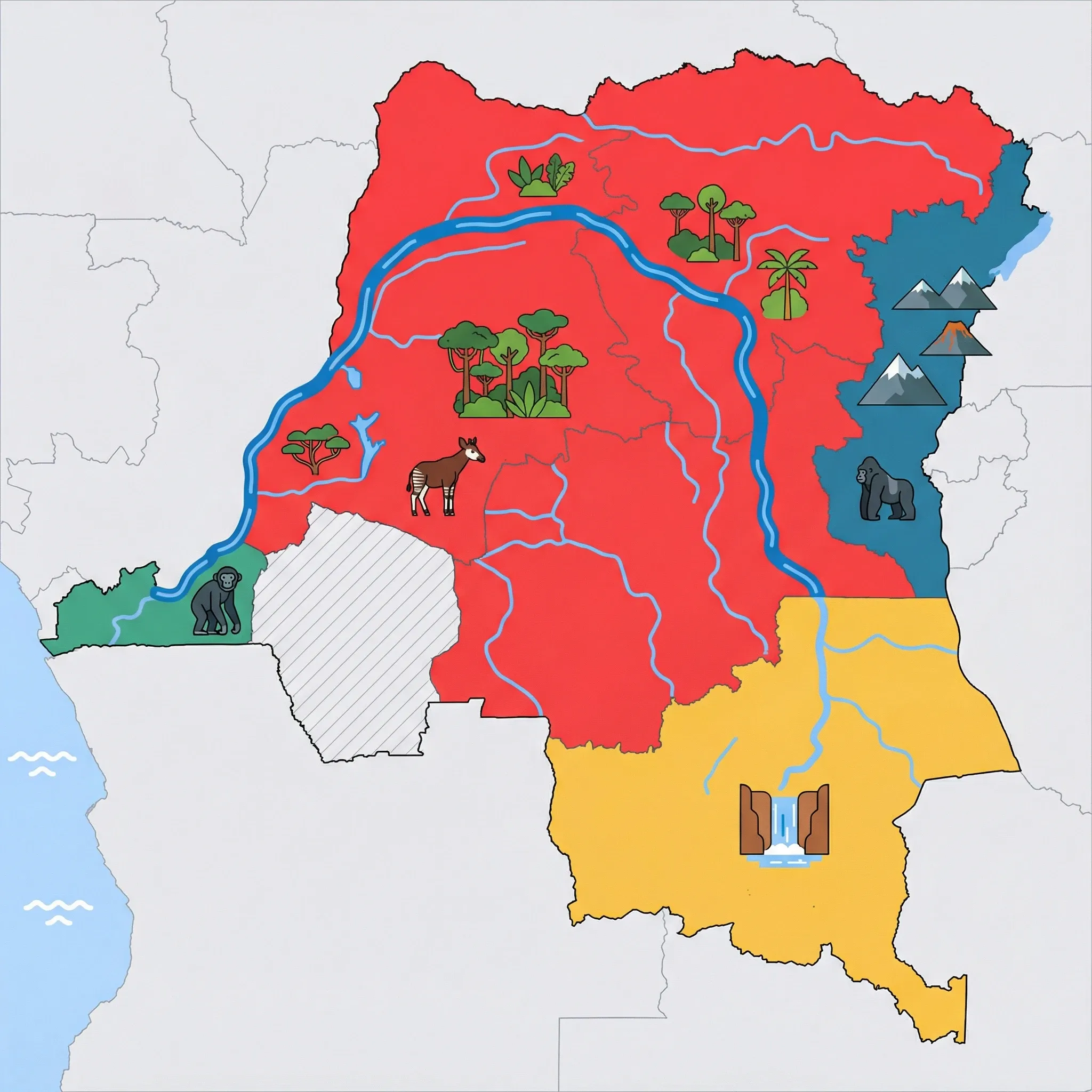
Click a region to explore
⚠️ SAFETY WARNING: While generally more stable than the east, government agencies (including USA, UK, and CA) advise travelers to reconsider travel here due to crime and limited emergency services. Border areas and remote mining sites carry higher risks. Families are strongly urged to consult their own government's official travel advisory before considering a trip, as circumstances and risk assessments vary.
Katanga differs significantly from the rest of the Congo. Geographically, it shares more in common with the savannahs of Zambia than the jungles of the north. It is the industrial powerhouse of the nation, rich in copper and cobalt, which has endowed the regional capital, Lubumbashi, with better infrastructure and a more cosmopolitan feel than many other Congolese cities. For families, this means a slightly softer landing into the DRC experience. The landscape here is defined by rolling miombo woodlands, vast grassy plains, and dramatic escarpments. It feels expansive and open, with a climate that is generally cooler and less humid than the river basin, making it more comfortable for children accustomed to temperate zones.
Lubumbashi itself acts as a bubble of relative calm. Known as the "City of Peace," it boasts wide boulevards, colonial-era architecture, and a distinct red-brick charm. The presence of international mining companies means there are higher-standard hotels, supermarkets, and restaurants available, which simplifies the logistics of traveling with kids. However, the real magic lies just outside the city limits. The region is home to some of the country's most impressive hydrological features and recovering national parks. While wildlife populations were depleted in past decades, conservation efforts are bringing the savannahs back to life, offering a glimpse of a wilder, historic Africa.
Key Attractions
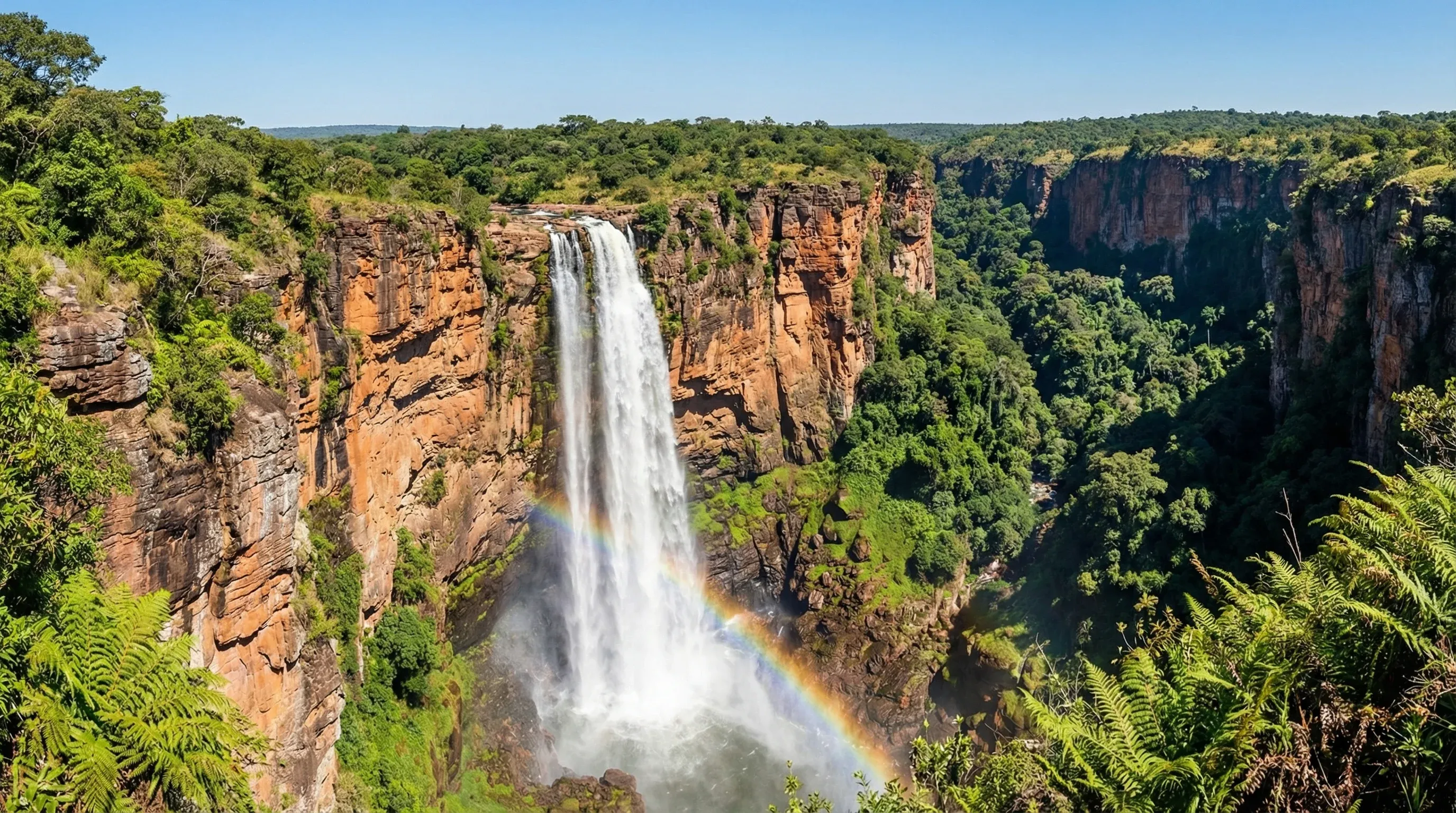
For nature-loving families, the Upemba National Park is a highlight. Unlike the dense rainforests, Upemba features a mosaic of lakes, rivers, and savannahs. It is the only place in the DRC where zebras and savannah elephants roam, and the landscapes are hauntingly beautiful. It requires effort to reach, but the sense of solitude is unmatched. Closer to civilization, the Lofoi Falls (Chutes de la Lofoi) are a breathtaking sight. Dropping over 165 meters (one of the highest continuous drops in Central Africa), the falls are situated in the Kundelungu National Park and provide a spectacular backdrop for a family hike and picnic.
Within the city, the National Museum of Lubumbashi is excellent for a cultural afternoon. It houses a significant collection of geological specimens (which kids often love due to the shiny minerals) and ethnographic artifacts that explain the history of the Luba kingdom. The Cathédrale Saints-Pierre-et-Paul is another landmark worth a visit; its Romanesque-Byzantine architecture and striking red brickwork make it an icon of the city skyline and a peaceful place to escape the heat.
Practical Advice
The dry season (May to September) is the best time to visit Katanga. Days are sunny and warm, but nights can get surprisingly chilly, so pack layers. Lubumbashi is the only city in the region with reliable modern healthcare facilities, so any travel to remote parks like Upemba requires carrying a comprehensive medical kit.
Food & Drink
Typical meal times: Lunch is usually served from 12:30 pm to 2:30 pm. Dinner in Lubumbashi is a social affair, typically starting around 7:00 pm and lasting until 9:30 pm.
Typical meal costs: A mid-range meal in a Lubumbashi restaurant costs roughly 42,000–84,000 CDF (approx. $15–30 USD / €13–27 EUR). High-end dining in expat-focused venues can reach 140,000 CDF (approx. $50 USD / €45 EUR) per person.
Dietary requirements: Due to the international community, Lubumbashi restaurants are familiar with vegetarian requests. Pizza and pasta are widely available for fussy eaters. Nut allergies should be communicated clearly, as peanuts are a common thickener in sauces.
Signature dishes:
- Bukari – The local name for the stiff maize porridge (fufu) staple, traditionally eaten with the hands and used to scoop up sauces.
- Sombe – Cassava leaves pounded and cooked with palm oil, onions, and sometimes smoked fish; a mineral-rich side dish that accompanies most meals.
- Tshombo – Goat meat, usually grilled over charcoal (barbecue style) and seasoned with salt and pili-pili chili, popular at roadside eateries.
Why this score?
While Lubumbashi offers an urban environment, reaching the spectacular Lofoi Falls or Upemba National Park involves difficult overland travel on deteriorating roads. These areas offer a genuine sense of isolation and require self-sufficiency.
Why this score?
Lubumbashi features some of the country's better private clinics, often supported by the local mining industry, which provide a basic level of care for foreigners. However, specialized services are still scarce and complex cases usually require medical evacuation to South Africa.
Why this score?
Tourism in this region is minimal and consists primarily of business travelers linked to the mining sector or domestic visitors. While Lubumbashi has some attractions, it remains off the map for the vast majority of international leisure travelers.

Lubumbashi is generally more affordable than Kinshasa but still expensive compared to neighboring Zambia. A good family hotel room costs 280,000–500,000 CDF (approx. $100–180 USD / €90–160 EUR). Car rental is pricey, often around 420,000 CDF (approx. $150 USD / €135 EUR) per day.

Getting Here & Around
Getting Here
- Airports – Lubumbashi International Airport (FBM) is well-connected with international flights from Addis Ababa, Johannesburg, and Nairobi, as well as domestic flights from Kinshasa.
- Train – The rail network is generally for cargo and not recommended for tourists due to poor maintenance and extreme delays.
- Driving – The road from the Zambian border (Kasumbalesa) to Lubumbashi is paved and busy with trucks.
Getting Around
- Car – Renting a 4x4 with a driver is the only viable option for families. Roads to Lofoi Falls can be rough.
- Taxi – In Lubumbashi, use private hire taxis recommended by your hotel rather than hailing from the street.
Nearby Airports (3 airports)
Lubumbashi International
FBMLubumbashi
Kalemie
FMIKalemie
Kolwezi
KWZKolwezi
View full flight map for Democratic Republic of the Congo →

Packing List
Nights in the dry season (May-Aug) are surprisingly cold
Hotel outlets are scarce and voltage fluctuations occur
Mining activity and unpaved roads create significant dust
Mobile data coverage drops off sharply outside Lubumbashi
Local merchants and banks refuse dollar bills with even tiny tears, marks, or dates older than 2013.
You will be physically denied entry at the airport without this original yellow booklet.
Power cuts are frequent even in cities; street lighting is non-existent in many areas.
English is rarely spoken outside top hotels; basic French is essential for daily interactions.
Malaria is a severe risk throughout the country; medication is much harder to find locally.
To keep phones charged during long travel days or frequent hotel blackouts.

Activities & Best Times

Hiking, wildlife, outdoor exploration, ecotourism
Home to the spectacular Lofoi Falls and the vast Upemba and Kundelungu National Parks, the region offers raw, authentic wilderness immersion. Peak visitation occurs during the May-September dry season when park tracks are navigable and wildlife is easier to spot near water sources.

Urban tourism, museums, historical sites, architecture
Lubumbashi serves as a cultural hub with significant Belgian colonial architecture and a well-regarded national museum. The dry winter months provide the most comfortable conditions for exploring the city's street life, markets, and botanical gardens without the heavy tropical downpours of the wet season.

Sport tourism, fitness activities, active recreation
The region features world-class hiking terrain, specifically the challenging trails leading to the Lofoi Falls and within the national park interiors. Peak conditions occur in the dry season when trails are safe, firm, and offer high visibility for trekkers.

Scenic drives, countryside tours, route-based travel
The Copperbelt Mining Heritage and Kundelungu Plateau routes offer unique industrial and natural landscapes for experienced 4x4 travelers. Driving is only recommended during the core dry months (June-August) when unpaved roads are stable and free from seasonal flooding or mud.




Public Holidays & Calendar Next 12 months
Public holidays, festivals, cultural celebrations, and seasonal natural phenomena coming up in Katanga & South over the next 12 months.
Loading holidays and events...

Travel Advisory
Due to a split in agency assessments between 'Reconsider Travel' and 'Do Not Travel', the higher severity level of L3 is applied. Most agencies cite extreme risks from armed conflict, kidnapping, and terrorism.
Safety Topics
Traveller Advice (4 groups)

While same-sex relations are not explicitly criminalized under national law, social stigma and discrimination are high, and same-sex couples are legally barred from adopting children.

Ensure you have comprehensive travel insurance that includes emergency medical evacuation by air. Most standard policies may exclude coverage for the DRC due to its security status.

High risks of sexual violence and harassment exist. Women are advised to maintain a low profile, dress conservatively, and avoid travelling alone, particularly after dark.

Humanitarian workers are frequently targeted by armed groups and violent mobs. Personnel should operate with extreme caution and specialized security protocols.
Agency Summaries
Canadians are advised to avoid non-essential travel to the Democratic Republic of the Congo due to a very fragile security environment, significant crime rates, and frequent civil disturbances. Regional advisories suggest avoiding all travel to most eastern and northeastern provinces.
Ireland maintains a 'Do Not Travel' advisory for the DRC, emphasizing the high risk of violence and conflict, especially in eastern provinces where fighting between government and rebel forces has escalated.
The U.S. government recommends reconsidering travel to the DRC because of prevalent crime and civil unrest. Some regions, particularly in the east, carry a much higher risk due to active armed conflict and terrorism.
British authorities advise against all but essential travel to the country as a whole, with stricter 'no travel' warnings for specific areas in the east and north. Recent updates highlight insecurity at Bangoka International Airport in Kisangani.
New Zealand advises its citizens not to travel to the DRC due to the unstable security situation, ongoing armed conflict, and high risk of terrorism and violent crime.
Australia advises against all travel to the DRC due to the volatile security climate and the significant threat of kidnapping, terrorism, and violent conflict throughout the country.
Information is provided for general guidance only and does not constitute travel, safety, medical, or legal advice. Conditions may change. Users are responsible for independently verifying information before travel.