
Attractions in Katanga & South
Savannahs, waterfalls, and mineral wealth 💎🦁
Showing 18 attractions · Sorted by importance

Cathédrale Saints-Pierre-et-Paul
📍 Lubumbashi
🏛 LandmarkA striking 1920s brick cathedral with twin towers, standing as the religious and architectural heart of Lubumbashi.

Lofoi Falls (Chutes de la Lofoi)
📍 Lubumbashi
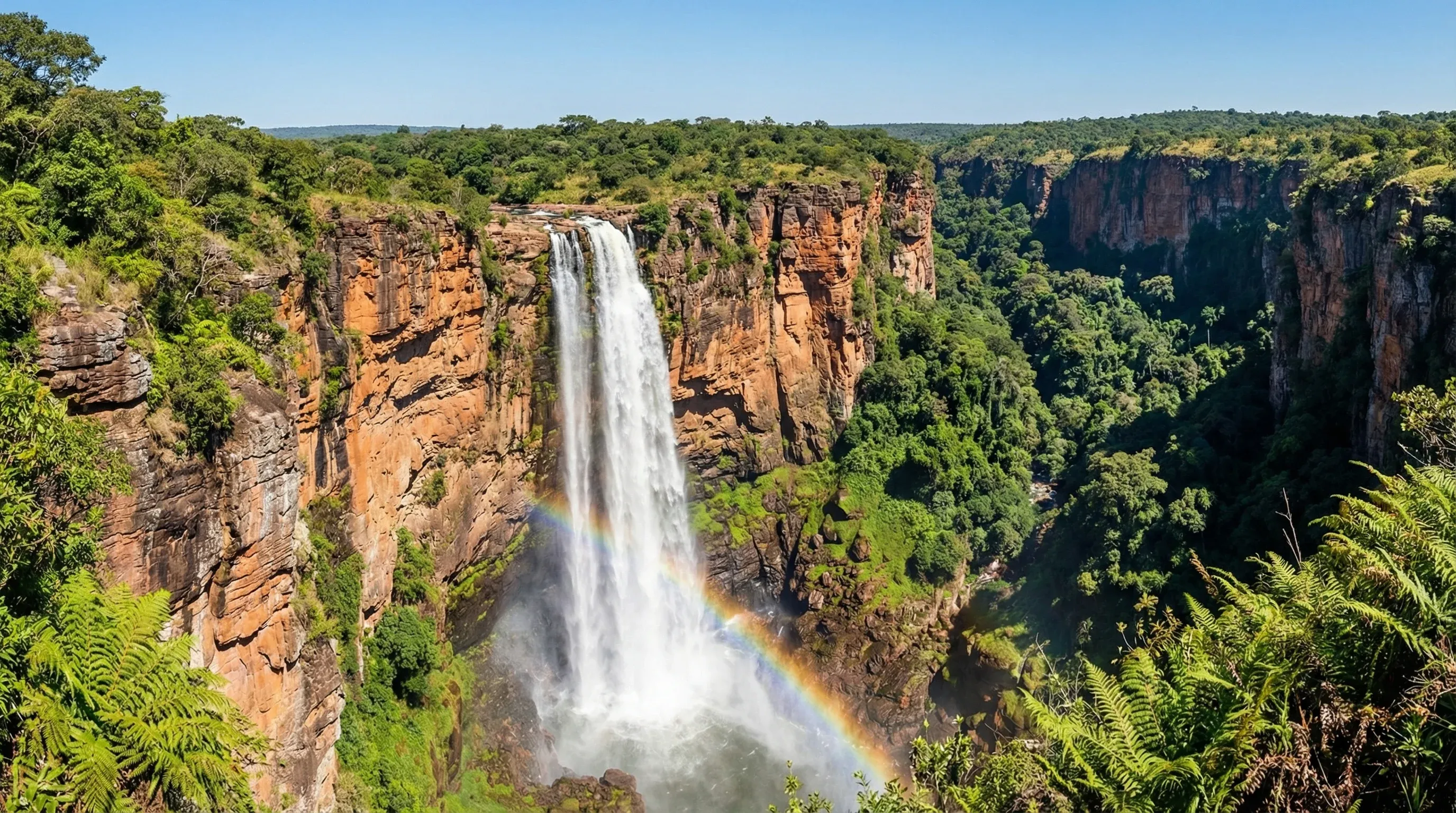
🏔 Scenic ViewOne of the highest waterfalls in Africa, this stunning 340-meter single-drop cascade is the crown jewel of Kundelungu National Park.

National Museum of Lubumbashi
📍 Lubumbashi
🖼 Art GalleryThis museum features an impressive collection of archaeological finds, traditional masks, and contemporary art that showcases the rich cultural heritage of the Katanga region.

Upemba National Park
📍 Lubumbashi
🧗 AdventureAn expansive wilderness area featuring diverse landscapes from plateaus to wetlands, ideal for rugged outdoor exploration and spotting rare wildlife.

Katanga Copperbelt Mining Heritage Route
📍 Lubumbashi
🚗 Road Trip300km paved highway route (4-6 hours) following the N1 and N39. This well-maintained industrial corridor connects the mining heartland, passing through the 'Copper Capital' Likasi and ending in Kolwezi. Key highlights include the stunning turquoise waters of Lake Tshangalele, the massive open-pit mines of Tenke Fungurume, and the historical colonial architecture of the mining towns.

Kundelungu National Park
📍 Lubumbashi
🧗 AdventureFamous for the Lofoi Falls, this park offers adventurous hiking trails and breathtaking views of one of Africa's highest waterfalls.

Lofoi Falls Trail
📍 Kundelungu National Park
🥾 Hiking & Cycling30km challenging 2-day trek to the base of Africa's tallest vertical-drop waterfall (340m). The route involves steep descents into the canyon and river crossings through dense gallery forests. Shorter 10km moderate day-hike options are available to the upper viewpoints. Official guide required from ICCN at the park headquarters.

Lubumbashi Zoo
📍 Lubumbashi
🦁 ZooA historic urban zoo housing diverse Congolese wildlife and offering a popular educational outing for families in the heart of the city.

Kalemie Beach
📍 Kalemie
⛱ BeachA prominent white-sand beach on the shores of Lake Tanganyika, offering clear turquoise waters for swimming and scenic views of the surrounding mountains.
Kiubo Falls
📍 Kiubo
🧗 AdventureA stunning series of waterfalls where visitors can enjoy white-water rafting, motorboating, and swimming in a scenic outdoor setting.
Kiubo Falls Trail
📍 Upemba National Park
🥾 Hiking & Cycling15km moderate round-trip day hike through the Lufira River valley. The route leads to the spectacular Kiobo Falls, which are notable for their width and tiered cascades. Hikers pass through a mix of high-altitude savannah and miombo woodland. Elevation gain is approximately 250m. Guides are mandatory and arranged at the Nagero or Lusinga park stations.
Kundelungu Plateau Route
📍 Lubumbashi
🚗 Road Trip180km route (3-4 hours) primarily consisting of paved roads to Minga followed by maintained gravel tracks. The drive is famous for the dramatic ascent onto the Kundelungu Plateau, offering panoramic views of the Lufira River basin. The ultimate destination is the Lofoi Falls, the highest waterfall in Africa (340m), reachable by a scenic track through high-altitude savanna.

Mikembo Sanctuary
📍 Lubumbashi
🐄 FarmA wildlife sanctuary and rural escape where families can observe giraffes, zebras, and antelopes in a protected savanna environment.

Mineralogical Museum of Likasi
📍 Likasi
🔬 ScienceA specialized science museum featuring over 600 geological specimens and stone samples that document the immense mineral wealth and geological history of the Katanga Copperbelt.

Gare de Lubumbashi
📍 Lubumbashi
🏛 LandmarkA historic railway hub with distinctive colonial architecture that reflects Lubumbashi's origins as a mining capital.
Kibara Plateau Trek
📍 Upemba National Park
🥾 Hiking & Cycling50km expert 4-day trek across the Afromontane grasslands of the Kibara Plateau. This high-altitude route (averaging 1,700m) offers rare opportunities to see the region's unique zebra population and endemic flora. The terrain is rolling and exposed, with significant elevation changes. Treks typically start from the Lusinga station. Self-sufficient camping is required.