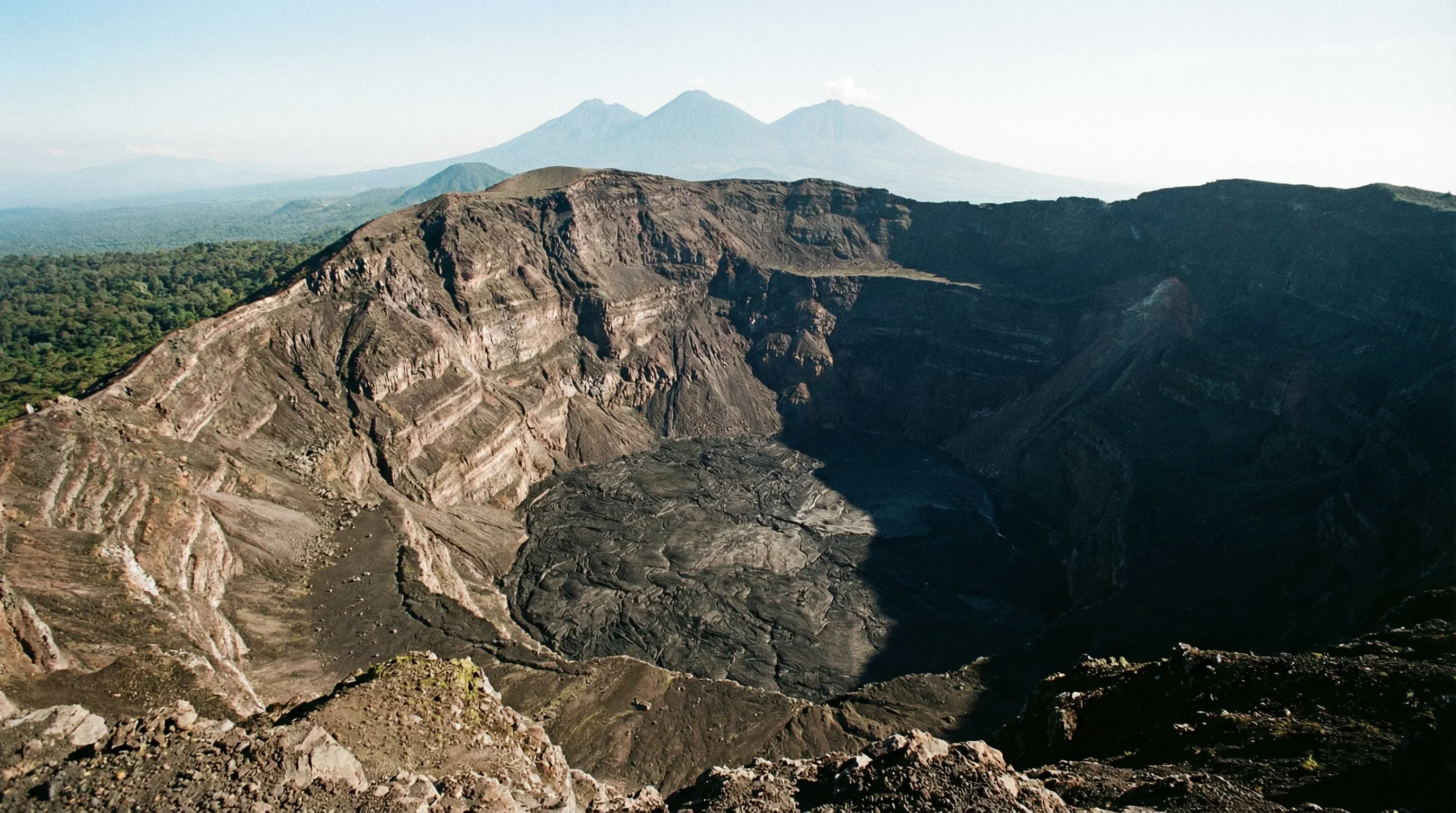

Virunga & Eastern DRC (gorillas)
Africa's most dramatic and dangerous wilderness 🦍🌋
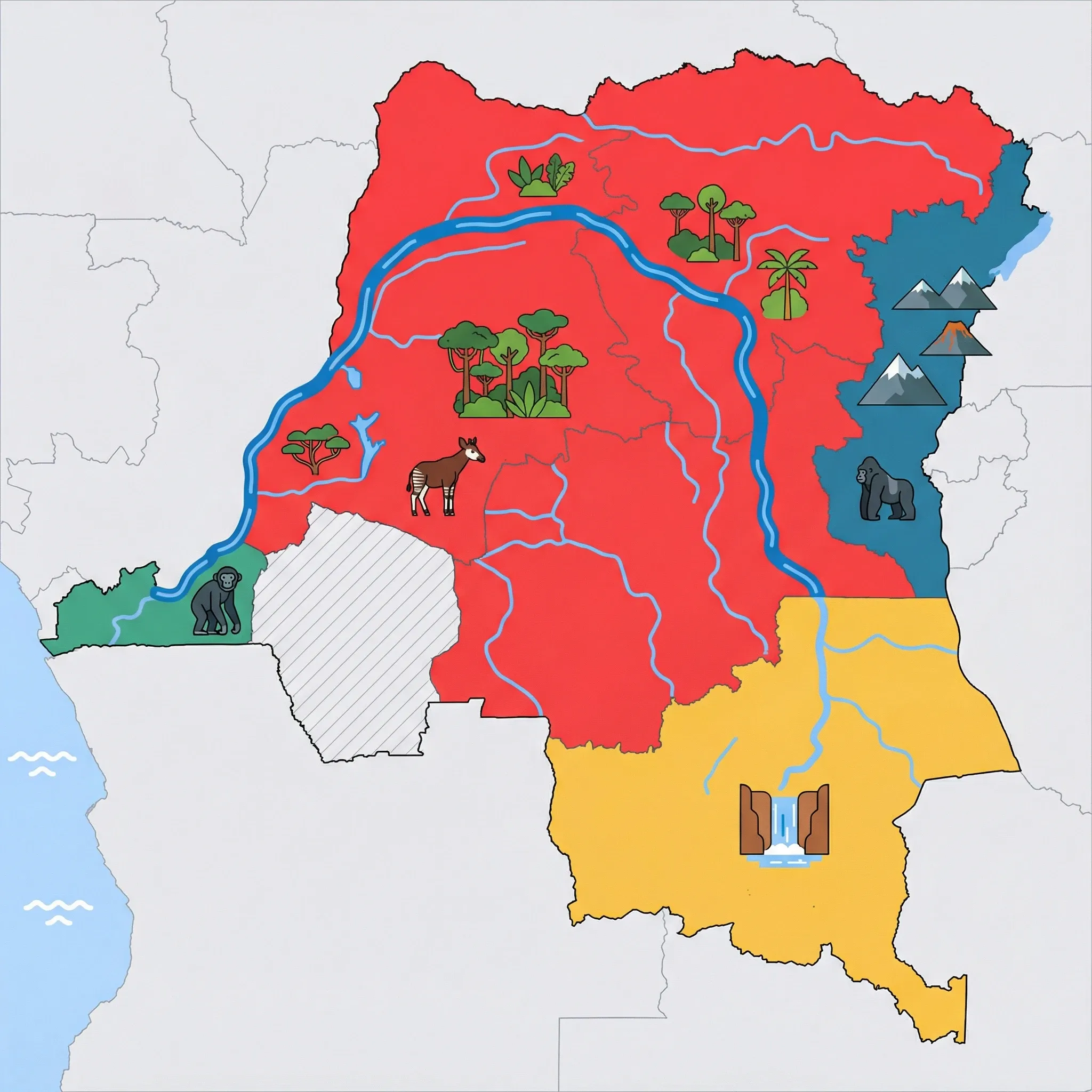
Click a region to explore
⚠️ SAFETY WARNING: Due to active armed conflict, kidnapping risks, and terrorism, government agencies (including USA, UK, CA, AU, IE, and NZ) advise travelers to DO NOT TRAVEL to this region. The security situation is extremely volatile. Gorilla tourism involves serious personal safety risks that cannot be fully mitigated. Families are strongly urged to consult their own government's official travel advisory before considering a trip, as circumstances and risk assessments vary.
This region contains some of the most spectacular landscapes on Earth, yet it remains one of the most inaccessible due to decades of instability. Known as the "Switzerland of Africa" for its verdant, misty peaks and cool climate, Eastern DRC sits on the Albertine Rift. It is a place of fire and ice, where the glaciers of the Rwenzori Mountains look down upon the boiling lava lakes of the Virunga chain. For the rare few who visit (often journalists, aid workers, or extreme adventure tourists), the draw is the raw power of nature. The soil is incredibly fertile, supporting lush tea plantations and dense cloud forests that seem plucked from a fantasy novel.
The region is dominated by the presence of the Great Apes. This is the only place in the world where you can find Mountain Gorillas, Eastern Lowland Gorillas, and Chimpanzees living in such proximity. The city of Goma serves as the nerve center, a town paved with volcanic rock and sitting in the shadow of active volcanoes. Despite the grim security context, the resilience and warmth of the local population are profound. The shores of Lake Kivu offer a strange kind of Riviera vibe, where families (mostly locals and expats) gather on weekends to swim and eat fresh fish, momentarily ignoring the rumble of the volcano and the complexities of the conflict nearby.
Key Attractions
The primary reason anyone considers this perilous journey is Virunga National Park. It is Africa's oldest national park and a UNESCO World Heritage site. When open to tourists (it frequently closes due to security threats), it offers the bucket-list experience of trekking to see Mountain Gorillas. The park is also home to Mount Nyiragongo, an active volcano with the world's largest lava lake. Climbing it is a grueling overnight hike, sleeping in freezing cabins at the summit while watching the red glow of the magma—a sight unmatched anywhere else.
South of Goma lies Kahuzi-Biega National Park, the last stronghold of the Eastern Lowland (Grauer's) Gorilla. These apes are larger than their mountain cousins, and the trek here is generally less steep but equally humid and dense. For a change of pace, Lake Kivu offers scenic beauty. It is one of the African Great Lakes and is unique because it contains high amounts of methane gas. Boat rides on the lake offer stunning views of the green hills and small islands, providing a brief respite from the intensity of the jungle.
Practical Advice
Travel here is strictly for adults or families with older teens, and only when the political situation permits. The climate is high-altitude; it is often cool and rainy. If visiting, you must book through the official park authorities who provide armed ranger escorts and transport. Never attempt to travel independently. Comprehensive kidnap and ransom insurance is usually required.
Food & Drink
Typical meal times: 12:00 pm to 2:00 pm for lunch. Dinner is usually early, around 6:30 pm to 8:30 pm, due to security curfews often suggesting people stay off streets at night.
Typical meal costs: Meals in Goma's secure hotels or expat restaurants cost 28,000–70,000 CDF (approx. $10–25 USD / €9–22 EUR). Food is generally cheaper here than Kinshasa due to local agriculture.
Dietary requirements: Fresh fruits and vegetables are abundant and excellent quality due to the volcanic soil. Vegetarian meals are easy to arrange (beans, potatoes, avocados). Dairy (cheese) is famously produced in the Masisi highlands nearby.
Signature dishes:
- Sambaza – Tiny, sardine-like fish from Lake Kivu, usually deep-fried and eaten whole as a crunchy snack or appetizer with lemon.
- Goma Cheese – A semi-hard Gouda-style cheese produced in the nearby Masisi hills, a unique local product resulting from Belgian colonial history.
- Plantain fries – Sliced savory bananas fried until golden, a staple carbohydrate accompanying almost every grilled meat dish.
Why this score?
Trekking through dense cloud forests to see gorillas and climbing the active Nyiragongo volcano are world-class adventure activities. The region's rugged terrain is compounded by the high-stakes security environment, making every trip a significant undertaking.
Why this score?
Medical infrastructure is extremely sparse and frequently strained by regional conflict and displacement. Outside of Goma, access to any form of reliable medical care for international travelers is nearly non-existent.
Why this score?
Despite the global fame of its mountain gorillas and volcanoes, persistent regional instability and frequent park closures have reduced international visitor numbers to a trickle. It remains a niche destination for the most dedicated wildlife enthusiasts.

While local costs are low, the cost of safe tourism is very high. Gorilla permits alone cost roughly 1,120,000–1,400,000 CDF (approx. $400–500 USD / €360–450 EUR) per person. Secure accommodation and armed transport push daily costs for a couple to over 1,680,000 CDF (approx. $600 USD / €540 EUR).

Getting Here & Around
Getting Here
- Airports – Goma International Airport (GOM) has flights from Addis Ababa and Kinshasa.
- Car – Many travelers fly into Kigali (Rwanda) and drive 3-4 hours to the "Grande Barrière" border crossing at Gisenyi/Goma. This is often more reliable than flying directly into DRC.
Getting Around
- Car – Transport is almost exclusively by official park vehicles or hired 4x4s with drivers. Escorted convoys are common for travel to Virunga National Park HQ.
- Boat – Ferries and speedboats connect Goma to Bukavu (for Kahuzi-Biega National Park) across Lake Kivu. This is safer and more scenic than the road.
Nearby Airports (1 airport)
Goma
GOMGoma
View full flight map for Democratic Republic of the Congo →
Official Links

Packing List
Crucial for gripping stinging nettles during gorilla treks
Prevents safari ants from climbing up trousers in the jungle
Temperatures at the Nyiragongo summit drop near freezing
Trousers must be tucked into socks to prevent insect bites
Local merchants and banks refuse dollar bills with even tiny tears, marks, or dates older than 2013.
You will be physically denied entry at the airport without this original yellow booklet.
Power cuts are frequent even in cities; street lighting is non-existent in many areas.
English is rarely spoken outside top hotels; basic French is essential for daily interactions.
Malaria is a severe risk throughout the country; medication is much harder to find locally.
To keep phones charged during long travel days or frequent hotel blackouts.

Activities & Best Times

Hiking, wildlife, outdoor exploration, ecotourism
A globally unique destination for mountain gorilla encounters and trekking active volcanoes like Nyiragongo. The experience is highly authentic and immersive, with peak accessibility occurring during the drier months when forest trails are manageable.

Sport tourism, fitness activities, active recreation
Features world-class high-altitude trekking infrastructure on the Rwenzori and Virunga massifs. Conditions are best for these physically demanding climbs during the dry seasons to ensure safety and visibility on technical slopes.

Urban tourism, museums, historical sites, architecture
While Goma and Bukavu offer authentic glimpses into post-colonial history and vibrant local markets, the infrastructure remains challenging for international families. Visitation follows the dry season patterns when navigating urban peripheries and heritage sites is more reliable.

Learning experiences, scientific sites, historical education
The Lwiro Natural Science Research Center provides a significant, destination-level educational opportunity for families interested in conservation. Travel to the center is heavily weather-dependent, making the drier peak months the only recommended time for international visitors.

Spa retreats, wellness centers, peaceful getaways
Natural thermal springs like May-ya-Moto offer a unique restorative element to an adventure-heavy itinerary. These facilities are most approachable during the cooler dry months, though they lack the world-class luxury found in primary wellness destinations.




Public Holidays & Calendar Next 12 months
Public holidays, festivals, cultural celebrations, and seasonal natural phenomena coming up in Virunga & Eastern DRC (gorillas) over the next 12 months.
Loading holidays and events...

Travel Advisory
Due to a split in agency assessments between 'Reconsider Travel' and 'Do Not Travel', the higher severity level of L3 is applied. Most agencies cite extreme risks from armed conflict, kidnapping, and terrorism.
Safety Topics
Traveller Advice (4 groups)

While same-sex relations are not explicitly criminalized under national law, social stigma and discrimination are high, and same-sex couples are legally barred from adopting children.

Ensure you have comprehensive travel insurance that includes emergency medical evacuation by air. Most standard policies may exclude coverage for the DRC due to its security status.

High risks of sexual violence and harassment exist. Women are advised to maintain a low profile, dress conservatively, and avoid travelling alone, particularly after dark.

Humanitarian workers are frequently targeted by armed groups and violent mobs. Personnel should operate with extreme caution and specialized security protocols.
Agency Summaries
Canadians are advised to avoid non-essential travel to the Democratic Republic of the Congo due to a very fragile security environment, significant crime rates, and frequent civil disturbances. Regional advisories suggest avoiding all travel to most eastern and northeastern provinces.
Ireland maintains a 'Do Not Travel' advisory for the DRC, emphasizing the high risk of violence and conflict, especially in eastern provinces where fighting between government and rebel forces has escalated.
The U.S. government recommends reconsidering travel to the DRC because of prevalent crime and civil unrest. Some regions, particularly in the east, carry a much higher risk due to active armed conflict and terrorism.
British authorities advise against all but essential travel to the country as a whole, with stricter 'no travel' warnings for specific areas in the east and north. Recent updates highlight insecurity at Bangoka International Airport in Kisangani.
New Zealand advises its citizens not to travel to the DRC due to the unstable security situation, ongoing armed conflict, and high risk of terrorism and violent crime.
Australia advises against all travel to the DRC due to the volatile security climate and the significant threat of kidnapping, terrorism, and violent conflict throughout the country.
Information is provided for general guidance only and does not constitute travel, safety, medical, or legal advice. Conditions may change. Users are responsible for independently verifying information before travel.