
Central & East Jutland (Midt- & Østjylland)
Home of LEGO and the happiest city 🇩🇰🧱
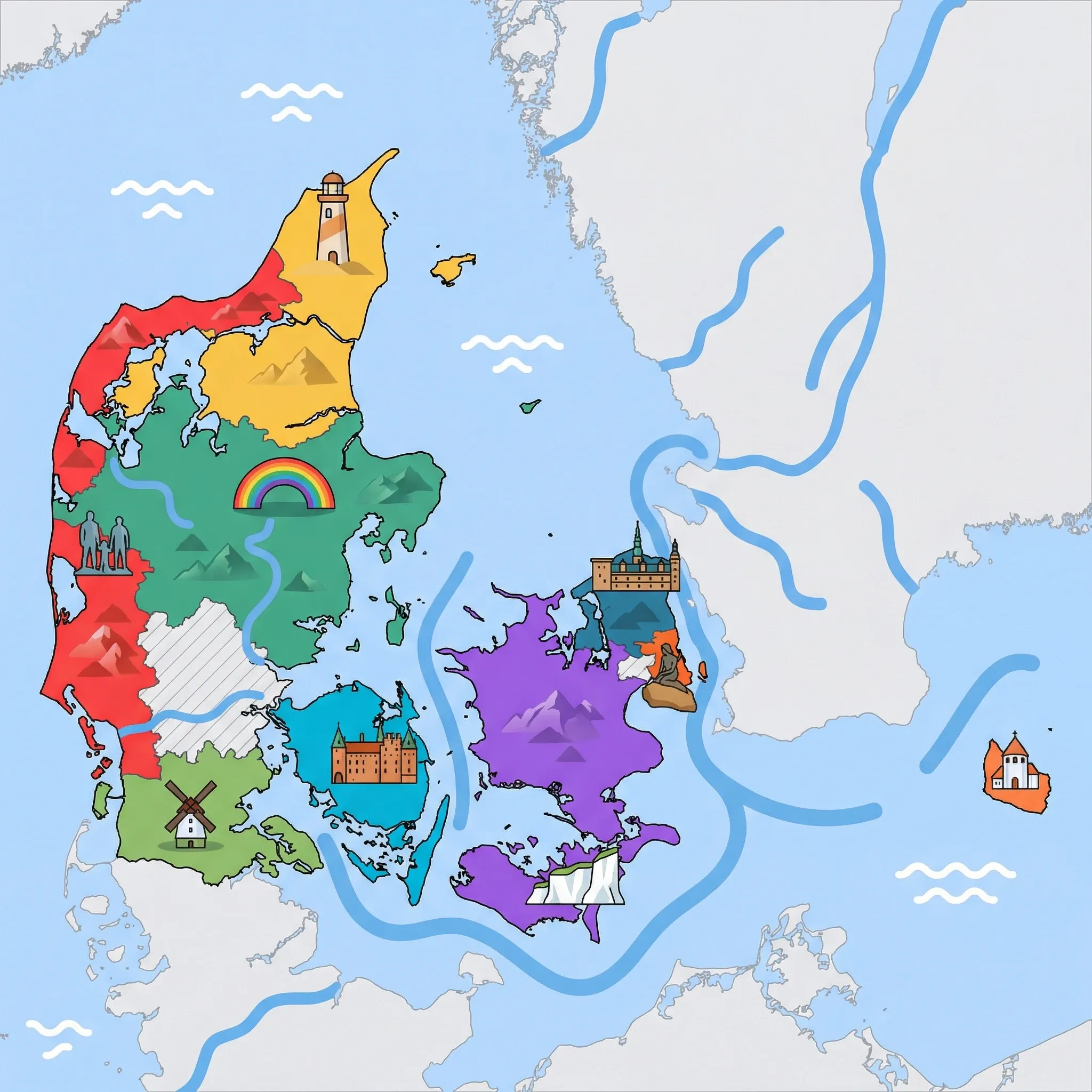
Click a region to explore
Central and East Jutland is often the first stop for international families visiting Denmark, and for good reason: it is the birthplace of LEGO®. The town of Billund sits at the center of this region, serving as a global pilgrimage site for children who dream of bricks. However, limiting this region to just theme parks would be a mistake. To the east lies Aarhus, Denmark's second-largest city, known as the "City of Smiles." Aarhus offers a vibrant, youthful atmosphere with world-class museums that are surprisingly kid-friendly, walkable streets, and a harbour that has been transformed into a recreational playground. The contrast between the rural inland and the cultural coast provides a balanced holiday experience.
Geographically, this is the most varied part of the Danish mainland. The "Lake District" (Søhøjlandet) around Silkeborg features Denmark's highest "mountains" (gentle hills by international standards, but significant for Danes!) and the Gudenå River, which is perfect for family canoe trips. To the east, the Djursland peninsula juts out into the Kattegat sea, offering sandy beaches and a concentration of animal parks and activity centers. The infrastructure here is designed with families in mind; from stroller-accessible forest paths to restaurants that provide coloring books and high chairs as a standard. It is a region where high-octane entertainment meets the calm of the Nordic outdoors.
Key Attractions
The crown jewel is undoubtedly LEGOLAND Billund Resort. As the original park, it has a charm and history that newer versions lack, with Miniland being a highlight for all ages. Right next door is the newer LEGO House, an architectural masterpiece filled with 25 million bricks and interactive creative zones—many families actually rate this higher than the theme park itself! For animal lovers, Givskud Zoo (Zootopia) offers a safari experience where you can drive your own car among lions and giraffes, which is a thrilling experience for children.
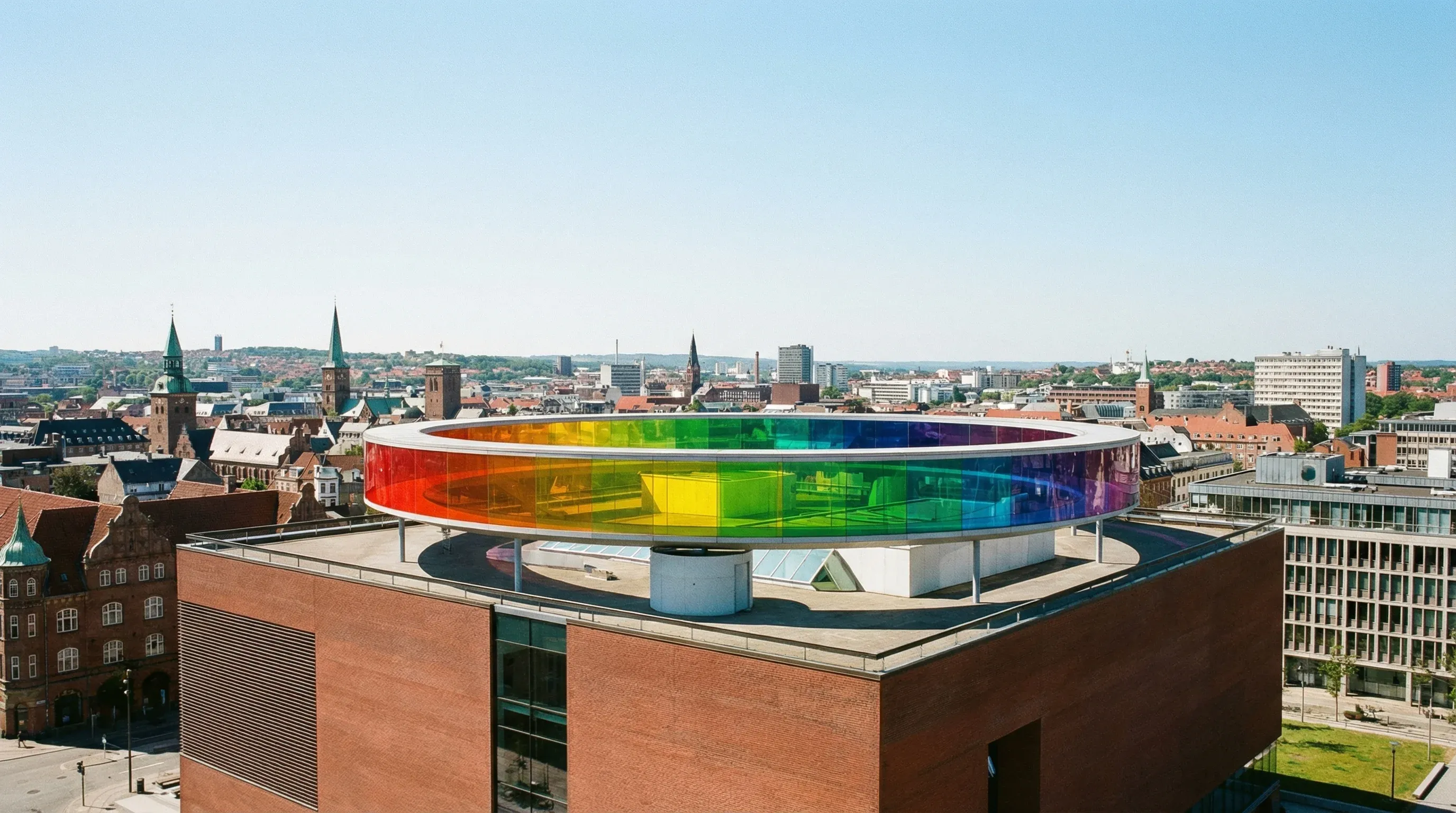
In Aarhus, Den Gamle By (The Old Town) is an open-air museum that functions as a living city. Actors in period costumes bake bread, shoe horses, and run 1970s radio shops, allowing kids to physically walk through history. Just up the hill, the ARoS Aarhus Art Museum is famous for its "Your rainbow panorama" walkway on the roof, offering 360-degree views of the city in different colors—a visual experience toddlers and teens alike adore. Further north, in Randers, Randers Tropical Zoo (Randers Regnskov) offers an indoor rainforest experience with free-roaming monkeys and bats, perfect for rainy days.
Practical Advice
If visiting Billund, buy combination tickets for LEGOLAND and LEGO House online in advance to save money and skip queues. Avoid the peak weeks of mid-July if you dislike crowds. Aarhus is a great base for a city break, while holiday homes in Djursland offer a more relaxed coastal vibe. Public transport is good between major cities, but a car is recommended for reaching the Lake District and Djursland attractions comfortably.
Food & Drink
Typical meal times: Lunch is 11:30 am to 1:30 pm. Dinner is standard Danish time, 5:30 pm to 8:00 pm. Restaurants in Billund and Aarhus stay open later.
Typical meal costs: Theme park food is pricey; expect DKK 150–200 (approx. $22–29 USD / €20–27 EUR) for a burger meal. In Aarhus, street food markets offer value meals for DKK 85–120 (approx. $12–17 USD / €11–16 EUR).
Dietary requirements: Extremely easy. Aarhus has a high density of vegetarian and organic cafes. Theme parks like LEGOLAND are well-versed in handling allergies (gluten, nut, dairy).
Signature dishes:
- Aarhus Street Food – Not one dish, but the concept of communal dining halls (like the one at the bus garage) is central to the local food culture.
- Stjerneskud (Shooting Star) – A lavish open-faced sandwich with both fried and steamed plaice, shrimp, caviar, and dressing.
- Pølsemix – A fast-food classic popular in Jutland: fried sausage slices mixed with french fries and curry ketchup.
Why this score?
The terrain is largely characterized by rolling hills, lakes, and farmland with highly developed infrastructure. Outdoor activities like canoeing in Silkeborg are gentle and catered toward families rather than adventure seekers.
Why this score?
Aarhus University Hospital is one of the leading medical facilities in Northern Europe, offering world-class care. The presence of Billund's international infrastructure also ensures excellent emergency and English-speaking medical services.
Why this score?
This region is a major international draw, anchored by Billund's LEGOLAND and the cultural powerhouse of Aarhus. It benefits from a dedicated international airport (BLL) that serves millions of families and tourists annually.

While general costs are average for Denmark, the admission prices for major attractions like <a data-attraction-id="23956">LEGOLAND Billund Resort</a> can make this an expensive trip. A family of four should budget DKK 2,000 (approx. $290 USD / €270 EUR) just for one day's entry and food inside a park. Accommodation near Billund carries a premium.

Getting Here & Around
Getting Here
- Airports – Billund Airport (BLL) is the second largest in Denmark and located right next to LEGOLAND Billund Resort. Aarhus Airport (AAR) also serves the region.
- Train – Frequent trains run from Copenhagen to Aarhus (approx. 3 hours) and Vejle (the hub for Billund).
- Driving – Easy access via the E45 motorway which runs north-south through the region. Approx. 2.5 hours drive from the German border.
Getting Around
- Car – Recommended for families wanting to visit Givskud Zoo (Zootopia) or the Djursland coast.
- Public Transport – The "Letbanen" (light rail) connects Aarhus with Djursland. Buses connect Vejle train station to Billund regularly.
- Walking – Aarhus is very walkable, and Den Gamle By (The Old Town) is in the city center.
Nearby Airports (2 airports)
Aarhus
AARAarhus
Billund Airport
BLLBillund
View full flight map for Denmark →
Official Links

Packing List
You will walk 15,000+ steps per day in theme parks like LEGOLAND and Djurs Sommerland.
Tap water is excellent and free; buying bottled water in theme parks is unnecessarily expensive.
Most Danish attractions allow you to bring your own food, which saves a fortune.
Essential for log flume rides and unpredictable Danish showers.
Ticks (skovflåt) are common in Danish forests and tall grass; quick removal is important.
Summer days are very long with sunrise as early as 4:00 am, which can disrupt kids' sleep.
Essential for playgrounds and forest walks; Danish kids wear these over clothes to play outside in wet weather.
Many Danish beaches have pebbles, and harbor bath ladders can be slippery or have sharp barnacles.
Denmark is flat and often breezy, even on sunny summer days, so a windbreaker is more useful than a heavy coat.

Activities & Best Times

Urban tourism, museums, historical sites, architecture
Aarhus is a sophisticated cultural hub featuring the iconic ARoS museum and a vibrant culinary scene. Shoulder months offer better access to galleries without the peak summer crowds, while winter is often too dark for optimal urban exploration.

Hiking, wildlife, outdoor exploration, ecotourism
Søhøjlandet Lake District and Mols Bjerge are nationally outstanding but not globally exceptional. 'Excellent' should be reserved for UNESCO-level or world-renowned natural destinations. Mols Bjerge is a small national park (18km²) - compare to Yellowstone, Yosemite, or Swiss Alps for true 'excellent' calibration.

Sport tourism, fitness activities, active recreation
Excellent infrastructure for cycling and hiking, particularly around Mols Bjerge and the Ancient Road. Activity is highly seasonal, peaking when weather conditions are stable and daylight hours are maximized for long-distance routes.
Amusement parks, family entertainment venues
Features the global flagship LEGOLAND Billund and the massive Djurs Sommerland. While Lalandia offers indoor water parks, the primary theme park season is tied to school holidays and the temperate summer window.
Beach resorts, marine activities: diving, snorkelling, kite surfing, wind surfing, sailing
East Jutland offers calm, shallow waters and sandy stretches like Grenaa, ideal for families but with a short swimming season. Peak months align with the warmest Baltic temperatures and maximum coastal service availability.

Learning experiences, scientific sites, historical education
Highly specialized facilities like the Kattegatcentret and Randers Tropical Zoo offer world-class biological education. These are best experienced in conjunction with broader regional travel during the warmer, more accessible months.

Scenic drives, countryside tours, route-based travel
The Marguerite Route and Lake District drives offer exceptional scenic beauty on high-quality roads. Driving is best during late spring and summer when the countryside is in full bloom and visibility is highest.

Spa retreats, wellness centers, peaceful getaways
Historic bathing facilities like Badeanstalten Spanien provide an authentic but limited wellness experience. This type of indoor restoration is most appealing during the cold, dark Danish winter months.

Attractions (20 total)



Public Holidays & Calendar Next 12 months
Public holidays, festivals, cultural celebrations, and seasonal natural phenomena coming up in Central & East Jutland (Midt- & Østjylland) over the next 12 months.
Loading holidays and events...

Travel Advisory
The majority of international agencies suggest that standard safety measures are sufficient for travel to Denmark. However, travelers should be aware of elevated security warnings from North American agencies regarding terrorism and localized gang activity.
Safety Topics
Traveller Advice (4 groups)

Maintain awareness in crowded areas and on public transportation to prevent falling victim to petty theft. Always carry travel documents when crossing internal European borders.
Those visiting remote areas in Greenland or the Faroe Islands must prepare for extreme weather conditions and recognize that medical and rescue infrastructure is extremely limited.

The social climate is highly progressive and the country is consistently ranked as one of the safest and most welcoming destinations for the community.

Female visitors should follow standard safety protocols, particularly when traveling alone at night in large metropolitan areas like Copenhagen.
Agency Summaries
No specific travel restrictions are in place, though visitors are encouraged to review security guidelines and prepare for standard European travel risks.
General safety risks are considered low, though visitors are advised to avoid protests and keep an eye on personal belongings in transit hubs.
Visitors should maintain standard safety awareness and ensure they have valid identification for movement within the Schengen area.
The safety environment is stable, though petty crime remains a factor in popular tourist areas and travelers should stay informed about the local terror threat level.
Officials recommend a heightened state of vigilance due to the threat of terrorist activities and incidents of gang-related violence in specific urban districts.
Travelers should remain alert to their surroundings because of persistent plans by extremist groups to target public and tourist locations.
Information is provided for general guidance only and does not constitute travel, safety, medical, or legal advice. Conditions may change. Users are responsible for independently verifying information before travel.