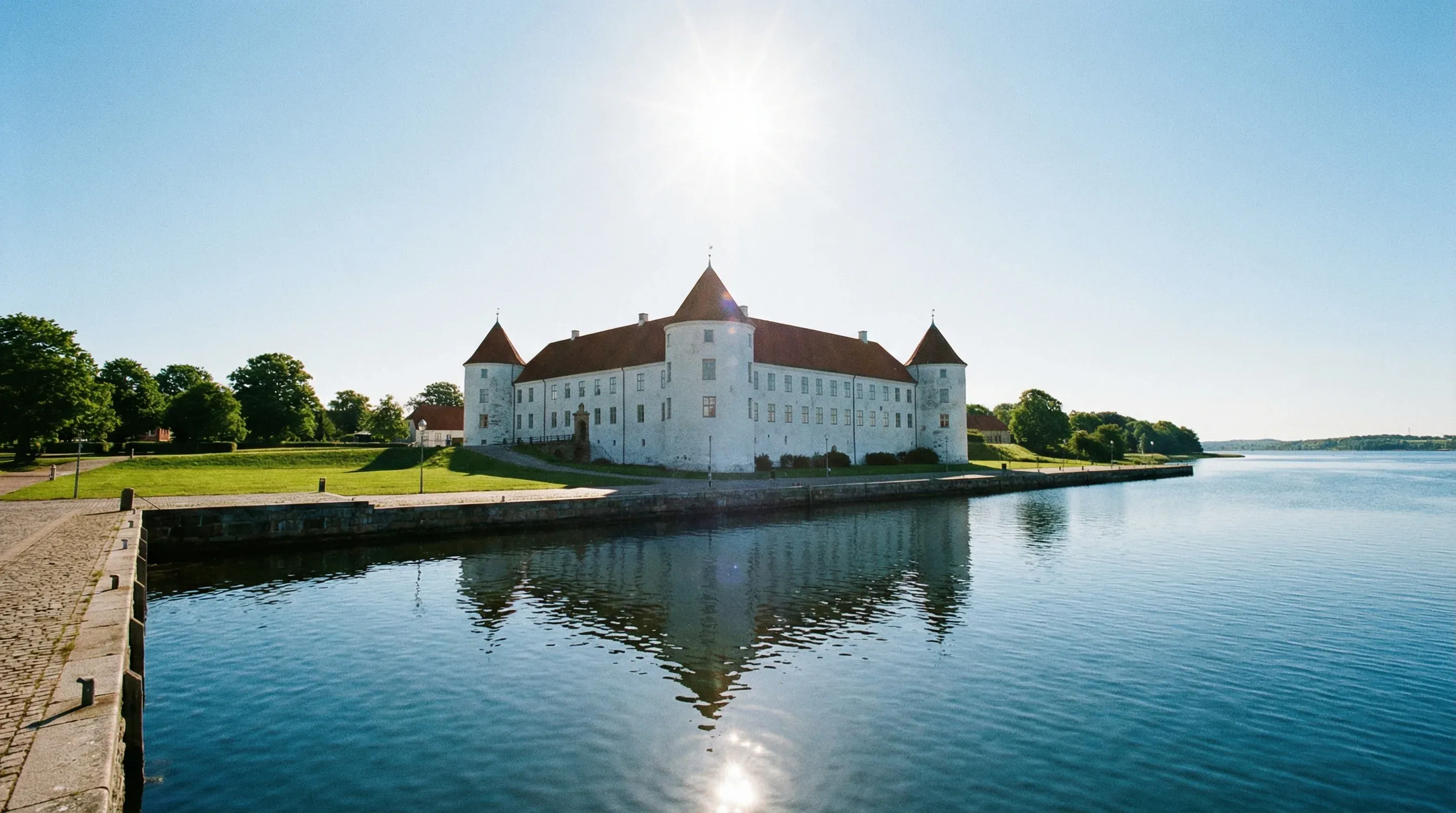

South Jutland (Sønderjylland)
Historic borderlands and epic cake tables 🇩🇰🇩🇪🍰
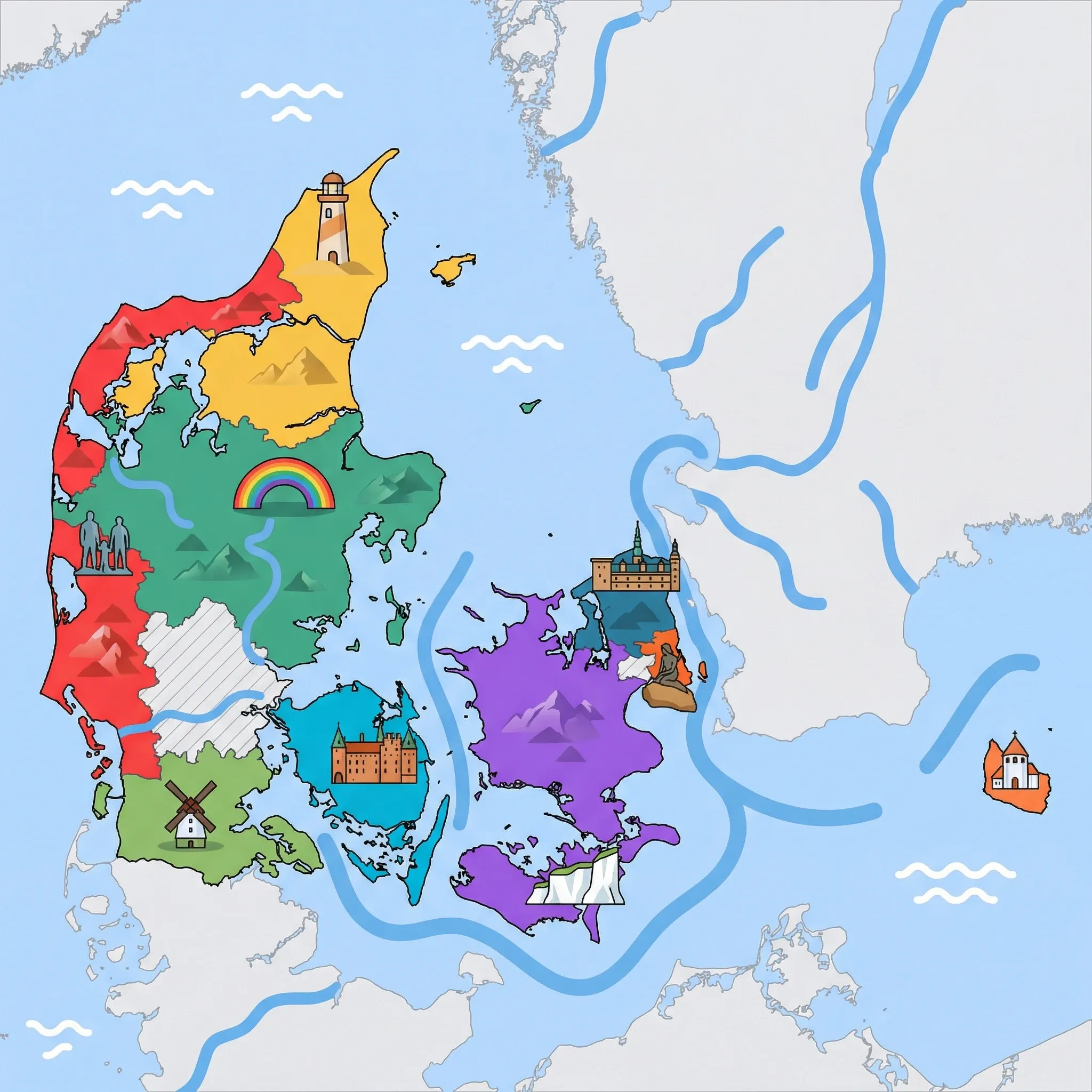
Click a region to explore
South Jutland is the historic gateway to Denmark. Having changed hands between Denmark and Germany throughout history, it has a rich, complex heritage that is distinct from the rest of the country. For families, this history is told in engaging, hands-on ways, particularly around the 1864 war sites. But it is not just about battles; the region boasts diverse nature, from the flat marshlands of the Wadden Sea in the west to the hilly, fjord-rich landscape of the east.
The island of Als, connected by bridges, is a hub for active families, hosting one of Denmark's best science parks. The region is also famous for its hospitality and food culture. The "Sønderjysk Kaffebord" (South Jutland Cake Table) is a bucket-list experience involving up to 21 different types of cakes—a sugar rush that kids will never forget. Whether you are hunting for oysters in the mudflats or marching like a 19th-century soldier, South Jutland offers meaningful experiences that connect nature, history, and fun.
Key Attractions
History comes alive at History Centre Dybbøl Banke. Here, families don't just look at exhibits; they can cast bullets, eat soldier's pancakes, and participate in drills. It is immersive education at its best. Nearby, the iconic Dybbøl Mølle (windmill) stands as a national symbol. On the island of Als, Universe Science Park is a fantastic destination where kids can lift a car using leverage, explore VR worlds, and learn about energy—it’s learning disguised as pure play.
For a quieter cultural experience, visit Christiansfeld UNESCO World Heritage Site. This town was built by the Moravian Brethren and is incredibly preserved; it is also famous for its honey cakes. In the west, the Wadden Sea National Park offers guided tours to see seals or the "Black Sun" (Sort Sol), where millions of starlings dance in the sky at sunset (spring/autumn). Sønderborg Castle offers a more traditional museum experience focusing on the border region's turbulent history.
Practical Advice
A car is highly recommended here to move between the east and west coasts. If visiting Universe Science Park, allow a full day. The "Black Sun" phenomenon is best seen with a guided tour to know exactly where the birds are roosting.
Food & Drink
Typical meal times: Lunch 12:00 pm to 1:30 pm. Dinner 6:00 pm to 8:00 pm.
Typical meal costs: Generally lower than Copenhagen. A good inn meal (Kro) costs DKK 120–180 (approx. $17–26 USD / €16–24 EUR). A full cake table experience costs around DKK 150–200 (approx. $22–29 USD / €20–27 EUR).
Dietary requirements: Traditional food is heavy on meat and dairy (pork, cream, butter). However, modern cafes in Sønderborg cater to all needs.
Signature dishes:
- Sønderjysk Kaffebord – A lavish spread of 7 soft cakes, 7 dry cakes, and 7 hard cakes. You must eat them in a specific order!
- Solæg (Sun Eggs) – Hard-boiled eggs pickled in brine, eaten with mustard, oil, and vinegar. You peel them, remove the yolk, fill the hole with condiments, put the yolk back, and eat it in one bite.
- Snysk – A summer stew of garden vegetables (beans, peas, carrots) in a white sauce, served with breaded pork and pickled beetroot.
Why this score?
The landscape consists mostly of flat marshlands and agricultural fields. Activities like walking the Gendarmstien are pleasant but lack any significant physical challenge or ruggedness.
Why this score?
Regional hospitals in Sønderborg and Aabenraa provide excellent healthcare and are accustomed to international visitors due to the German border. Emergency response times are fast and standards are consistently high.
Why this score?
Tourism here is primarily domestic and cross-border from Germany, focused on history and the Wadden Sea. It lacks the global name recognition of Copenhagen or Billund, making it a quieter region for non-European visitors.

South Jutland offers some of the best value in Denmark. Accommodation, especially camping and holiday centers, is reasonably priced. Cross-border shopping in Germany is common for locals to save money on beverages and snacks. A family meal can be found for DKK 400–600 (approx. $58–87 USD / €53–80 EUR).

Getting Here & Around
Getting Here
- Driving – The main E45 motorway connects directly from Germany (Hamburg is approx. 2 hours away).
- Train – InterCity trains run to Sønderborg and Fredericia. Tønder is connected by local train from Esbjerg.
- Airports – Billund Airport (BLL) is about 1-1.5 hours drive north. Sønderborg has a small airport (SGD) with flights from Copenhagen.
Getting Around
- Car – Essential for exploring the marshlands and crossing from coast to coast efficiently.
- Bicycle – Gendarmstien (The Gendarmes Path) is a popular hiking/biking coastal route along the border.
- Bus – Connects major towns, but rural service is limited.
Nearby Airports (1 airport)
Sonderborg
SGDSonderborg
View full flight map for Denmark →
Official Links

Packing List
You are on the German border; crossing for shopping or sightseeing is common, and random checks occur.
Essential if you plan to do a Wadden Sea walk or oyster safari in the mudflats.
The 'South Jutland Cake Table' is a serious eating challenge; arrive hungry!
Ticks (skovflåt) are common in Danish forests and tall grass; quick removal is important.
Summer days are very long with sunrise as early as 4:00 am, which can disrupt kids' sleep.
Essential for playgrounds and forest walks; Danish kids wear these over clothes to play outside in wet weather.
Many Danish beaches have pebbles, and harbor bath ladders can be slippery or have sharp barnacles.
Denmark is flat and often breezy, even on sunny summer days, so a windbreaker is more useful than a heavy coat.

Activities & Best Times

Hiking, wildlife, outdoor exploration, ecotourism
Features the UNESCO-listed Wadden Sea and the spectacular 'Black Sun' starling murmurations during spring and autumn. The Gendarmstien path offers a world-class coastal hiking experience through diverse natural ecosystems.

Urban tourism, museums, historical sites, architecture
Deeply authentic historical sites like Sønderborg Castle and the 1864 battlefield at Dybbøl Banke provide high-quality heritage experiences. Palace gardens in Gråsten and Augustenborg are at their peak in summer, while Tønder offers a renowned atmospheric Christmas season.

Beach resorts, marine activities: diving, snorkelling, kite surfing, wind surfing, sailing
Offers unique, world-class sandy beaches at Lakolk that allow for car access, though Northern European water temperatures restrict swimming to a brief summer window. The Wadden Sea provides exceptional opportunities for mudflat excursions and seal safaris.

Scenic drives, countryside tours, route-based travel
The region features segments of the scenic Margueritruten and the Wadden Sea Coastal Drive, passing through unique marsh landscapes and historic villages. Roads are excellent and routes are well-signposted for international travelers.

Sport tourism, fitness activities, active recreation
Well-maintained cycling routes like the Gendarmstien and Marsh Trail provide excellent infrastructure for active exploration. Universe Science Park integrates physical activity with discovery, though facilities are primarily seasonal.

Learning experiences, scientific sites, historical education
Gram Lergrav offers an internationally interesting paleontology experience where families can dig for fossils. This specialized activity is highly weather-dependent and operates primarily during the warmer months.

Attractions (18 total)



Public Holidays & Calendar Next 12 months
Public holidays, festivals, cultural celebrations, and seasonal natural phenomena coming up in South Jutland (Sønderjylland) over the next 12 months.
Loading holidays and events...

Travel Advisory
The majority of international agencies suggest that standard safety measures are sufficient for travel to Denmark. However, travelers should be aware of elevated security warnings from North American agencies regarding terrorism and localized gang activity.
Safety Topics
Traveller Advice (4 groups)

Maintain awareness in crowded areas and on public transportation to prevent falling victim to petty theft. Always carry travel documents when crossing internal European borders.
Those visiting remote areas in Greenland or the Faroe Islands must prepare for extreme weather conditions and recognize that medical and rescue infrastructure is extremely limited.

The social climate is highly progressive and the country is consistently ranked as one of the safest and most welcoming destinations for the community.

Female visitors should follow standard safety protocols, particularly when traveling alone at night in large metropolitan areas like Copenhagen.
Agency Summaries
No specific travel restrictions are in place, though visitors are encouraged to review security guidelines and prepare for standard European travel risks.
General safety risks are considered low, though visitors are advised to avoid protests and keep an eye on personal belongings in transit hubs.
Visitors should maintain standard safety awareness and ensure they have valid identification for movement within the Schengen area.
The safety environment is stable, though petty crime remains a factor in popular tourist areas and travelers should stay informed about the local terror threat level.
Officials recommend a heightened state of vigilance due to the threat of terrorist activities and incidents of gang-related violence in specific urban districts.
Travelers should remain alert to their surroundings because of persistent plans by extremist groups to target public and tourist locations.
Information is provided for general guidance only and does not constitute travel, safety, medical, or legal advice. Conditions may change. Users are responsible for independently verifying information before travel.