
West Coast & Wadden Sea (Vestkysten & Vadehavet)
Viking lands and the UNESCO Wadden Sea 🛶🌊
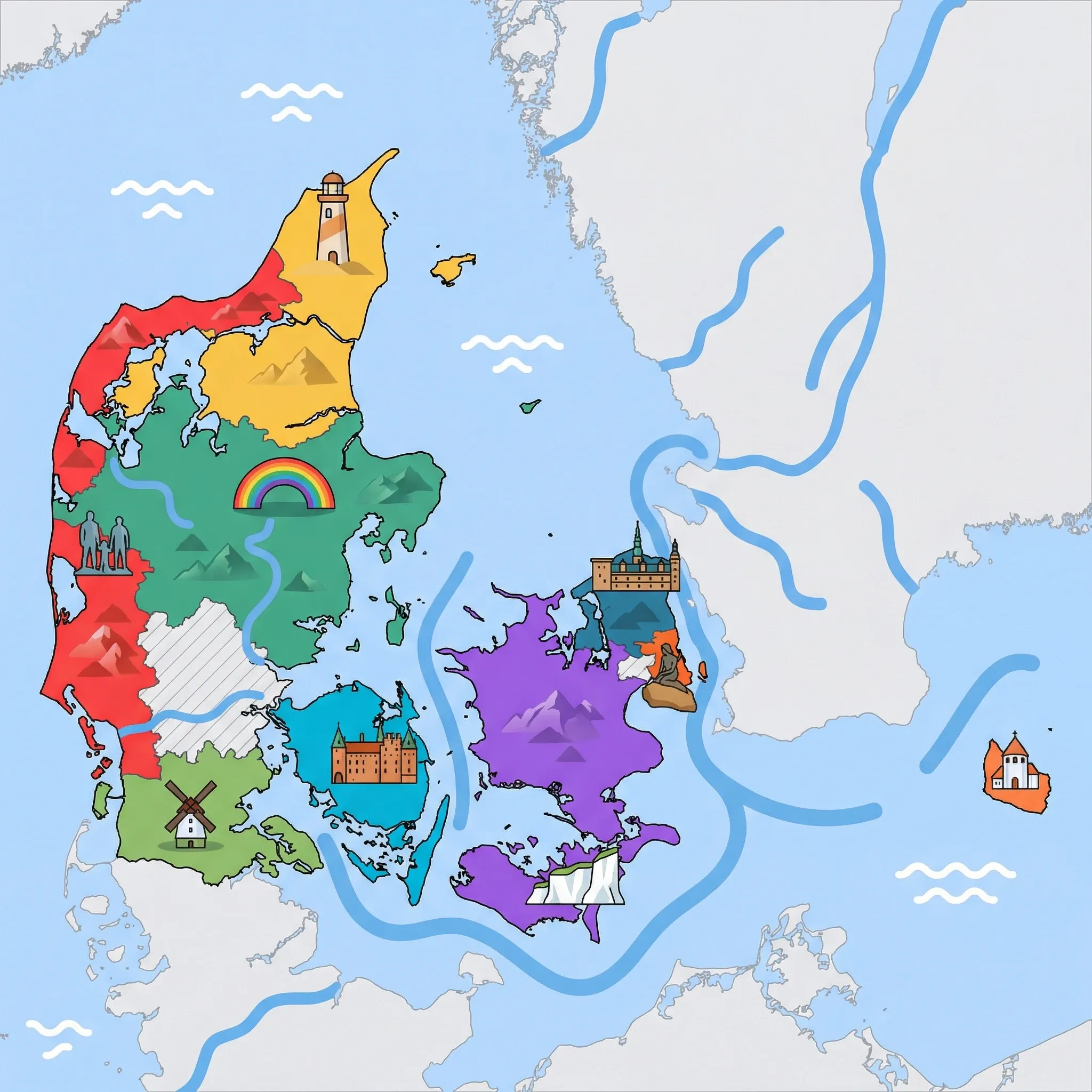
Click a region to explore
The West Coast and Wadden Sea region offers a nature experience unique in the world. Here, the rhythm of life is dictated by the tides. Twice a day, the sea retreats to expose kilometers of seabed, allowing families to walk on the ocean floor, hunt for oysters, and spot seals sunbathing on sandbanks. This dynamic landscape is the Wadden Sea National Park, a UNESCO World Heritage site. It is not a place for swimming in deep water, but for exploration, rubber boots, and horizon-gazing. The islands of Rømø and Fanø protect the coast and offer some of Europe's widest sandy beaches, where you can drive your car right to the water's edge or fly massive kites.
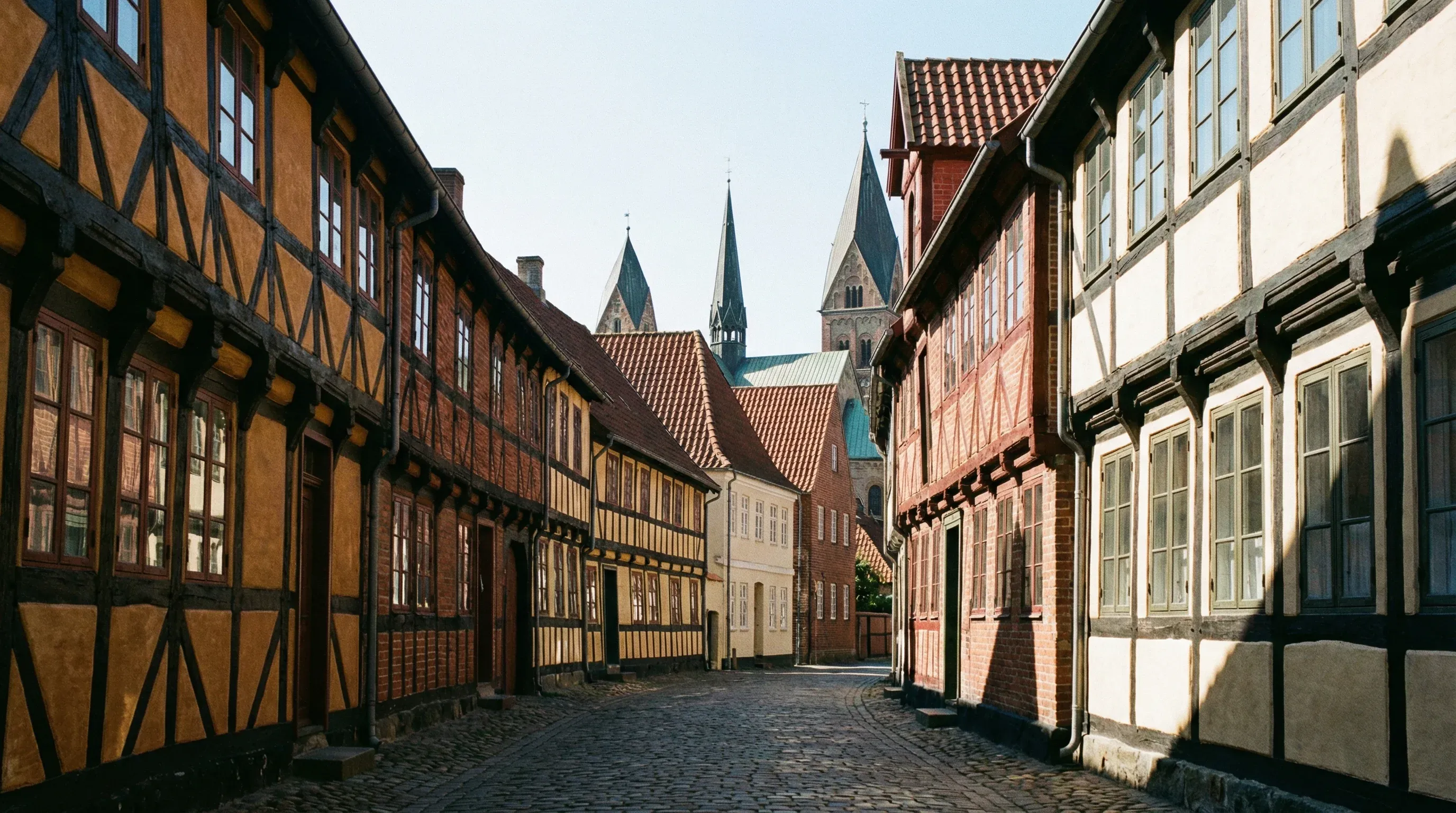
Inland from the sea lies Ribe Old Town, Denmark's oldest town. With its cobblestone streets, crooked half-timbered houses, and stork nests on chimneys, it looks exactly like a fairy tale. But unlike a museum, it is a living town. The history here is deep—this was the Viking's gateway to Europe. Museums and centers here don't just show history; they let kids live it, from archery to woodcarving. The combination of wild, raw nature and deep, accessible history makes this region incredibly grounding and educational for families.
Key Attractions
Start in Ribe Old Town. After walking the streets, visit the Ribe VikingeCenter (located a few km south). This is a reconstructed Viking village where costumed reenactors live and work. Kids can bake flatbread, shoot bows, and learn warrior skills—it is immersive and brilliant. In the town center, Ribe Cathedral offers a climb up the tower for views over the flat marshland.
To experience the nature, head to the Wadden Sea National Park center (Vadehavscentret) which offers architectural beauty and guided "Sea Explorer" tours. On the coast near Esbjerg, you cannot miss Men at Sea, four giant white statues gazing out at the ocean—a perfect photo op. Just north in Blåvand, the Tirpitz Museum is a hidden bunker museum designed by Bjarke Ingels (BIG). It turns a dark WWII history into a stunning, light-filled exploration of the coast's stories, including amber and hidden treasures. Finally, Lakolk Beach on Rømø is the place to drive your car onto the sand and fly a kite.
Practical Advice
Always check the tide tables ("Tidevandstabel") before walking out on the mudflats; the water comes back fast and fog can descend quickly. Guided tours are recommended for safety. Summer traffic to Rømø and Fanø ferries can be heavy on Saturdays.
Food & Drink
Typical meal times: Lunch 12:00 pm to 2:00 pm. Dinner 6:00 pm to 8:30 pm.
Typical meal costs: Moderate. A seafood lunch in a harbour town is DKK 150–200 (approx. $22–29 USD / €20–27 EUR). Hot dogs and ice cream are cheaper staples.
Dietary requirements: Seafood is king, but tourist towns like Ribe and Blåvand cater to all tastes (Italian, burgers, salads). Gluten-free bread is common in supermarkets.
Signature dishes:
- Bakskuld – Salted, dried, and smoked dab (fish), fried in butter and served with rye bread. A true regional specialty of Fanø and Esbjerg.
- Wadden Sea Oysters – You can pick them yourself (with a guide) in the winter/spring months. They are Pacific oysters and are invasive, so you are helping nature by eating them!
- Fanø Beer – The local brewery on Fanø makes excellent brews often used in local cooking.
Why this score?
The North Sea coast is the most 'wild' mainland environment, featuring mudflat hikes and seal safaris that are tide-dependent. The harsh winds and expansive sands provide a higher level of physical engagement than the interior regions.
Why this score?
Esbjerg provides a solid medical anchor for the region with a large central hospital. In more remote coastal vacation areas, seasonal clinics exist, though serious issues require transport to the regional centers.
Why this score?
The Wadden Sea's UNESCO status and the massive beaches of Blåvand attract large numbers of European tourists, especially from Germany. It is a major hub for nature-based tourism but remains less known outside of Northern Europe.

Holiday home rentals are the norm here. Prices vary wildly by season; a week in August can cost DKK 8,000+ ($1,150 USD / €1,070 EUR), while May is half that. Food prices are standard Danish levels. Activities like hiking and beach days are free.

Getting Here & Around
Getting Here
- Airports – Billund Airport (BLL) is the closest major hub (approx. 1 hour drive). Esbjerg Airport (EBJ) has limited connections.
- Driving – Esbjerg is the end point of the E20 motorway from Copenhagen. Driving from the German border to Ribe takes just 45 minutes.
- Train – Trains run to Esbjerg and Ribe. The station in Ribe is within walking distance of the old town.
Getting Around
- Car – Essential for freedom. You need a car to drive onto the beaches at Rømø.
- Ferry – The Fanø ferry (Fanølinjen) takes 12 minutes from Esbjerg. The ferry to Rømø (Syltferry) connects to the German island of Sylt.
- Tractor Bus – The "Mandøbussen" is a tractor-pulled bus that drives across the seabed to the island of Mandø at low tide.
Nearby Airports (1 airport)
Esbjerg
EBJEsbjerg
View full flight map for Denmark →
Official Links

Packing List
Absolutely mandatory for walking on the Wadden Sea mudflats; sneakers will get ruined.
The North Sea wind is constant and cool, even in July.
If visiting in oyster season (months with 'r'), you can pick bucketloads for free.
Rømø and Fanø are world-famous kite spots; don't just watch, join in!
Ticks (skovflåt) are common in Danish forests and tall grass; quick removal is important.
Summer days are very long with sunrise as early as 4:00 am, which can disrupt kids' sleep.
Essential for playgrounds and forest walks; Danish kids wear these over clothes to play outside in wet weather.
Many Danish beaches have pebbles, and harbor bath ladders can be slippery or have sharp barnacles.
Denmark is flat and often breezy, even on sunny summer days, so a windbreaker is more useful than a heavy coat.

Activities & Best Times

Hiking, wildlife, outdoor exploration, ecotourism
Home to the Wadden Sea UNESCO World Heritage site, offering world-class tidal ecosystems, seal safaris, and unique mudflat trekking. Peak season aligns with mild weather and critical bird migration periods.

Urban tourism, museums, historical sites, architecture
Ribe offers an exceptionally authentic medieval experience as Denmark's oldest town, complemented by Esbjerg's modern art scene. Summer provides the best vibe, while December is peak for traditional Scandinavian Christmas markets.

Sport tourism, fitness activities, active recreation
Features premier cycling routes like the North Sea Cycle Route and excellent water sports infrastructure in Hvide Sande. Optimal conditions for cycling and outdoor activity parks are found between May and September.

Beach resorts, marine activities: diving, snorkelling, kite surfing, wind surfing, sailing
Features expansive, unique beaches like Lakolk where driving on the sand is permitted, though the North Sea remains cool for swimming. Best visited during the warmest summer months for coastal activities and windsurfing.

Learning experiences, scientific sites, historical education
The Wadden Sea Centre and Fisheries and Maritime Museum provide sophisticated, purpose-built learning environments for families. These facilities are best enjoyed when combined with the active ecosystem exploration possible in warmer months.

Scenic drives, countryside tours, route-based travel
The North Sea Road (Route 181) offers a classic scenic drive through dunes and coastal villages with high-quality infrastructure. Best visibility and daylight occur from late spring through early autumn.

Amusement parks, family entertainment venues
Strong selection of high-quality indoor water parks and regional heritage parks like Varde Miniby. Peak tourism occurs in summer, with shoulder peaks during February and October school holidays for indoor aquatic centers.

Events, celebrations, seasonal attractions
Host to the spectacular 'Black Sun' starling murmurations in spring and autumn, a bucket-list event for nature lovers. The Fanø Kite Festival in June adds significant but brief international appeal.

Attractions (18 total)



Public Holidays & Calendar Next 12 months
Public holidays, festivals, cultural celebrations, and seasonal natural phenomena coming up in West Coast & Wadden Sea (Vestkysten & Vadehavet) over the next 12 months.
Loading holidays and events...

Travel Advisory
The majority of international agencies suggest that standard safety measures are sufficient for travel to Denmark. However, travelers should be aware of elevated security warnings from North American agencies regarding terrorism and localized gang activity.
Safety Topics
Traveller Advice (4 groups)

Maintain awareness in crowded areas and on public transportation to prevent falling victim to petty theft. Always carry travel documents when crossing internal European borders.

Those visiting remote areas in Greenland or the Faroe Islands must prepare for extreme weather conditions and recognize that medical and rescue infrastructure is extremely limited.

The social climate is highly progressive and the country is consistently ranked as one of the safest and most welcoming destinations for the community.

Female visitors should follow standard safety protocols, particularly when traveling alone at night in large metropolitan areas like Copenhagen.
Agency Summaries
No specific travel restrictions are in place, though visitors are encouraged to review security guidelines and prepare for standard European travel risks.
General safety risks are considered low, though visitors are advised to avoid protests and keep an eye on personal belongings in transit hubs.
Visitors should maintain standard safety awareness and ensure they have valid identification for movement within the Schengen area.
The safety environment is stable, though petty crime remains a factor in popular tourist areas and travelers should stay informed about the local terror threat level.
Officials recommend a heightened state of vigilance due to the threat of terrorist activities and incidents of gang-related violence in specific urban districts.
Travelers should remain alert to their surroundings because of persistent plans by extremist groups to target public and tourist locations.
Information is provided for general guidance only and does not constitute travel, safety, medical, or legal advice. Conditions may change. Users are responsible for independently verifying information before travel.