

Overview
Dominica is not your typical Caribbean destination. You won't find sprawling all-inclusive resorts or endless miles of white powder sand here. Instead, Dominica offers something far more exciting for adventurous families: a Jurassic-like landscape of towering volcanoes, boiling lakes, and thick rainforests that feels entirely untouched. Known as the "Nature Island", it appeals to families who prefer hiking boots to flip-flops and river canyoning to sunloungers. The island's geography is dramatic-roads wind sharply through steep green mountains, and the air is filled with the sound of crashing waterfalls and tropical birds.
For children, Dominica is a giant open-air science classroom. They can swim through volcanic gorges, watch sea turtles nest on black volcanic sand, and learn about indigenous culture in the Kalinago Territory. The vibe is laid-back and unpretentious; locals are welcoming, and the lack of mass tourism means you often have natural wonders all to yourselves. While the terrain can be rugged, the island offers plenty of soft adventures suitable for active kids, making it a memorable alternative to the standard beach holiday.
Key Attractions
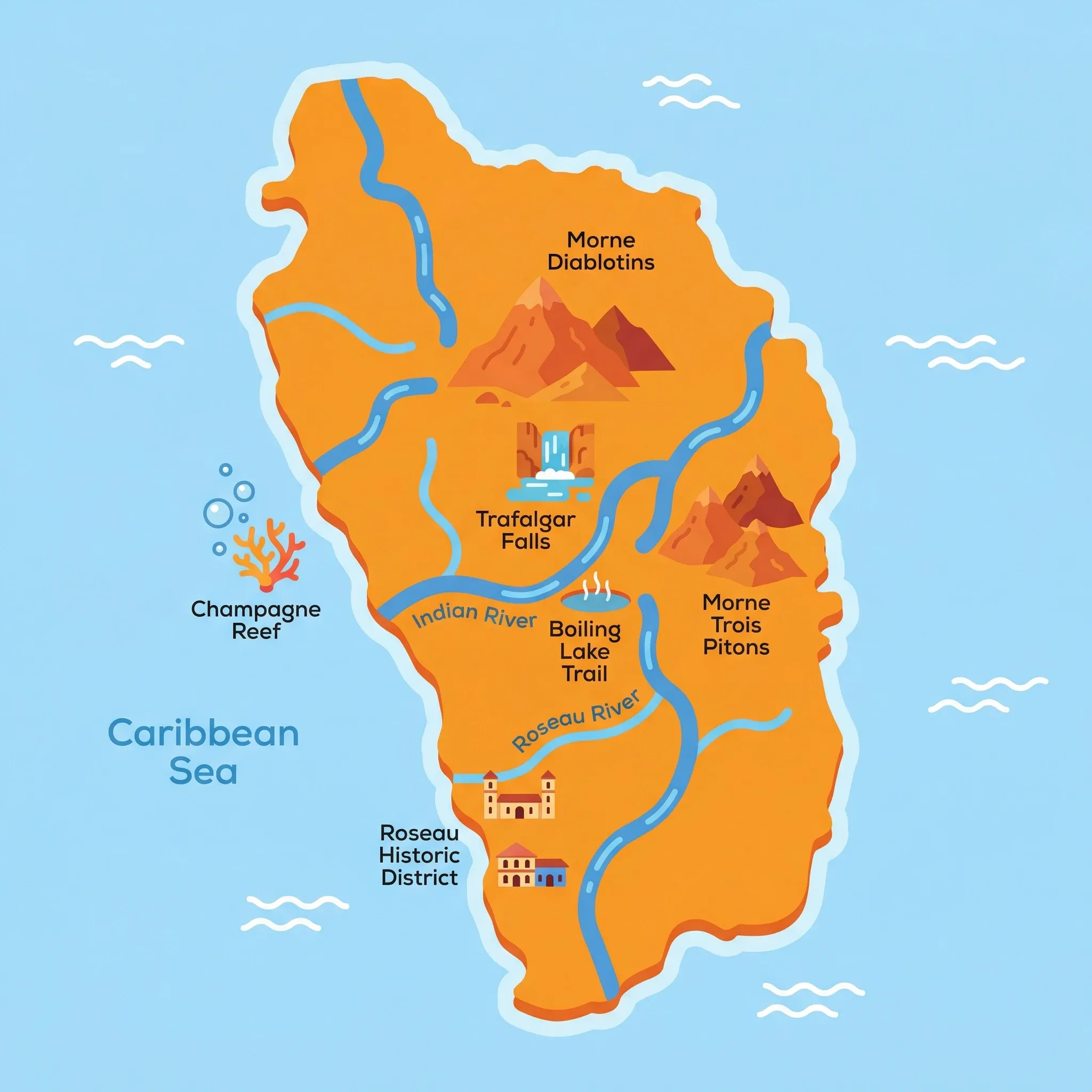
The island's crown jewel is Morne Trois Pitons National Park, a UNESCO World Heritage site that dominates the southern interior. While the famous Boiling Lake hike is too strenuous for most young children, the park is home to the Emerald Pool, a magical grotto fed by a waterfall that is just a short, easy walk from the road-perfect for a family swim. Nearby, families can swim up the narrow, high-walled Titou Gorge, a thrilling experience that requires life jackets and feels like exploring a secret cave (and was a filming location for Pirates of the Caribbean).
In the capital, Roseau, the Dominica Botanic Gardens offers a gentle change of pace. It is a great spot for a picnic and spotting the endemic Sisserou parrot in the aviary. A favourite photo opportunity for kids is the "crushed bus"-a school bus that was flattened by a massive Baobab tree during Hurricane David in 1979 and remains stuck there today. It serves as a fascinating, tangible lesson in the power of nature.
For underwater adventures, Scotts Head at the island's southern tip provides some of the best snorkeling in the region. The peninsula separates the calm Caribbean Sea from the rougher Atlantic Ocean. On the Caribbean side, the water is shallow and crystal clear, allowing children to see vibrant coral and fish just metres from the shore. Nearby at Champagne Reef, volcanic vents release streams of bubbles from the sea floor, giving kids the unique sensation of swimming in a giant glass of champagne.
Practical Advice
Best time to visit: The dry season runs from December to May, which is ideal for hiking. July to October is hurricane season and can be very wet. Logistics: English is the official language. The currency is the East Caribbean Dollar (XCD), though USD is widely accepted. Transport: The roads are infamous for being narrow, steep, and incredibly winding. If your family suffers from car sickness, prepare accordingly.
Food & Drink
Typical meal times: Lunch is usually served from 12:00 pm to 2:00 pm, and dinner from 6:00 pm to 9:00 pm. Many places close early in sleepy villages.
Typical meal costs: Lunch typically costs $20–40 XCD (approx. $7–15 USD / €7–14 EUR). Dinner at a sit-down restaurant ranges from $60–120 XCD (approx. $22–45 USD / €20–42 EUR).
Dietary requirements: Dominica is excellent for vegetarians and vegans due to the strong Rastafarian influence. "Ital" food (strictly natural, often vegan) is widely available and delicious.
Family-friendly dining: Most dining is casual and open-air. Highchairs are rare outside major hotels, but staff are generally very accommodating to children.
Signature dishes:
- Callaloo – A thick, creamy soup made from dasheen leaves (similar to spinach), coconut milk, and sometimes crab. It is the national dish and very kid-friendly.
- Fig and Saltfish – Not sweet figs, but green bananas (called figs locally) boiled and served with stewed salted cod. A breakfast staple.
- Braff – A hearty, clear fish broth loaded with root vegetables (provisions) and dumplings.
- Tannia Datons – Sweet treats made from tannia root, sugar, and spices, often found at local markets.
Safety
Dominica is generally very safe with low crime rates. The biggest risks are environmental: flash floods in rivers during heavy rain and slippery hiking trails. Always check weather conditions before canyoning or hiking. The roads are challenging; if you rent a car, drive slowly and use your horn on blind corners.

Dominica is moderately priced. A family of four can expect to spend around $550–800 XCD (approx. $200–300 USD / €185–275 EUR) per day. Local street food and minibuses are cheap, but accommodation, imported goods, and guided adventure tours (like canyoning or whale watching) can push costs higher.
Age Suitability




Did you know? Dominica welcomes approximately 61,000 international visitors per year. Most visitors come from Americas.
Why this score?
Earning its reputation as the Nature Island, Dominica offers a significantly more rugged experience than its neighbors, highlighted by the 115-mile Waitukubuli National Trail and the strenuous trek to the Boiling Lake. The island's vertical volcanic topography, dense rainforests, and world-class canyoning opportunities provide a high level of physical adventure for families willing to move beyond traditional resort environments.
Why this score?
Medical infrastructure is quite limited, centered primarily around the Dominica China Friendship Hospital in Roseau which offers basic to moderate care levels. For any serious specialized treatment or major emergencies, patients are frequently stabilized and then medically evacuated to more advanced facilities in Martinique, Guadeloupe, or the United States.
Why this score?
With only 61,000 annual inbound tourists and a very limited inventory of 1,386 hotel beds, Dominica is one of the least visited nations in the Caribbean. While it receives seasonal cruise ship traffic at Roseau, it remains a niche destination for eco-travelers rather than a mainstream global hotspot, comparable in volume to remote regions in South America or Africa.
Dominica is moderately priced—more affordable than luxury destinations like St. Barts but more expensive than parts of Central America due to import costs. Street food is great value, while supermarket imports are pricey. A family of four can expect to pay XCD 200–350 (approx. $75–130 USD / €70–120 EUR) per night for a decent guesthouse or cottage. Entry fees to natural sites are low, typically roughly XCD 13–27 (approx. $5–10 USD / €4.50–9 EUR) per site.

Getting There & Around
Getting There
- By Air – Most visitors fly into Douglas-Charles Airport (DOM). There are few direct long-haul flights; most connections come via Puerto Rico (SJU), Barbados (BGI), or Antigua (ANU). American Airlines offers a direct flight from Miami (MIA).
- By Sea – The L'Express des Iles ferry service connects Dominica with Guadeloupe, Martinique, and Saint Lucia. It's a reliable and scenic option, though the crossing can be choppy.
- Entry Requirements – Visitors must complete the Online Immigration & Customs Form before arrival. US, UK, and EU citizens generally do not need a visa for stays up to 3-6 months. Check your government website for the latest visa requirements, or use the IATA Travel Centre entry-requirements checker.
Getting Around
- Minibuses – The most authentic way to travel. Look for registration plates starting with 'H'. Fares are low, typically $3–10 XCD (approx. $1–4 USD / €1–3.50 EUR) depending on distance. They are fun for kids but can be crowded and fast.
- Car Hire – Gives you the most freedom to explore Dominica. You need to buy a temporary local driving permit (approx. $30 XCD / $11 USD). Be warned: roads are steep, narrow, and winding with deep gutters. 4WD is recommended.
- Taxis – Available at airports and in Roseau. Rates are fixed by law but can be expensive for long distances. A trip from Douglas-Charles Airport to Roseau takes over an hour and costs around $215 XCD (approx. $80 USD).

Packing List
The roads are famously winding (one stretch has 365 bends); essential for sensitive kids.
Crucial for rocky beaches like Champagne Reef and walking through riverbeds.
Protects electronics during sudden rainforest showers, boat trips, or canyoning tours.
Strictly required to protect the pristine coral ecosystems while snorkeling.
It's called the Nature Island for a reason; rain showers are frequent and sudden.

Activities & Best Times

Adventure & Nature
ExcellentHiking, wildlife, outdoor exploration, ecotourism
Known as the 'Nature Island' of the Caribbean, Dominica offers world-class volcanic trekking, including the Boiling Lake and the 115-mile Waitukubuli National Trail. Peak visitation occurs during the drier months when hiking trails are safer and less muddy, while the peak hurricane season poses genuine risks to wilderness exploration.

Sports & Active
Very GoodSport tourism, fitness activities, active recreation
The island is a premier destination for specialized sports like canyoning through rainforest gorges and diving at the unique Champagne Reef. Conditions are optimal from December to May; August through October are avoided due to potential for storm-surge-related sea conditions and heavy rainfall impacting outdoor activity centers.

Beach & Sea
GoodBeach resorts, marine activities: diving, snorkelling, kite surfing, wind surfing, sailing
Dominica features distinctive volcanic black-sand beaches and exceptional snorkeling at Scotts Head and Champagne Reef rather than traditional white-sand resorts. The dry season provides the best underwater visibility and calmest waters, whereas peak hurricane months often bring rougher swells and lower visibility.

City & Cultural
GoodUrban tourism, museums, historical sites, architecture
Roseau offers an authentic, non-commercialized Caribbean atmosphere with historic architecture and the unique Kalinago Territory showcasing indigenous heritage. Tourism centers on the winter months when the weather is comfortable for walking tours, while late summer heat and humidity can be oppressive for urban exploration.

Relaxation & Wellness
GoodSpa retreats, wellness centers, peaceful getaways
Natural volcanic sulphur springs and thermal baths like Screw's and Ti Kwen Glo Cho provide a rustic and authentic wellness experience. While the springs are accessible year-round, the peak season aligns with drier weather which makes the outdoor jungle settings more enjoyable and accessible.

Festivals & Seasonal
MarginalEvents, celebrations, seasonal attractions
The World Creole Music Festival in October is an internationally recognized celebration of heritage, and Carnival (Mas Domnik) in February is a major regional event. These specific months are the primary draws for cultural event seekers, with the rest of the year offering very little in the way of destination-level festivals.

Road Trips & Scenic
MarginalScenic drives, countryside tours, route-based travel
Scenic drives like the E.O. Leblanc Highway offer dramatic coastal and mountain views, though the terrain is challenging for less experienced drivers. Travel is best in the dry season as heavy tropical rains from August to October can lead to localized landslides and difficult driving conditions on mountain passes.




Public Holidays & Calendar Next 12 months
Public holidays, festivals, cultural celebrations, and seasonal natural phenomena coming up in Dominica over the next 12 months.
Loading holidays and events...

Travel Advisory
All six major agencies agree that Dominica is a safe destination where standard travel safety precautions are sufficient. No elevated security warnings are currently in place for the country.
Safety Topics
Traveller Advice (3 groups)

Practice standard safety measures, especially after dark. Secure your accommodation and avoid carrying excessive valuables. Monitor local weather during the hurricane season.

Local attitudes are generally conservative. Public displays of affection may attract negative attention, and some same-sex acts are technically illegal.

Exercise vigilance when walking alone, particularly in unpopulated areas or on beaches after dark. Be cautious when interacting with strangers.
Agency Summaries
Travellers should maintain standard safety awareness. While generally safe, petty crime like theft and pickpocketing occurs, and more serious incidents like robberies and assaults have been reported near tourist sites. Risk increases during the Carnival and World Creole Music Festival periods.
New Zealand does not have a specific warning for the country but advises standard security awareness. Key concerns include limited local medical infrastructure and health risks from mosquito-borne diseases like Zika and Dengue.
Ireland recommends that its citizens follow local authorities' guidance and stay informed via local media. Consular services are limited as there is no local embassy; assistance is handled via Washington, D.C.
Australia advises travellers to use common sense and follow standard safety practices. Visitors should monitor local developments and be aware that consular assistance is provided through the High Commission in Trinidad and Tobago.
Most visits are trouble-free, but visitors should be alert to crime, especially in isolated areas or on yachts. While there is no recent history of terrorism, a global threat exists. Local roads can be challenging due to poor conditions and lack of signage. Social attitudes towards the LGBTQ+ community remain conservative.
The United States suggests visitors practice standard safety measures while in the country. It notes that the tourism industry is not consistently regulated, meaning safety inspections for equipment and facilities may not be regular.
Information is provided for general guidance only and does not constitute travel, safety, medical, or legal advice. Conditions may change. Users are responsible for independently verifying information before travel.