

Overview
The Dominican Republic is often reduced to its glossy resort brochures, but for families willing to explore, it offers a depth of culture and geography unmatched in the Caribbean. Sharing the island of Hispaniola, it boasts the region's highest peak and its lowest point, creating a landscape that shifts from pine forests and waterfalls to desert dunes and turquoise coastlines. The Dominican people are famously warm and welcoming to children, and music-specifically merengue and bachata-is the heartbeat of daily life.
While the all-inclusive resorts of Punta Cana & East provide an easy, relaxing base for families, the country's true magic lies in its diversity. You can spend the morning exploring the cobblestone streets of the Zona Colonial where Christopher Columbus's son once lived, and the afternoon swimming in the crystalline cenotes of Los Tres Ojos National Park. Whether you are ziplining through the jungle canopy or building sandcastles on a remote cay, the "DR" delivers high-energy adventure alongside Caribbean relaxation.
Key Attractions
For a perfect mix of history and nature, start in Santo Domingo at the Zona Colonial. This UNESCO World Heritage site is pedestrian-friendly and packed with history; kids will be fascinated by the Alcázar de Colón, a palace that looks like a fortress, and the imposing Fortaleza Ozama. Just a short drive away, Los Tres Ojos National Park offers an easy, magical descent into open-air limestone caves with three brilliantly blue underground lakes that feel like a lost world.
If you are based in the southeast, a catamaran day trip to Saona Island is essential. It is famous for its natural pool-a shallow sandbar far from shore where children can stand in waist-deep turquoise water and see giant starfish (remember: look but don't touch!). For active families visiting the Samaná Peninsula, a trek to Salto El Limón is an unforgettable adventure; you can hike or ride horses through the jungle to reach a stunning 52-metre waterfall with a swimming hole at the bottom.
On the north coast, Cabarete Beach offers a completely different vibe, known as the kitesurfing capital of the Caribbean. It’s perfect for active teens who want to try water sports, while younger kids can enjoy the calmer waters of Playa Sosúa nearby. For a history lesson with a view, the Fortaleza San Felipe in Puerto Plata protects the harbour and offers plenty of cannons and ramparts for children to explore.
Practical Advice
Best time to visit: December to April offers the best weather with lower humidity. Hurricane season runs June to November, though storms are occasional. Entry rules: The "E-Ticket" is mandatory for entry and exit; one digital form covers a family of up to 7 people and must be filled out before travel. Health: Tap water is not safe to drink; stick to bottled water for drinking and brushing teeth. Mosquitoes can carry dengue, so rigorous repellent use is necessary.
Food & Drink
Typical meal times: Lunch is the main meal, typically served from 12:00 pm to 2:00 pm. Dinner is lighter and eaten later, from 7:00 pm to 9:00 pm.
Typical meal costs: 300–900 DOP (approx. $5–15 USD / €4.50–14 EUR) for local comedores; 1,500–3,000 DOP (approx. $25–50 USD / €23–46 EUR) for mid-range restaurant meals.
Dietary requirements: Rice, beans, and tropical fruit are staples, making gluten-free/vegetarian dining manageable. However, vegan options can be limited outside major tourist hubs and resorts. Always clarify "sin carne" (without meat) clearly.
Family-friendly dining: Dominicans love children, and kids are welcome everywhere. Most restaurants offer simple options like fried chicken (pica pollo), rice, and fries.
Signature dishes:
- La Bandera – The national lunch dish meaning "The Flag," consisting of white rice, stewed red beans, and meat (usually chicken or beef).
- Mangú – Boiled and mashed plantains topped with pickled red onions, traditionally eaten for breakfast.
- Sancocho – A rich, hearty stew made with up to seven types of meat and root vegetables, often served on special occasions.
- Pescado Frito – Whole fried fish, usually red snapper, served beachside with tostones (fried plantains).
Safety
Exercise increased caution due to crime. Resort areas (Punta Cana, La Romana) are heavily policed by the specialized tourist police (CESTUR) and are generally safe. However, urban areas like Santo Domingo require vigilance against "drive-by" theft from motorbikes; avoid wearing expensive jewellery and keep phones out of sight. Driving can be chaotic and hazardous due to aggressive local habits; avoid driving at night. The border area with Haiti should be strictly avoided.

Resort packages can be expensive, but independent travel is affordable. A family of four can expect to spend around 12,000–18,000 DOP (approx. $200–300 USD / €185–280 EUR) per day including mid-range accommodation, meals, and activities. Local transport and street food are very cheap.
Age Suitability





Did you know? Dominican Republic welcomes approximately 8.5 million international visitors per year. Most visitors come from Americas.

Explore Regions
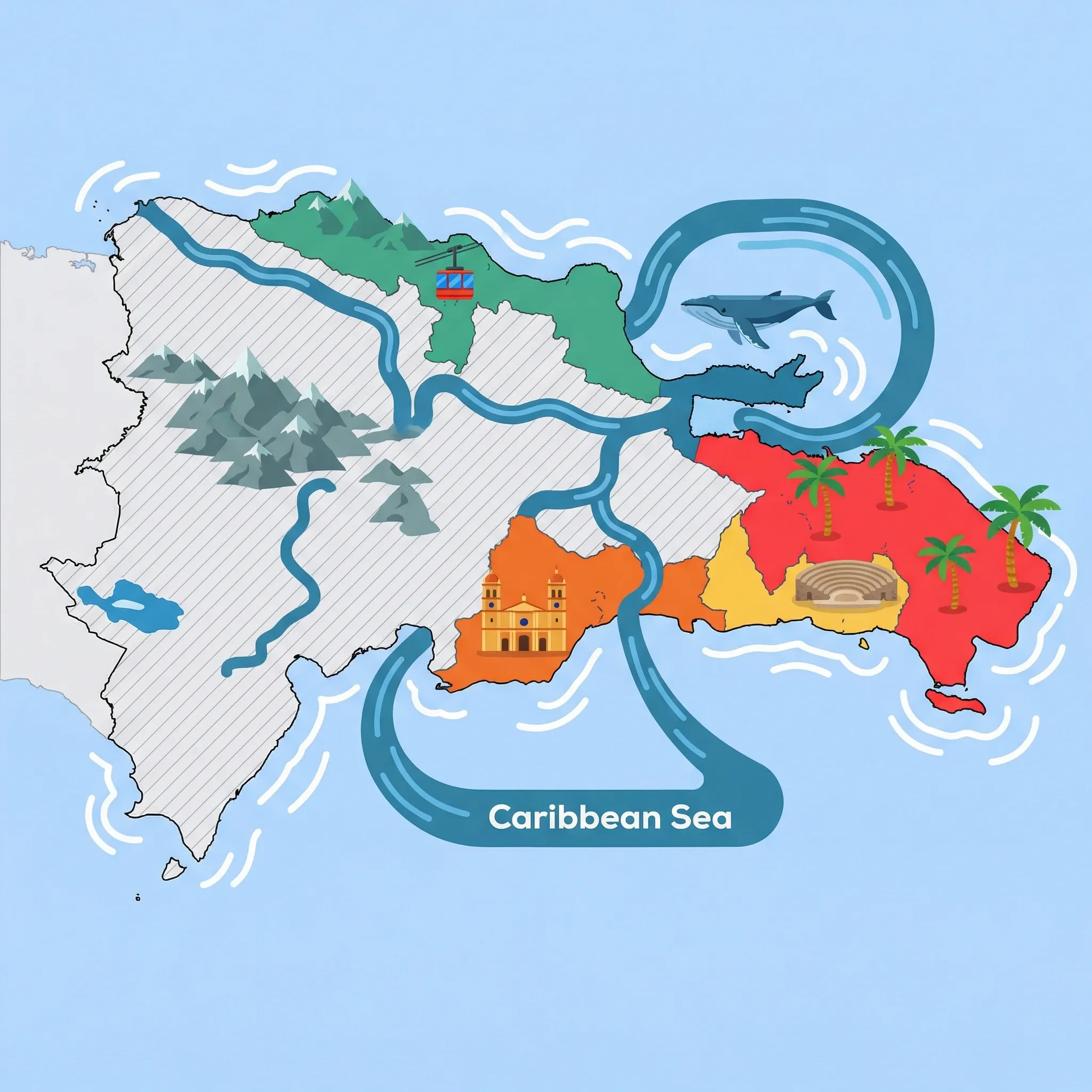
5 Regions
La Romana & Southeast
Caribbean calm, luxury living, and island adventures 🏝️
Puerto Plata & North Coast
Where golden amber sands meet Atlantic adventure 🪁
Punta Cana & East
Endless white beaches and family fun in the sun 🌴
Samaná Peninsula
Wild nature, whales, and hidden waterfalls 🐋
Santo Domingo
The first city of the Americas 🏛️
Click on a region marker to explore details. Use the dropdown to color regions by activity suitability.

Getting There & Around
Getting There
- By Air – Punta Cana International Airport (PUJ) is the main leisure gateway, serving Punta Cana & East with direct flights from the US, Canada, and Europe. Las Américas (SDQ) serves Santo Domingo, while Gregorio Luperón (POP) serves Puerto Plata & North Coast.
- Entry Requirements – Most visitors (including US, UK, and EU citizens) do not need a visa for tourist stays up to 30 days. However, ALL travelers must complete the digital "E-Ticket" form for entry and exit. One form covers a family of up to 7 people. Check your government website for the latest visa requirements, or use the IATA Travel Centre entry-requirements checker.
- By Sea – Cruise ships frequently dock at Amber Cove (Puerto Plata), La Romana, and Samaná.
Getting Around
- Private Transfers – The safest and most stress-free option for families, especially for airport-to-resort travel. Pre-book reputable tourist vans (transporte turístico) to avoid haggling.
- Intercity Buses – Metro Tours and Caribe Tours offer reliable, air-conditioned, and comfortable coach services between major cities like Santo Domingo and Puerto Plata & North Coast. They are safe and very affordable.
- Taxis & Uber – Uber operates in Santo Domingo, Santiago, and Puerto Plata and is generally safer and cheaper than street taxis. In resort areas, stick to official hotel taxis with fixed rates.
- Car Hire – Available but recommended only for confident drivers due to chaotic traffic, aggressive driving habits, and poor road conditions in rural areas. Avoid night driving entirely.

Packing List
Sharp coral and sea urchins are common at many beaches; essential for protecting small feet.
Mandatory for some marine excursions like Saona Island to protect delicate coral ecosystems.
Plastic waste is an issue and drinks get warm instantly in the humidity; keeps water cold all day.
Dengue is a risk; wipes are easier to apply to squirming children than sprays and easier to pack.
Voltage fluctuations are frequent; protects expensive tablets and phones while charging.
Essential for boat trips to Saona or waterfalls where everything gets wet.

Activities & Best Times

Adventure & Nature
Very GoodHiking, wildlife, outdoor exploration, ecotourism
Home to major ecological reserves and adventure parks like Scape Park at Cap Cana, offering cenote exploration and jungle immersion. Drier winter and spring months provide ideal temperatures and trail conditions for outdoor exploration.
Home to the exceptional Damajagua Waterfalls and Mount Isabel de Torres, providing high-quality tropical exploration. Peak season occurs during drier months to ensure safe canyoning and clear hiking trails, avoiding the significant mud and flood risks of the wet seasons.
Features unique natural sites like Los Tres Ojos limestone caves and a significant national zoo, though these are more suburban than wild. Peak visitation aligns with the dry season to ensure trail accessibility and clear waters in the cenotes.

City & Cultural
Very GoodUrban tourism, museums, historical sites, architecture
Boasts significant colonial heritage, including the first European settlement at La Isabela and the San Felipe fortress. The city is best explored in the cooler winter months, while the peak hurricane window in autumn poses a risk to travel plans.
Home to the UNESCO-listed Zona Colonial, featuring the Americas' oldest cathedral and fortress, Santo Domingo offers a rich heritage experience. The dry winter months provide comfortable walking weather, while late summer carries peak hurricane risks and intense humidity.
The region offers a sophisticated mix of local Taino history and the unique French-influenced atmosphere of Las Terrenas. Best experienced during the cooler, drier months when walking the Pueblo de los Pescadores and historic sites is most comfortable.

Sports & Active
Very GoodSport tourism, fitness activities, active recreation
Excellent infrastructure for zip-lining, hiking trails at Padre Nuestro, and coastal trekking routes between Macao and Uvero Alto. The cooler, drier winter months allow for active sports without the extreme humidity of the hurricane season.
Renowned for active pursuits including canyoning at 27 Charcos and mountain biking in El Choco. Optimal conditions occur during dry spells when water levels are safe for river activities and mountain trails are most accessible.
The Mirador del Sur park and local MTB trails provide quality infrastructure for cycling and running within the city. Activity is best enjoyed in the cooler, dryer mornings of the winter months to avoid tropical heat exhaustion.

Beach & Sea
GoodBeach resorts, marine activities: diving, snorkelling, kite surfing, wind surfing, sailing
Features iconic Caribbean beaches like Bavaro and Macao with world-class resort infrastructure and crystal-clear waters. Peak season avoids the humidity and sargassum seaweed peaks typical of the late summer and early autumn hurricane season.
Features internationally famous wind-sport hubs like Cabarete and scenic bays in Sosúa. Peak conditions align with winter sun-seekers and optimal summer trade winds, while late autumn is avoided due to high rainfall and hurricane risk.
Boca Chica offers shallow, turquoise waters suitable for families, while the Malecon provides a coastal urban atmosphere. Conditions are most predictable during the dry season, with late summer often affected by seaweed and storm surges.

Road Trips & Scenic
GoodScenic drives, countryside tours, route-based travel
Modern highways like the Boulevard Turístico del Este provide scenic coastal access to remote beaches and fishing villages. Driving conditions are safest and most visually spectacular during the stable weather of the dry season.
Santo Domingo serves as the hub for scenic highways leading to Samaná and the southern coast, offering diverse landscapes. The dry season is critical for safe driving conditions on these routes to avoid landslides or flooding common in late summer.
Features the Bulevar Turístico del Atlántico, one of the most scenic coastal drives in the Caribbean. Travel is recommended in the dry season to ensure road safety and clear panoramic views of the Atlantic coastline.

Theme Park & Entertainment
GoodAmusement parks, family entertainment venues
Hosts high-quality international entertainment brands like Aqua Nick and Scape Park, catering to luxury-seeking families. Peak months align with global school holiday windows when weather is most reliable for outdoor aquatic activities.
Limited to regional aquatic centers like Sosua Ocean Village. While suitable for families, it lacks the world-class scale of international theme park destinations and is best visited during peak school holiday windows.
Local water parks and 4D cinema experiences offer decent family entertainment but do not reach the standards of international destination parks. Visitation is highest during holiday windows when weather is most conducive to outdoor aquatic activities.

Educational & Exploratory
GoodLearning experiences, scientific sites, historical education
Centered on the internationally recognized Whale Museum and Nature Center which highlights Humpback whale conservation. The educational value is highest during the active migration season in the first quarter of the year.
Ocean World Adventure Park provides major marine-focused learning opportunities. Demand peaks with family travel seasons, though it serves as a secondary activity rather than a standalone educational destination for sophisticated travelers.
The National Aquarium and Museum of Natural History provide solid educational value for children, though they lack the global scale of top-tier international institutions. Indoor facilities offer some refuge, but the city is most accessible for families during the cooler dry season.

Festivals & Seasonal
MarginalEvents, celebrations, seasonal attractions
The Dominican Carnival in February is a major cultural event with vibrant parades and music, attracting international interest. Outside of this specific window and the surrounding weeks, the city lacks globally significant festivals.
The Humpback whale migration into Samaná Bay is a major international natural event attracting thousands of visitors. This spectacular seasonal phenomenon is strictly limited to the winter months, typically peaking in February.

Public Holidays & Calendar Next 12 months
Public holidays, festivals, cultural celebrations, and seasonal natural phenomena coming up in Dominican Republic over the next 12 months.
Loading holidays and events...

Climate & Weather
La Romana & Southeast
Show Details
| Month | Temp °C | Rain | Humidity |
|---|
Puerto Plata & North Coast
Show Details
| Month | Temp °C | Rain | Humidity |
|---|
Punta Cana & East
Show Details
| Month | Temp °C | Rain | Humidity |
|---|
Samaná Peninsula
Show Details
| Month | Temp °C | Rain | Humidity |
|---|
Santo Domingo
Show Details
| Month | Temp °C | Rain | Humidity |
|---|

Travel Advisory
The majority of major international agencies recommend exercising increased caution or a high degree of vigilance. The primary driver for this assessment is the prevalent rate of violent crime and potential security instability near the border with Haiti.
Safety Topics
Traveller Advice (3 groups)

All visitors must complete the official electronic entry and exit form (eTicket) before travel. Dual nationals should be aware that their second citizenship may limit the ability of their other home country to provide consular assistance while in the Dominican Republic.

Infrastructure for travelers with mobility or other disabilities may be limited outside of major international hotels. It is recommended to review specialized guides for traveling abroad with a disability before departure.

Female travelers should be particularly cautious as incidents of sexual harassment and assault have been reported, including within major resorts. It is advised to avoid walking alone, especially in unlit or secluded areas after dark, and to be wary of accepting drinks from strangers.
Agency Summaries
Ireland advises its citizens to exercise a high degree of caution primarily due to crime and road safety risks. The country has a very high rate of traffic accidents, and travelers should be extremely careful when driving or walking near roads.
No specific travel advisory is in effect, but travelers are reminded to maintain standard safety awareness. Emphasis is placed on health risks like rabies and insect-borne diseases, and the necessity of having comprehensive medical insurance that covers air evacuation.
Travelers should remain vigilant due to significant crime rates. Security near the closed border with Haiti is highly unstable, and disturbances can escalate quickly. Violent incidents and opportunistic crimes like pickpocketing are common, especially in urban centers and after dark.
Increased caution is recommended due to prevalent violent crime, including armed robbery and homicide. While tourist areas benefit from dedicated police presence, crime remains a nationwide threat. Travelers are cautioned against displaying wealth and meeting strangers from online apps in secluded spots.
A high level of vigilance is required because of the threat of violent crime. Crime occurs in both residential and tourist areas, including beaches. Travelers should use secure transportation and avoid carrying large amounts of cash or wearing expensive jewelry.
Most visits are trouble-free, but travelers should be aware of high crime rates and poor road safety. The border with Haiti remains closed, and the security situation there is precarious. Specific entry requirements and health precautions regarding mosquito-borne diseases apply.
Information is provided for general guidance only and does not constitute travel, safety, medical, or legal advice. Conditions may change. Users are responsible for independently verifying information before travel.