
La Romana & Southeast
Caribbean calm, luxury living, and island adventures 🏝️
Click a region to explore
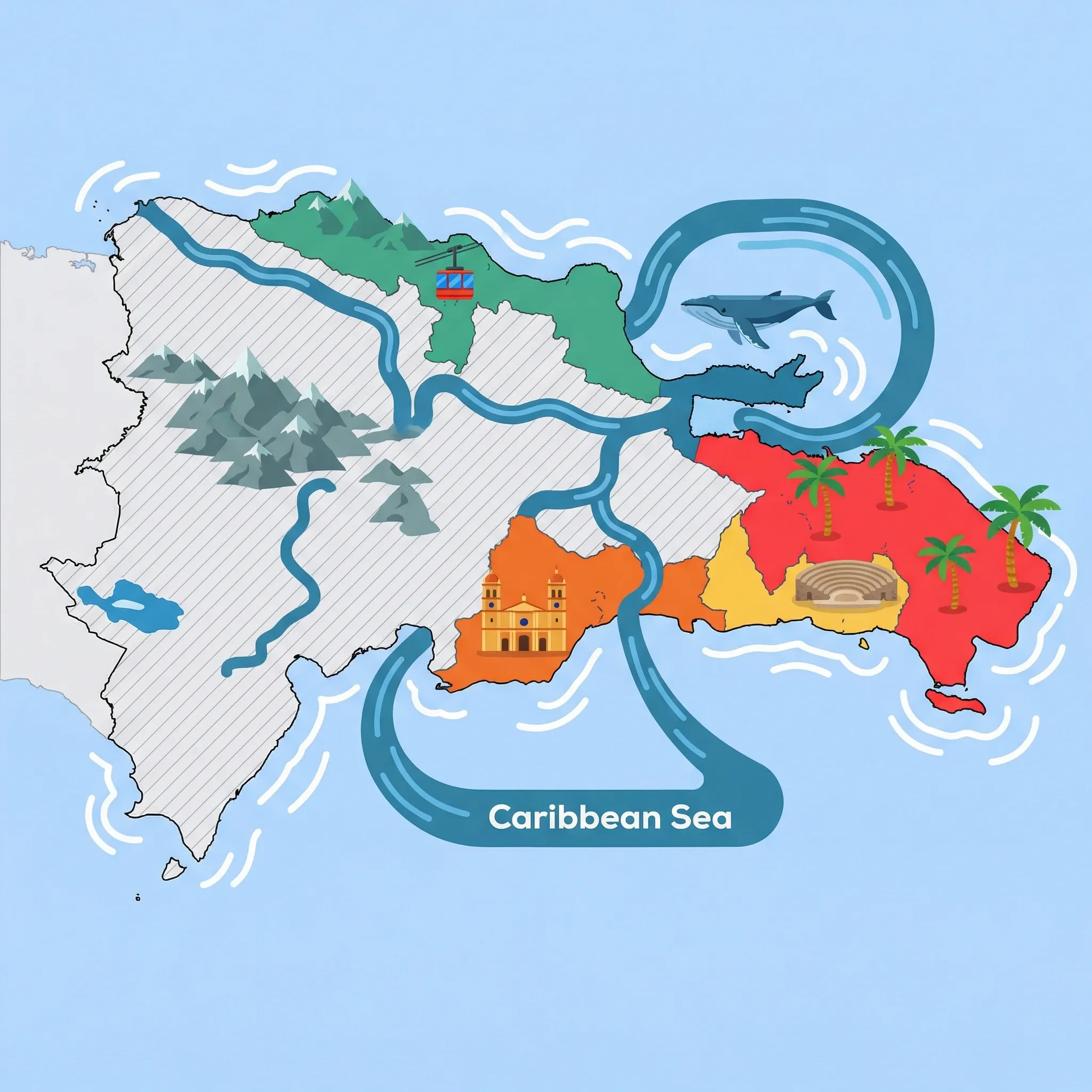
The southeastern coast of the Dominican Republic is a haven for families seeking the calmer, turquoise waters of the Caribbean Sea, distinct from the wavier Atlantic north. La Romana and the nearby village of Bayahibe serve as the gateway to some of the country's most spectacular offshore islands. The region is characterized by vast sugarcane fields, high-end manicured resorts like Casa de Campo, and accessible coral reefs that make snorkeling safe and exciting for younger swimmers. The atmosphere here is generally more laid-back and less crowded than Punta Cana, making it ideal for families who want a mix of pool time and authentic exploration.
Culturally, the region offers a fascinating glimpse into Dominican history and art. The area is not just about beaches; it is a hub for artisans and history enthusiasts. Families can spend mornings exploring river gorges and afternoons relaxing on Blue Flag beaches. The infrastructure is well-developed, with excellent roads connecting the main attractions, ensuring that travel with children is comfortable and stress-free.
Key Attractions
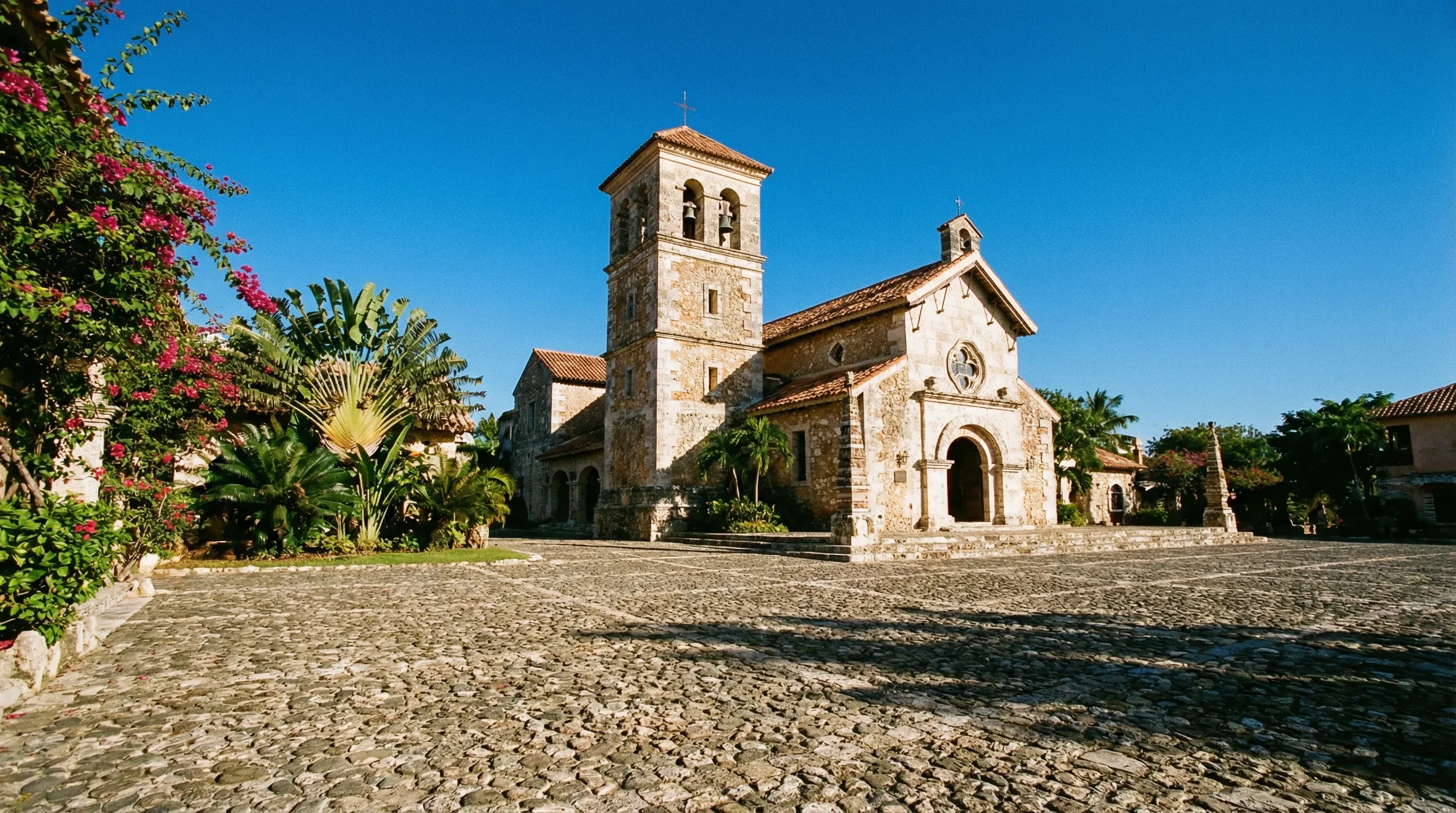
A must-visit for any family is Altos de Chavón, a stunning architectural wonder perched high above the Chavón River. Designed as a replica of a 16th-century Mediterranean village, its amphitheater and cobblestone paths feel like a fairy tale setting for kids to explore. Nearby, the Basilica Cathedral of Nuestra Señora de la Altagracia in Higüey offers a striking lesson in modern architecture and local spiritual culture.
For nature lovers, a catamaran excursion to Saona Island (Isla Saona) is the quintessential Caribbean day trip. The shallow natural pools located mid-ocean allow children to stand waist-deep in crystal-clear water and spot starfish. Alternatively, Catalina Island (Isla Catalina) offers superior snorkeling right off the beach, perfect for introducing older kids to vibrant underwater ecosystems.
Practical Advice
The best time to visit is December to April when the weather is dry and pleasant. La Romana has its own airport (LRM), but it is also easily accessible from Punta Cana (PUJ) via the Autopista del Coral (Coral Highway).
Food & Drink
Typical meal times: Lunch is typically served from 12:00 pm to 2:30 pm, and dinner from 7:00 pm to 10:00 pm.
Typical meal costs: A mid-range meal for a family of four costs approximately RD$3,500–5,500 (approx. $60–95 USD / €55–90 EUR).
Dietary requirements: Resorts are excellent at catering to allergies. In local towns, seafood is dominant, but rice, beans, and chicken are staples available everywhere. Gluten-free options are common in high-end restaurants but rare in roadside eateries.
Signature dishes:
- La Bandera Dominicana – The national lunch dish consisting of white rice, stewed red beans, and meat (usually chicken or beef), representing the flag's colors.
- Pescado Frito – Whole fried fish, usually red snapper, served beachside in Bayahibe with fried plantains (tostones).
- Dulce de Leche Cortada – A curdled milk dessert with cinnamon and raisins, a sweet treat children often enjoy.
Why this score?
The region is largely characterized by manicured resort environments and organized boat excursions, offering a relatively low-intensity experience. Adventure is primarily limited to snorkeling trips and the Cave of Wonders, both of which are highly managed for mass tourism. The terrain is flat and well-developed, catering more to relaxation and cultural sightseeing than rugged exploration.
Why this score?
La Romana city hosts several decent private clinics and hospitals that are accustomed to treating international tourists and cruise passengers. For specialized or critical care, the region benefits from its proximity to Santo Domingo, which is accessible via a modern highway in less than two hours. English-speaking staff are generally available in facilities catering to the major resort complexes.
Why this score?
This region is a major international draw, anchored by the luxury enclave of Casa de Campo and the high-volume transit point of the La Romana cruise port. It serves as the primary gateway for day trips to Saona Island, which is one of the most visited offshore attractions in the Caribbean. While it lacks the massive room inventory of Punta Cana, its combination of high-end villas and the popular Bayahibe resort area ensures a constant flow of international visitors.

While exclusive areas like Casa de Campo are luxury-priced, the town of Bayahibe offers great value. Local dining is affordable, with lunch plates costing RD$400–700 (approx. $7–12 USD / €6–11 EUR). Excursions to islands are the main expense, typically costing RD$4,500–7,000 (approx. $75–120 USD / €70–110 EUR) per person.

Getting Here & Around
Getting Here
- Airports – La Romana International Airport (LRM) is the closest hub. Punta Cana International Airport (PUJ) is about 45 minutes away.
- Driving – The region is connected by the excellent Autopista del Coral (Coral Highway), making transfers from Punta Cana or Santo Domingo smooth and fast.
- Bus – Comfortable express buses (Expreso Romana) run regularly from Santo Domingo.
Getting Around
- Car – Renting a car is safe and convenient here due to good road conditions, especially for visiting Altos de Chavón independently.
- Taxi – Tourist taxis are widely available at hotels but can be expensive; always agree on the fare in USD or DOP beforehand.
- Boat – Ferries and catamarans are the only way to reach Saona Island (Isla Saona) and Catalina Island (Isla Catalina).
Nearby Airports (1 airport)
La Romana International
LRMLa Romana
View full flight map for Dominican Republic →
Official Links

Packing List
Essential for protecting the protected coral reefs around Catalina Island.
Crucial for capturing photos in the 'natural pool' on the way to Saona Island.
River areas near Chavón can be buggy at dusk; wipes are easier to apply on kids.
Rental gear quality varies; having your own ensures a good fit for children.
Sharp coral and sea urchins are common at many beaches; essential for protecting small feet.
Plastic waste is an issue and drinks get warm instantly in the humidity; keeps water cold all day.
Voltage fluctuations are frequent; protects expensive tablets and phones while charging.
Essential for boat trips to Saona or waterfalls where everything gets wet.

Activities & Best Times

Hiking, wildlife, outdoor exploration, ecotourism
Features the expansive Cotubanamá National Park and significant cave systems for self-guided exploration. Winter months provide the most comfortable trekking temperatures; late summer and autumn carry excessive humidity and significant storm risks.

Urban tourism, museums, historical sites, architecture
Home to the unique 16th-century style village of Altos de Chavón and the Basilica of Nuestra Señora de la Altagracia. The dry season is ideal for cultural tours, while the autumn months are frequently disrupted by regional weather systems.

Beach resorts, marine activities: diving, snorkelling, kite surfing, wind surfing, sailing
Offers access to world-class offshore islands like Saona and Catalina with turquoise waters and significant resort infrastructure. Peak season aligns with the dry winter months, whereas Aug-Oct is restricted by peak hurricane and tropical storm activity.

Scenic drives, countryside tours, route-based travel
The Autopista del Coral and scenic coastal routes provide high-quality driving experiences between key coastal points. Optimal driving conditions and visibility occur in winter, while autumn poses safety risks due to heavy rainfall.

Sport tourism, fitness activities, active recreation
Features established infrastructure for canopy tours and coastal cycling routes. Physical exertion is best suited to the cooler, drier winter months, as summer heat is intense and autumn storms frequently close outdoor centers.

Learning experiences, scientific sites, historical education
Includes focused learning at the Regional Museum of Archaeology and the geological Cueva de las Maravillas. Visits are most recommended during the stable dry season, with the off-season avoided due to high regional storm probability.




Public Holidays & Calendar Next 12 months
Public holidays, festivals, cultural celebrations, and seasonal natural phenomena coming up in La Romana & Southeast over the next 12 months.
Loading holidays and events...

Travel Advisory
The majority of major international agencies recommend exercising increased caution or a high degree of vigilance. The primary driver for this assessment is the prevalent rate of violent crime and potential security instability near the border with Haiti.
Safety Topics
Traveller Advice (3 groups)

All visitors must complete the official electronic entry and exit form (eTicket) before travel. Dual nationals should be aware that their second citizenship may limit the ability of their other home country to provide consular assistance while in the Dominican Republic.

Infrastructure for travelers with mobility or other disabilities may be limited outside of major international hotels. It is recommended to review specialized guides for traveling abroad with a disability before departure.

Female travelers should be particularly cautious as incidents of sexual harassment and assault have been reported, including within major resorts. It is advised to avoid walking alone, especially in unlit or secluded areas after dark, and to be wary of accepting drinks from strangers.
Agency Summaries
Ireland advises its citizens to exercise a high degree of caution primarily due to crime and road safety risks. The country has a very high rate of traffic accidents, and travelers should be extremely careful when driving or walking near roads.
No specific travel advisory is in effect, but travelers are reminded to maintain standard safety awareness. Emphasis is placed on health risks like rabies and insect-borne diseases, and the necessity of having comprehensive medical insurance that covers air evacuation.
Travelers should remain vigilant due to significant crime rates. Security near the closed border with Haiti is highly unstable, and disturbances can escalate quickly. Violent incidents and opportunistic crimes like pickpocketing are common, especially in urban centers and after dark.
Increased caution is recommended due to prevalent violent crime, including armed robbery and homicide. While tourist areas benefit from dedicated police presence, crime remains a nationwide threat. Travelers are cautioned against displaying wealth and meeting strangers from online apps in secluded spots.
A high level of vigilance is required because of the threat of violent crime. Crime occurs in both residential and tourist areas, including beaches. Travelers should use secure transportation and avoid carrying large amounts of cash or wearing expensive jewelry.
Most visits are trouble-free, but travelers should be aware of high crime rates and poor road safety. The border with Haiti remains closed, and the security situation there is precarious. Specific entry requirements and health precautions regarding mosquito-borne diseases apply.
Information is provided for general guidance only and does not constitute travel, safety, medical, or legal advice. Conditions may change. Users are responsible for independently verifying information before travel.