
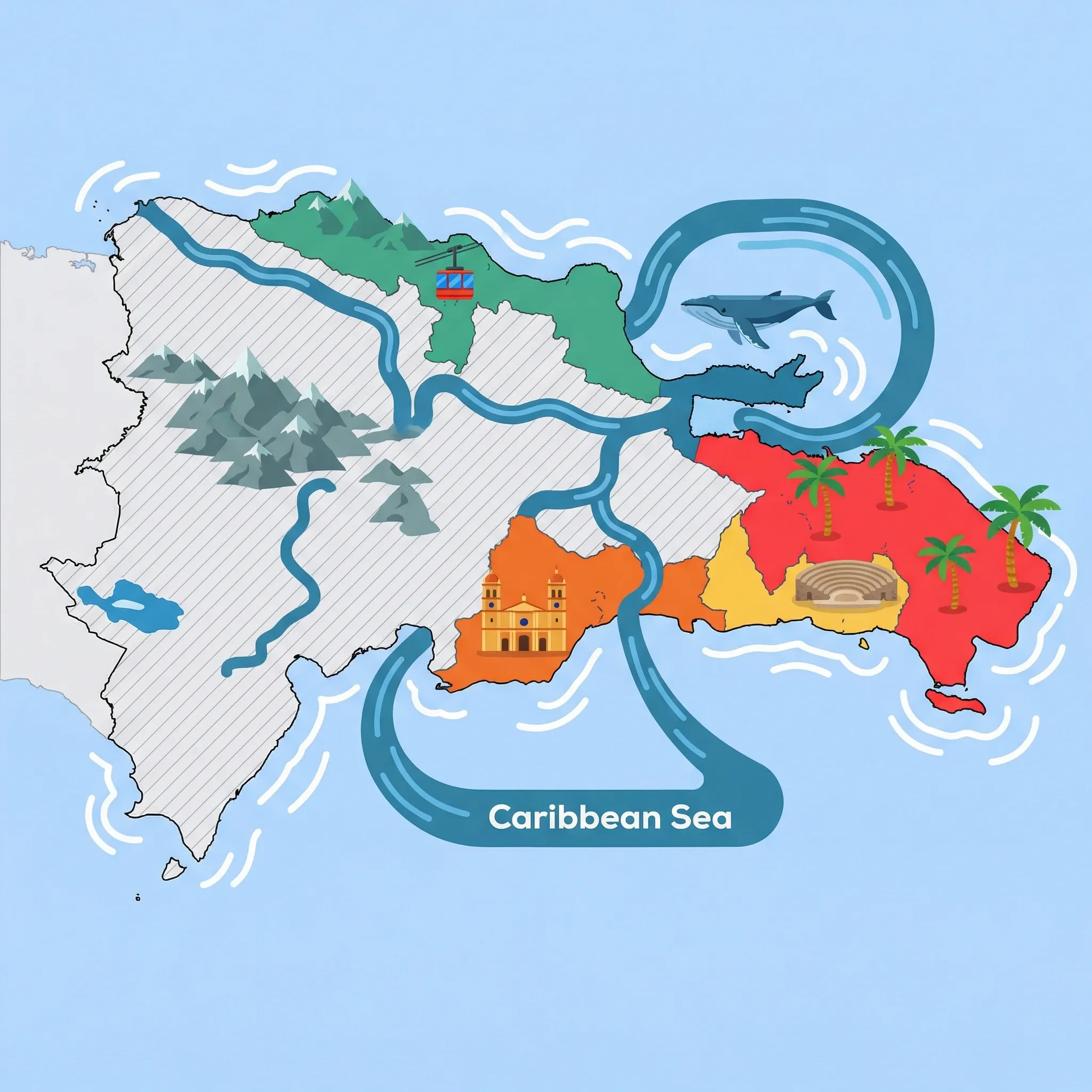
Click a region to explore
⚠️ SAFETY WARNING: Due to urban crime including theft and robbery, government agencies (including CA, USA, UK, and AU) advise travelers to exercise increased caution or reconsider travel to Santo Domingo. The historic Zona Colonial is generally safe during the day, but visitors should avoid displaying valuables, use registered taxis, and avoid walking alone at night. Families are strongly urged to consult their own government's official travel advisory before considering a trip, as circumstances and risk assessments vary.
Santo Domingo is a city of contrasts, where the very old meets the modern Caribbean. As the oldest European settlement in the Americas, its heart is the Zona Colonial, a UNESCO World Heritage site. Here, families can walk on the original cobblestones where history was made. The area is surprisingly pedestrian-friendly, filled with cafes, museums, and shady plazas where kids can chase pigeons while parents admire 16th-century architecture. Beyond the history, the modern city offers botanical gardens, zoos, and impressive shopping malls, providing a break from the heat.
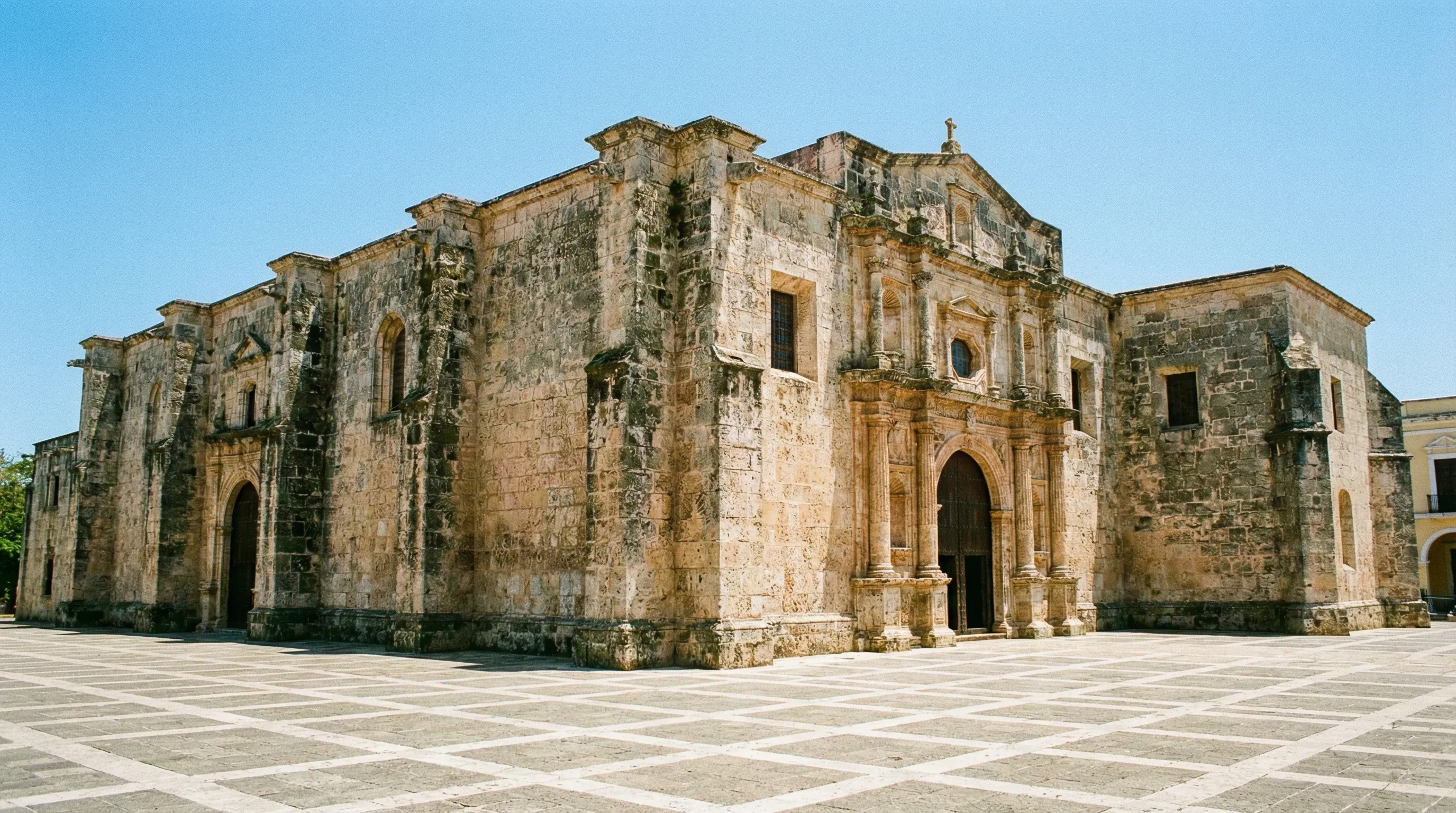
Visiting the capital offers an educational depth that beach resorts cannot match. It is a bustling, noisy, and vibrant metropolis that exposes children to the real rhythm of Dominican life. While traffic can be chaotic, the cultural rewards are immense. A visit here is often best done as a 1-2 day cultural addition to a beach holiday, allowing families to see the Catedral Primada de América and natural wonders like urban limestone caves without getting overwhelmed by the big-city pace.
Key Attractions
The Zona Colonial is the primary focus for tourists. Within this compact area, you can visit the Alcázar de Colón, the former palace of Christopher Columbus's son, which is furnished with period pieces that bring the era to life. Just nearby stands the Catedral Primada de América, the first cathedral in the New World, with its stunning vaulted ceilings.
Just outside the city center, Los Tres Ojos National Park is a natural marvel that feels like a hidden world. It consists of three turquoise limestone lakes set inside a series of open-air caves. It's an easy walk with stairs and walkways, making it an adventurous but safe outing for kids. For a dose of science, the National Museum of Natural History in the Plaza de la Cultura is excellent and well-suited for children.
Practical Advice
The best time to explore is early morning or late afternoon to avoid the midday heat. Pavements can be uneven and narrow, so carriers are better than strollers for infants. Uber is widely used and safer/cheaper than hailing street taxis.
Food & Drink
Typical meal times: Lunch 12:00 pm to 3:00 pm, Dinner 7:30 pm to 10:00 pm.
Typical meal costs: Sit-down meals in the Colonial Zone cost RD$1,000–2,000 (approx. $17–35 USD / €16–32 EUR) per person. Local cafeterias are much cheaper.
Dietary requirements: The city has a cosmopolitan food scene. You will easily find Italian, Asian, and American chains, as well as vegetarian-friendly cafes in the tourist zones.
Signature dishes:
- Mofongo – A must-try in the capital; garlicky mashed plantains served in a wooden mortar (pilón), often with shrimp or fried pork.
- Sancocho – The ultimate Dominican comfort food, a thick stew often enjoyed on weekends.
- Jugo de Chinola – Fresh passion fruit juice, ubiquitous and refreshing in the city heat.
Why this score?
Santo Domingo is a densely populated urban environment where tourism is centered on historic architecture, museums, and dining. Beyond the limestone caverns of Los Tres Ojos, there is very little in the way of rugged terrain or wilderness activity within the city limits. The experience is almost entirely metropolitan and paved, offering minimal physical challenge or outdoor adventure.
Why this score?
Santo Domingo is the medical hub of the Dominican Republic, offering the highest concentration of advanced hospitals and specialist physicians in the country. Facilities such as CEDIMAT and Plaza de la Salud are world-class institutions capable of performing complex surgeries and treatments. Foreigners will find the best access to English-speaking specialists and high-tech medical infrastructure here.
Why this score?
As the capital and home to a UNESCO World Heritage colonial site, the city receives a significant number of international visitors, though many are short-stay or business travelers. It serves as the cultural heart of the country, yet it lacks the massive 'stay-and-play' international tourist volume seen in the dedicated beach corridors. Its popularity is rooted in history and urban exploration rather than the typical Caribbean sun-and-sand model.

Santo Domingo offers options for all budgets. Luxury colonial hotels can be pricey (RD$10,000+ / $170+ USD), but entry fees to museums are very low, often under RD$200 (approx. $3.50 USD / €3.20 EUR). Dining in the Zona Colonial attracts a tourist premium, but is still generally cheaper than resort areas.

Getting Here & Around
Getting Here
- Airports – Las Américas International Airport (SDQ) is the main gateway, about 30 minutes from the city center.
- Bus – High-quality express buses connect Santo Domingo to Punta Cana (via Autovía del Este), La Romana, and Puerto Plata.
- Cruise – Many families arrive via the Sans Souci cruise terminal near the Colonial Zone.
Getting Around
- Walking – The best way to see the Zona Colonial. Streets are historic and compact.
- Uber / Taxi – Essential for reaching attractions like Los Tres Ojos National Park. Avoid renting a car due to chaotic traffic and parking issues.
- Metro – Clean and efficient, but limited routes; useful for reaching the Plaza de la Cultura museums.
Nearby Airports (2 airports)
Dr Joaquin Balaguer International Airport
JBQSanto Domingo
Las Americas International
SDQSanto Domingo
View full flight map for Dominican Republic →
Official Links

Packing List
Extra security is recommended in busy urban areas and crowds.
The Colonial Zone has uneven cobblestones that are tough on flip-flops.
Shoulders and knees must be covered to enter the Cathedral and other religious sites.
The city can be stiflingly hot and humid with less breeze than the coast.
Sharp coral and sea urchins are common at many beaches; essential for protecting small feet.
Mandatory for some marine excursions like Saona Island to protect delicate coral ecosystems.
Plastic waste is an issue and drinks get warm instantly in the humidity; keeps water cold all day.
Dengue is a risk; wipes are easier to apply to squirming children than sprays and easier to pack.
Voltage fluctuations are frequent; protects expensive tablets and phones while charging.
Essential for boat trips to Saona or waterfalls where everything gets wet.

Activities & Best Times

Hiking, wildlife, outdoor exploration, ecotourism
Features unique natural sites like Los Tres Ojos limestone caves and a significant national zoo, though these are more suburban than wild. Peak visitation aligns with the dry season to ensure trail accessibility and clear waters in the cenotes.

Urban tourism, museums, historical sites, architecture
Home to the UNESCO-listed Zona Colonial, featuring the Americas' oldest cathedral and fortress, Santo Domingo offers a rich heritage experience. The dry winter months provide comfortable walking weather, while late summer carries peak hurricane risks and intense humidity.

Beach resorts, marine activities: diving, snorkelling, kite surfing, wind surfing, sailing
Boca Chica offers shallow, turquoise waters suitable for families, while the Malecon provides a coastal urban atmosphere. Conditions are most predictable during the dry season, with late summer often affected by seaweed and storm surges.

Scenic drives, countryside tours, route-based travel
Santo Domingo serves as the hub for scenic highways leading to Samaná and the southern coast, offering diverse landscapes. The dry season is critical for safe driving conditions on these routes to avoid landslides or flooding common in late summer.

Sport tourism, fitness activities, active recreation
The Mirador del Sur park and local MTB trails provide quality infrastructure for cycling and running within the city. Activity is best enjoyed in the cooler, dryer mornings of the winter months to avoid tropical heat exhaustion.

Learning experiences, scientific sites, historical education
The National Aquarium and Museum of Natural History provide solid educational value for children, though they lack the global scale of top-tier international institutions. Indoor facilities offer some refuge, but the city is most accessible for families during the cooler dry season.

Events, celebrations, seasonal attractions
The Dominican Carnival in February is a major cultural event with vibrant parades and music, attracting international interest. Outside of this specific window and the surrounding weeks, the city lacks globally significant festivals.

Amusement parks, family entertainment venues
Local water parks and 4D cinema experiences offer decent family entertainment but do not reach the standards of international destination parks. Visitation is highest during holiday windows when weather is most conducive to outdoor aquatic activities.

Attractions (17 total)



Public Holidays & Calendar Next 12 months
Public holidays, festivals, cultural celebrations, and seasonal natural phenomena coming up in Santo Domingo over the next 12 months.
Loading holidays and events...

Travel Advisory
The majority of major international agencies recommend exercising increased caution or a high degree of vigilance. The primary driver for this assessment is the prevalent rate of violent crime and potential security instability near the border with Haiti.
Safety Topics
Traveller Advice (3 groups)

All visitors must complete the official electronic entry and exit form (eTicket) before travel. Dual nationals should be aware that their second citizenship may limit the ability of their other home country to provide consular assistance while in the Dominican Republic.

Infrastructure for travelers with mobility or other disabilities may be limited outside of major international hotels. It is recommended to review specialized guides for traveling abroad with a disability before departure.

Female travelers should be particularly cautious as incidents of sexual harassment and assault have been reported, including within major resorts. It is advised to avoid walking alone, especially in unlit or secluded areas after dark, and to be wary of accepting drinks from strangers.
Agency Summaries
Ireland advises its citizens to exercise a high degree of caution primarily due to crime and road safety risks. The country has a very high rate of traffic accidents, and travelers should be extremely careful when driving or walking near roads.
No specific travel advisory is in effect, but travelers are reminded to maintain standard safety awareness. Emphasis is placed on health risks like rabies and insect-borne diseases, and the necessity of having comprehensive medical insurance that covers air evacuation.
Travelers should remain vigilant due to significant crime rates. Security near the closed border with Haiti is highly unstable, and disturbances can escalate quickly. Violent incidents and opportunistic crimes like pickpocketing are common, especially in urban centers and after dark.
Increased caution is recommended due to prevalent violent crime, including armed robbery and homicide. While tourist areas benefit from dedicated police presence, crime remains a nationwide threat. Travelers are cautioned against displaying wealth and meeting strangers from online apps in secluded spots.
A high level of vigilance is required because of the threat of violent crime. Crime occurs in both residential and tourist areas, including beaches. Travelers should use secure transportation and avoid carrying large amounts of cash or wearing expensive jewelry.
Most visits are trouble-free, but travelers should be aware of high crime rates and poor road safety. The border with Haiti remains closed, and the security situation there is precarious. Specific entry requirements and health precautions regarding mosquito-borne diseases apply.
Information is provided for general guidance only and does not constitute travel, safety, medical, or legal advice. Conditions may change. Users are responsible for independently verifying information before travel.