
Click a region to explore
Overview
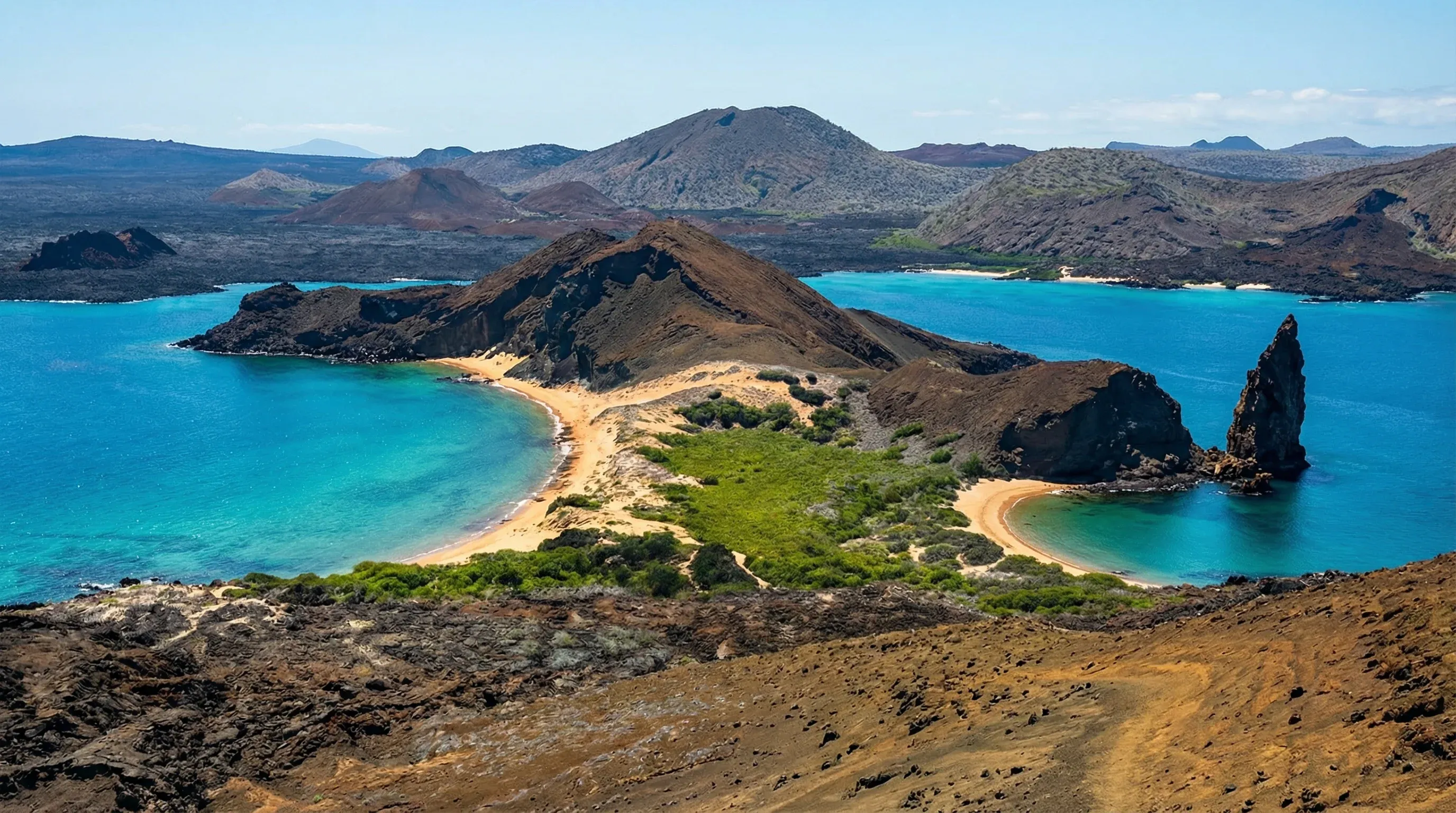
The Galápagos Islands are a bucket-list destination that genuinely lives up to the hype. For children, it is a magical place where the usual rules of nature seem reversed: sea lions lounge on park benches, marine iguanas block the sidewalks, and birds don't fly away when you approach. It is an open-air classroom where evolution is visible and tangible.
Visiting with families is best done via a "land-based" trip (staying in hotels on the islands) rather than a cruise, as it offers more flexibility for downtime and is generally more affordable. The islands of Santa Cruz, San Cristóbal, and Isabela are inhabited and offer safe beaches, shallow waters for snorkeling, and plenty of ice cream shops. The environment is heavily protected, so it's also a place to teach kids about conservation and respecting nature.
Key Attractions
On Santa Cruz, the Charles Darwin Research Station is essential for seeing the breeding programs that saved the giant tortoises. A short water taxi ride leads to Las Grietas, a spectacular fracture in the lava rock filled with emerald seawater—cool, calm, and full of fish. For active families, hiking the Sierra Negra Volcano on Isabela Island reveals a massive caldera and alien volcanic landscapes. Snorkeling is the main event here; even shallow waters near Kicker Rock (for older kids) or just off the beach can teem with rays, turtles, and sharks.
Practical Advice
This is an expensive destination. All visitors must pay an entry fee upon arrival ($100 USD per adult, rising to $200 USD in late 2024). The sun is extremely strong on the equator; high-SPF sunscreen is non-negotiable. Tap water is not potable. Seas between islands can be rough, so plan accordingly if prone to motion sickness.
Food & Drink
Typical meal times: Lunch 12:00 pm to 2:30 pm; Dinner 6:30 pm to 9:00 pm. The famous "Kiosks" in Puerto Ayora start serving dinner around 7:00 pm.
Typical meal costs: $15–30 USD (approx. €14–28 EUR / £12–24 GBP) per main dish in restaurants. Street food (empanadas) is cheaper ($3–5 USD).
Dietary requirements: Seafood is dominant. Vegetarians will find pasta, pizza, and rice dishes, but variety can be limited on smaller islands like Isabela. Dairy is common.
Signature dishes:
- Lobster – (Seasonal, usually July-Dec) Spiny lobster caught locally, often grilled simply with garlic butter.
- Ceviche – Can be shrimp, fish, or octopus, marinated in lime and served with popcorn and chifles (plantain chips).
- Arroz Marinero – A seafood rice paella-style dish loaded with clams, shrimp, and calamari.
Why this score?
The archipelago offers unique, rugged experiences such as volcanic trekking and snorkeling in open-water environments with diverse wildlife. However, the highly regulated nature of the park and mandatory guided tours provide a structured environment that prevents it from being a true 'wild' wilderness.
Why this score?
While basic healthcare exists in Puerto Ayora and Puerto Baquerizo Moreno, the islands lack facilities for specialized surgery or complex trauma. In serious cases, patients must be medically evacuated by air to the mainland, which is both time-consuming and expensive.
Why this score?
As a premier global bucket-list destination, the islands draw a massive international crowd relative to their size and isolation. The infrastructure is entirely built around supporting high volumes of foreign tourists through cruises and land-based tours.

Significantly more expensive than the mainland. A mid-range family hotel room costs $150–250 USD (approx. €138–230 EUR / £118–195 GBP) per night. Day tours (snorkeling/diving) are the biggest expense, costing $120–180 USD (approx. €110–165 EUR / £95–140 GBP) per person. Groceries are also pricey due to import costs.
Family Travel Notice
Minors who are dual nationals or have resident status may require notarized consent from both parents to exit the country. Ensure all documentation is legalized via apostille where necessary.

Getting Here & Around
Getting Here
- Airports – Flights land at Baltra (GPS) for Santa Cruz or San Cristóbal (SCY). There are no direct international flights; you must fly via Quito or Guayaquil.
- Ferry – Inter-island speedboats connect Santa Cruz, Isabela, and San Cristóbal. The ride takes ~2 hours and can be very bumpy.
Getting Around
- Water Taxi – Small boats that ferry you from docks to beaches or larger boats; usually cost $1 USD per person.
- White Taxis – Pickup trucks are the standard taxi. Useful for crossing Santa Cruz to visit the Charles Darwin Research Station or highland ranches.
- Walking – The towns of Puerto Ayora and Puerto Baquerizo Moreno are small and pedestrian-friendly.
Nearby Airports (1 airport)
Galapagos
GPSGalapagos Islands
View full flight map for Ecuador →
Official Links

Packing List
Strictly enforced to protect coral; chemical sunscreens are discouraged.
The best wildlife viewing happens underwater; you will regret not having one.
Inter-island speedboat crossings are notoriously rough (the "Galapagos washing machine").
Many beaches (like Tortuga Bay) have no facilities or towel rentals.
Many shops and taxis cannot change $20 bills; small change is essential for daily purchases.
Mandatory in the Galápagos to protect marine life; regular sunscreen is often restricted.
Essential for 'wet landings' from boats in Galápagos and walking on sharp volcanic rock.
Boat travel between islands can be choppy; vital for kids even if they don't usually get seasick.
Protects electronics during Amazon canoe trips and Galápagos pangas (dinghy rides).

Activities & Best Times

Hiking, wildlife, outdoor exploration, ecotourism
A globally unique archipelago offering unparalleled wildlife encounters and volcanic trekking; peak months reflect the main international family travel windows and key wildlife activity. September is often considered off-peak as some cruise vessels undergo maintenance and the cool, misty weather is at its peak.

Urban tourism, museums, historical sites, architecture
Rich in unique heritage sites like the Wall of Tears and Post Office Bay that tell the islands' human history alongside iconic natural landmarks. These sites are best visited during drier, cooler periods or peak holiday windows, while September sees the lowest tourism infrastructure activity.

Sport tourism, fitness activities, active recreation
Features exceptional hiking routes on Sierra Negra and unique formations like Las Grietas for active exploration. Peak months offer the most comfortable temperatures for strenuous hiking, whereas the February to April period can be excessively hot and humid.

Beach resorts, marine activities: diving, snorkelling, kite surfing, wind surfing, sailing
Offers iconic coastal areas like Tortuga Bay with unique marine life; peak months align with the warm season when water visibility and temperatures are highest for snorkeling. The off-season sees cooler, choppier waters and the 'garúa' mist which reduces clarity.

Learning experiences, scientific sites, historical education
Home to the world-renowned Charles Darwin Research Station and high-quality interpretation centers that provide essential context for the islands' biodiversity. Visits are optimal during peak travel seasons when guided programs are most frequent.




Public Holidays & Calendar Next 12 months
Public holidays, festivals, cultural celebrations, and seasonal natural phenomena coming up in Galápagos Islands over the next 12 months.
Loading holidays and events...

Travel Advisory
Most major agencies advise exercising a high degree of caution or increased vigilance country-wide due to crime and civil unrest, despite extreme danger in specific border and coastal regions.
Safety Topics
Traveller Advice (4 groups)

Hikers and climbers should monitor volcanic activity alerts for Cotopaxi and Sangay. Use only reputable guides and ensure your insurance covers high-altitude search and rescue.

Female travellers should exercise extreme vigilance, particularly in tourist hubs like Montañita, due to reports of harassment and sexual assault. Avoid solo travel and moving alone after dark.

Minors who are dual nationals or have resident status may require notarized consent from both parents to exit the country. Ensure all documentation is legalized via apostille where necessary.

While legal protections exist, social attitudes can be conservative outside of major urban centres. Public displays of affection may attract unwanted attention or hostility in rural areas.
Agency Summaries
Due to serious security threats and a state of internal armed conflict, only essential travel is advised. Consular assistance is very limited in many parts of the country.
Heightened security concerns stem from violent crime and civil unrest. Travellers are advised to avoid certain neighbourhoods in Guayaquil and all areas within 20km of the border with Colombia.
General caution is advised across the country because of criminal activity and civil unrest. Higher risk levels apply to parts of Guayaquil and El Oro, while border provinces like Carchi and Esmeraldas are designated as Level 4 (Do Not Travel).
Travellers should be extremely vigilant due to pervasive crime and potential civil instability. Elevated risks, including a recommendation to avoid all travel, exist within 20km of the Colombian border in Carchi, Esmeraldas, and Sucumbíos provinces.
High levels of violent crime and internal armed conflict require significant security awareness. Specific regions, including Guayaquil and the northern border, carry higher risk ratings of 'Reconsider your need to travel' or 'Do not travel'.
Authorities recommend against all but essential travel to coastal provinces and areas near the Colombian border. Visitors should monitor the status of the ongoing nationwide state of emergency and observe local curfews.
Information is provided for general guidance only and does not constitute travel, safety, medical, or legal advice. Conditions may change. Users are responsible for independently verifying information before travel.