
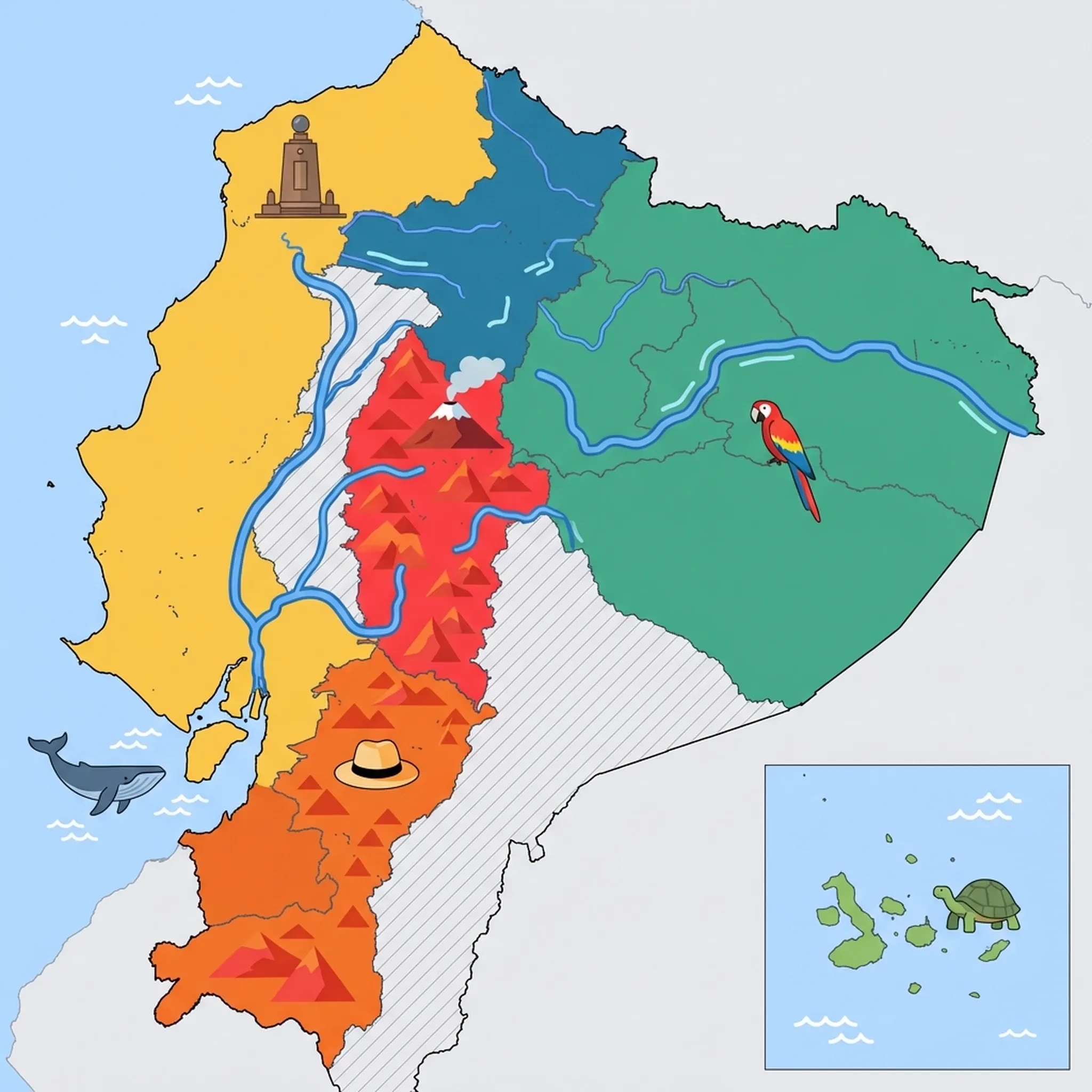
Click a region to explore
⚠️ SAFETY WARNING: Due to high levels of crime and civil unrest, government agencies (including USA, UK, CA, AU, NZ) advise travelers to exercise increased caution or reconsider travel to parts of the Coast. Specifically, avoid Esmeraldas province and southern neighborhoods of Guayaquil. However, tourist zones like the Malecón 2000, Salinas, and Puerto López remain accessible with vigilance. Families are strongly urged to consult their own government's official travel advisory before considering a trip, as circumstances and risk assessments vary.
Overview
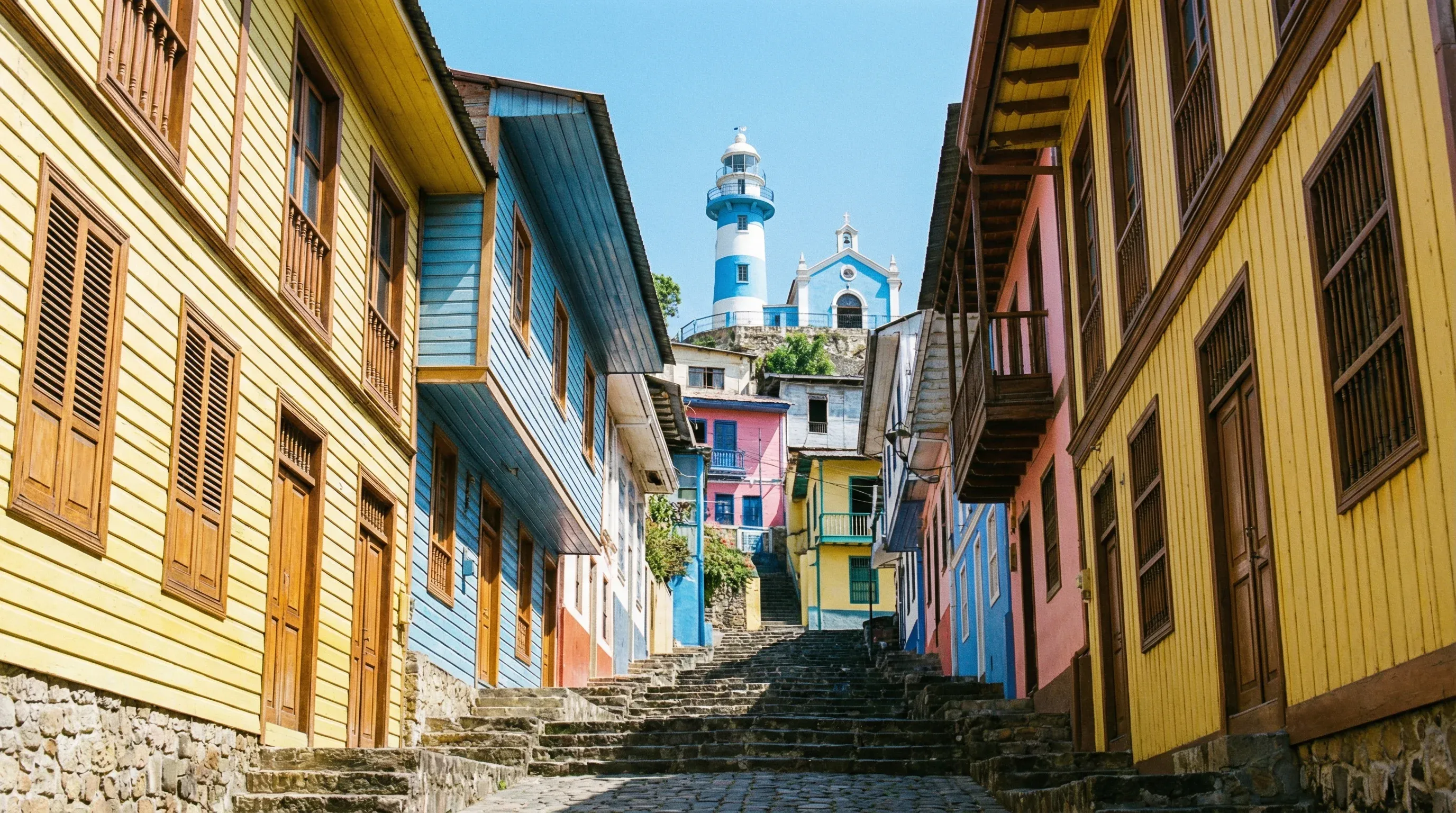
The Ecuadorian coast offers a distinct culture from the Andes—it's hotter, louder, and moves to a tropical rhythm. Guayaquil, the country's largest city, has transformed its riverfront into a major family attraction, though it requires street-smarts to visit safely. The real draw for families, however, is the "Ruta del Spondylus" highway that runs north along the Pacific, connecting fishing villages and beaches.
While some areas are party-focused, towns like Puerto López offer a relaxed base for exploring nature. From June to September, humpback whales migrate just off the coast, putting on acrobatic shows that are easily visible from boat tours. The dry tropical forests of the coast are also home to howler monkeys and countless birds, offering a "jungle lite" experience without the deep Amazon humidity.
Key Attractions
In Guayaquil, Malecón 2000 is a gated, patrolled 2.5km boardwalk with playgrounds, gardens, and monuments—it is the safest and most enjoyable part of the city for kids. Nearby, Parque Histórico Guayaquil is a fantastic open-air museum where you can see sloths and parrots in a semi-wild mangrove setting, alongside reconstructed colonial houses. On the coast, Machalilla National Park protects the stunning Los Frailes beach (one of the country's best) and serves as the launch point for Isla de la Plata, often called the "Poor Man's Galapagos" for its blue-footed boobies and snorkeling.
Practical Advice
The coast is hot and humid year-round. The rainy season (January-April) is sweltering but sunny in the mornings; the dry season (June-November) is cooler but often overcast ("garúa"). Mosquito protection is essential here due to dengue risk. Stick to official taxis and tourist transport.
Food & Drink
Typical meal times: Lunch is 1:00 pm to 3:00 pm. Dinner is late, often 8:00 pm onwards, as locals wait for the heat to subside.
Typical meal costs: $10–20 USD (approx. €9–18 EUR / £8–16 GBP) for fresh seafood. High-end dining in Guayaquil can reach $40–60 USD.
Dietary requirements: This is seafood heaven. Shellfish allergies can be tricky to manage due to cross-contamination. Plantains and rice are the staples for gluten-free travelers.
Signature dishes:
- Encebollado – A fish stew (albacore) with cassava and pickled onions, eaten for breakfast or as a hangover cure; a national obsession.
- Cangrejo Criollo – Red mangrove crabs cooked with beer and spices. Eating them is a messy, social event involving mallets and bibs—fun for older kids!
- Bolón de Verde – Huge balls of mashed green plantain stuffed with cheese or pork crackling (chicharrón), usually served for breakfast.
Why this score?
The region features some moderate adventures like whale watching and exploring the Machalilla National Park, but it is largely characterized by flat coastal lowlands and accessible beach towns. It lacks the ruggedness and remote feel of the Amazon or the high Andes.
Why this score?
Guayaquil is home to some of the best private hospitals in the country, such as Hospital Clínica Kennedy, which offer modern technology and specialist care. These facilities provide a high standard of service for international travelers, though quality drops significantly in rural coastal areas.
Why this score?
Ecuador's coast is primarily a domestic destination for residents of Guayaquil, with international flows focused narrowly on Puerto López and the surf town of Montañita. Much of the coastline remains undeveloped for international tourism compared to regional neighbors like Colombia or Peru.

Costs are moderate. A beachfront family hotel in Puerto López might cost $60–100 USD (approx. €55–92 EUR / £47–79 GBP). Seafood is excellent value; a fresh fish dinner is often $10–15 USD. Guayaquil has luxury options but also plenty of budget chains.
Family Travel Notice
Minors who are dual nationals or have resident status may require notarized consent from both parents to exit the country. Ensure all documentation is legalized via apostille where necessary.

Getting Here & Around
Getting Here
- Airports – José Joaquín de Olmedo International Airport (GYE) in Guayaquil is a major hub with direct flights from the US and Europe.
- Bus – Comfortable executive buses connect Guayaquil to beach towns like Montañita and Puerto López (3-4 hours).
- Driving – The coastal roads are generally flat and paved, but driving style can be aggressive.
Getting Around
- Taxi/Uber – In Guayaquil, use Uber or Cabify for safety; do not hail street taxis.
- Tuk-tuk – In beach towns like Puerto López, motorized rickshaws are the standard way to get around ($1–2 USD per ride).
- Walking – Malecón 2000 is pedestrian-only and stroller-friendly.
Nearby Airports (3 airports)
Coronel Artilleria Victor Larrea Airport
ETRSanta Rosa
Simon Bolivar International
GYEGuayaquil
Eloy Alfaro International
MECManta
View full flight map for Ecuador →

Packing List
Coastal mosquitoes can carry dengue and zika; essential for evenings.
Sun protection during the day and bug protection at night without overheating.
Soap is sometimes missing in public restrooms at beach stops.
Many shops and taxis cannot change $20 bills; small change is essential for daily purchases.
Mandatory in the Galápagos to protect marine life; regular sunscreen is often restricted.
Essential for 'wet landings' from boats in Galápagos and walking on sharp volcanic rock.
Boat travel between islands can be choppy; vital for kids even if they don't usually get seasick.
Protects electronics during Amazon canoe trips and Galápagos pangas (dinghy rides).

Activities & Best Times

Hiking, wildlife, outdoor exploration, ecotourism
Home to the unique Machalilla National Park and significant dry tropical forests, offering exceptional wildlife encounters including humpback whale watching. The dry months are optimal for trekking and wildlife observation before the heavy rains and humidity of early year.

Urban tourism, museums, historical sites, architecture
Guayaquil offers a sophisticated blend of historic charm in Las Peñas and modern urban design along the Malecón 2000. Peak visitation coincides with cooler weather and major civic festivals in July and October, avoiding the extreme heat of the rainy season.

Beach resorts, marine activities: diving, snorkelling, kite surfing, wind surfing, sailing
The region features iconic coastal spots like Los Frailes and Montañita, though they lack the high-end luxury infrastructure of global beach capitals. Peak season occurs during the sunny, tropical months when water temperatures are highest, while the dry season brings grey skies and cooler waters.

Scenic drives, countryside tours, route-based travel
The Ruta del Spondylus is a celebrated scenic drive connecting diverse coastal landscapes and archaeological sites. The dry season ensures the most stable driving conditions and clear vistas along the Pacific shoreline.

Sport tourism, fitness activities, active recreation
Extensive hiking trails in Machalilla and large-scale recreational facilities like Samanes Park support an active itinerary. Peak conditions occur during the drier, cooler months when the climate is more conducive to physical exertion than the humid rainy season.

Learning experiences, scientific sites, historical education
Small-scale but authentic facilities like the Whale Museum and Megaterio Paleontology Museum provide interesting context for regional natural history. These are best visited during the drier, more accessible months but are not primary travel motivators for international families.

Events, celebrations, seasonal attractions
The humpback whale migration is a world-class seasonal event that defines the region's tourism calendar between June and September. Outside of this period and specific civic holidays, there are few festivals that attract international attention.

Spa retreats, wellness centers, peaceful getaways
Natural sulfur lagoons and community-run thermal baths at Agua Blanca offer an authentic, rustic wellness experience. These sites lack world-class luxury spa infrastructure, making them more suitable for travelers seeking cultural immersion during the cooler dry season.

Amusement parks, family entertainment venues
While featuring local major attractions like La Perla and Safari Xtreme, these facilities serve primarily domestic audiences and lack international destination status. Activity peaks during the coastal sunny season and regional school holiday windows.

Attractions (19 total)



Public Holidays & Calendar Next 12 months
Public holidays, festivals, cultural celebrations, and seasonal natural phenomena coming up in Guayaquil & Coast over the next 12 months.
Loading holidays and events...

Travel Advisory
Most major agencies advise exercising a high degree of caution or increased vigilance country-wide due to crime and civil unrest, despite extreme danger in specific border and coastal regions.
Safety Topics
Traveller Advice (4 groups)

Hikers and climbers should monitor volcanic activity alerts for Cotopaxi and Sangay. Use only reputable guides and ensure your insurance covers high-altitude search and rescue.

Female travellers should exercise extreme vigilance, particularly in tourist hubs like Montañita, due to reports of harassment and sexual assault. Avoid solo travel and moving alone after dark.

Minors who are dual nationals or have resident status may require notarized consent from both parents to exit the country. Ensure all documentation is legalized via apostille where necessary.

While legal protections exist, social attitudes can be conservative outside of major urban centres. Public displays of affection may attract unwanted attention or hostility in rural areas.
Agency Summaries
Due to serious security threats and a state of internal armed conflict, only essential travel is advised. Consular assistance is very limited in many parts of the country.
Heightened security concerns stem from violent crime and civil unrest. Travellers are advised to avoid certain neighbourhoods in Guayaquil and all areas within 20km of the border with Colombia.
General caution is advised across the country because of criminal activity and civil unrest. Higher risk levels apply to parts of Guayaquil and El Oro, while border provinces like Carchi and Esmeraldas are designated as Level 4 (Do Not Travel).
Travellers should be extremely vigilant due to pervasive crime and potential civil instability. Elevated risks, including a recommendation to avoid all travel, exist within 20km of the Colombian border in Carchi, Esmeraldas, and Sucumbíos provinces.
High levels of violent crime and internal armed conflict require significant security awareness. Specific regions, including Guayaquil and the northern border, carry higher risk ratings of 'Reconsider your need to travel' or 'Do not travel'.
Authorities recommend against all but essential travel to coastal provinces and areas near the Colombian border. Visitors should monitor the status of the ongoing nationwide state of emergency and observe local curfews.
Information is provided for general guidance only and does not constitute travel, safety, medical, or legal advice. Conditions may change. Users are responsible for independently verifying information before travel.