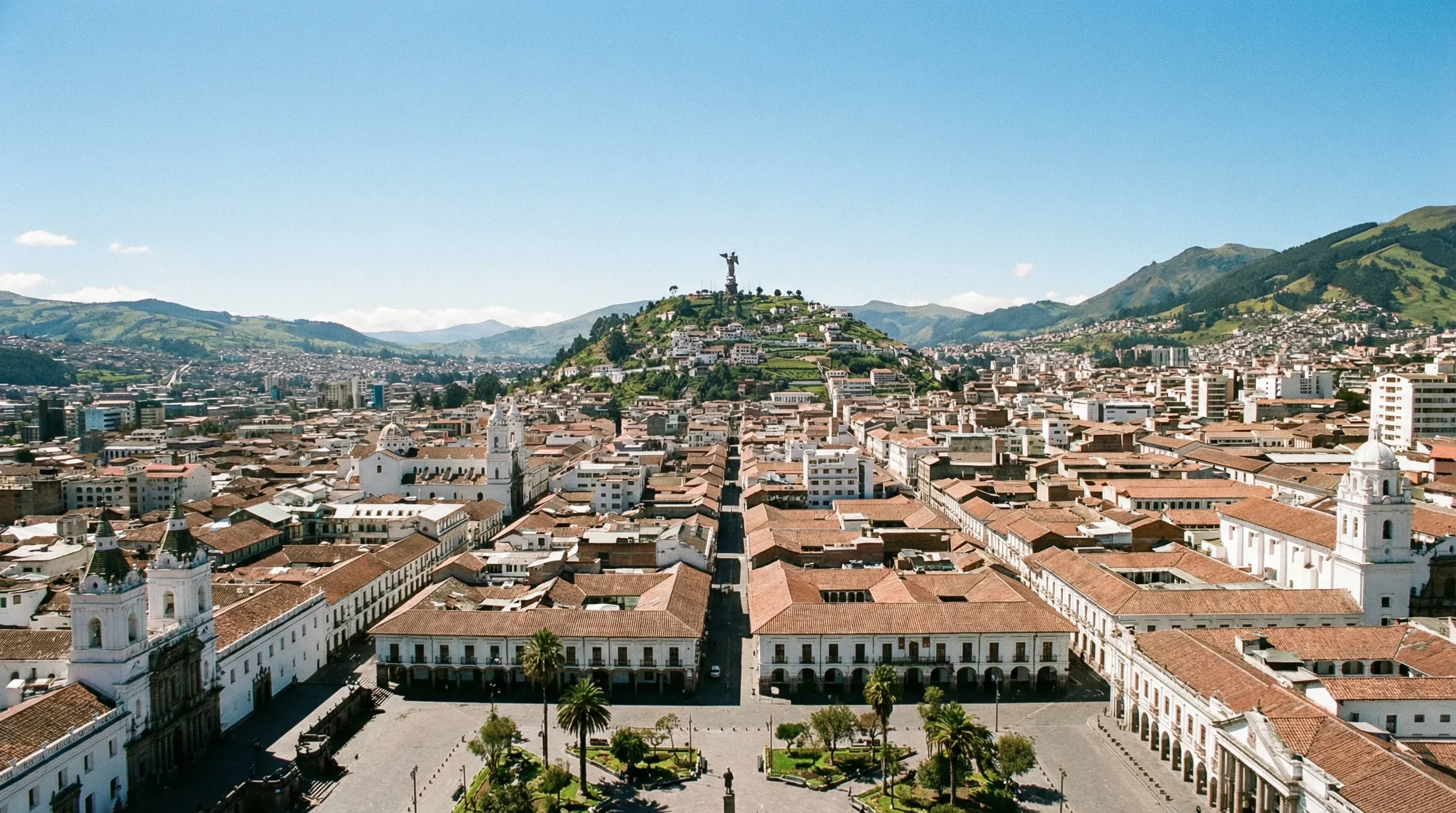

Quito & Northern Highlands
A capital in the clouds and the middle of the world ☁️🌎
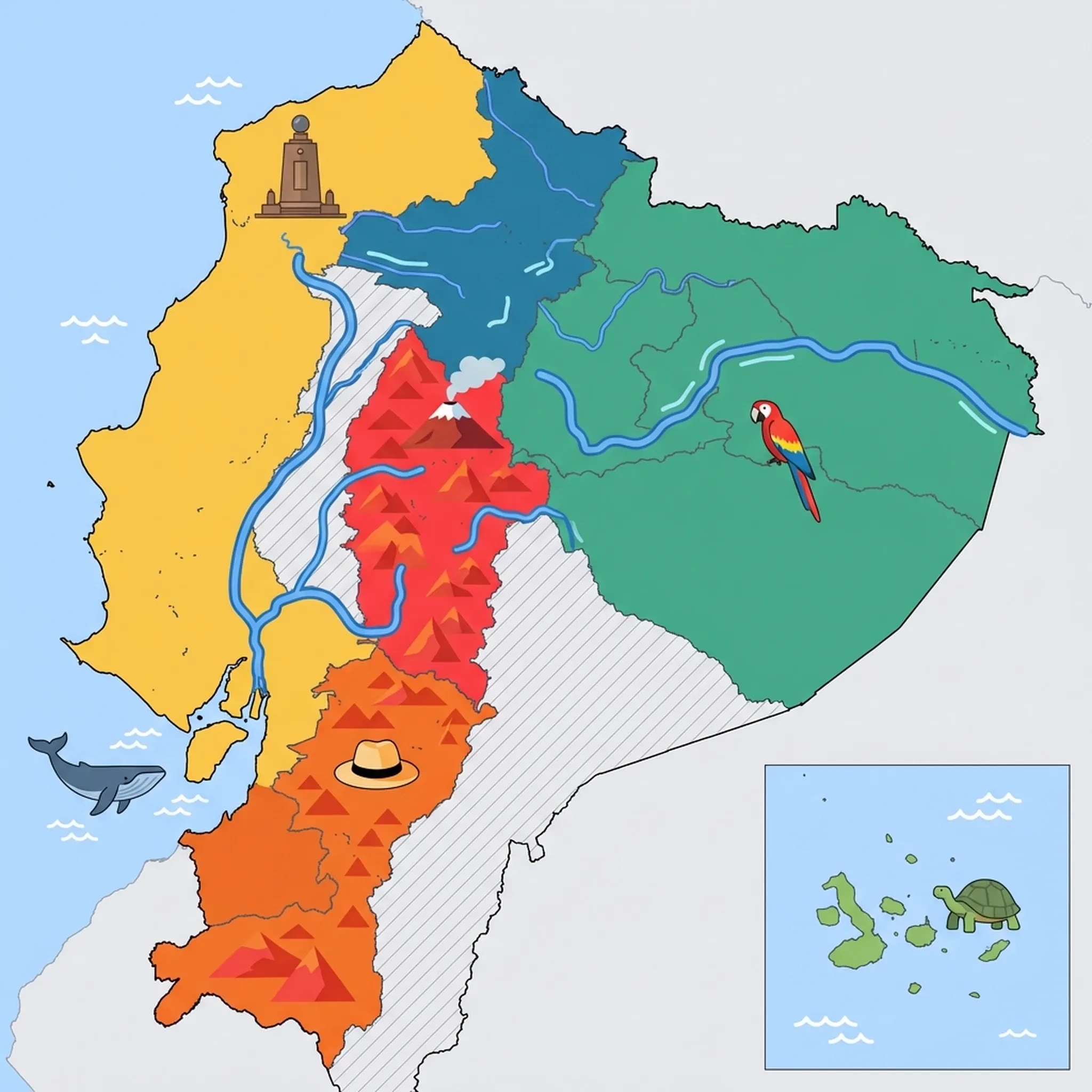
Click a region to explore
⚠️ SAFETY WARNING: Due to crime and potential civil unrest, government agencies (including USA, UK, CA, AU, NZ) advise travelers to exercise increased caution in Quito and reconsider travel to the Carchi province border region (near Colombia). While the main tourist circuits in Quito and Otavalo are generally manageable with standard urban precautions (avoiding isolated areas at night), the security situation can fluctuate. Families are strongly urged to consult their own government's official travel advisory before considering a trip, as circumstances and risk assessments vary.
Overview
Quito is a high-altitude metropolis cradled by volcanoes. At 2,850m (9,350 ft), it literally takes your breath away. For families, the region offers a mix of history and unique geography. You can visit the official equator line to test gravity experiments (some real, some just for fun) and then dive into the dense cloud forests of Mindo just two hours away. The region is rich in indigenous culture, most visibly in the colorful markets of Otavalo.
The city itself has a dual character: the modern north with shopping malls and parks, and the UNESCO-listed historic center with its narrow streets and golden churches. While navigating a busy Latin American capital requires care, the rewards are high. The surrounding highlands offer fresh air, crater lakes, and haciendas that welcome children with open arms.
Key Attractions
No trip is complete without visiting Ciudad Mitad del Mundo (Middle of the World City). It's a tourist complex with the famous monument, but the nearby Intiñan Museum is more fun for kids, featuring interactive exhibits about indigenous tribes and physics tricks. In the city, the Telefériqo Quito gondola lifts you up the side of Pichincha volcano to 4,000m—great for views, but bundle up! For nature, the Mindo Cloud Forest is a paradise of butterflies, waterfalls, and chocolate tours that will delight any age group. The Historic Center of Quito is impressive, but for kids, the changing of the guard at the presidential palace on Mondays is the highlight.
Practical Advice
Altitude sickness is a real risk. Take it easy for the first 24 hours, drink lots of water, and avoid heavy meals. The weather is unpredictable: "Four seasons in one day" is the local motto. Mornings are sunny, afternoons often rainy. Sun protection is critical even when it feels cool.
Food & Drink
Typical meal times: Lunch 12:30 pm to 2:30 pm. Dinner 7:00 pm to 9:00 pm.
Typical meal costs: $10–25 USD (approx. €9–23 EUR / £8–20 GBP) for sit-down meals. "Almuerzos" (set lunches) are $3–5 USD.
Dietary requirements: Quito is cosmopolitan with plenty of vegetarian, vegan, and international restaurants. Allergies are generally well-understood in tourist areas.
Signature dishes:
- Fritada – Chunks of pork cooked in spiced water until the water evaporates and the meat fries in its own fat; served with mote (corn) and plantains.
- Locro de Papa – A thick potato soup with cheese and avocado, ubiquitous in the highlands.
- Canelazo – A warm, spiced cinnamon drink made with naranjilla fruit (often contains alcohol/aguardiente, so ask for a "virgin" version for kids).
Why this score?
The region provides accessible outdoor activities like the Telefériqo up Pichincha and birdwatching in Mindo's cloud forest. While high altitudes can be challenging, the excellent road network and developed tourist facilities make it more of a recreational than a truly rugged destination.
Why this score?
Quito offers the highest density of top-tier medical facilities in Ecuador, including hospitals with international accreditation and English-speaking staff. It is the primary hub for medical tourism and serious emergency care for the entire country.
Why this score?
As the main international entry point, Quito’s UNESCO-listed old town and the nearby Otavalo market are central to almost every Ecuadorian itinerary. The region maintains a high and steady flow of international visitors throughout the year.

Quito accommodates all budgets. Hostels are cheap, while luxury heritage hotels in the <a data-attraction-id="47893">Historic Center of Quito</a> can cost $200+ USD per night. A typical family meal in a nice restaurant is $40–70 USD (approx. €37–65 EUR / £31–55 GBP). Museums and attractions usually charge $2–8 USD entry.
Family Travel Notice
Minors who are dual nationals or have resident status may require notarized consent from both parents to exit the country. Ensure all documentation is legalized via apostille where necessary.

Getting Here & Around
Getting Here
- Airports – Mariscal Sucre International Airport (UIO) is the main international gateway, located about 45 minutes to 1 hour from the city center.
- Bus – The terminal at Carcelén serves northern destinations (Otavalo), while Quitumbe serves the south.
- Taxi/Transfer – Official airport taxis have flat rates (approx. $25–30 USD) to the city.
Getting Around
- Metro – Quito's new metro system is the fastest way to move between north, center, and south, avoiding traffic.
- Taxi/Uber – Uber is widely used and generally safer/easier for tourists than hailing yellow taxis on the street.
- Bus – For day trips to Ciudad Mitad del Mundo or Mindo Cloud Forest, public buses are cheap but can be crowded.
Nearby Airports (1 airport)
Mariscal Sucre International
UIOQuito
View full flight map for Ecuador →
Official Links

Packing List
UV radiation at 2,800m on the equator is extreme; burn time can be 15 mins.
Temperatures drop significantly as soon as the sun goes down.
Helpful for digestion issues which can be common with altitude and new foods.
Many shops and taxis cannot change $20 bills; small change is essential for daily purchases.
Mandatory in the Galápagos to protect marine life; regular sunscreen is often restricted.
Essential for 'wet landings' from boats in Galápagos and walking on sharp volcanic rock.
Boat travel between islands can be choppy; vital for kids even if they don't usually get seasick.
Protects electronics during Amazon canoe trips and Galápagos pangas (dinghy rides).

Activities & Best Times

Hiking, wildlife, outdoor exploration, ecotourism
Features exceptional biodiversity in the Mindo cloud forest and dramatic Andean landscapes like the Cotopaxi volcano. Peak conditions occur during the drier summer months and year-end holidays when visibility is highest for wildlife and trekking.

Urban tourism, museums, historical sites, architecture
Home to the first UNESCO World Heritage site, Quito offers an authentic colonial atmosphere and world-class heritage sites. While mostly a year-round destination, the heavy rains of March and April can hinder explorations of the steep historic streets.

Learning experiences, scientific sites, historical education
Includes unique scientific attractions such as the Intiñan Solar Museum on the equator and interactive science centers for families. Visitation peaks during major school holiday periods when weather is driest for outdoor interactive exhibits.

Events, celebrations, seasonal attractions
Inti Raymi is a globally significant indigenous sun festival with substantial international visitor interest. The classification notes acknowledge 'culturally significant events' but the marginal rating understates the importance of these festivals in Ecuador's cultural tourism offer.

Spa retreats, wellness centers, peaceful getaways
Famous for natural volcanic thermal springs in Papallacta and Chachimbiro, providing high-quality restorative experiences. The baths are particularly appealing during the cooler, drier months of the year.

Scenic drives, countryside tours, route-based travel
The Avenue of the Volcanoes and Lake Route offer spectacular driving routes with views of the Andes. Peak visibility is critical for these scenic drives, occurring between June and September before the heaviest cloud cover arrives.

Sport tourism, fitness activities, active recreation
High-altitude hiking on Rucu Pichincha and canopy adventures in Mindo utilize the dramatic terrain. The dry season provides the essential trail safety and clear conditions required for high-altitude trekking and active adventure parks.
Amusement parks, family entertainment venues
Vulqano Park provides standard amusement facilities for children with the added uniqueness of a high-altitude setting near the Telefériqo. It serves as a secondary attraction best visited during the local and international holiday windows.

Attractions (21 total)



Public Holidays & Calendar Next 12 months
Public holidays, festivals, cultural celebrations, and seasonal natural phenomena coming up in Quito & Northern Highlands over the next 12 months.
Loading holidays and events...

Travel Advisory
Most major agencies advise exercising a high degree of caution or increased vigilance country-wide due to crime and civil unrest, despite extreme danger in specific border and coastal regions.
Safety Topics
Traveller Advice (4 groups)

Hikers and climbers should monitor volcanic activity alerts for Cotopaxi and Sangay. Use only reputable guides and ensure your insurance covers high-altitude search and rescue.

Female travellers should exercise extreme vigilance, particularly in tourist hubs like Montañita, due to reports of harassment and sexual assault. Avoid solo travel and moving alone after dark.
Minors who are dual nationals or have resident status may require notarized consent from both parents to exit the country. Ensure all documentation is legalized via apostille where necessary.

While legal protections exist, social attitudes can be conservative outside of major urban centres. Public displays of affection may attract unwanted attention or hostility in rural areas.
Agency Summaries
Due to serious security threats and a state of internal armed conflict, only essential travel is advised. Consular assistance is very limited in many parts of the country.
Heightened security concerns stem from violent crime and civil unrest. Travellers are advised to avoid certain neighbourhoods in Guayaquil and all areas within 20km of the border with Colombia.
General caution is advised across the country because of criminal activity and civil unrest. Higher risk levels apply to parts of Guayaquil and El Oro, while border provinces like Carchi and Esmeraldas are designated as Level 4 (Do Not Travel).
Travellers should be extremely vigilant due to pervasive crime and potential civil instability. Elevated risks, including a recommendation to avoid all travel, exist within 20km of the Colombian border in Carchi, Esmeraldas, and Sucumbíos provinces.
High levels of violent crime and internal armed conflict require significant security awareness. Specific regions, including Guayaquil and the northern border, carry higher risk ratings of 'Reconsider your need to travel' or 'Do not travel'.
Authorities recommend against all but essential travel to coastal provinces and areas near the Colombian border. Visitors should monitor the status of the ongoing nationwide state of emergency and observe local curfews.
Information is provided for general guidance only and does not constitute travel, safety, medical, or legal advice. Conditions may change. Users are responsible for independently verifying information before travel.