
⚠️ SAFETY WARNING: Egypt is currently rated as Level 2 (Exercise Increased Caution) by major government advisories (US/UK). While the main tourist trail along the Nile and the Red Sea coast is heavily secured and generally safe for families, you should avoid all travel to the North Sinai governorate and the Western Desert (including the Libyan border) due to military activity and higher risks. Always stick to established tourist zones and follow local advice.
Overview
Egypt is a land of immense contrasts that brings school history lessons to vibrant life. For families, it offers a journey through time, from the chaotic energy of Cairo & Giza to the serene, palm-lined banks of the Nile in the south. The country is defined by this mighty river, which creates a lush green ribbon through the golden desert, supporting civilization today just as it did 5,000 years ago. Egyptian culture is warm and deeply family-oriented; children are adored here and will often be the center of attention, receiving smiles and treats from friendly locals.
Traveling here with kids is an adventure that mixes education with relaxation. One day you might be exploring the claustrophobic but thrilling interior of a pyramid, and the next you could be snorkeling amidst colourful fish in the warm waters of the Red Sea Resorts. While the cities can be loud and the heat intense, the infrastructure for tourism is well-established. Comfortable resorts, guided tours, and river cruises make it surprisingly accessible for families willing to embrace a bit of hustle and bustle in exchange for memories of the world's greatest ancient monuments.
Key Attractions
No family trip is complete without standing before the Giza Necropolis. These sole survivors of the ancient wonders are awe-inspiring for children of all ages. Just steps away, the enigmatic Great Sphinx of Giza captures imaginations with its lion body and human head. For a deep dive into the treasures of the pharaohs, The Egyptian Museum in downtown Cairo remains an essential stop, overflowing with artifacts that will fascinate curious young minds.
Traveling south to Luxor & Upper Egypt, the scale of history expands even further. The massive Karnak Temple Complex is a stone forest of giant columns where kids can play hide-and-seek among the hieroglyphs. Across the river, the Valley of the Kings offers a thrilling descent into colorful royal tombs hidden deep in the desert rock. Further south in Aswan and Abu Simbel, the colossal Abu Simbel Temples are well worth the journey, famous for the four massive statues of Ramses II guarding the entrance.
For downtime, the coast offers world-class marine life. The Hurghada Grand Aquarium is a fantastic educational stop, while a boat trip to the Giftun Islands allows families to swim in turquoise waters often compared to the Caribbean. Combining these natural wonders with historical sites creates a perfectly balanced itinerary.
Practical Advice
The best time to visit is from October to April, when temperatures are pleasant for sightseeing; summer (May–September) can be dangerously hot, especially for young children. A visa is required for most visitors; an e-Visa is available for citizens of 46+ countries (including US, UK, EU) via the official government portal. Stomach bugs ("Pharaoh's Revenge") are common, so drink only sealed bottled water and avoid ice. Carry small change for tipping (baksheesh), which is expected for almost every service, including bathroom attendants.
Safety
Tourist police are visible at all major sites, and security checks (metal detectors, bag scans) are standard at hotels and malls. This heavy security presence is there for your protection. Street crime is relatively low, but scams and aggressive touts at tourist sites can be annoying; a firm "La, shukran" (No, thank you) usually works. Traffic in cities is chaotic-cross streets with extreme care, ideally shadowing a local.
Food & Drink
Typical meal times: Lunch is the main meal, typically eaten late between 2:00 pm to 5:00 pm. Dinner is a lighter affair, often served very late, from 9:00 pm to 12:00 am, though tourist restaurants will serve earlier.
Typical meal costs: 250–500 EGP (approx. $5–10 USD / €4.50–9.50 EUR) for a mid-range restaurant meal. Street food like koshary costs 50–100 EGP (approx. $1–2 USD / €0.90–1.90 EUR).
Dietary requirements: Vegetarian options are abundant as many traditional dishes rely on beans, lentils, and vegetables. Vegan food is also easy to find (koshary, falafel, foul). Gluten-free can be harder to guarantee due to cross-contamination with bread, which is a staple.
Family-friendly dining: Egyptians love children, and kids are welcome everywhere. Highchairs are available in modern restaurants but less common in local cafes. Menus often feature grilled chicken, rice, and mild dips like hummus that are palatable for picky eaters.
Signature dishes:
- Koshary – The national comfort food: a mix of rice, macaroni, and lentils topped with spicy tomato sauce and crispy onions. Kids usually love the carb-heavy combination.
- Ta'ameya (Egyptian Falafel) – Made from fava beans rather than chickpeas, these deep-fried green patties are softer and herbier than the Levantine version.
- Foul Medames – Slow-cooked fava beans seasoned with lemon, oil, and cumin, traditionally eaten for breakfast with fresh bread.
- Mahshi – Vegetables like zucchini, vine leaves, or peppers stuffed with a mild, herbal rice mixture.
- Om Ali – A delicious bread pudding made with puff pastry, milk, nuts, and raisins, served hot.
Family Travel Notice
Check entry tax requirements at specific border crossings, as infants may be exempt. Ensure all family members are up to date on routine vaccinations, including measles, before travel.

Egypt is an exceptionally affordable destination for families. A family of four can expect to spend around 4,000–7,000 EGP (approx. $80–140 USD / €75–130 EUR) per day, covering mid-range accommodation, meals, and entry fees. While major sites like the Pyramids have risen in price (approx. 540 EGP per adult), food and local transport remain very cheap.
Age Suitability





Did you know? Egypt welcomes approximately 11.6 million international visitors per year. Most visitors come from Europe.
Explore Regions
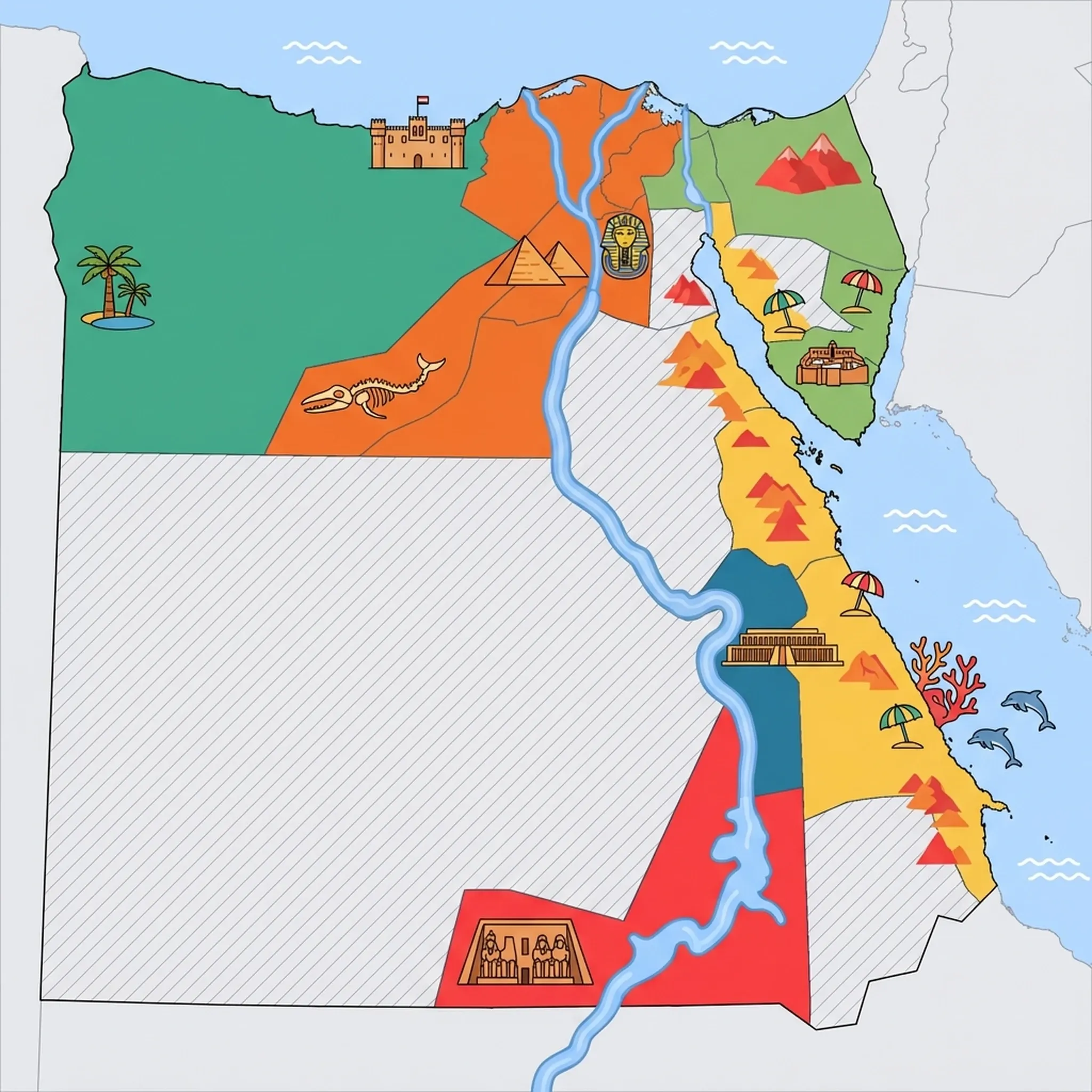
6 Regions
Alexandria, Mediterranean Coast & Siwa Oasis
Mediterranean breezes, ancient mysteries, and desert adventures 🌊🏛️
Aswan and Abu Simbel
Where the Nile is most beautiful and Nubian culture thrives ⛵🐊
Cairo & Giza
Home to the Pyramids and the heartbeat of modern Egypt 🔺🏙️
Luxor & Upper Egypt
Walk in the footsteps of Pharaohs in the world's greatest open-air museum 🏛️👑
Red Sea Resorts
Sun, sand, and world-class snorkeling on the mainland coast 🐠🏖️
Sinai Beach Resorts
Desert mountains meet spectacular coral reefs 🏔️🤿
Click on a region marker to explore details. Use the dropdown to color regions by activity suitability.

Getting There & Around
Getting There
- By Air – Cairo International Airport (CAI) is the main hub, receiving flights from major global cities. The Red Sea Resorts are served by Hurghada (HRG) and Sharm el-Sheikh (SSH) airports, which have many direct charter connections from Europe.
- By Land – Border crossings from Israel (Taba) and Sudan exist but are subject to strict security and occasional closure. Taba is popular for tourists entering the Sinai resorts.
- Entry Requirements – Visitors from the US, UK, EU, and many other nations require a visa. An e-Visa can be obtained in advance ($25 USD) or a visa-on-arrival is available at major airports (payable in cash USD/EUR/GBP). Check your government website for the latest visa requirements, or use the IATA Travel Centre entry-requirements checker.
Getting Around
- Domestic Flights – The quickest way to cover long distances, such as between Cairo & Giza and Aswan and Abu Simbel. EgyptAir and Nile Air operate frequent services.
- Trains – The rail network runs along the Nile, connecting Cairo to Luxor and Aswan. Foreigners often pay higher fares in foreign currency. The overnight sleeper train is a classic experience, though facilities are aging.
- Car Hire – Generally not recommended for tourists due to chaotic traffic and aggressive driving habits. Hiring a car with a private driver is a safer and very affordable alternative for families.
- Uber/Careem – These ride-hailing apps are essential for getting around Cairo and Alexandria safely and cheaply, avoiding the need to haggle with taxi drivers.

Packing List
Public restrooms and even some museums often lack toilet paper; carrying your own supply is essential.
The interiors of pyramids and tombs in the Valley of the Kings can be stiflingly hot with zero air circulation.
You must remove shoes to enter mosques; thick socks protect feet from dust, heat, or cold marble floors.
Dehydration and stomach upsets are common; these help recovery quickly if the local food disagrees with you.
Essential for women and girls to cover heads when entering mosques, and useful for sun/dust protection.
Lighting inside ancient tombs and pyramids can be dim; a small light helps kids spot hieroglyphic details.

Activities & Best Times

City & Cultural
ExcellentUrban tourism, museums, historical sites, architecture
Features world-class UNESCO sites like Abu Simbel and Philae Temple, offering unparalleled historical depth for sophisticated travelers. Peak visitation aligns with the mild winter season, while the extreme Saharan summer heat makes extensive temple exploration punishing.
Luxor is a globally peerless open-air museum featuring major UNESCO sites like Karnak and the Valley of the Kings. Peak season aligns with the cooler winter months, as the extreme desert heat from May to September makes outdoor exploration of these vast stone complexes physically grueling for families.
Home to the Giza Necropolis and Islamic Cairo, this region offers world-class archaeological and heritage sites essential for sophisticated travelers. Peak visitation aligns with the mild winter and spring, while extreme summer heat from June to August makes extensive urban exploration and monument visiting highly uncomfortable.

Adventure & Nature
Very GoodHiking, wildlife, outdoor exploration, ecotourism
Provides unique desert and river immersion, from sailing the Nile's first cataracts to exploring authentic Nubian villages on Elephantine Island. Best experienced during cooler months to safely enjoy desert trails and island hopping, as summer temperatures are dangerously high.
With 14 supporting attractions including the Sinai Protectorate and dramatic desert canyons, this is a premier destination for wilderness immersion. Summer months are unsuitable due to extreme heat levels that make desert exploration dangerous for families with children.
Wadi el Gemal and Giftun Island Protectorate offer rare desert-meets-sea ecosystems and unique wildlife encounters. Winter is the peak season for desert exploration to avoid the dangerous summer heat.

Sports & Active
Very GoodSport tourism, fitness activities, active recreation
Known for world-class kitesurfing in El Gouna and the award-winning Red Sea Mountain Trail for hiking. Spring and autumn provide the optimal balance of wind and temperature for these active pursuits.
Offers distinctive Nile-based activities like kayaking around granite islands and hiking historical desert routes like the West Bank trail. Optimal conditions occur during the temperate winter, while intense solar radiation and heat severely limit physical activity from May to September.
Established infrastructure at SOHO Square and Ghibli Raceway supports active family pursuits and organized sports tourism. The spring and autumn windows offer the most comfortable climate for high-energy activities like karting and outdoor sports.

Beach & Sea
Very GoodBeach resorts, marine activities: diving, snorkelling, kite surfing, wind surfing, sailing
The Red Sea is internationally renowned for diving and coral reef quality. While beach resort infrastructure may not match Caribbean/Maldives levels, the marine environment is world-class. Current 'good' rating undervalues Egypt's global competitive position for marine tourism.
Home to the world-renowned Ras Mohammed National Park, the region offers exceptional marine biodiversity and reef access that appeals to sophisticated divers. Peak periods avoid the intense summer heat and the cooler winter sea temperatures which can be less ideal for family swimming.
The North Coast features pristine turquoise Mediterranean waters and white sands, particularly at Agiba and within upscale resort enclaves. The season is strictly confined to the summer when water temperatures are suitable for swimming, with the region becoming largely dormant and windy during the cooler winter months.

Educational & Exploratory
GoodLearning experiences, scientific sites, historical education
The Hurghada Grand Aquarium and marine biology centers provide internationally significant insights into Red Sea biodiversity. These indoor-outdoor sites are most comfortable during the milder transitional seasons.
Home to significant facilities like the Nile Museum and Animalia, providing expert insights into Nubian culture and the river's hydrology. While these are primarily indoor, visitation follows general tourism patterns when overall regional conditions are most comfortable for families.

Road Trips & Scenic
GoodScenic drives, countryside tours, route-based travel
The Route 24 coastal highway provides dramatic desert-to-sea vistas and access to historic inland trails. Winter months are essential for safe and comfortable driving and exploring scenic desert viewpoints.
The desert highway to Abu Simbel is an iconic, starkly beautiful transit through the Sahara often celebrated as a premier scenic drive in Egypt. The journey is most pleasant in winter, avoiding the intense heat haze and extreme cabin-soaking temperatures of the mid-summer desert sun.

Theme Park & Entertainment
GoodAmusement parks, family entertainment venues
Features large-scale water parks like Makadi Water World that are significant regional draws for families. Peak times avoid the extreme heat of summer and the cooler winter winds that make water play less enjoyable.
Features significant facilities like KidZania and Dream Park that cater well to international families seeking familiar entertainment standards with a local twist. Peak times are the spring and autumn months when outdoor temperatures are pleasant for amusement park lines, while summer months are avoided due to extreme heat.
Local water and theme parks like Cleo Park provide family entertainment but lack the scale and polish of global benchmarks like Disney or Europa-Park. These facilities are best enjoyed when air temperatures are warm but not at their summer extreme.

Festivals & Seasonal
MarginalEvents, celebrations, seasonal attractions

Public Holidays & Calendar Next 12 months
Public holidays, festivals, cultural celebrations, and seasonal natural phenomena coming up in Egypt over the next 12 months.
Loading holidays and events...
Climate & Weather
Alexandria, Mediterranean Coast & Siwa Oasis
Show Details
| Month | Temp °C | Rain | Humidity |
|---|
Aswan and Abu Simbel
Show Details
| Month | Temp °C | Rain | Humidity |
|---|
Cairo & Giza
Show Details
| Month | Temp °C | Rain | Humidity |
|---|
Luxor & Upper Egypt
Show Details
| Month | Temp °C | Rain | Humidity |
|---|
Red Sea Resorts
Show Details
| Month | Temp °C | Rain | Humidity |
|---|
Sinai Beach Resorts
Show Details
| Month | Temp °C | Rain | Humidity |
|---|

Travel Advisory
Standard safety precautions are insufficient. Multiple international agencies recommend exercising increased vigilance due to the threat of terrorism and regional political instability.
Safety Topics
Traveller Advice (4 groups)
Media professionals must obtain official accreditation from the national press center before arrival. Operating without proper credentials can lead to severe legal penalties and detention.

Local laws and social perspectives on sexual orientation and gender identity differ significantly from Western norms. Public displays of affection or sharing information online could lead to legal complications or discrimination.

Ensure you have comprehensive travel insurance that covers medical evacuation. Register your travel plans with your national embassy and stay informed of local safety updates through official channels.
Check entry tax requirements at specific border crossings, as infants may be exempt. Ensure all family members are up to date on routine vaccinations, including measles, before travel.
Agency Summaries
The overall security situation remains stable for the majority of travelers in tourist hubs, but specific advisories are in place for border zones and the Sinai Peninsula. Ongoing regional tensions may affect travel arrangements.
Travelers should maintain a high level of vigilance due to an unstable security environment and the persistent threat of terrorist activity throughout the country. Regional conflicts have made certain border areas particularly dangerous.
Safety concerns are more significant than those found in standard travel destinations. Particular attention should be paid to the risk of civil unrest and the presence of landmines in specific remote areas.
Irish citizens are encouraged to be highly vigilant and monitor local media. Regional escalation poses a risk of sudden travel disruptions and changes to the security profile of the country.
Terrorism is an ongoing risk that could impact any location at any time. Recent military developments in the broader region have increased the potential for travel disruptions and localized instability.
Visitors are urged to stay alert for potential terrorist threats. While major tourist sites are generally more secure, remote regions and certain northern areas carry severe safety risks that discourage non-essential movement.
Information is provided for general guidance only and does not constitute travel, safety, medical, or legal advice. Conditions may change. Users are responsible for independently verifying information before travel.