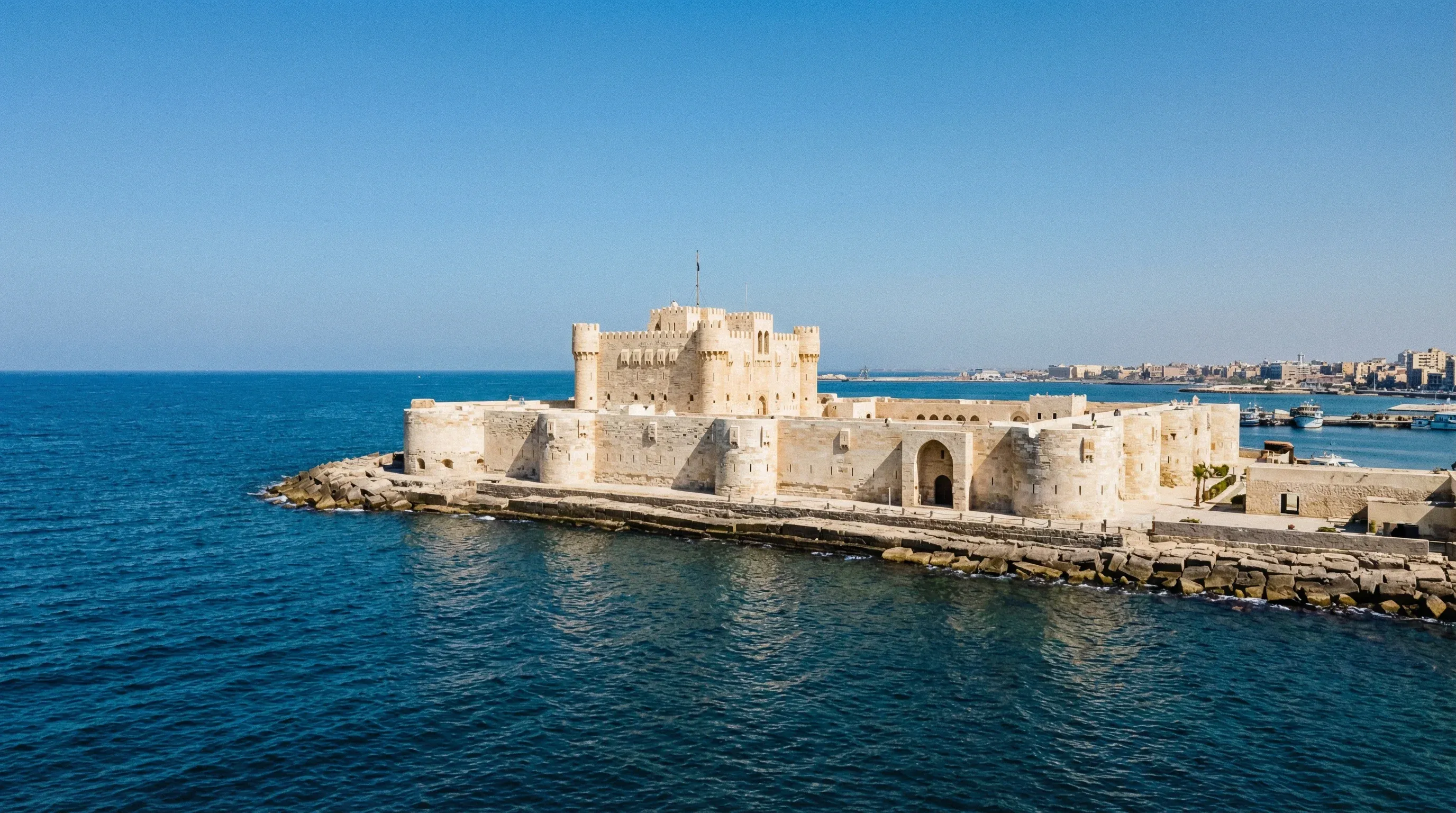

Alexandria, Mediterranean Coast & Siwa Oasis
Mediterranean breezes, ancient mysteries, and desert adventures 🌊🏛️
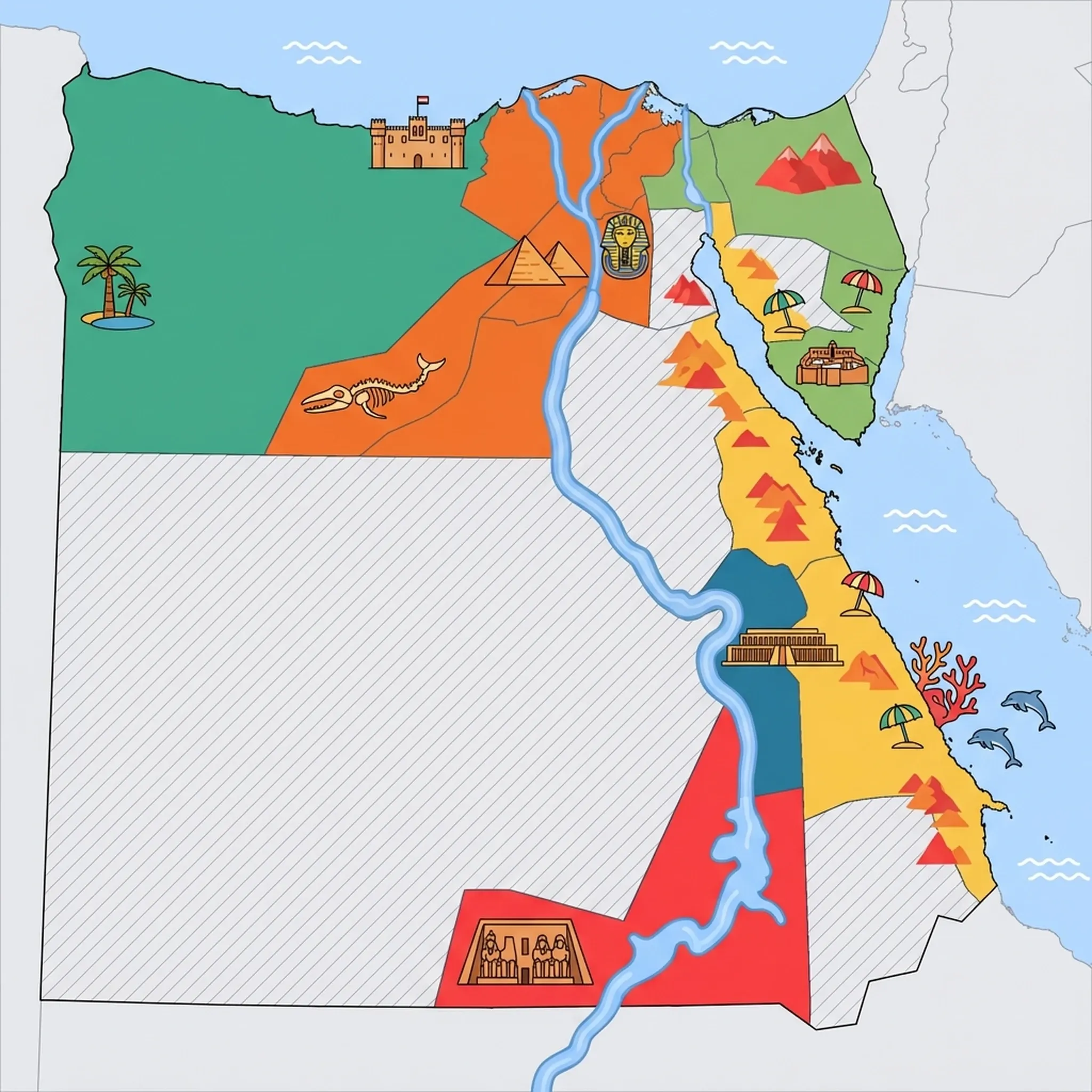
Click a region to explore
Overview
Stretching along the azure Mediterranean, this region serves as Egypt's summer playground. Alexandria, founded by Alexander the Great, feels more European than Middle Eastern, with its seaside corniche, grand cafes, and cooling sea breezes. For families overwhelmed by the heat of the south, the climate here is a welcome relief. The city is walkable and steeped in stories of sunken palaces and ancient libraries that capture children's imaginations. Further west, the beaches of Marsa Matruh offer Maldivian-style turquoise waters perfect for swimming.
Inland lies the Siwa Oasis, a magical patch of green in the Great Sand Sea. While the journey is long, adventurous families are rewarded with freshwater springs, vast sand dunes for boarding, and the unique mud-brick architecture of the Shali Fortress. It is a place where time slows down, allowing families to disconnect and experience authentic Bedouin hospitality away from the mass tourism crowds.
Key Attractions
In Alexandria, the Citadel of Qaitbay is an absolute must; kids love climbing the ramparts and watching the fishing boats. Just a short taxi ride away, the Catacombs of Kom El Shoqafa provide a thrilling underground adventure, blending Egyptian and Roman art in a way seen nowhere else. For a cultural break, the Royal Jewelry Museum displays dazzling treasures that can fascinate older children interested in princesses and palaces. If you venture to the Roman Amphitheatre (Kom El Dikka), let the kids test the ancient acoustics in the well-preserved seating area.
Practical Advice
The best time to visit Alexandria is spring (March–May) or autumn (September–November). Summer is incredibly crowded with domestic tourists. If visiting Siwa, avoid the scorching summer months entirely; winter is magical there.
Food & Drink
Typical meal times: Lunch is late, typically 2:00 pm to 5:00 pm. Dinner is often eaten after 9:00 pm, though tourist spots serve earlier.
Typical meal costs: A seafood meal for a family of four costs EGP 1,200–2,000 (approx. $25–42 USD / €23–38 EUR).
Dietary requirements: Seafood is king here. Vegetarians will find plenty of mezze (hummus, babaganoush) and koshary, but vegan options in Siwa may be limited to simple vegetable tagines.
Signature dishes:
- Alexandrian Liver (Kebda Iskandarani) – Spicy beef liver cooked with garlic, peppers, and lime, usually served in sandwiches.
- Sayadiya – A fisherman’s rice dish cooked with caramelized onions and served with fresh catch of the day.
- Feteer Meshaltet – A flaky, layered pastry often served with honey and cheese; a breakfast staple.
Why this score?
The inclusion of Siwa Oasis significantly raises the adventure profile, requiring a long journey into the Great Sand Sea for an off-the-beaten-path experience. Visiting the remote desert involves rugged terrain and basic infrastructure, contrasting sharply with the developed urban environment of Alexandria. This mix offers families a genuine sense of exploration and physical engagement with the Saharan landscape.
Why this score?
Alexandria, as Egypt's second-largest city, offers several reputable private hospitals and university medical centers with English-speaking staff. However, the region's overall score is tempered by the extreme remoteness of Siwa and the western coast, where medical facilities are very basic. For any serious condition in the desert areas, a long and difficult transport to Alexandria or Cairo is necessary.
Why this score?
While Alexandria is a massive hub for domestic tourism and business, it sees a more moderate flow of international visitors compared to the Nile Valley or Red Sea. The Siwa Oasis remains a niche, emerging destination that attracts dedicated backpackers and adventure seekers rather than the mass international market. The region provides a mix of historical urban exploration and remote desert tourism.

Alexandria is generally cheaper than Cairo and the Red Sea resorts. A comfortable hotel costs EGP 2,500–4,500 (approx. $52–94 USD / €48–86 EUR) per night. Street food is incredibly cheap, with sandwiches costing EGP 30–60 (approx. $0.60–1.25 USD / €0.55–1.15 EUR).
Family Travel Notice
Check entry tax requirements at specific border crossings, as infants may be exempt. Ensure all family members are up to date on routine vaccinations, including measles, before travel.

Getting Here & Around
Getting Here
- Train – The most comfortable option. Trains run frequently from Cairo's Ramses Station to Alexandria (approx. 2.5 to 3 hours).
- Bus – West and Middle Delta Bus companies and Go Bus operate routes from Cairo to Alexandria and Marsa Matruh.
- Driving – The Desert Road from Cairo is well-paved, taking about 2.5 hours to Alexandria. Siwa is a long 8-9 hour drive from Cairo via Marsa Matruh.
Getting Around
- Trams – Alexandria has a historic tram system. It is slow and rickety but a fun, cheap experience for kids to travel along the coast.
- Taxi/Uber – Uber and Careem are widely available in Alexandria and are the safest, most stress-free way to reach sites like the Citadel of Qaitbay.
- Tuk-tuks – Common in Siwa Oasis for local transport between springs and town.
Nearby Airports (2 airports)
Al Alamain International Airport
DBBDabaa
Borg El Arab Intl
HBEAlexandria
View full flight map for Egypt →
Official Links

Packing List
Public beaches in Alexandria are conservative; bikinis are fine in private hotel pools but not on public sands.
The Mediterranean breeze can be surprisingly chilly in evenings, even in spring.
Essential for Siwa Oasis where standing water in springs attracts insects.
Public restrooms and even some museums often lack toilet paper; carrying your own supply is essential.
The interiors of pyramids and tombs in the Valley of the Kings can be stiflingly hot with zero air circulation.
You must remove shoes to enter mosques; thick socks protect feet from dust, heat, or cold marble floors.
Dehydration and stomach upsets are common; these help recovery quickly if the local food disagrees with you.
Essential for women and girls to cover heads when entering mosques, and useful for sun/dust protection.
Lighting inside ancient tombs and pyramids can be dim; a small light helps kids spot hieroglyphic details.

Activities & Best Times

Urban tourism, museums, historical sites, architecture
Alexandria offers an authentic Greco-Roman and cosmopolitan heritage, anchored by the world-class Bibliotheca Alexandrina and several major royal museums. Peak seasons provide ideal walking weather, while summer months are excluded due to extreme humidity and overwhelming domestic tourism crowds that detract from the sophisticated experience.

Hiking, wildlife, outdoor exploration, ecotourism
While Siwa Oasis offers authentic desert experience, the region lacks the scale and infrastructure of destinations that merit 'very_good' for adventure (e.g., Patagonia, New Zealand, Costa Rica). Single heritage site in database doesn't support adventure rating. Downgrade maintains honesty while acknowledging Siwa's appeal.

Beach resorts, marine activities: diving, snorkelling, kite surfing, wind surfing, sailing
The North Coast features pristine turquoise Mediterranean waters and white sands, particularly at Agiba and within upscale resort enclaves. The season is strictly confined to the summer when water temperatures are suitable for swimming, with the region becoming largely dormant and windy during the cooler winter months.

Sport tourism, fitness activities, active recreation
Home to globally unique underwater archaeology diving among the sunken remains of Cleopatra’s palace, the region caters to active families seeking authentic discovery. Peak activity occurs during the summer months when sea conditions are calmest and underwater visibility is optimal for exploring marine ruins.

Amusement parks, family entertainment venues
While Marassi Water World exists, single facility doesn't warrant 'good' rating when compared to regions with multiple high-quality parks. Downgrade to marginal acknowledges presence without overstating appeal.




Public Holidays & Calendar Next 12 months
Public holidays, festivals, cultural celebrations, and seasonal natural phenomena coming up in Alexandria, Mediterranean Coast & Siwa Oasis over the next 12 months.
Loading holidays and events...

Travel Advisory
Standard safety precautions are insufficient. Multiple international agencies recommend exercising increased vigilance due to the threat of terrorism and regional political instability.
Safety Topics
Traveller Advice (4 groups)
Media professionals must obtain official accreditation from the national press center before arrival. Operating without proper credentials can lead to severe legal penalties and detention.

Local laws and social perspectives on sexual orientation and gender identity differ significantly from Western norms. Public displays of affection or sharing information online could lead to legal complications or discrimination.

Ensure you have comprehensive travel insurance that covers medical evacuation. Register your travel plans with your national embassy and stay informed of local safety updates through official channels.
Check entry tax requirements at specific border crossings, as infants may be exempt. Ensure all family members are up to date on routine vaccinations, including measles, before travel.
Agency Summaries
The overall security situation remains stable for the majority of travelers in tourist hubs, but specific advisories are in place for border zones and the Sinai Peninsula. Ongoing regional tensions may affect travel arrangements.
Travelers should maintain a high level of vigilance due to an unstable security environment and the persistent threat of terrorist activity throughout the country. Regional conflicts have made certain border areas particularly dangerous.
Safety concerns are more significant than those found in standard travel destinations. Particular attention should be paid to the risk of civil unrest and the presence of landmines in specific remote areas.
Irish citizens are encouraged to be highly vigilant and monitor local media. Regional escalation poses a risk of sudden travel disruptions and changes to the security profile of the country.
Terrorism is an ongoing risk that could impact any location at any time. Recent military developments in the broader region have increased the potential for travel disruptions and localized instability.
Visitors are urged to stay alert for potential terrorist threats. While major tourist sites are generally more secure, remote regions and certain northern areas carry severe safety risks that discourage non-essential movement.
Information is provided for general guidance only and does not constitute travel, safety, medical, or legal advice. Conditions may change. Users are responsible for independently verifying information before travel.