
Cairo & Giza
Home to the Pyramids and the heartbeat of modern Egypt 🔺🏙️
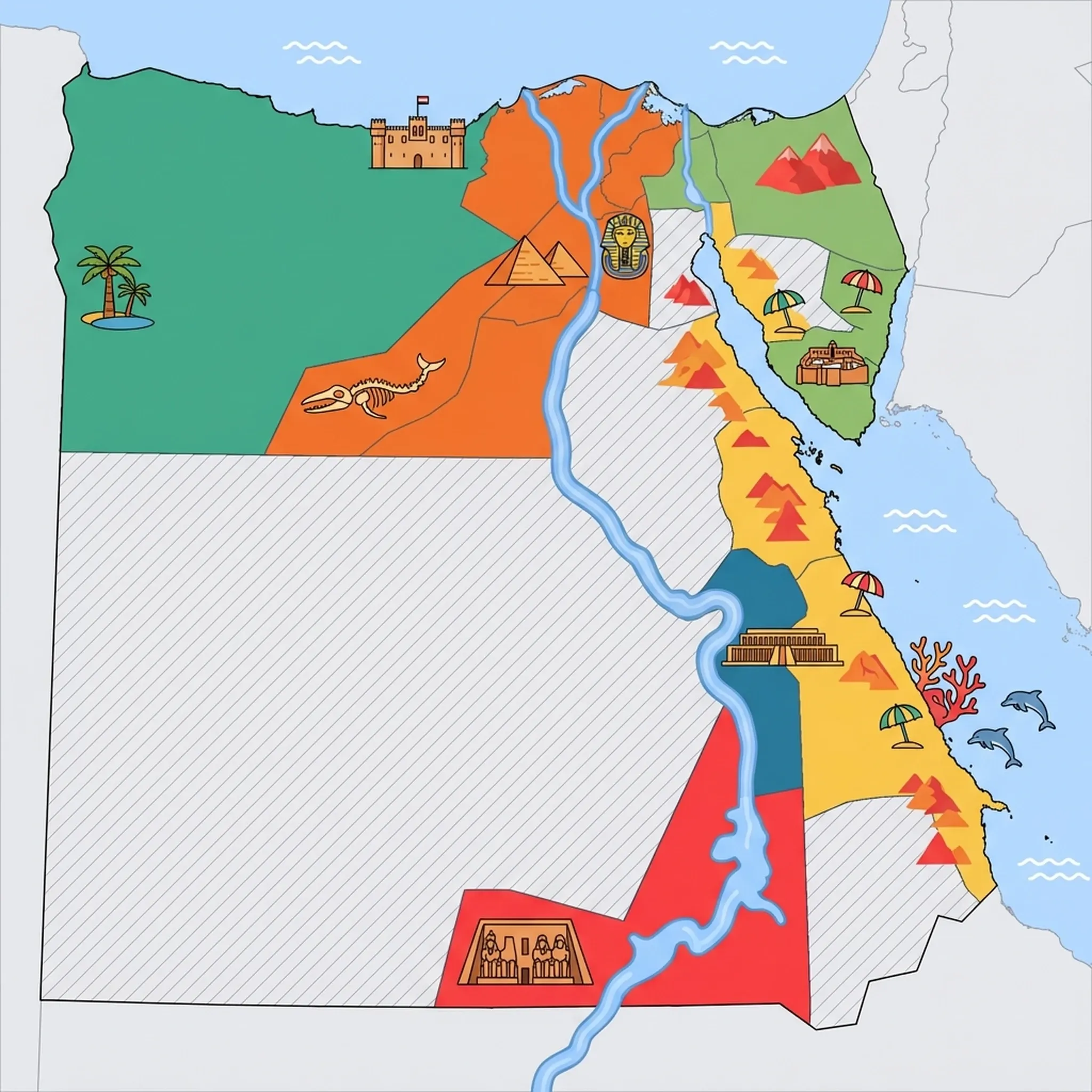
Click a region to explore
Overview
Cairo is an assault on the senses in the best possible way. It is a city that never sleeps, where ancient history sits alongside modern chaos. For families, seeing the Pyramids is a rite of passage, but the city offers much more. From the narrow, scent-filled alleys of historic souqs to state-of-the-art museums, Cairo brings history textbooks to life. While the traffic and noise can be overwhelming, the warmth of the locals toward children helps balance the intensity.
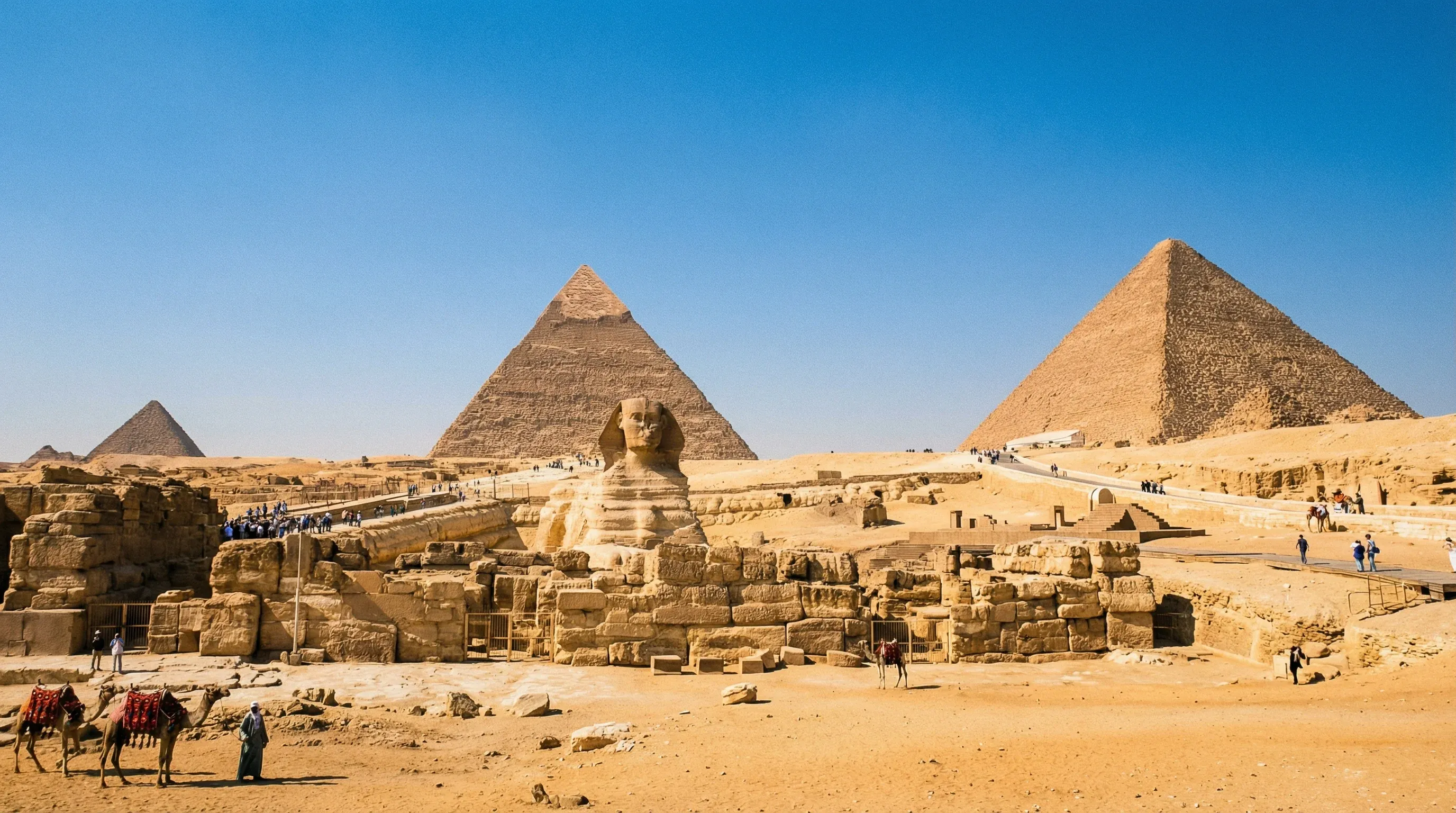
Giza, on the west bank, is where you will find the ancient heavyweights, while central and Islamic Cairo offers medieval architecture and culture. A hidden gem for families is the "Pharaonic Village," a living museum that reenacts ancient life, perfect for younger kids who might find static museums boring. The city is best tackled in small chunks, mixing history with pool time or park visits.
Key Attractions
The Giza Necropolis and the Great Sphinx of Giza are non-negotiable; consider a camel ride here for the ultimate photo op. For a deep dive into history, the The Egyptian Museum (Tahrir) holds the classic treasures, while the new National Museum of Egyptian Civilization is more spacious and stroller-friendly, housing the Royal Mummies. In the evening, head to Khan el-Khalili market to shop for souvenirs, but hold tight to little hands in the crowds. If the city noise gets too much, retreat to Al-Azhar Park for green space, playgrounds, and stunning views of the Saladin Citadel.
Practical Advice
Traffic is unpredictable. Always allow double the travel time you expect. Friday mornings (prayer time) are the quietest times to move around the city.
Food & Drink
Typical meal times: Lunch 2:00 pm to 5:00 pm; Dinner 8:00 pm to midnight.
Typical meal costs: Street food is pennies; a sit-down family dinner ranges from EGP 1,000–2,500 (approx. $21–52 USD / €19–48 EUR).
Dietary requirements: Very easy. Koshary is vegan by default. Grilled meats and salads are available everywhere for gluten-free needs.
Signature dishes:
- Koshary – The national dish: a mix of rice, macaroni, and lentils topped with spicy tomato sauce and fried onions. Cheap and kids love it.
- Ta'ameya – Egyptian falafel made from fava beans rather than chickpeas, greener and fluffier than the Levantine version.
- Om Ali – A bread pudding made with puff pastry, milk, nuts, and raisins; a warm, comforting dessert.
Why this score?
Cairo is a high-density, heavily urbanized environment where tourism is focused on historical sightseeing and museum visits. While navigating the chaotic traffic and the bustling Khan el-Khalili market provides some sensory excitement, the experience is largely developed and lacks rugged outdoor challenges. Activities are structured and occur within a well-established urban tourism framework.
Why this score?
Cairo is the center of Egyptian healthcare, featuring the country's most advanced private hospitals such as Dar Al Fouad and As-Salam International. These facilities have specialized departments, modern equipment, and many English-speaking doctors trained abroad. It is the most reliable region in Egypt for handling international insurance and complex medical emergencies.
Why this score?
As the location of the Great Pyramids of Giza, the only surviving Wonder of the Ancient World, Cairo is a top-tier global destination. It serves as the primary gateway for millions of international visitors who come to see the Sphinx, the Egyptian Museum, and Islamic Cairo. The sheer iconicity of its monuments places it among the most visited metropolitan areas in the Middle East and Africa.

Cairo accommodates all budgets. You can eat Koshary for EGP 50 ($1) or dine in luxury for EGP 2,000 ($40). Entry fees to major sites like the <a data-attraction-id="9799">Giza Necropolis</a> are significant for foreigners, costing around EGP 540 (approx. $11 USD / €10 EUR) per adult, with student discounts available.
Family Travel Notice
Check entry tax requirements at specific border crossings, as infants may be exempt. Ensure all family members are up to date on routine vaccinations, including measles, before travel.

Getting Here & Around
Getting Here
- Airports – Cairo International Airport (CAI) is the main hub, located about 45-60 minutes from downtown and Giza.
- Train – Ramses Station connects Cairo to Alexandria and the south (Luxor/Aswan).
- Bus – Go Bus and Super Jet operate from stations in Tahrir and Nasr City to the Red Sea and coast.
Getting Around
- Uber/Careem – The absolute best way for families. No bargaining required, GPS tracking, and safety. Avoid regular white taxis if possible to avoid scams.
- Metro – Efficient and cheap, but often very crowded. Good for hopping between downtown and Coptic Cairo (The Hanging Church).
- Walking – Difficult in most areas due to broken sidewalks and traffic, except in pedestrian zones like Al-Muizz li-Din Allah al-Fatimi Street.
Nearby Airports (2 airports)
Cairo International Airport
CAICairo
Sphinx International Airport
SPXGiza
View full flight map for Egypt →
Official Links

Packing List
The constant honking and city noise can be overwhelming for children with sensory sensitivities.
Streets are dusty, uneven, and often have debris; sandals are not practical for city walking.
Essential after handling money or touching rails in the Metro/museums.
Great for kids to spot details on high ceilings in mosques or the distant Pyramids.
Public restrooms and even some museums often lack toilet paper; carrying your own supply is essential.
The interiors of pyramids and tombs in the Valley of the Kings can be stiflingly hot with zero air circulation.
You must remove shoes to enter mosques; thick socks protect feet from dust, heat, or cold marble floors.
Dehydration and stomach upsets are common; these help recovery quickly if the local food disagrees with you.
Essential for women and girls to cover heads when entering mosques, and useful for sun/dust protection.
Lighting inside ancient tombs and pyramids can be dim; a small light helps kids spot hieroglyphic details.

Activities & Best Times

Urban tourism, museums, historical sites, architecture
Home to the Giza Necropolis and Islamic Cairo, this region offers world-class archaeological and heritage sites essential for sophisticated travelers. Peak visitation aligns with the mild winter and spring, while extreme summer heat from June to August makes extensive urban exploration and monument visiting highly uncomfortable.

Hiking, wildlife, outdoor exploration, ecotourism
Offers unique rural experiences and petting farms like Al Sorat and the Pharaonic Village that provide authentic insights into Egyptian agriculture and history for families. These outdoor-heavy activities are best enjoyed in the cooler winter months, as the desert sun is too intense during the extended summer season.

Amusement parks, family entertainment venues
Features significant facilities like KidZania and Dream Park that cater well to international families seeking familiar entertainment standards with a local twist. Peak times are the spring and autumn months when outdoor temperatures are pleasant for amusement park lines, while summer months are avoided due to extreme heat.

Sport tourism, fitness activities, active recreation
Infrastructure like Mario's High Ropes and Zed Park offer structured physical activity for active families, though it is a secondary draw compared to cultural sites. Activity is strictly seasonal, with peak conditions occurring during the cool winter to avoid heat exhaustion in outdoor facilities.

Attractions (17 total)



Public Holidays & Calendar Next 12 months
Public holidays, festivals, cultural celebrations, and seasonal natural phenomena coming up in Cairo & Giza over the next 12 months.
Loading holidays and events...

Travel Advisory
Standard safety precautions are insufficient. Multiple international agencies recommend exercising increased vigilance due to the threat of terrorism and regional political instability.
Safety Topics
Traveller Advice (4 groups)
Media professionals must obtain official accreditation from the national press center before arrival. Operating without proper credentials can lead to severe legal penalties and detention.

Local laws and social perspectives on sexual orientation and gender identity differ significantly from Western norms. Public displays of affection or sharing information online could lead to legal complications or discrimination.

Ensure you have comprehensive travel insurance that covers medical evacuation. Register your travel plans with your national embassy and stay informed of local safety updates through official channels.
Check entry tax requirements at specific border crossings, as infants may be exempt. Ensure all family members are up to date on routine vaccinations, including measles, before travel.
Agency Summaries
The overall security situation remains stable for the majority of travelers in tourist hubs, but specific advisories are in place for border zones and the Sinai Peninsula. Ongoing regional tensions may affect travel arrangements.
Travelers should maintain a high level of vigilance due to an unstable security environment and the persistent threat of terrorist activity throughout the country. Regional conflicts have made certain border areas particularly dangerous.
Safety concerns are more significant than those found in standard travel destinations. Particular attention should be paid to the risk of civil unrest and the presence of landmines in specific remote areas.
Irish citizens are encouraged to be highly vigilant and monitor local media. Regional escalation poses a risk of sudden travel disruptions and changes to the security profile of the country.
Terrorism is an ongoing risk that could impact any location at any time. Recent military developments in the broader region have increased the potential for travel disruptions and localized instability.
Visitors are urged to stay alert for potential terrorist threats. While major tourist sites are generally more secure, remote regions and certain northern areas carry severe safety risks that discourage non-essential movement.
Information is provided for general guidance only and does not constitute travel, safety, medical, or legal advice. Conditions may change. Users are responsible for independently verifying information before travel.