

El Salvador
Republic of El Salvador
República de El Salvador
El Salvador packs a punch that defies its small size. Known as the "Little Thumb of the Americas" (Pulgarcito de América), this country offers a dense concentration of adventures that are perfect for families who want to minimize travel time and maximize experience. In a single week, you can explore mist-covered coffee plantations in the highlands, hike accessible volcanoes, and relax on warm Pacific beaches. The climate is tropical, with a dry season from November to April that offers endless blue skies, making it the ideal time for school holiday trips.
Culturally, El Salvador is warm and welcoming, with a society that deeply values family. Children are greeted with smiles everywhere, from the bustling markets of San Salvador to the sleepy cobblestone streets of the mountain towns. The country is currently experiencing a tourism renaissance; recent safety improvements have opened up regions that were previously off the beaten path, allowing visitors to discover a land rich in Mayan heritage and natural beauty without the crowds found in neighboring countries.
Key Attractions
For active families, the Santa Ana & West region is a playground of natural wonders. A must-do is the Santa Ana Volcano Hike (Ilamatepec). It is one of the most accessible volcano hikes in Central America, offering a manageable challenge for older children and rewarding them with a stunning turquoise crater lake at the summit. Nearby, Lake Coatepeque is a sparkling volcanic caldera where families can rent boats, jet skis, or simply swim in the refreshing geothermal waters, often with restaurants right on the water's edge.
History comes alive in a way kids can understand at the Joya de Cerén Archaeological Park. Known as the "Pompeii of the Americas," this UNESCO World Heritage site preserves a Mayan farming village buried by ash 1,400 years ago, showing exactly how ancient families lived, ate, and slept. Back in the capital, the Historic Center of San Salvador has been revitalized, offering safe, walkable plazas where you can see the majestic National Palace of El Salvador and the Metropolitan Cathedral of San Salvador. For a quieter day, the La Laguna Botanical Garden offers a shady, green oasis built inside an extinct volcanic crater, perfect for toddlers to run around safely.
Practical Advice
The best time to visit is during the dry season (November to April), when rain is rare and humidity is lower. El Salvador uses the US Dollar as its official currency (alongside Bitcoin), which simplifies budgeting for many travelers. ATMs are widespread in cities but can be scarce in rural villages. Malaria is rare, but dengue fever exists, so mosquito protection is essential. The country is small, so you can base yourself in one or two locations-like the capital or the coast-and take day trips without constantly repacking.
Safety
El Salvador has seen a dramatic improvement in safety in recent years, moving from one of the most dangerous countries to a popular tourist hub. However, a "State of Exception" is currently in place to maintain this order. For tourists, this generally means a very visible police and military presence, which most families find reassuring rather than intimidating. Violent crime against tourists is rare, but petty theft can happen. Stick to main tourist routes, avoid walking in unlit areas at night, and always carry a copy of your passport rather than the original. It is advisable to use official transport or private drivers rather than local buses for inter-city travel with children.
Food & Drink
Typical meal times: Breakfast is early, from 6:30 am to 8:30 am. Lunch is the main meal, served 12:00 pm to 2:00 pm. Dinner is lighter and eaten between 6:00 pm and 7:30 pm.
Typical meal costs: $6–12 USD (approx. €5.50–11 EUR / £4.75–9.50 GBP) for a casual local meal; $0.75–1.50 USD (approx. €0.70–1.40 EUR / £0.60–1.20 GBP) per pupusa.
Dietary requirements: Vegetarian options are easy to find, as beans, cheese, and eggs are staples. Gluten-free travelers can enjoy corn-based tortillas and pupusas (always ask if wheat flour "harina de trigo" is mixed in, but traditional ones are corn "maíz" or rice "arroz"). Vegan options are growing in surf towns but require specification elsewhere.
Family-friendly dining: Salvadoran dining is inherently family-oriented. Highchairs are common in modern restaurants but less so in small comedores. Kids almost universally love pupusas-they are cheap, tasty finger food that is fun to eat.
Signature dishes:
- Pupusas – Thick, handmade corn or rice tortillas stuffed with cheese, beans, or pork, grilled until golden and served with pickled cabbage slaw (curtido) and tomato salsa.
- Yuca Frita – Fried cassava root served with chunks of pork (chicharrón) or small fried fish (pescaditas), a hearty snack often found at markets.
- Desayuno Típico – The classic breakfast featuring scrambled eggs with vegetables, refried beans, fried plantains, fresh cheese (queso fresco), and cream.
- Horchata de Morro – A sweet, refreshing drink made from ground morro seeds, spices, and milk, distinct from the Mexican rice-based version.

El Salvador offers excellent value for families. A daily budget of $100–150 USD (approx. €90–135 EUR / £80–120 GBP) covers a family of four for mid-range hotels, private transport, and plenty of food. Street food like pupusas costs less than $1 USD each, while sit-down dinners run $10–18 USD (approx. €9–16 EUR / £8–14 GBP) per person. Activities are affordable, with many parks charging under $5 USD entry.
Age Suitability





Did you know? El Salvador welcomes approximately 3.2 million international visitors per year. Most visitors come from Americas.

Explore Regions
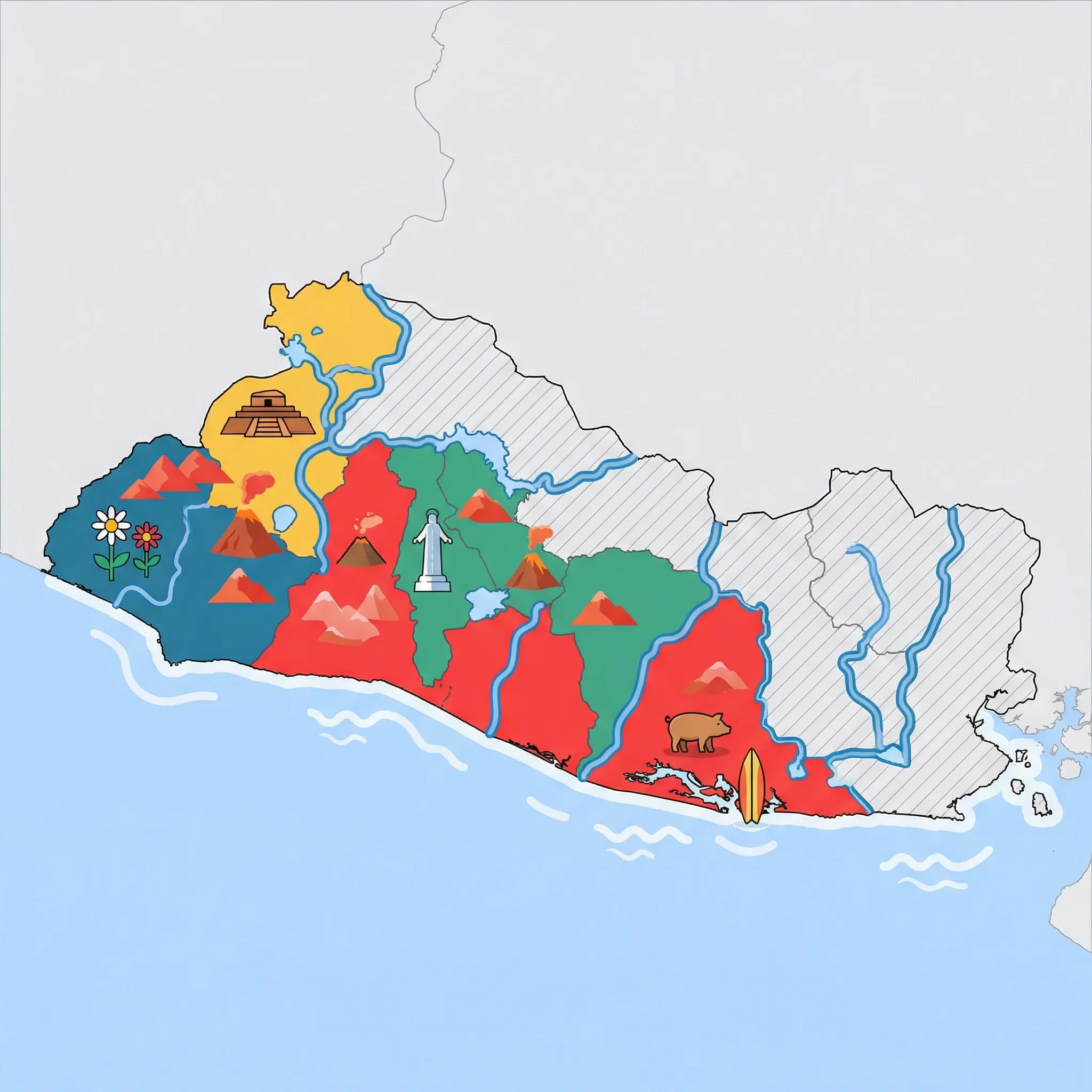
4 Regions
El Tunco & Pacific Beaches (surfing)
Chasing sunsets and surf on black volcanic sands 🌊🏄♂️
Ruta de las Flores
Misty mountains, colorful murals, and coffee culture ☕🌸
San Salvador
A city of contrasts: historic plazas, modern malls, and volcanoes 🌋🏙️
Santa Ana & West
Ancient ruins, emerald lakes, and volcanic peaks 🌋🏛️
Click on a region marker to explore details. Use the dropdown to color regions by activity suitability.

Getting There & Around
Getting There
- By Air – El Salvador International Airport (SAL) is the main hub, located about 45 minutes from El Tunco & Pacific Beaches and 1 hour from the capital. It receives direct flights from major US cities, Madrid, and regional capitals.
- By Land – First-class buses (like Pullmantur or TicaBus) connect San Salvador with Guatemala City and Tegucigalpa. These are comfortable, air-conditioned, and safe for families.
- Entry Requirements – Tourists from the US, UK, and EU typically do not need a visa for stays up to 90 days, but may need to purchase a tourist card upon arrival ($12 USD). Check your government website for the latest visa requirements, or use the IATA Travel Centre entry-requirements checker.
Getting Around
- Private Drivers – The most stress-free option for families. You can hire a driver for the day for around $80–120 USD. It allows you to stop whenever the kids need a break and navigate mountain roads safely.
- Car Hire – Major international agencies operate at the airport and in San Salvador. Roads are generally good on main routes (CA-1, CA-2), but GPS is essential. Driving styles can be aggressive, so stay alert.
- Uber – Widely available, safe, and very cheap in San Salvador and Santa Tecla. It is a great way to get around the city for dinner or museum visits.
- Buses – The famous "chicken buses" are colorful and cheap but often crowded, fast, and not recommended for families with young children or luggage due to safety standards.

Packing List
Beaches like El Tunco are rocky (stones, not sand) and river waterfalls can be slippery.
Evenings in mountain towns like Apaneca and Ataco can get surprisingly chilly (down to 15°C/60°F).
Fireworks are very common year-round for celebrations, often late at night or early morning.
Street lighting in smaller colonial towns can be dim or sporadic during power fluctuations.
The tropical heat and humidity deplete you quickly; local options aren't always kid-friendly flavors.

Activities & Best Times

Adventure & Nature
Very GoodHiking, wildlife, outdoor exploration, ecotourism
Rating remains very_good but justification needs correction - Santa Ana Volcano is NOT in this region. The very_good rating is supported by the Seven Waterfalls (Los Chorros de la Calera), coffee highlands biodiversity, and the concentration of waterfall systems. Notes should reference actual attractions in this region.
Features diverse tropical dry forests and dramatic waterfalls like Tamanique, offering genuine wilderness immersion for active families. Optimal from Nov–Mar when trails are dry and accessible, while peak rainfall (Jun–Sep) makes exploration hazardous.
Home to the iconic Santa Ana Volcano and the high-biodiversity El Imposible National Park. The dry season (Nov-Apr) is peak for safe trekking and clear vistas, while heavy rains in June and September degrade trail safety.

City & Cultural
Very GoodUrban tourism, museums, historical sites, architecture
Features a dense collection of authentic colonial towns like Ataco and Juayúa alongside indigenous heritage in Nahuizalco. The dry season (Nov-Apr) is optimal for exploring street art, coffee cooperatives, and outdoor food festivals, which are central to the region's cultural appeal.
San Salvador features a revitalized historic core and the UNESCO-listed Joya de Cer%n, offering world-class archaeological insights into ancient Mayan life. Walking tours and site visits are most comfortable in the drier months, as the late-year tropical storms can disrupt exploration of the heritage sites.
Features UNESCO-listed Joya de Cerén and the impressive Tazumal ruins alongside Santa Ana's neo-Gothic cathedral. Outdoor exploration of these heritage sites is best during the dry months to avoid tropical downpours.

Sports & Active
Very GoodSport tourism, fitness activities, active recreation
Boasts significant adventure infrastructure including high-altitude cycling loops and the popular Cafe Albania activity center. Peak visitation aligns with the dry season to ensure full access to outdoor equipment and mountain hiking routes which become slick during the tropical wet season.
The region boasts dedicated mountain biking circuits and well-maintained hiking infrastructure at sites like Eco Parque El Espino and El Boquer%n. Trail conditions are best when the ground is dry and stable, as the heavy precipitation in September and October creates muddy conditions unsuitable for active sports.
A hub for surfing and active exploration, featuring purpose-built adventure parks and internationally recognized surf competition venues. Conditions are most favorable during the dry season for both ocean activities and inland biking trails.

Road Trips & Scenic
GoodScenic drives, countryside tours, route-based travel
A well-defined and celebrated scenic route through high-altitude coffee plantations and flower-lined mountain passes. Driving conditions are best from November to February when the local flora is in bloom and visibility across the Apaneca range is at its highest.
As a hub for the famous Ruta de las Flores and the scenic Coastal Route, the region provides excellent access to celebrated driving tours through coffee-growing highlands. The early dry season is peak for seeing the flowers in bloom and coffee harvests, while the peak rainy season can make mountain roads treacherous.
The Ruta de las Flores is a celebrated scenic drive through colonial coffee towns. It is most spectacular from November to February during the flower blooming season and when road visibility is highest.

Theme Park & Entertainment
GoodAmusement parks, family entertainment venues
Café Albania offers internationally unique adventure rides like the rainbow slide and bike zipline. Operations are best in the dry season when mountain weather is stable and outdoor family attractions are most accessible.
Contains local aquatic centers like Atecozol that serve as regional entertainment hubs, though they lack the scale of global theme parks. These outdoor venues are primarily visited during the sunny peak season when families seek water-based recreation.
Local venues like Los Chorros water park and the Tin Mar%n Children's Museum provide family-friendly recreation but remain modest in scale for international travelers. Peak visitation aligns with the warmest dry months and school holidays, whereas the peak rainy season makes outdoor aquatic centers unappealing.

Beach & Sea
GoodBeach resorts, marine activities: diving, snorkelling, kite surfing, wind surfing, sailing
Renowned for consistent surf breaks like El Sunzal and a vibrant coastal culture, offering an authentic Pacific experience. Peak dry season (Nov–Mar) provides the most reliable family-friendly conditions and sunny skies.
Los Cóbanos features rare volcanic reefs for snorkeling while Barra de Santiago offers mangrove scenery. Best visited in mid-dry season for maximum water visibility and calmer Pacific swells.

Relaxation & Wellness
MarginalSpa retreats, wellness centers, peaceful getaways
Offers unique geothermal experiences like the hot water falls of Malacatiupán, though facilities are more rustic than international luxury standards. These thermal sites are best visited in the drier months when surrounding river levels are controlled and access roads are reliable.
Natural thermal springs at Santa Teresa and Alicante provide a rustic wellness experience. These open-air baths are most enjoyable during the cooler and drier months of the year.

Educational & Exploratory
MarginalLearning experiences, scientific sites, historical education
The Tin Mar%n and Natural History museums offer solid educational engagement for younger children, though they lack the global prestige of major capital city institutions. These indoor facilities remain functional during the shoulder season but align with broader regional tourism peaks during the 'Verano' (summer) months.
Joya de Cerén provides a unique scientific look at pre-Hispanic life, often called the 'Pompeii of the Americas.' While internationally significant, it is a focused site best paired with other cultural activities in the dry season.

Public Holidays & Calendar Next 12 months
Public holidays, festivals, cultural celebrations, and seasonal natural phenomena coming up in El Salvador over the next 12 months.
Loading holidays and events...

Climate & Weather
El Tunco & Pacific Beaches (surfing)
Show Details
| Month | Temp °C | Rain | Humidity |
|---|
Ruta de las Flores
Show Details
| Month | Temp °C | Rain | Humidity |
|---|
San Salvador
Show Details
| Month | Temp °C | Rain | Humidity |
|---|
Santa Ana & West
Show Details
| Month | Temp °C | Rain | Humidity |
|---|

Travel Advisory
Most major agencies recommend exercising a high degree of caution or increased vigilance. While the security situation regarding gang violence has significantly improved since 2022, the ongoing 'State of Exception' allows for expanded police powers and the suspension of certain constitutional rights.
Safety Topics
Traveller Advice (4 groups)

Female travellers should consult specific safety guidance regarding solo travel and remain vigilant in public spaces.

Ensure you carry valid identification at all times as security checkpoints and searches are common. Avoid displaying wealth or travelling alone at night, especially in rural or less populated areas.

When visiting volcanoes or remote hiking trails, it is highly recommended to use certified local guides and conduct activities during daylight hours to ensure safety.

Specific resources are available for sexual and gender minority travellers to navigate local social norms and legal differences.
Agency Summaries
While the security environment has gotten better and crime rates have dropped, a state of emergency persists, and travellers are advised to stay alert to their surroundings.
Travellers are encouraged to be careful and avoid areas where security operations are active, as the country continues to operate under a national state of emergency.
Due to concerns regarding violent crime, travellers should exercise a higher level of awareness than they normally would, particularly in urban centers.
Safety conditions have improved notably as gang-related activity and homicides have decreased; however, a state of exception remains in effect which limits certain rights.
High levels of caution are recommended due to the persistent threat of violent crime, even though security measures have led to some reductions in gang activity.
Visitors should maintain heightened vigilance because of the ongoing risk of crime and the potential for arbitrary enforcement of local laws under current emergency measures.
Information is provided for general guidance only and does not constitute travel, safety, medical, or legal advice. Conditions may change. Users are responsible for independently verifying information before travel.