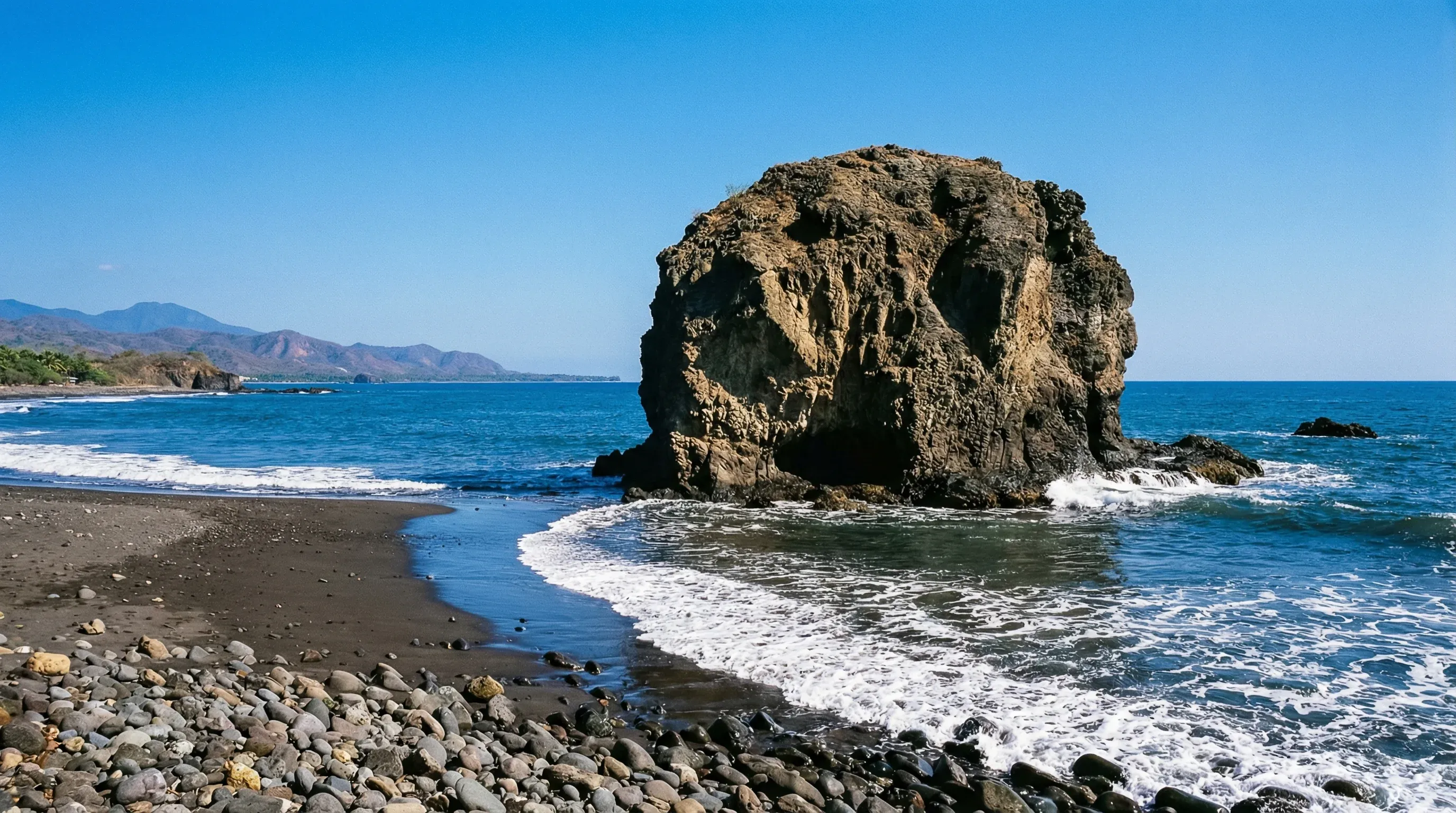

El Tunco & Pacific Beaches (surfing)
Chasing sunsets and surf on black volcanic sands 🌊🏄♂️
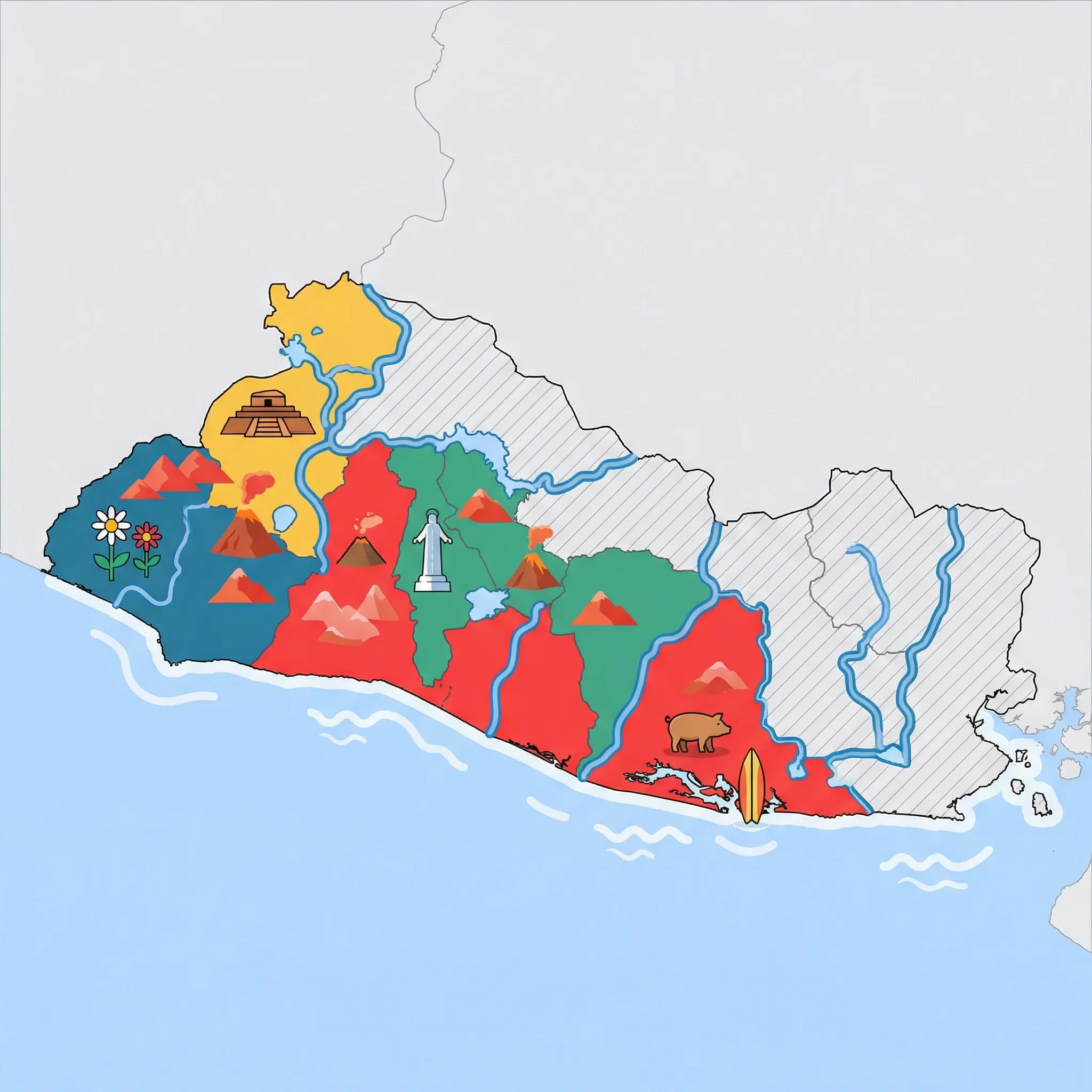
Click a region to explore
The Pacific coastline of La Libertad, anchored by the vibrant village of El Tunco, represents the beating heart of El Salvador's tourism renaissance. For families, this region offers a fascinating introduction to the power of the Pacific Ocean, set against a backdrop of glistening black volcanic sand and lush tropical cliffs. While historically known as a surfer's paradise, the area has evolved into a family-friendly destination where barefoot luxury meets bohemian charm. The atmosphere is distinctly relaxed; days are spent watching skilled surfers tackle the waves at La Bocana, exploring tide pools teeming with marine life at low tide, or enjoying fresh coconuts in beachfront cabanas. The unique black sand, created by volcanic rock erosion, is a geological marvel that fascinates children, though parents should note it absorbs heat quickly and requires footwear during midday.
While the ocean here is powerful, the region is safe for families who respect the water. The distinct rock formations, including the iconic pig-shaped rock that gives El Tunco ("The Pig") its name, create a dramatic landscape for family photos. Beyond the beach, the area serves as an excellent strategic base. You are close enough to the capital for convenience but far enough to feel completely immersed in the coastal rhythm. The vibe changes from calm mornings—ideal for beginner surf lessons in protected coves—to lively evenings where travelers from around the world gather to watch the sun dip below the horizon.
Key Attractions
While the beaches themselves are the main draw, the region's central location allows for exceptional excursions. Families looking for a break from the salt water can make a short trip inland to the La Laguna Botanical Garden. This sunken garden, located inside an extinct volcanic crater, offers a cool, shaded respite with playgrounds and thousands of plant species that captivate young explorers. It is a peaceful contrast to the bustling beach scene and provides a safe, enclosed environment for toddlers to run free.
For a different kind of beach experience, a drive west brings you to Los Cóbanos. Unlike the dark sands of Tunco, this area features golden sands and is home to an important coral reef system. It is one of the best spots in the country for snorkeling when conditions are calm, allowing older children to see colorful fish and marine life in their natural habitat. The protected nature of the cove often makes the water calmer here than at the surfing heavyweights like Sunzal.
Practical Advice
The dry season (November to April) is the best time to visit for endless sunshine and milder humidity. However, the wet season (May to October) brings lush green landscapes and surfing swells, with rain usually limited to late afternoon showers. Families should be aware that the Pacific currents here are strong; always swim in designated areas and consider hiring a local guide for surf lessons. ATMs are available in El Tunco, but having cash (USD) is recommended for smaller vendors.
Food & Drink
Typical meal times: Breakfast is served from 7:00 am to 10:00 am, lunch from 12:00 pm to 2:30 pm, and dinner typically runs from 6:30 pm to 9:00 pm. Beachfront bars stay open later.
Typical meal costs: A fresh seafood dinner for a family of four costs approximately $40–70 USD (approx. €37–65 EUR / £32–55 GBP). Street food pupusas cost as little as $1 USD (approx. €0.90 EUR / £0.80 GBP) each.
Dietary requirements: Excellent for pescatarians. Vegetarian options are widespread due to the international backpacker influence (smoothie bowls, veggie burgers). Gluten-free travelers can rely on corn-based pupusas, but always ask if wheat flour is added to the mix.
Signature dishes:
- Ceviche de Camarón – Fresh shrimp "cooked" in lime juice with onions, cilantro, and tomato, served with crackers or fried tortilla chips.
- Mariscada – A rich, creamy seafood soup often containing crab, shrimp, fish, and squid, a Sunday favorite for local families.
- Minutas – Shaved ice served in a bag or cup, topped with fruit syrup and condensed milk—the ultimate beach cooling treat.
Why this score?
The region offers rugged coastal experiences including world-class surfing, hiking to the Tamanique waterfalls, and exploring volcanic caves. The Pacific surf can be powerful and challenging, providing a moderately high adventure level for active families. However, the presence of established tourist villages like El Tunco provides a safety net of amenities that keeps it from being true wilderness.
Why this score?
Medical facilities in the immediate beach towns are limited to small clinics and pharmacies capable of handling minor injuries or surf-related scrapes. While the modern 'Sunset Park' area has improved basic infrastructure, any serious medical emergency or specialized care requires a 45-minute to one-hour drive to San Salvador. Language barriers are common in local clinics, though some private practitioners in the surf community speak English.
Why this score?
As the heart of the 'Surf City' initiative, this region has seen a significant rise in international visibility, particularly among the surfing community and backpackers. While it lacks the mass-market volume of major Caribbean destinations, its world-class point breaks and black sand beaches attract a steady flow of international visitors. Infrastructure is developing rapidly, though it remains a primarily niche destination compared to global hubs.

While El Tunco is one of the pricier tourist zones in El Salvador, it remains affordable by international standards. Boutique hotels range from $80–150 USD (approx. €75–140 EUR / £65–120 GBP) per night. Hostel private rooms can be found for $40–60 USD (approx. €37–55 EUR / £32–48 GBP). Budget travelers can eat well on $5–8 USD (approx. €4.50–7.50 EUR / £4–6.50 GBP) per meal if sticking to local comedores.

Getting Here & Around
Getting Here
- Airports – The region is conveniently located just 40–50 minutes from El Salvador International Airport (SAL). Taxis and shuttles are readily available.
- Driving – The "Surf City" road infrastructure is excellent. It is a straightforward 45-minute drive from San Salvador via the well-paved highway.
- Shuttles – Tourist shuttles connect El Tunco directly with Antigua (Guatemala) and other major Central American hubs.
Getting Around
- Walking – The village of El Tunco is entirely walkable. You can walk between El Tunco and nearby beaches at low tide, but watch the tide tables.
- Car – Having a car is useful for exploring further afield to places like Los Cóbanos, but parking in El Tunco can be tight on weekends.
- Local Bus – The "Chicken Buses" (Route 102A) run along the coastal highway, offering a cheap experience, though they are often crowded and driven aggressively.
Nearby Airports (1 airport)
El Salvador International
SALSan Salvador
View full flight map for El Salvador →
Official Links

Packing List
Many beaches have rocky bottoms or volcanic stone patches that are painful to walk on.
The tropical sun is intense, and surfboard wax can irritate bare skin during lessons.
Essential for water resistance during surfing; local brands can be expensive.
To protect electronics from fine black sand which gets into everything.
Beaches like El Tunco are rocky (stones, not sand) and river waterfalls can be slippery.
Evenings in mountain towns like Apaneca and Ataco can get surprisingly chilly (down to 15°C/60°F).
Fireworks are very common year-round for celebrations, often late at night or early morning.
Street lighting in smaller colonial towns can be dim or sporadic during power fluctuations.
The tropical heat and humidity deplete you quickly; local options aren't always kid-friendly flavors.

Activities & Best Times

Hiking, wildlife, outdoor exploration, ecotourism
Features diverse tropical dry forests and dramatic waterfalls like Tamanique, offering genuine wilderness immersion for active families. Optimal from Nov–Mar when trails are dry and accessible, while peak rainfall (Jun–Sep) makes exploration hazardous.

Beach resorts, marine activities: diving, snorkelling, kite surfing, wind surfing, sailing
Renowned for consistent surf breaks like El Sunzal and a vibrant coastal culture, offering an authentic Pacific experience. Peak dry season (Nov–Mar) provides the most reliable family-friendly conditions and sunny skies.

Urban tourism, museums, historical sites, architecture
Centred on the authentic fishing port of La Libertad and the laid-back surf village vibe of El Tunco. Best visited in the dry months to experience the lively street culture and outdoor dining without the seasonal tropical rains.

Sport tourism, fitness activities, active recreation
A hub for surfing and active exploration, featuring purpose-built adventure parks and internationally recognized surf competition venues. Conditions are most favorable during the dry season for both ocean activities and inland biking trails.

Scenic drives, countryside tours, route-based travel
The Surf City coastal highway offers dramatic ocean vistas and access to scenic lookouts along El Salvador's rugged Pacific coast. Travel is best in the dry season (Nov–Mar) to avoid visibility issues and road hazards common during heavy rainfall.



Public Holidays & Calendar Next 12 months
Public holidays, festivals, cultural celebrations, and seasonal natural phenomena coming up in El Tunco & Pacific Beaches (surfing) over the next 12 months.
Loading holidays and events...

Travel Advisory
Most major agencies recommend exercising a high degree of caution or increased vigilance. While the security situation regarding gang violence has significantly improved since 2022, the ongoing 'State of Exception' allows for expanded police powers and the suspension of certain constitutional rights.
Safety Topics
Traveller Advice (4 groups)

Female travellers should consult specific safety guidance regarding solo travel and remain vigilant in public spaces.

Ensure you carry valid identification at all times as security checkpoints and searches are common. Avoid displaying wealth or travelling alone at night, especially in rural or less populated areas.

When visiting volcanoes or remote hiking trails, it is highly recommended to use certified local guides and conduct activities during daylight hours to ensure safety.

Specific resources are available for sexual and gender minority travellers to navigate local social norms and legal differences.
Agency Summaries
While the security environment has gotten better and crime rates have dropped, a state of emergency persists, and travellers are advised to stay alert to their surroundings.
Travellers are encouraged to be careful and avoid areas where security operations are active, as the country continues to operate under a national state of emergency.
Due to concerns regarding violent crime, travellers should exercise a higher level of awareness than they normally would, particularly in urban centers.
Safety conditions have improved notably as gang-related activity and homicides have decreased; however, a state of exception remains in effect which limits certain rights.
High levels of caution are recommended due to the persistent threat of violent crime, even though security measures have led to some reductions in gang activity.
Visitors should maintain heightened vigilance because of the ongoing risk of crime and the potential for arbitrary enforcement of local laws under current emergency measures.
Information is provided for general guidance only and does not constitute travel, safety, medical, or legal advice. Conditions may change. Users are responsible for independently verifying information before travel.