

Equatorial Guinea
Republic of Equatorial Guinea
República de Guinea Ecuatorial
⚠️ SAFETY WARNING: Exercise increased caution in Equatorial Guinea. Police checkpoints are frequent, and officers may demand bribes or scrutinize documents intently. Avoid all political gatherings, do not photograph government buildings (including the presidential palace and airports), and ensure you carry color copies of your passport and visa at all times to avoid handing over original documents to corrupt officials.
Overview
Equatorial Guinea is a destination for the truly adventurous family. It is the only Spanish-speaking country in Africa, creating a unique cultural atmosphere where colonial architecture blends with vibrant West African traditions. Split between the volcanic island of Malabo (Bioko Island) and the larger mainland region of Rio Muni, the country offers dense primary rainforests, deserted beaches, and a level of biodiversity that is hard to find elsewhere. Unlike more developed tourist hubs, you will likely have these incredible sights entirely to yourselves.
However, travel here requires patience and preparation. It is not a budget destination, nor is it particularly easy to navigate. Families will need to arrange comfortable transport and be prepared for frequent police stops. The rewards, though, are significant: trekking to hidden waterfalls, watching leatherback turtles lay eggs on the shores of Ureka, and standing before the towering Basílica de la Inmaculada Concepción in Mongomo. For teenagers and older children interested in nature and genuine exploration, it is an unforgettable classroom of living history and biology.
Key Attractions
The crown jewel of the country's natural heritage is Monte Alén National Park in the Bata & Continental Region. This 1,400-square-kilometre protected area is a playground of dense jungle, rushing waterfalls, and wildlife including chimpanzees, forest elephants, and gorillas. While spotting shy forest animals is harder than on a savannah safari, the experience of hiking through untouched rainforest is profound. Hiring a local guide is mandatory and essential for navigating the trails safely.
On the mainland's eastern border lies the city of Mongomo, home to the unexpected and magnificent Basílica de la Inmaculada Concepción. One of the largest Christian churches in Africa, its sheer size and Italian-style grandeur stand in stark contrast to the surrounding jungle landscape, making it a surreal and impressive sight for visitors. Back on Bioko Island, the black-sand beaches of Arena Blanca offer a unique seaside experience, while the southern village of Ureka is famous for its dry-season turtle nesting sites, a magical spectacle for nature-loving children.
Practical Advice
The best time to visit is during the dry season, from December to February, when roads are more passable and turtle viewing is at its peak. Visas are required for most nationalities (including US, UK, and EU citizens) and can now be applied for online, though the process can still be bureaucratic. Malaria is prevalent, so high-quality prophylaxis and insect repellent are non-negotiable. French and Spanish are the official languages; English is rarely spoken, so a phrasebook or translation app is vital. Be aware that credit cards are rarely accepted outside top luxury hotels in Malabo; carry plenty of cash (Euros or CFA Francs).
Food & Drink
Typical meal times: Lunch is usually taken between 1:00 pm and 3:00 pm, while dinner is a late affair, typically starting from 8:00 pm to 10:00 pm, reflecting the Spanish cultural influence.
Typical meal costs: 10,000–30,000 XAF (approx. $16–50 USD / €15–45 EUR). Dining in Malabo is surprisingly expensive, with prices comparable to or higher than in Europe due to the reliance on imported goods.
Dietary requirements: Vegetarian options are limited to side dishes like plantains, rice, and beans. Vegan and gluten-free travellers will struggle in restaurants and should consider bringing their own staple snacks. Peanuts and shellfish are common ingredients.
Family-friendly dining: Highchairs are virtually non-existent. Restaurants in Malabo are generally welcoming to children, but service can be slow. Pizza and pasta are widely available in the capital for fussy eaters.
Signature dishes:
- Succotash – The national dish, a hearty stew of sweetcorn, beans, and pumpkin, often simmered with fish or meat.
- Pepe-sup – A very spicy fish soup made with locally caught fresh fish, onions, and fiery peppers (ask for a non-spicy version for kids).
- Paella – A remnant of colonial rule, this rice dish is often made with local seafood and chicken, widely available in Malabo.
- Bambucha – A rich, traditional stew made from cassava leaves, palm kernel oil, and fish, offering a truly local flavour profile.
- Akwadu – A popular dessert of bananas baked with coconut and honey, perfect for children.
Safety
Equatorial Guinea is politically stable but strictly controlled. Violent crime against tourists is relatively rare, but petty theft can occur. The biggest "danger" is often officialdom; ensure your paperwork is perfect. Do not take photos of anything that looks official (police, military, government buildings, airports) as this can lead to detention and confiscation of equipment. Health is a major consideration; medical facilities are limited, so comprehensive travel insurance with medical evacuation cover is essential. Avoid drinking tap water entirely.

Equatorial Guinea is one of the most expensive destinations in Africa. A family of four should expect to spend 250,000–400,000 XAF (approx. $400–650 USD / €380–610 EUR) per day. Hotels in Malabo are priced for business travellers ($150+ per night), and meals are costly. Internal flights to Bata cost around $200 per person.
Age Suitability





Explore Regions
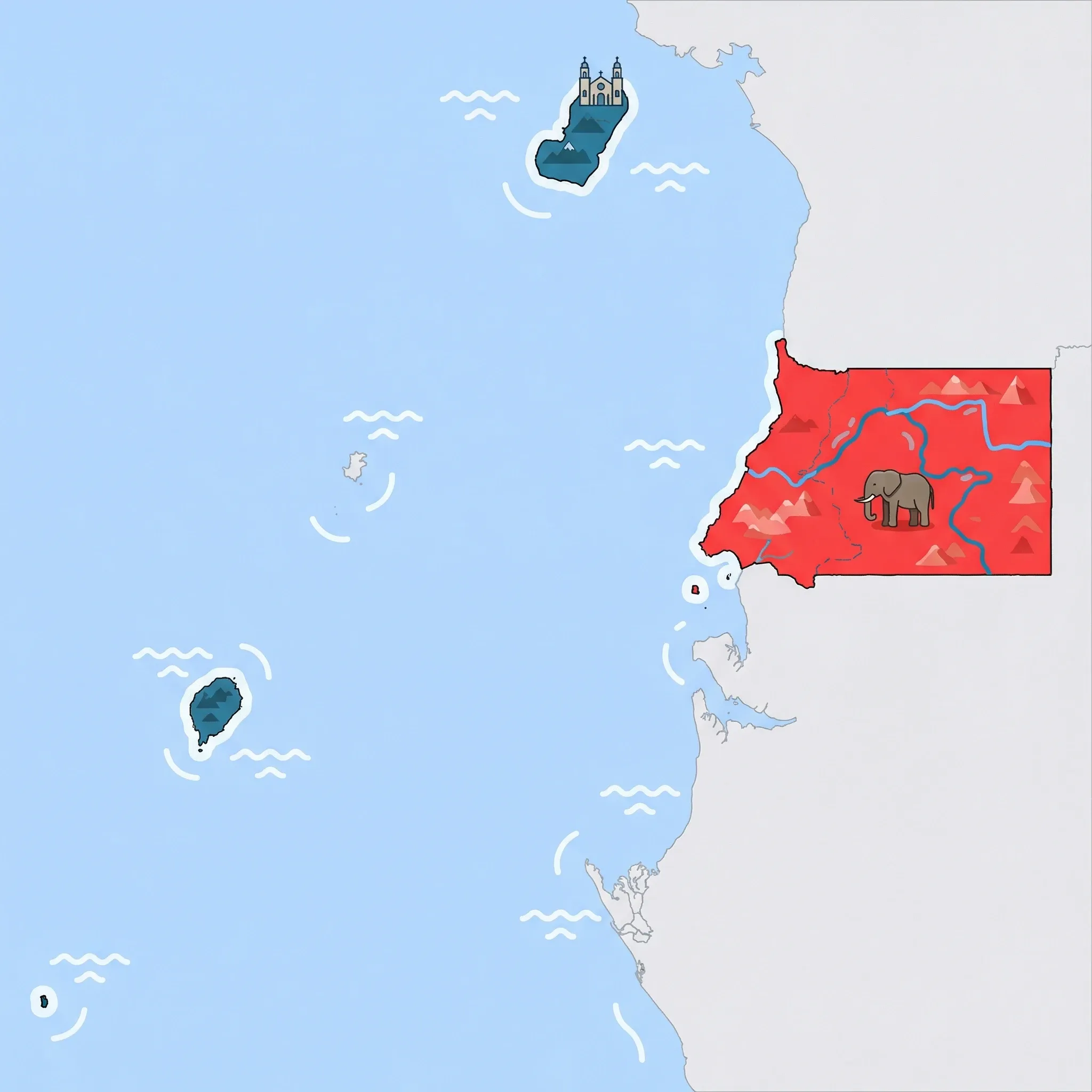
2 Regions
Bata & Continental Region
Deep rainforest adventures meeting unexpected architectural marvels 🦍🌿
Malabo (Bioko Island)
Volcanic peaks and colonial charm in the Atlantic 🌋🏝️
Click on a region marker to explore details. Use the dropdown to color regions by activity suitability.

Getting There & Around
Getting There
- By Air – Flights land at Malabo International Airport (SSG). Major connections include Air France from Paris and Royal Air Maroc from Casablanca. Regional flights connect from Addis Ababa and Lomé.
- By Sea – A ferry service occasionally runs between Malabo and Bata, but it is slow (12+ hours) and safety standards vary; flying is the better option for families.
- Entry Requirements – Visas are required for US, UK, and EU citizens. An e-visa system is now available. Check your government website for the latest visa requirements, or use the IATA Travel Centre entry-requirements checker.
Getting Around
- Domestic Flights – The most reliable way to travel between Malabo and the Bata & Continental Region is by air. Carriers like Ceiba Intercontinental and Cronos Airlines operate daily 45-minute flights.
- Taxis – In Malabo and Bata, shared taxis are common and cheap, but private hire is safer for families. Always negotiate the price before getting in.
- Car Hire – Renting a 4x4 with a local driver is highly recommended for safety and navigating police checkpoints. Self-driving is difficult due to road conditions and frequent stops.

Packing List
Mandatory for entry; you may be refused boarding or entry without the original yellow card.
Hand these to police at checkpoints instead of your actual passport to prevent documents being held for bribes.
ATMs are unreliable and often reject foreign cards; credit cards are rarely accepted outside luxury hotels.
English is virtually non-existent; knowing basic Spanish is essential for daily interactions.
Power cuts can occur, and street lighting is inconsistent in smaller towns.
Essential for Monte Alén National Park to protect against mud, insects, and snakes on jungle trails.

Activities & Best Times

Adventure & Nature
Very GoodHiking, wildlife, outdoor exploration, ecotourism
Monte Alén National Park is a world-class biodiversity hotspot offering authentic jungle trekking and wildlife viewing that satisfies even the most experienced travelers. The rainy seasons (March-May and September-November) make jungle trails extremely difficult and are considered off-season for safe exploration.
Home to world-class biodiversity, including rare primates and sea turtle nesting sites in Ureka. The dry months are essential for navigating jungle trails and accessing the dramatic Cascadas de Iladyi.

Beach & Sea
GoodBeach resorts, marine activities: diving, snorkelling, kite surfing, wind surfing, sailing
Bata and Mbini offer pristine Atlantic beaches and a well-developed coastal promenade (Paseo Marítimo) that appeals to families seeking quiet, uncrowded shores. Visitation peaks during the drier windows of January-February and July-August when sea conditions are calm and humidity is slightly more manageable.
Features unique volcanic landscapes and the rare white sands of Arena Blanca. Peak conditions occur during the short dry season when sea visibility is at its best and coastal humidity is more manageable.

City & Cultural
GoodUrban tourism, museums, historical sites, architecture
While Malabo has authentic colonial architecture and local culture, 'very_good' overstates its international appeal. The city lacks major museums, galleries, or cultural institutions found in truly strong cultural destinations. 'Good' is more appropriate for a small capital with modest cultural offerings.
Bata and Mongomo have some cultural interest (religious architecture, local culture) but lack the institutional depth, tourist infrastructure, and international recognition for a 'good' rating. Limited museums, galleries, and cultural venues compared to recognized cultural destinations.

Sports & Active
GoodSport tourism, fitness activities, active recreation
Active travelers can utilize the established trails of Monte Alén and the waterways of the Mbini River for demanding physical excursions. These activities are highly weather-dependent, with the peak months offering the stable conditions required for trekking and river navigation.
Offers challenging high-altitude trekking on Pico Basile and rugged coastal routes near Ureka. These activities are highly weather-dependent, with peak seasons aligned to the months with the lowest rainfall and safest trail conditions.

Road Trips & Scenic
MarginalScenic drives, countryside tours, route-based travel
While the Bata-Mongomo highway exists, Equatorial Guinea's limited road network and lack of scenic route development doesn't support 'good' rating. Road infrastructure outside oil industry routes is limited, and this isn't recognized as a road trip destination.
The Southern Circuit and Pico Basile road provide spectacular volcanic vistas on high-quality roads. Safety and visibility are significantly compromised during the extreme rainfall months, making the dry window the only viable time for touring.

Public Holidays & Calendar Next 12 months
Public holidays, festivals, cultural celebrations, and seasonal natural phenomena coming up in Equatorial Guinea over the next 12 months.
Loading holidays and events...
Climate & Weather
Bata & Continental Region
Show Details
| Month | Temp °C | Rain | Humidity |
|---|
Malabo (Bioko Island)
Show Details
| Month | Temp °C | Rain | Humidity |
|---|

Travel Advisory
The majority of international agencies advise exercising increased caution (Level 2 or equivalent) due to persistent crime and limited essential services.
Safety Topics
Traveller Advice (3 groups)

Always carry your original passport or a high-quality photocopy, as police and military checkpoints are frequent and documentation is strictly enforced. Avoid taking photographs of government buildings, military sites, or officials to avoid arrest.

Female travellers should dress conservatively to respect local customs and avoid walking alone at night in urban areas due to safety risks.

While same-sex relationships are not explicitly illegal, there is significant social stigma and no legal protection against discrimination. Public displays of affection should be avoided.
Agency Summaries
Visitors should exercise increased caution because of crime, health concerns, and the potential for arbitrary enforcement of local regulations. Medical infrastructure is extremely limited.
Travellers should remain highly vigilant due to prevalent crime. Criminal activity is a significant concern across the country.
Maintain standard safety awareness. Be aware that Australia has no diplomatic mission in the country; consular assistance is provided via the embassy in Spain or Canadian offices.
While no specific warning is in place, travellers should maintain comprehensive insurance and follow standard health precautions for Central Africa.
Exercise caution throughout the country. Risks include petty and violent crime, particularly in urban centers after dark, and the possibility of arbitrary detention in commercial or legal disputes.
High vigilance is recommended, especially in Bata and Malabo where armed robbery and petty theft are frequent. Avoid large gatherings and always carry official identification.
Information is provided for general guidance only and does not constitute travel, safety, medical, or legal advice. Conditions may change. Users are responsible for independently verifying information before travel.