
Bata & Continental Region
Deep rainforest adventures meeting unexpected architectural marvels 🦍🌿
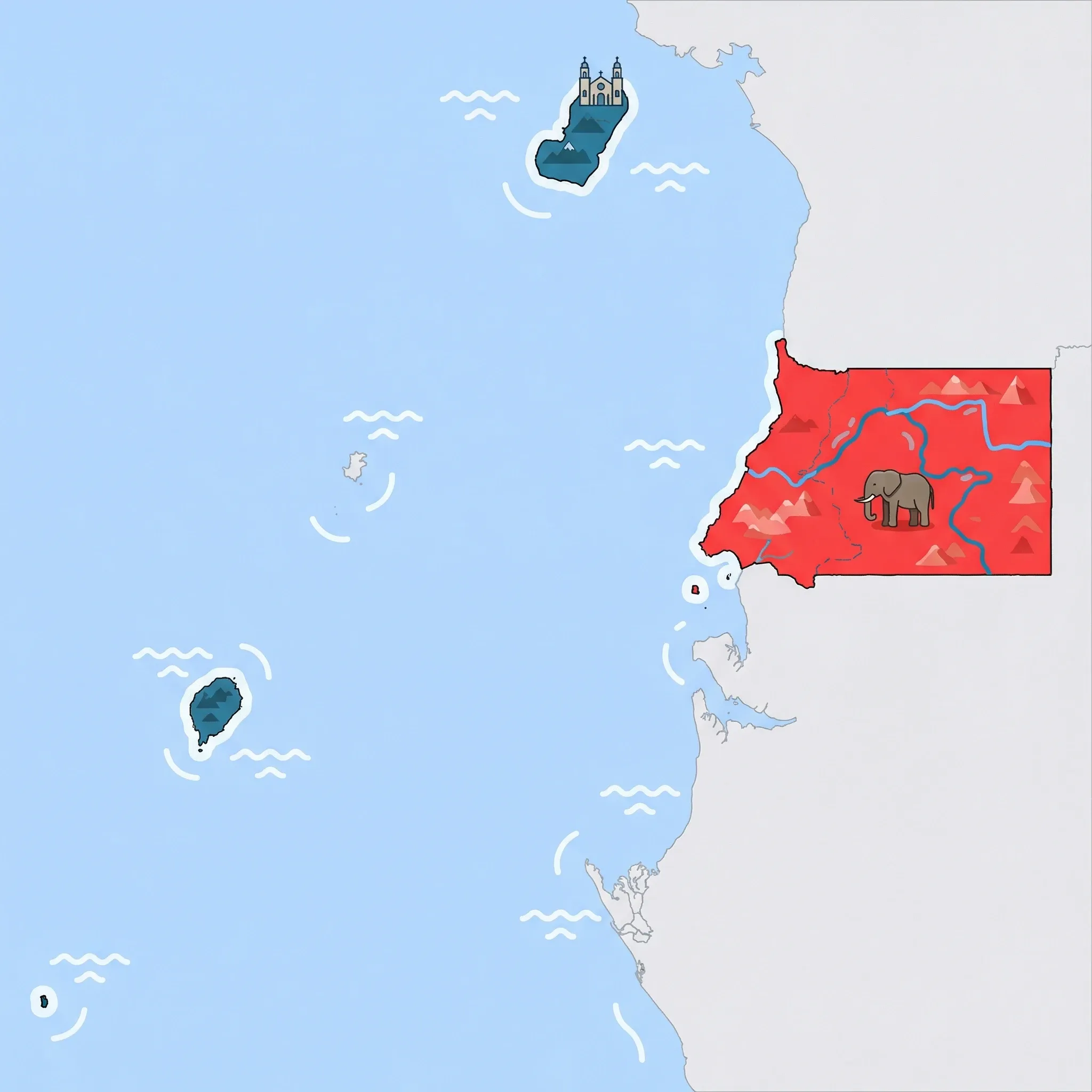
Click a region to explore
Important Travel Advisory
Please note: Equatorial Guinea enforces strict rules regarding photography and travel permits. Photography of government buildings, military sites, airports, and even some public squares is strictly prohibited and can lead to detention or confiscation of equipment. Police checkpoints are frequent along roads between Bata, Mongomo, and Ebibeyin; always carry original passports and vaccination documents. Travelers should respect local authority and obtain necessary tourist permits for interior travel if required.
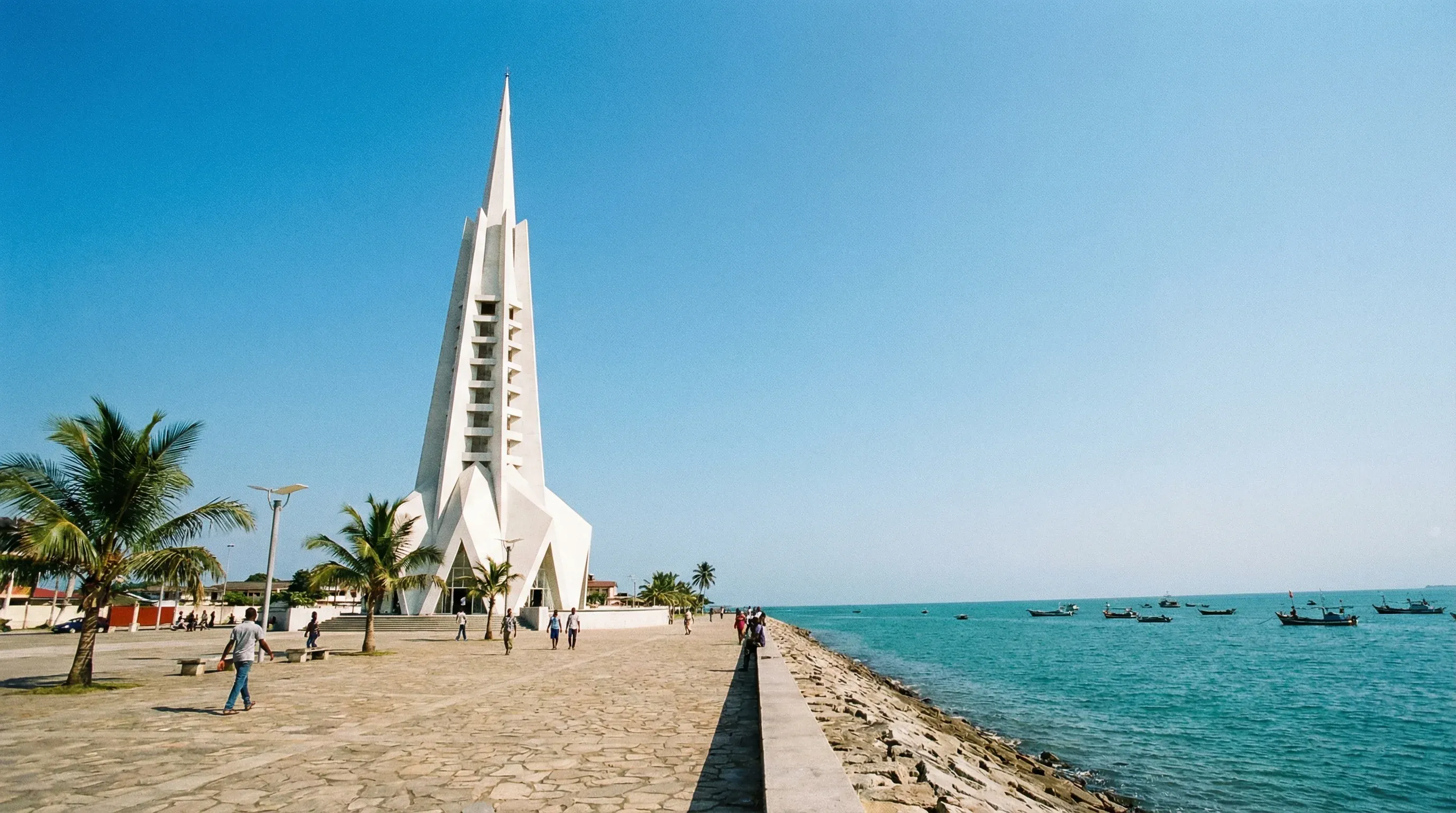
The Continental Region (Río Muni) feels worlds apart from the island capital. It is the geographic heart of the country, a place where the Atlantic coastline gives way to rolling hills and the dense, humid rainforests of the Congo Basin. For families, the city of Bata serves as a relaxed, breezy gateway with its wide palm-lined boulevards and colonial remnants. Unlike the hustle of typical African metropolises, Bata moves at a slower pace, offering a chance to walk along the Paseo Marítimo and watch fishermen haul in their daily catch.
Venturing inland, the infrastructure is surprisingly modern, with smooth highways cutting through walls of green jungle. This accessibility makes it possible to explore deep into the interior where few international tourists tread. Children will be fascinated by the shift from coastal fishing culture to the agricultural communities of the Fang people in the interior. The region is not a manicured theme park; it is a genuine slice of Central Africa where the sounds of the forest are always present, and the mist hangs heavy over the canopy in the mornings.
Key Attractions
The undisputed highlight for nature-loving families is Monte Alén National Park. Spanning over 1,400 square kilometers, this protected area is a biodiversity hotspot. While spotting forest elephants or gorillas requires patience and a guide, the experience of hiking through untouched rainforest is unforgettable for older children and teens. The park reveals the raw beauty of the region, with cascading waterfalls and rocky outcrops rising from the jungle floor.
In stark contrast to the wild jungle, the town of Mongomo on the eastern border hosts the Basílica de la Inmaculada Concepción. This colossal religious site, inspired by St. Peter's in Rome, rises surreally out of the tropical landscape. It is the second-largest Catholic church in Africa and offers a unique cultural lesson on the country's colonial history and modern wealth. The sheer scale of the building is awe-inspiring for visitors of all ages.
Practical Advice
The dry seasons (December to February and July to August) are the best times to visit, as the unpaved roads within parks like Monte Alén become impassable in the rain. Bata has decent medical facilities, but the interior is remote; bring a comprehensive first-aid kit. Spanish is the main language, so a phrasebook is essential. Cash is king—credit cards are rarely accepted outside luxury hotels in Bata.
Food & Drink
Typical meal times: Lunch is a substantial affair, typically served from 1:00 pm to 3:00 pm. Dinner is eaten later, usually between 8:00 pm and 10:00 pm.
Typical meal costs: Meals are moderately priced but imported goods are expensive. A main dish in a decent restaurant costs 8,000–15,000 XAF (approx. $13–25 USD / €12–23 EUR). Street food is cheaper, around 2,000–4,000 XAF (approx. $3.30–6.60 USD / €3–6 EUR).
Dietary requirements: Vegetarian options can be challenging to find outside Bata. Most local dishes are meat or fish-heavy. Allergens like peanuts are common in sauces. Explain "sin carne" (without meat) clearly, but expect limited variety (mostly rice, plantains, and beans).
Signature dishes:
- Succotash – Not the American corn dish, but a local variation often involving vegetables, beans, and fish or meat simmered in palm oil.
- Sopa de Pescado con Pepa – A spicy fresh fish soup seasoned with paradise grains (pepa) and local herbs, very warming and aromatic.
- Pollo con Salsa de Cacahuete – Chicken slow-cooked in a rich, creamy peanut sauce, usually served with rice or boiled plantain.
Why this score?
The region features the vast and rugged Monte Alén National Park, which offers challenging treks through dense primary rainforest to spot forest elephants and gorillas. The lack of established tourist trails and the remote nature of the mainland interior provide a high-intensity wilderness experience.
Why this score?
While Bata and the new administrative city of Ciudad de la Paz have modern medical buildings, consistent access to high-quality care and English-speaking specialists is very limited. Rural areas offer only basic clinics, and serious medical emergencies typically require evacuation to Malabo or abroad.
Why this score?
This region receives almost no international leisure tourism, with the vast majority of foreign arrivals being business travelers in the petroleum and construction sectors. Infrastructure for independent travelers is extremely limited outside of Bata, and most of the interior remains unvisited by outsiders.

While street food and local transport are affordable, accommodation and sit-down dining in Bata are priced for oil-industry expats. A standard hotel room ranges from 60,000–100,000 XAF (approx. $100–165 USD / €90–150 EUR). Transport hire (4x4 with driver) is the biggest expense, costing upwards of 100,000 XAF (approx. $165 USD / €150 EUR) per day.

Getting Here & Around
Getting Here
- Airports – Bata Airport (BSG) is the main entry point, with frequent flights from Malabo (approx. 30-45 minutes). International connections usually route through Malabo first.
- Ferry – A ferry service connects Malabo to Bata, though schedules can be erratic and the journey takes several hours. It is an adventurous option for families with plenty of time.
- Driving – Once in Bata, the road network to the interior is surprisingly good. Paved highways connect Bata to Mongomo (near Basílica de la Inmaculada Concepción) and Ebibeyin.
Getting Around
- Car Rental – Renting a 4x4 with a driver is the safest and most practical way to explore. Self-driving is possible on major roads, but police checkpoints can be intimidating for non-Spanish speakers.
- Taxi – In Bata, shared taxis are color-coded and cheap. For longer trips, "bush taxis" (minibuses) run to interior towns, but they are often overcrowded and not recommended for families with small children.
- Walking – Bata's waterfront is walkable, but distances within the city and to attractions like Monte Alén National Park require a vehicle.
Nearby Airports (2 airports)
Bata
BSGBata
Mongomeyen Airport
GEMMongomo
View full flight map for Equatorial Guinea →

Packing List
Required at frequent police checkpoints so you don't have to hand over originals.
Malaria is prevalent and jungle insects in Monte Alén are aggressive.
English is rarely spoken outside of major hotels; essential for checkpoints.
ATMs are unreliable and often reject international cards; bring cash to exchange.
Mandatory for entry; you may be refused boarding or entry without the original yellow card.
Hand these to police at checkpoints instead of your actual passport to prevent documents being held for bribes.
ATMs are unreliable and often reject foreign cards; credit cards are rarely accepted outside luxury hotels.
Power cuts can occur, and street lighting is inconsistent in smaller towns.
Essential for Monte Alén National Park to protect against mud, insects, and snakes on jungle trails.

Activities & Best Times

Hiking, wildlife, outdoor exploration, ecotourism
Monte Alén National Park is a world-class biodiversity hotspot offering authentic jungle trekking and wildlife viewing that satisfies even the most experienced travelers. The rainy seasons (March-May and September-November) make jungle trails extremely difficult and are considered off-season for safe exploration.

Beach resorts, marine activities: diving, snorkelling, kite surfing, wind surfing, sailing
Bata and Mbini offer pristine Atlantic beaches and a well-developed coastal promenade (Paseo Marítimo) that appeals to families seeking quiet, uncrowded shores. Visitation peaks during the drier windows of January-February and July-August when sea conditions are calm and humidity is slightly more manageable.

Sport tourism, fitness activities, active recreation
Active travelers can utilize the established trails of Monte Alén and the waterways of the Mbini River for demanding physical excursions. These activities are highly weather-dependent, with the peak months offering the stable conditions required for trekking and river navigation.

Urban tourism, museums, historical sites, architecture
Bata and Mongomo have some cultural interest (religious architecture, local culture) but lack the institutional depth, tourist infrastructure, and international recognition for a 'good' rating. Limited museums, galleries, and cultural venues compared to recognized cultural destinations.

Scenic drives, countryside tours, route-based travel
While the Bata-Mongomo highway exists, Equatorial Guinea's limited road network and lack of scenic route development doesn't support 'good' rating. Road infrastructure outside oil industry routes is limited, and this isn't recognized as a road trip destination.




Public Holidays & Calendar Next 12 months
Public holidays, festivals, cultural celebrations, and seasonal natural phenomena coming up in Bata & Continental Region over the next 12 months.
Loading holidays and events...

Travel Advisory
The majority of international agencies advise exercising increased caution (Level 2 or equivalent) due to persistent crime and limited essential services.
Safety Topics
Traveller Advice (3 groups)

Always carry your original passport or a high-quality photocopy, as police and military checkpoints are frequent and documentation is strictly enforced. Avoid taking photographs of government buildings, military sites, or officials to avoid arrest.

Female travellers should dress conservatively to respect local customs and avoid walking alone at night in urban areas due to safety risks.

While same-sex relationships are not explicitly illegal, there is significant social stigma and no legal protection against discrimination. Public displays of affection should be avoided.
Agency Summaries
Visitors should exercise increased caution because of crime, health concerns, and the potential for arbitrary enforcement of local regulations. Medical infrastructure is extremely limited.
Travellers should remain highly vigilant due to prevalent crime. Criminal activity is a significant concern across the country.
Maintain standard safety awareness. Be aware that Australia has no diplomatic mission in the country; consular assistance is provided via the embassy in Spain or Canadian offices.
While no specific warning is in place, travellers should maintain comprehensive insurance and follow standard health precautions for Central Africa.
Exercise caution throughout the country. Risks include petty and violent crime, particularly in urban centers after dark, and the possibility of arbitrary detention in commercial or legal disputes.
High vigilance is recommended, especially in Bata and Malabo where armed robbery and petty theft are frequent. Avoid large gatherings and always carry official identification.
Information is provided for general guidance only and does not constitute travel, safety, medical, or legal advice. Conditions may change. Users are responsible for independently verifying information before travel.