
Malabo (Bioko Island)
Volcanic peaks and colonial charm in the Atlantic 🌋🏝️
Click a region to explore
Important Travel Advisory
Please note: Security is tight in Malabo. Taking photos of the Presidential Palace, military personnel, or government buildings is strictly forbidden and will attract immediate police attention. Always carry your passport or a certified copy. While violent crime is low, travelers should remain vigilant and respectful of local laws, especially during the evening hours.
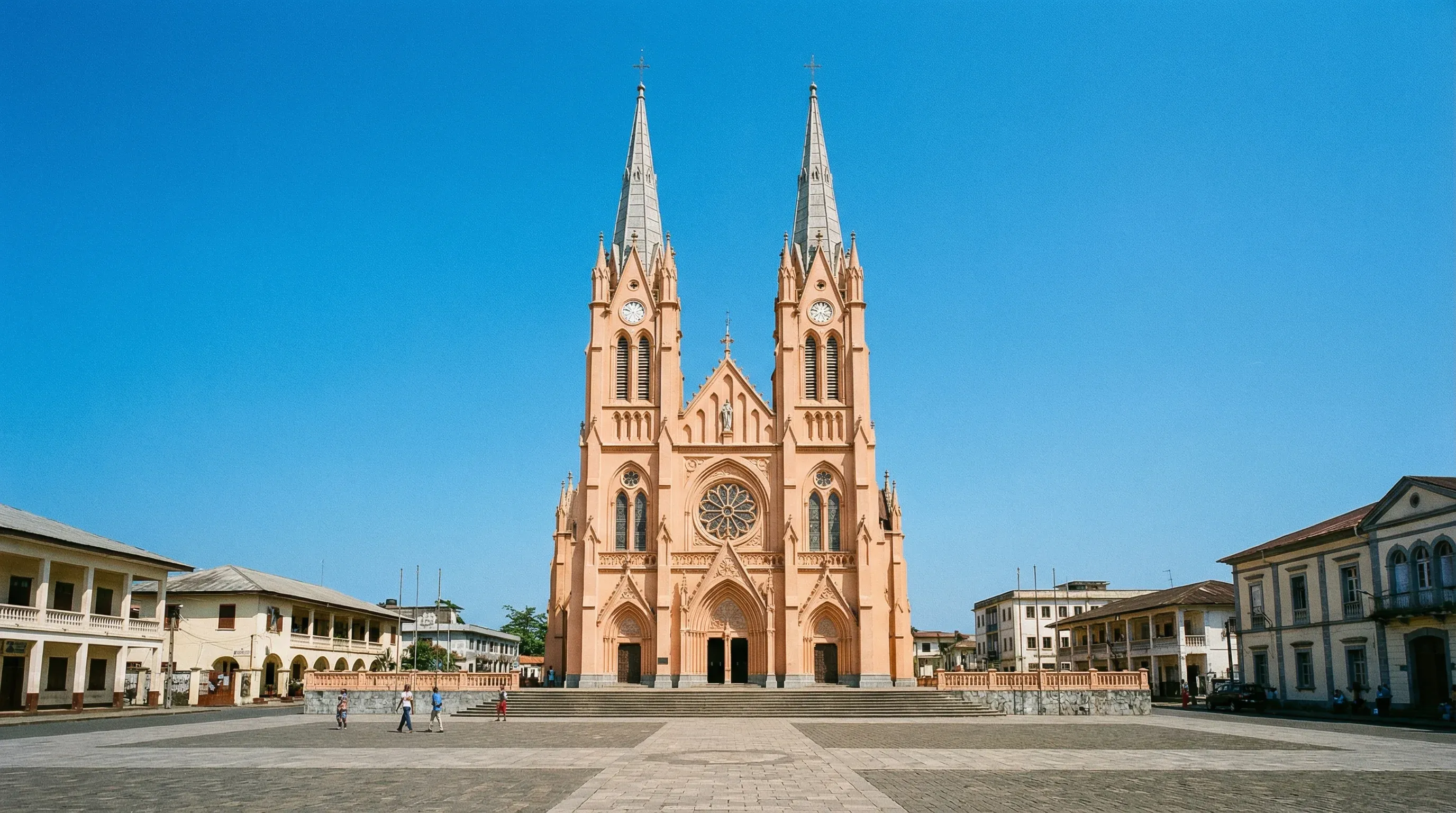
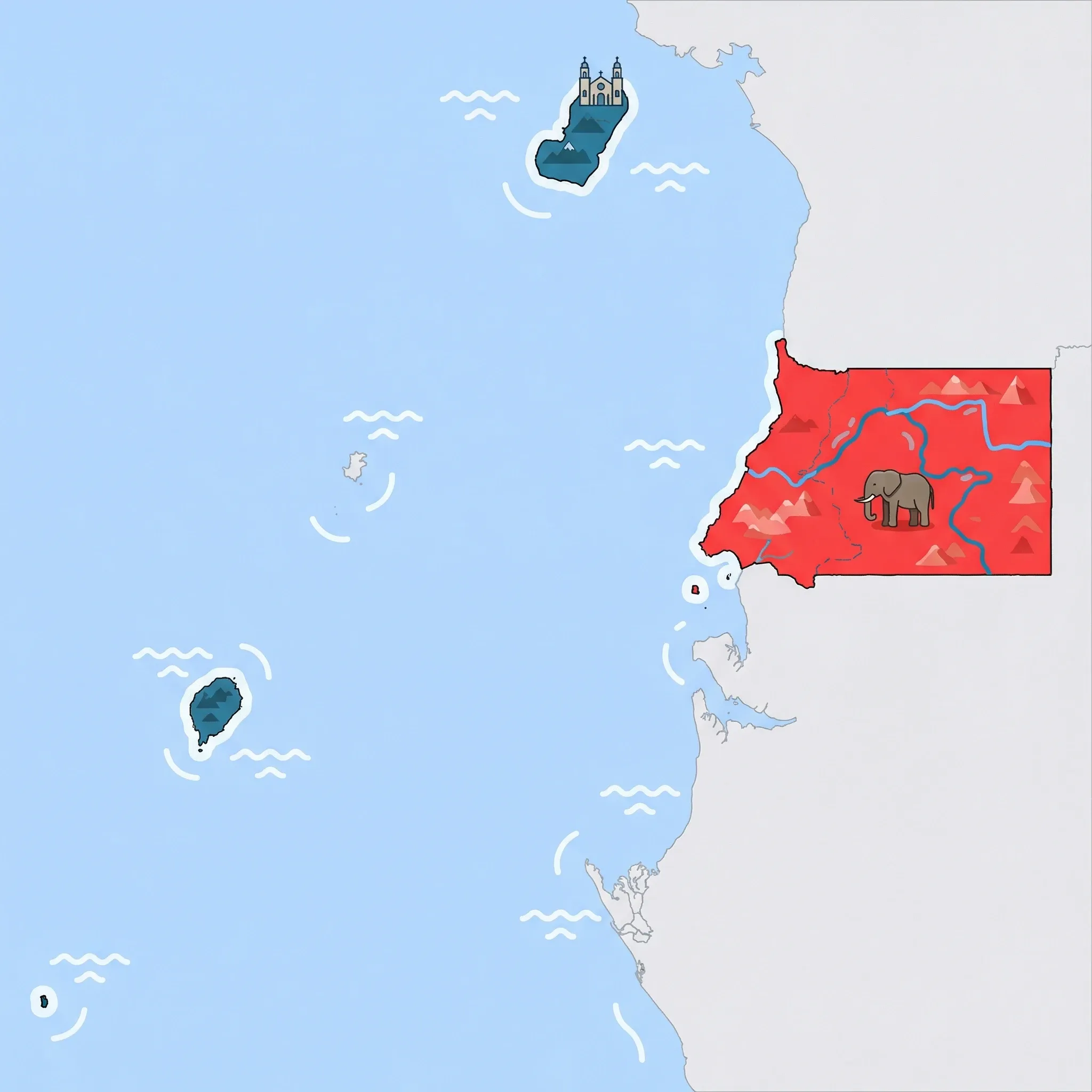
Malabo, situated on the northern rim of Bioko Island, is a city of layers. At its core, you find a sleepy colonial town with cathedral spires and Spanish plazas that feel like a tropical fragment of Europe. Surrounding this historic center is the modern infrastructure built on oil wealth, creating a unique urban tapestry. For families, Malabo offers a relatively soft landing into the region, with better hotels, supermarkets, and amenities than the mainland. The pace is relaxed, and the ocean breeze helps temper the tropical heat.
Beyond the city limits, the island transforms into a Jurassic Park-style wilderness. The interior is dominated by the massive shield volcano, Pico Basile, whose slopes are covered in thick rainforest. The southern part of the island feels incredibly remote, with small villages like Ureka nesting on beaches where sea turtles come to lay their eggs. Driving the island's loop road (where permitted) offers spectacular views of the Atlantic crashing against dark volcanic cliffs, a dramatic sight that children will love.
Key Attractions
The Cathedral of Saint Elizabeth is the architectural heart of Malabo. Its neo-Gothic spires are visible from much of the city, and the surrounding square is a peaceful spot for a family walk. It stands as a testament to the island's Spanish colonial past and is one of the most photographed (legally permitted) landmarks in the country.
For a day trip, Pico Basile offers breathtaking views. On clear days, you can see all the way to Mount Cameroon on the African mainland. The drive up takes you through changing vegetation zones, from tropical heat to cool mountain mist. Another family favorite is Arena Blanca, the only white sand beach on the island (actually a golden hue) which comes alive with butterflies during certain seasons, offering a magical experience for younger children.
Practical Advice
The dry season (December to February) is the best time to visit to avoid torrential island rains. Malabo has a good selection of pharmacies and clinics, but serious issues may require evacuation. Taxis are the easiest way to get around town, but agree on a price first. While the official languages include Spanish, French, and Portuguese, Spanish is the lingua franca.
Food & Drink
Typical meal times: Lunch is usually 1:00 pm to 3:00 pm. Dinner is a late affair, often starting around 8:00 pm or 9:00 pm in the city.
Typical meal costs: Malabo is one of the most expensive cities in Africa. A family meal at a mid-range restaurant can easily cost 25,000–45,000 XAF (approx. $40–75 USD / €38–68 EUR). A simple pizza can cost 10,000 XAF (approx. $16 USD / €15 EUR).
Dietary requirements: International restaurants (Lebanese, Chinese, Spanish) in Malabo cater well to various diets. Vegetarian options like hummus, salads, and pasta are readily available in the capital, unlike in rural areas.
Signature dishes:
- Pepe Soup – A spicy, light broth usually made with fresh fish locally caught off the island, seasoned with chili and local herbs.
- Bambá – A dish prepared with yucca (cassava) leaves and palm oil, often served with fish or meat, rich in flavor and very filling.
- Grilled Snapper – Fresh Red Snapper is a staple at beachside restaurants, typically served simply grilled with plantains or french fries.
Why this score?
Bioko Island offers significant adventure through the steep volcanic ascent of Pico Basile and the remote southern trek to Ureka. The terrain is physically demanding, featuring dense jungles, dramatic waterfalls, and isolated beaches where sea turtles nest during the dry season.
Why this score?
Malabo is home to the country's most advanced facilities, such as the La Paz Medical Center, which provides a better standard of care than the mainland. However, medical infrastructure still faces significant challenges in reliability and staffing compared to international tourism hubs.
Why this score?
As the capital and main international gateway, Malabo sees the highest concentration of the country's very few tourists. While it possesses colonial charm and volcanic scenery, it remains a niche destination globally due to historical visa difficulties and high travel costs.

Malabo is notoriously expensive due to its oil-based economy and high reliance on imports. Budget accommodation is virtually non-existent. A decent hotel room starts at 90,000–120,000 XAF (approx. $150–200 USD / €135–180 EUR). Supermarket goods can be double European prices. However, local taxis are cheap at roughly 500–1,000 XAF (approx. $0.80–1.65 USD / €0.75–1.50 EUR) per ride.

Getting Here & Around
Getting Here
- Airports – Malabo International Airport (SSG) is the country's main hub. Major connections arrive from Madrid, Paris, and regional capitals like Addis Ababa or Casablanca.
- Ferry – Ferries connect the island to Bata on the mainland, but the journey is long (4-6 hours) and maritime safety standards vary. Flying is generally recommended for families.
- Flight – Domestic flights between Malabo and Bata are frequent (30-45 mins) and are the most reliable way to hop between the island and mainland.
Getting Around
- Taxi – In Malabo, shared taxis are ubiquitous and cheap for short hops. They are the standard way to move around the city.
- Car Rental – To see the rest of Bioko Island (like Luba or Ureka), hiring a car with a driver is essential. The island road loop is scenic but requires local knowledge of checkpoints.
- Walking – Central Malabo is compact and walkable, especially the area around the Cathedral and the waterfront promenade.
Nearby Airports (1 airport)
Malabo
SSGMalabo
View full flight map for Equatorial Guinea →

Packing List
Bioko is one of the wettest places on earth; trails and streets can be muddy.
Power outages can occur, and street lighting is inconsistent outside the center.
Beach culture is modest; avoid overly revealing swimwear at public beaches.
Strictly checked at the airport upon arrival; you may be refused entry without it.
Mandatory for entry; you may be refused boarding or entry without the original yellow card.
Hand these to police at checkpoints instead of your actual passport to prevent documents being held for bribes.
ATMs are unreliable and often reject foreign cards; credit cards are rarely accepted outside luxury hotels.
English is virtually non-existent; knowing basic Spanish is essential for daily interactions.
Power cuts can occur, and street lighting is inconsistent in smaller towns.
Essential for Monte Alén National Park to protect against mud, insects, and snakes on jungle trails.

Activities & Best Times

Hiking, wildlife, outdoor exploration, ecotourism
Home to world-class biodiversity, including rare primates and sea turtle nesting sites in Ureka. The dry months are essential for navigating jungle trails and accessing the dramatic Cascadas de Iladyi.

Beach resorts, marine activities: diving, snorkelling, kite surfing, wind surfing, sailing
Features unique volcanic landscapes and the rare white sands of Arena Blanca. Peak conditions occur during the short dry season when sea visibility is at its best and coastal humidity is more manageable.

Urban tourism, museums, historical sites, architecture
While Malabo has authentic colonial architecture and local culture, 'very_good' overstates its international appeal. The city lacks major museums, galleries, or cultural institutions found in truly strong cultural destinations. 'Good' is more appropriate for a small capital with modest cultural offerings.

Sport tourism, fitness activities, active recreation
Offers challenging high-altitude trekking on Pico Basile and rugged coastal routes near Ureka. These activities are highly weather-dependent, with peak seasons aligned to the months with the lowest rainfall and safest trail conditions.

Scenic drives, countryside tours, route-based travel
The Southern Circuit and Pico Basile road provide spectacular volcanic vistas on high-quality roads. Safety and visibility are significantly compromised during the extreme rainfall months, making the dry window the only viable time for touring.




Public Holidays & Calendar Next 12 months
Public holidays, festivals, cultural celebrations, and seasonal natural phenomena coming up in Malabo (Bioko Island) over the next 12 months.
Loading holidays and events...

Travel Advisory
The majority of international agencies advise exercising increased caution (Level 2 or equivalent) due to persistent crime and limited essential services.
Safety Topics
Traveller Advice (3 groups)

Always carry your original passport or a high-quality photocopy, as police and military checkpoints are frequent and documentation is strictly enforced. Avoid taking photographs of government buildings, military sites, or officials to avoid arrest.

Female travellers should dress conservatively to respect local customs and avoid walking alone at night in urban areas due to safety risks.

While same-sex relationships are not explicitly illegal, there is significant social stigma and no legal protection against discrimination. Public displays of affection should be avoided.
Agency Summaries
Visitors should exercise increased caution because of crime, health concerns, and the potential for arbitrary enforcement of local regulations. Medical infrastructure is extremely limited.
Travellers should remain highly vigilant due to prevalent crime. Criminal activity is a significant concern across the country.
Maintain standard safety awareness. Be aware that Australia has no diplomatic mission in the country; consular assistance is provided via the embassy in Spain or Canadian offices.
While no specific warning is in place, travellers should maintain comprehensive insurance and follow standard health precautions for Central Africa.
Exercise caution throughout the country. Risks include petty and violent crime, particularly in urban centers after dark, and the possibility of arbitrary detention in commercial or legal disputes.
High vigilance is recommended, especially in Bata and Malabo where armed robbery and petty theft are frequent. Avoid large gatherings and always carry official identification.
Information is provided for general guidance only and does not constitute travel, safety, medical, or legal advice. Conditions may change. Users are responsible for independently verifying information before travel.