
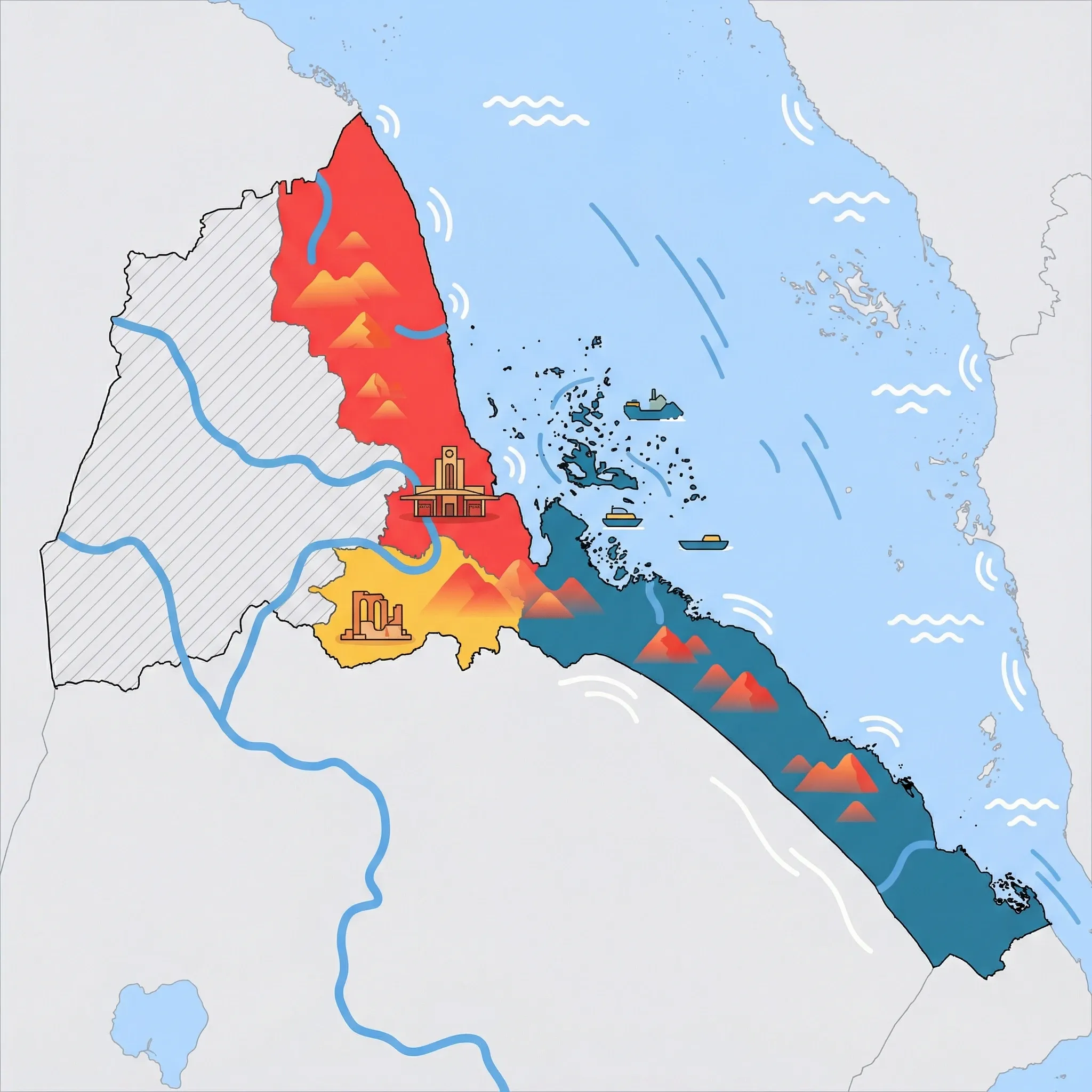
Click a region to explore
⚠️ SAFETY WARNING: Due to the potential for arbitrary detention, limited consular support, and restricted communication infrastructure, government agencies (including the USA, UK, and Canada) advise travelers to exercise increased caution or reconsider travel to Eritrea. While Asmara itself has low rates of street crime, the security environment is unpredictable. Families are strongly urged to consult their own government's official travel advisory before considering a trip, as circumstances and risk assessments vary.
Perched high on the Hamassien plateau at over 2,300 meters, Asmara defies many stereotypes of African capital cities. For families who do visit, it offers a serene, safe, and incredibly walkable environment that feels more like a southern Italian film set from the 1930s than a bustling metropolis. The climate is near-perfect year-round—known as the city of "eternal spring"—making it comfortable for children to explore without the exhaustion of extreme heat. The city is renowned for its safety; it is one of the few capitals in the world where families can walk comfortably at night, joining locals in the traditional evening passeggiata along Liberation Avenue.
The cultural atmosphere is a fascinating blend of Italian colonial history and fierce Eritrean pride. For children, the city is a living museum of shapes and colors. The streets are lined with palm trees and pastel-colored buildings, vintage Beetle cars zip around roundabouts, and old-school cinemas still show movies. Life here moves at a slow, deliberate pace. There is no rush, which suits family travel perfectly. You can spend hours sitting in open-air cafés, enjoying world-class macchiatos and gelato while kids play in the wide, clean piazzas. However, families must be prepared for a digital detox; internet access is extremely limited and slow, meaning tablets and phones will likely stay offline, encouraging old-fashioned family bonding.
Key Attractions
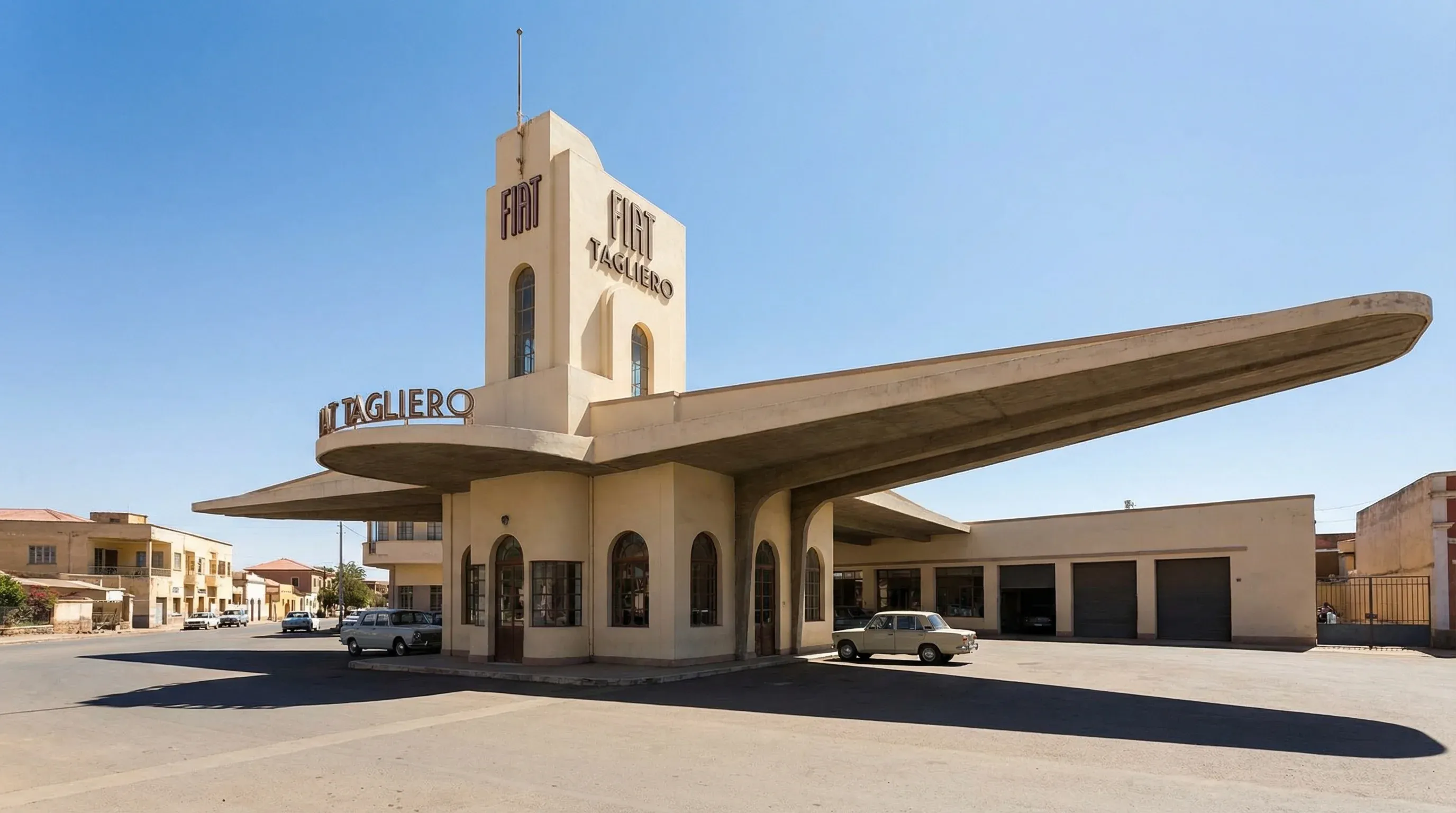
The architecture of Asmara is its primary playground. The most iconic stop for children is the Fiat Tagliero Building. Designed to look like an airplane in mid-flight, this futuristic service station is a marvel of engineering that defies gravity—kids love its comic-book appearance. Nearby, a walk through the Asmara Historic Perimeter reveals a treasure trove of cinemas, bowling alleys, and service stations built in Rationalist and Art Deco styles. The Cinema Impero is a particular highlight, still retaining its original projection equipment and grand foyer.
For a deeper dive into the country's complex history, the National Museum of Eritrea is essential. While modest in size, it houses archaeological finds that link the region to ancient civilizations and provides context on the struggle for independence that defines the modern national identity. Afterward, a visit to the Tank Graveyard (requires a permit) offers a sobering but visually striking lesson in history, where rusted military hardware is stacked in labyrinthine piles.
Practical Advice
Best time to visit: October to March offers clear, sunny days and crisp nights. The rainy season is July to August.
Logistics: Asmara is a cash economy. Credit cards are virtually useless. You must declare all currency upon arrival and keep receipts for exchanges. Travel permits are required to leave the city limits, so plan excursions days in advance at the Tourism Ministry.
Food & Drink
Typical meal times: Lunch is the main affair, typically served from 12:00 pm to 2:00 pm. Dinner is lighter and usually eaten between 7:00 pm and 9:00 pm.
Typical meal costs: Prices are moderate. A family meal at a good restaurant costs approximately 450–750 ERN (approx. $30–50 USD / €28–46 EUR). Note: Official exchange rates apply; costs can vary depending on inflation.
Dietary requirements: Eritrean fasting traditions (Orthodox) mean vegan food is widely available and delicious (lentils, chickpeas, spinach). Gluten-free travelers may struggle with injera if it's mixed with wheat, so always ask for pure Teff. Italian pasta and pizza are available everywhere.
Signature dishes:
- Zigni – A spicy, slow-cooked beef stew rich in berbere spices, the national dish usually eaten by hand with injera.
- Injera – A sour, spongy flatbread made from teff flour, serving as both the plate and the utensil for most meals.
- Frittata – An Italian-influenced scrambled egg dish with onions, peppers, and tomatoes, often served for breakfast with crusty bread.
- Capretto – Roast kid (goat) meat, a tender and popular delicacy often served in the Italian restaurants of Asmara.
Why this score?
The capital is a safe and walkable urban environment characterized by a Mediterranean-style cafe culture and well-preserved historic districts. Adventure is mostly limited to the logistical hurdles of visiting an isolated nation and the physical effects of its high-altitude location at over 2,300 meters.
Why this score?
Asmara contains the country's most advanced medical facilities, such as the Orotta Hospital, where some English-speaking staff are available. Nevertheless, the system frequently faces shortages of essential supplies and modern equipment, making it unsuitable for complex medical needs.
Why this score?
As a UNESCO World Heritage site and the country's primary gateway, Asmara attracts the majority of Eritrea's niche international visitors seeking its famous Art Deco architecture. However, due to restrictive visa policies and limited flight connectivity, visitor numbers remain very low compared to established global city destinations.

Asmara is moderately priced for tourists using official exchange rates. A comfortable hotel room costs between 1,200–2,250 ERN (approx. $80–150 USD / €75–140 EUR) per night. Coffee and cake in a historic café is a bargain at around 45–75 ERN (approx. $3–5 USD / €2.80–4.60 EUR). Transport is cheap, but hiring a private driver for the day will cost around 1,500–2,250 ERN (approx. $100–150 USD / €90–140 EUR).

Getting Here & Around
Getting Here
- Airports – Asmara International Airport (ASM) is the sole entry point, with flights connecting via Dubai, Cairo, Addis Ababa, or Istanbul.
- Visa & Permits – A visa must be secured before arrival. Upon landing, currency declaration forms are mandatory.
- Driving – There are no open land borders for tourists to drive into Eritrea; arrival is exclusively by air.
Getting Around
- Walking – The Asmara Historic Perimeter is best explored on foot. Sidewalks are wide and the traffic is generally respectful.
- Taxis – Yellow taxis are common but unmetered; negotiate the price before getting in. They are useful for reaching the Fiat Tagliero Building if you are tired.
- Buses – Red city buses are crowded and not recommended for families with luggage or small children.
Nearby Airports (1 airport)
Asmara Intl
ASMAsmara
View full flight map for Eritrea →
Official Links

Packing List
Power cuts are frequent in the evenings and street lighting can be sporadic.
Mobile data is virtually non-existent for tourists; paper maps are essential.
ATMs do not accept foreign cards; you must bring all cash in pristine notes.
At 2,300m elevation, evenings get surprisingly cold (down to 5°C/40°F).
Power cuts are frequent and street lighting is dim or non-existent in many areas.
ATMs do not exist. Bring more cash than you need; notes must be post-2009 and pristine.
Internet is virtually non-existent (no mobile data), so Google Maps will not work.
To keep devices charged during long blackouts or travel days.
With no Wi-Fi or streaming, bring downloaded movies, books, and games for kids.
Diapers, wipes, and feminine hygiene products are expensive and hard to find.

Activities & Best Times

Urban tourism, museums, historical sites, architecture
Asmara is a UNESCO World Heritage site celebrated for its exceptionally preserved Italian Modernist architecture and sophisticated café culture. Peak season provides dry, sunny weather ideal for architectural walks, while the heavy rainfall in July and August can disrupt outdoor heritage exploration.

Hiking, wildlife, outdoor exploration, ecotourism
While the Green Belt and escarpments are notable, 'very_good' suggests internationally outstanding nature tourism. With only urban attractions currently in the database and limited wilderness infrastructure, 'good' is more appropriate unless major nature reserves/parks are added.

Scenic drives, countryside tours, route-based travel
The descent from Asmara to Massawa is one of the world's most dramatic scenic drives, descending over 2,000 meters through diverse climate zones. Clear winter skies ensure spectacular views of the escarpments, whereas July and August bring heavy fog and hazardous driving conditions.

Sport tourism, fitness activities, active recreation
Eritrea's national passion for cycling provides world-class high-altitude training routes and challenging mountain trails for experienced cyclists. The temperate dry season offers perfect conditions for long-distance riding, avoiding the slippery roads and intense downpours of the summer months.

Attractions (7 total)



Public Holidays & Calendar Next 12 months
Public holidays, festivals, cultural celebrations, and seasonal natural phenomena coming up in Asmara over the next 12 months.
Loading holidays and events...

Travel Advisory
A majority of international agencies advise avoiding non-essential travel to Eritrea due to unstable regional security, the risk of arbitrary detention, mandatory internal travel permits, and significant landmine hazards in border regions.
Safety Topics
Traveller Advice (3 groups)

Same-sex sexual activity is illegal and generally not accepted in society; travellers should exercise extreme discretion.

Female travellers are encouraged to dress conservatively and remain aware of local cultural sensitivities, especially when visiting rural or religious sites.

Travellers should always carry copies of their passport and visa, as original documents should be kept secure. Dual nationals should be aware that they are treated as local citizens by authorities and may be subject to national service obligations.
Agency Summaries
Travellers are advised to avoid non-essential travel to the country due to ongoing regional tensions and the risk of conflict with neighbouring nations. Extreme caution is urged near all border regions where a total travel ban is in effect.
The government warns against all travel to areas within 25km of any land border due to high tensions with Ethiopia. Consular support is severely restricted throughout the country, and travel permits are mandatory for movement outside Asmara.
Increased vigilance is necessary due to the threat of wrongful detention, the presence of unmarked minefields, and the extremely limited ability of the government to provide emergency assistance to citizens outside the capital.
The security environment is unpredictable and can deteriorate rapidly. Travellers should avoid non-essential trips and be aware of high risks involving landmines and armed banditry in rural and coastal areas.
The general recommendation is to reconsider the necessity of travel because of the risk of violent crime and potential armed conflict. A 'Do Not Travel' warning is in place for all border zones.
Serious and life-threatening risks, including extensive landmines and limited consular assistance, warrant avoiding non-essential visits. Travel within 25km of borders is strictly advised against.
Information is provided for general guidance only and does not constitute travel, safety, medical, or legal advice. Conditions may change. Users are responsible for independently verifying information before travel.