
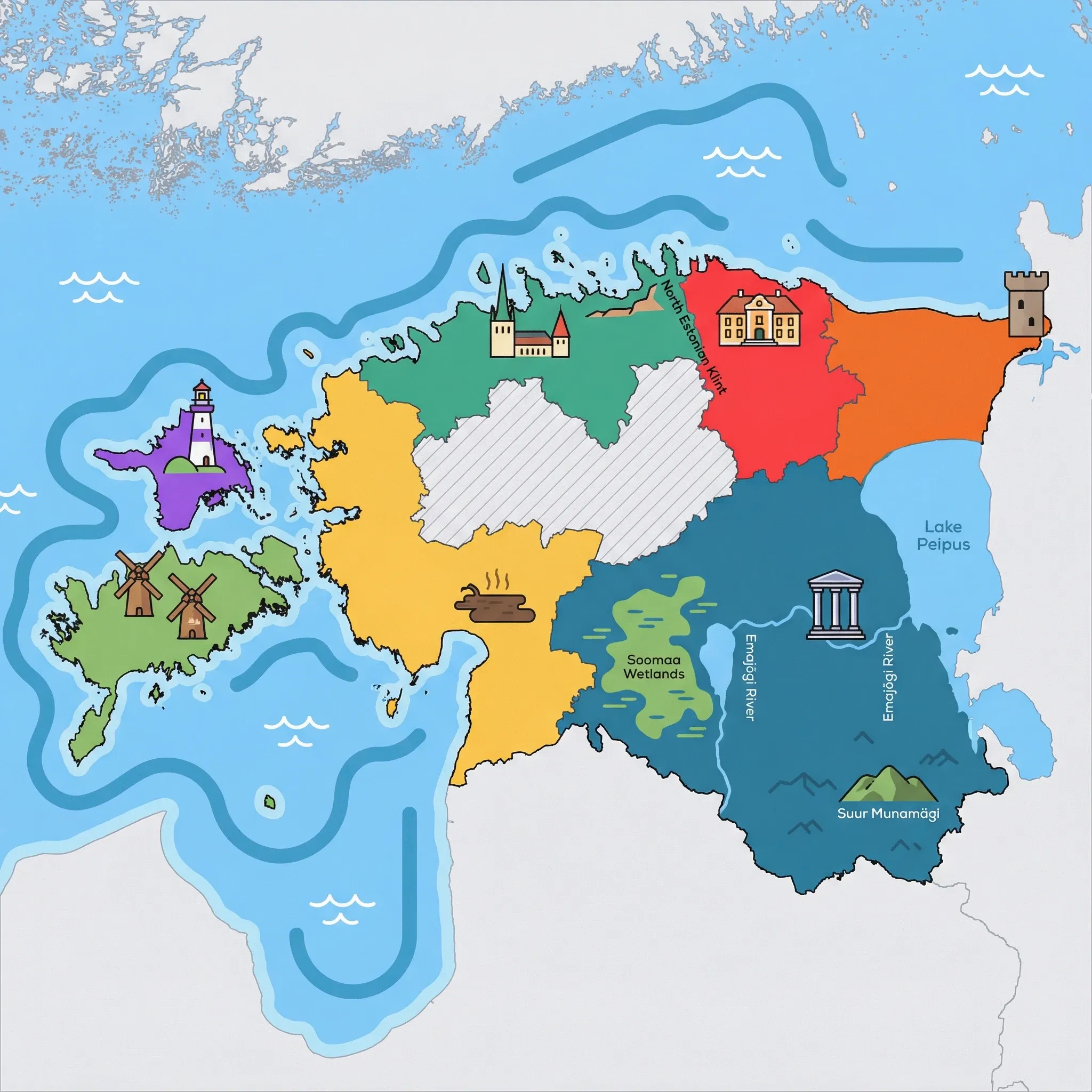
Click a region to explore
Ida-Viru County is the Adventure Land of Estonia, offering a travel experience that is distinct from the rest of the country. This region is a fascinating mix of Soviet-era industrial heritage, Russian cultural influences, and breathtaking natural features. For families who enjoy "off the beaten path" exploration, it provides a history lesson and a nature trip in one. The landscape is defined by the high limestone bank of the northern coast, dropping vertically into the sea, and the vast Alutaguse forests which are home to bears and flying squirrels. The cultural vibe here is unique; you will hear as much Russian as Estonian, offering a multicultural experience within the borders of the EU.
While the region was heavily industrialised in the 20th century, it has transformed its legacy into tourism gold. Old mines have become museums, and former closed cities like Sillamäe offer pristine Stalinist neoclassical architecture that looks like a movie set. However, nature is the real star for children. The beaches are some of the longest and sandiest in the Baltics, and the adventure parks built into old quarries offer adrenaline-pumping activities for teenagers. It is an area of discovery, where a morning can be spent 8 meters underground and the afternoon sunbathing on a white sand beach.
Key Attractions
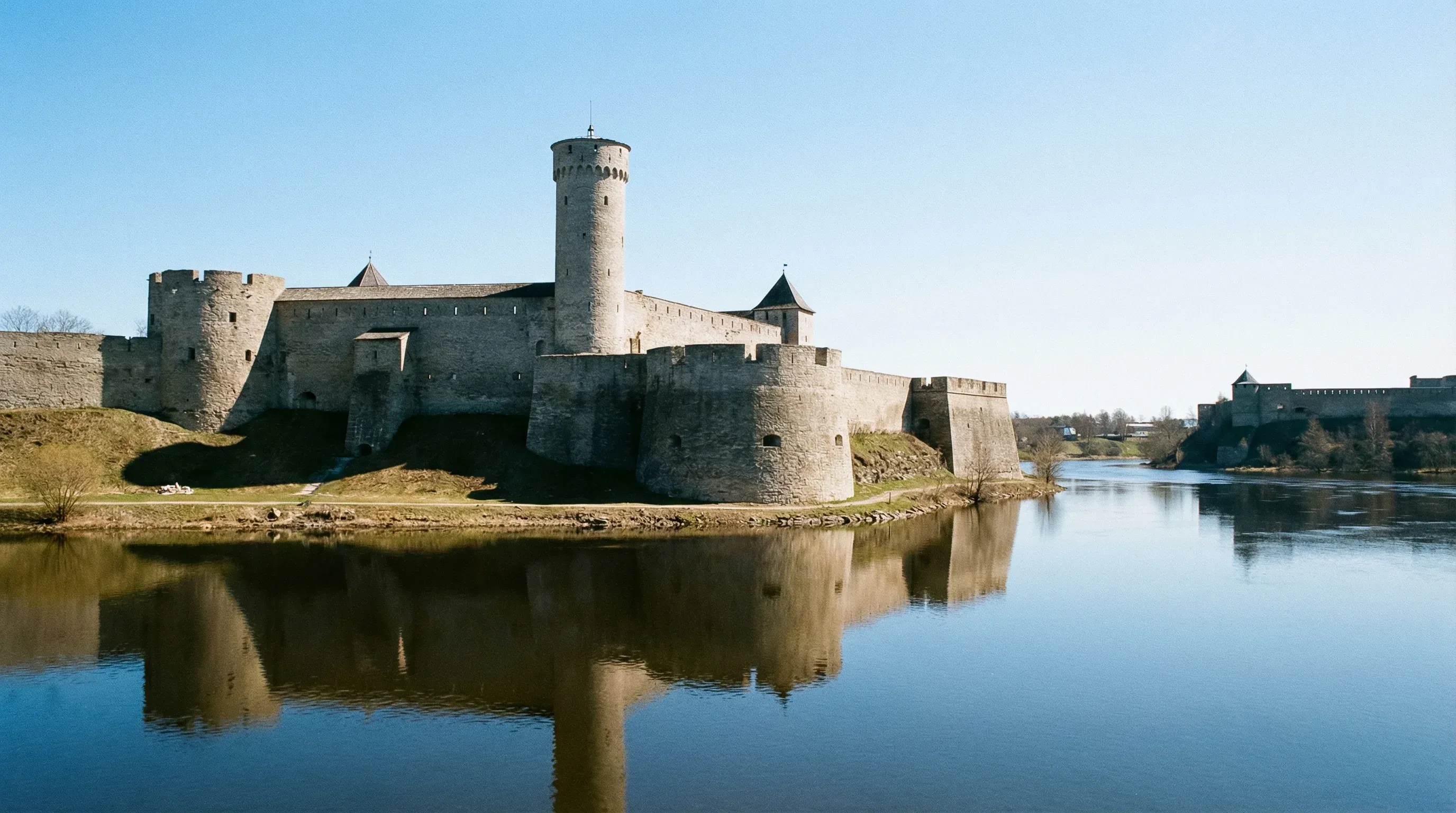
The absolute must-see is Narva Castle (Hermann Castle). It is one of the few places in the world where you can stand on the ramparts of a Western fortress and look directly across a narrow river at a Russian fortress (Ivangorod) on the other side. The castle museum is interactive and engaging for kids. Nature lovers should head to the Ontika Limestone Cliff, the highest in Estonia, which offers spectacular views over the Gulf of Finland. Nearby, the Valaste Waterfall crashes down the cliff face; a steel spiral staircase allows you to descend safely to view the falls from below—a thrilling walk for older children.
For relaxation, Narva-Jõesuu Beach is legendary. Known as the "Nordic Riviera" in the 1930s, it boasts kilometers of fine sand and pine trees. Inland, the Pühtitsa (Kuremäe) Convent looks like a fairytale illustration with its onion-domed churches and holy springs, offering a peaceful stop even for non-religious families. While in Narva, the Narva Art Gallery provides a quieter cultural interlude.
Practical Advice
Summer is best for beach holidays, but the waterfalls are most impressive during the spring thaw or when frozen in winter. Note that in Narva and Sillamäe, Russian is the primary language for many locals, though younger service staff speak English and Estonian.
Food & Drink
Typical meal times: Lunch 12:00 pm to 3:00 pm. Dinner 6:00 pm to 9:00 pm. In Narva, some restaurants stay open later than in rural Estonia.
Typical meal costs: Generally cheaper than Tallinn. Main courses €8–15 (approx. $8.50–16 USD / £7–13 GBP). Family dinner approx €35–60 (approx. $38–65 USD / £30–50 GBP).
Dietary requirements: Standard options exist, but vegan choices may be limited to sides or salads in traditional eateries. Georgian and Russian restaurants are common and very meat/dough heavy.
Signature dishes:
- Silmud (Lampreys) – A local delicacy from the Narva River, usually marinated or roasted. A challenging try for brave kids!
- Pelmeni – Meat dumplings served with sour cream, reflecting the strong Slavic influence in the region.
- Solyanka – A thick, spicy and sour soup with meat and pickles, perfect for warming up after a windy cliff walk.
Why this score?
Adventure here is found in the unconventional, such as exploring subterranean mines at Kohtla-Nõmme or hiking the steep Ontika limestone cliffs. The region's unique 'industrial-meets-nature' landscapes provide a rugged playground that differs from traditional European pastoral or mountain adventure regions.
Why this score?
Major cities like Narva and Kohtla-Järve have substantial regional hospitals that provide reliable emergency and routine care. However, English-speaking staff may be less common here than in Tallinn or Tartu, and the infrastructure, while functional, lacks the high-end private services found in the capital.
Why this score?
This region is an emerging destination focused on industrial heritage and border tourism, but it remains off the primary path for most international families visiting Estonia. While Narva Castle is a major landmark, the area's industrial past and linguistic shift toward Russian mean it sees fewer Western tourists than the western coast.

This is one of the most affordable regions in Estonia. Accommodation in Narva or rustic holiday homes near Peipus can be found for €50–80 (approx. $55–85 USD / £42–70 GBP) per night. Spa hotels in <a data-attraction-id="24455">Narva-Jõesuu Beach</a> are pricier in summer but offer great off-season deals. Dining is excellent value, with hearty meals often costing under €10 (approx. $11 USD / £8.50 GBP).
Family Travel Notice
Be familiar with international child custody regulations and the Hague Convention if travelling as a single parent or with non-biological children.

Getting Here & Around
Getting Here
- Train – Elron trains run several times a day from Tallinn to Narva, stopping at Jõhvi. The journey is comfortable, takes about 2.5 hours, and offers free Wi-Fi.
- Driving – A straightforward 2-hour drive from Tallinn along the E20 highway. This is the best way to see the Valaste Waterfall and coast.
- Bus – Frequent Lux Express buses connect Tallinn to Narva and Sillamäe. Buses are high quality with seat-back screens for kids.
Getting Around
- Car – Essential for exploring the coastline, the Ontika Limestone Cliff, and the remote Kuremäe convent.
- Public Transport – Good bus connections exist between the main towns (Jõhvi, Sillamäe, Narva), but reaching nature spots without a car is difficult.
- Walking – Narva-Jõesuu is best explored on foot along the beach or boardwalks.
No airports in this region. See the country flight map for nearby connections.
Official Links

Packing List
You must carry documents near the border zone (Narva, Peipus), even if you don't plan to cross.
Some parts of the northern limestone coast can be rocky underfoot before you reach the sand.
For looking across the river at the Russian castles in Narva or birdwatching on the coast.
The Alutaguse forests and wetland areas have high mosquito activity in June and July.
Legally mandatory for pedestrians at night or dusk. Locals wear them on coats to avoid fines.
Summer days have up to 19 hours of daylight; essential for getting children to sleep.
Ticks are common in forests and tall grass from spring to autumn; quick removal is key.
Many northern beaches are rocky or pebbly, making them uncomfortable for bare feet.

Activities & Best Times

Hiking, wildlife, outdoor exploration, ecotourism
The region features the dramatic Ontika limestone cliff and Valaste Waterfall, alongside unique post-industrial nature like the Aidu 'fjords.' Peak summer offers full access to hiking and bogs, while autumn provides excellent conditions for observing bird migrations and changing foliage.

Urban tourism, museums, historical sites, architecture
Narva Castle and the architectural legacy of the Soviet era in Sillam%de offer a unique cultural frontier experience at the edge of the EU. Summer is ideal for historical exploration and festivals, while December brings a festive, snow-covered atmosphere to the castles.

Sport tourism, fitness activities, active recreation
Excellent infrastructure for niche activities, particularly the rowing and water sports channels at Aidu and the adventure sports at Kivi%dli. These facilities are purpose-built for active tourism, with peak operation and optimal conditions occurring during the summer window.

Scenic drives, countryside tours, route-based travel
The Ontika Coastal Road offers spectacular cliff views, while the northern Peipus drive features unique cultural landscapes and fishing villages. Summer provides the best driving visibility and access to seasonal roadside stalls and local heritage sites.

Amusement parks, family entertainment venues
Features regional leaders like the Kivi%dli Adventure Center and several high-quality water parks within spa hotels. These provide solid family entertainment, though they are regional in scale rather than globally significant destinations.

Beach resorts, marine activities: diving, snorkelling, kite surfing, wind surfing, sailing
Historic resort nostalgia does not compensate for Baltic climate limitations. Wide white-sand beaches with 15-17°C water temps and 2-month season cannot meet international 'good' standards.

Learning experiences, scientific sites, historical education
Niche facilities like the Kukruse Polar Manor and Alutaguse National Park Visitor Centre provide interesting historical and scientific context. These are best visited during the warmer months when transit is easier, though they function as supplementary rather than primary travel motivators.

Winter sports, ski resorts, snow activities
Limited to cross-country skiing and small-scale downhill activities on artificial ash hills like Kivi%dli; it lack the elevation and infrastructure for international alpine standards. It serves as a decent winter stop for families already in the region during the reliable snow months of January and February.




Public Holidays & Calendar Next 12 months
Public holidays, festivals, cultural celebrations, and seasonal natural phenomena coming up in Ida-Viru & Northeast over the next 12 months.
Loading holidays and events...

Travel Advisory
Consensus across all international agencies indicates that Estonia is a safe destination with no significant security threats. Travellers should use common sense and standard safety practices.
Safety Topics
Traveller Advice (6 groups)

Maintain standard situational awareness, keep valuables secure in high-traffic areas, and verify current border conditions if planning to transit near the Russian frontier.

Be familiar with international child custody regulations and the Hague Convention if travelling as a single parent or with non-biological children.

Female visitors are generally safe but should be cautious when walking alone late at night due to occasional reports of harassment.

While legal protections exist, social attitudes can be conservative in certain areas. Public displays of affection may occasionally attract negative attention or verbal abuse.

A working holiday program is available for young citizens of specific countries, allowing for longer-term stays and employment.
Verify the legality of all prescription medications with Estonian health authorities and ensure they are carried in clearly labeled original packaging.
Agency Summaries
Travellers are encouraged to follow standard safety routines. There are no major security concerns, although some incidents of verbal harassment toward minority groups have been noted.
Standard safety measures are sufficient. Be aware that land border crossings with Russia may experience sudden closures or delays.
The country is considered safe and modern. Visitors should stay alert for petty crime such as pickpocketing in crowded tourist zones and at night.
No significant travel risks identified. Long-term visitors staying over 90 days must register their place of residence locally.
No high-level warnings are in place. Travellers should maintain standard personal security and ensure they have appropriate health coverage for their stay.
There is no specific travel advisory for this destination. New Zealanders are advised to follow the same safety protocols they would at home.
Information is provided for general guidance only and does not constitute travel, safety, medical, or legal advice. Conditions may change. Users are responsible for independently verifying information before travel.