
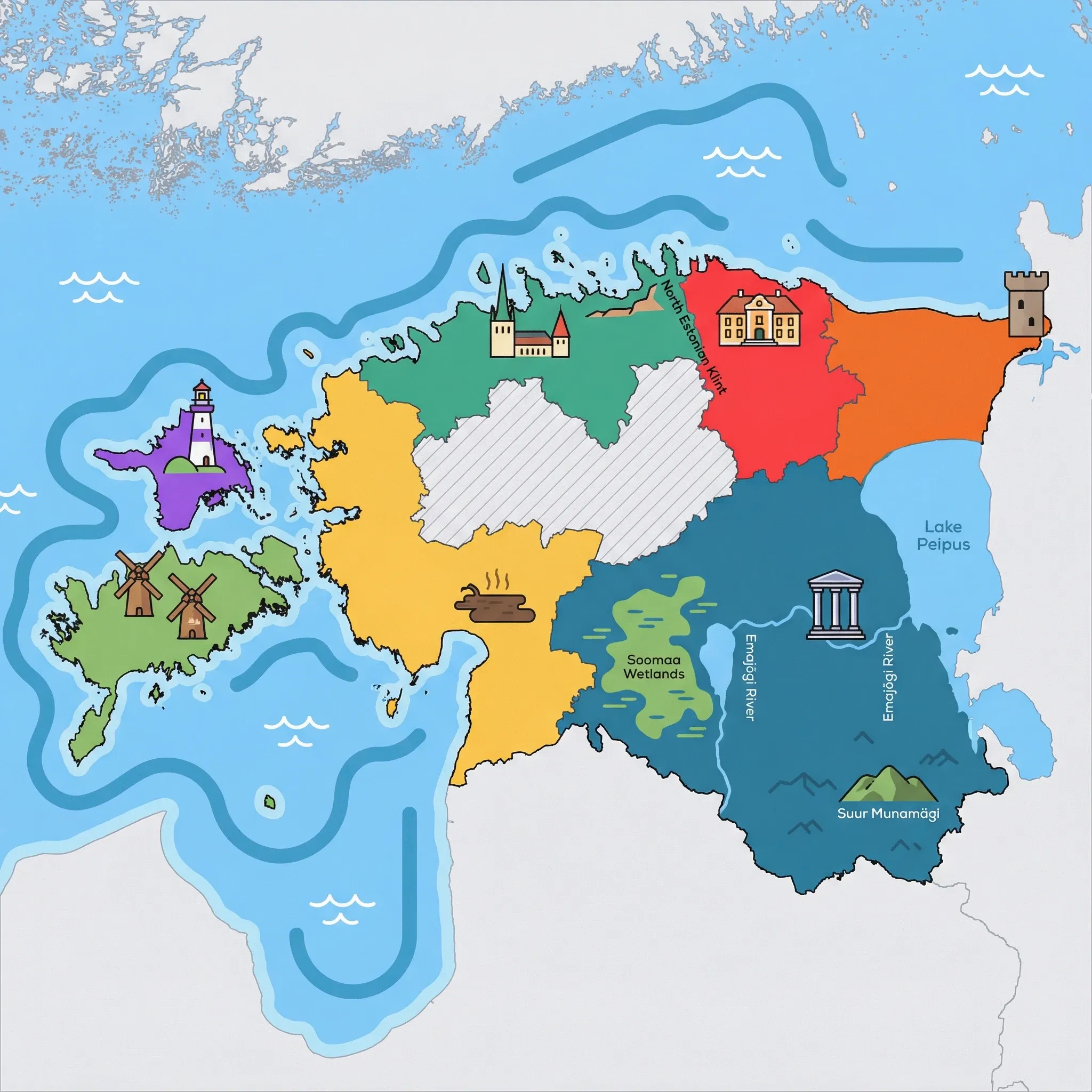
Click a region to explore
Lahemaa ("Land of Bays") is Estonia's oldest and largest national park, serving as the perfect introduction to the country's nature for families. The landscape is characterized by peninsulas stretching into the sea, bays rich in birdlife, and forests scattered with giant glacial boulders that look like they were tossed by giants. It is incredibly accessible; within a short drive from Tallinn, you feel completely immersed in the wilderness. The region is not just trees and rocks, though—it is dotted with beautifully restored German manor houses and historic fishing villages that have preserved their 19th-century charm.
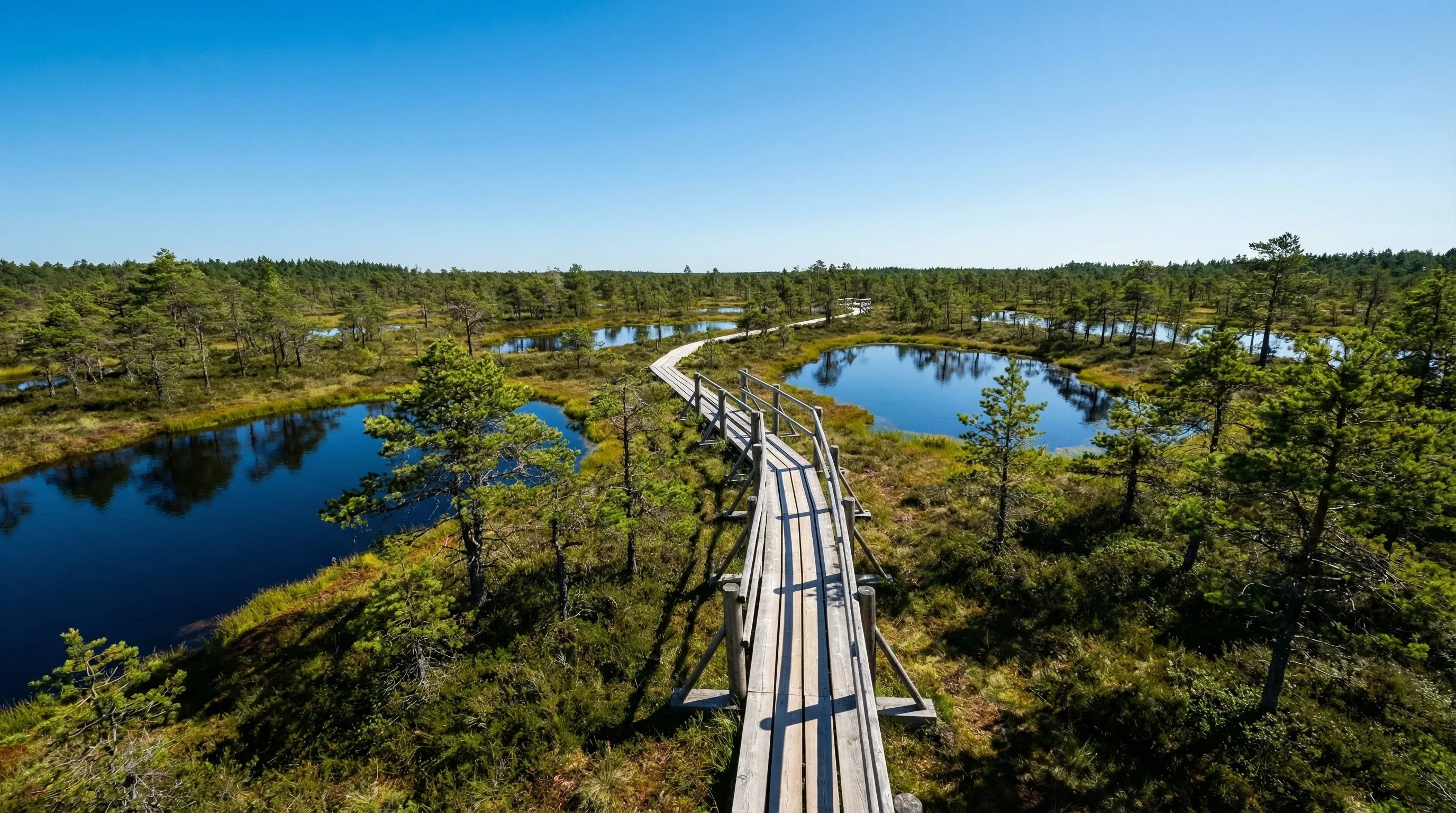
For children, Lahemaa is a tactile wonderland. The forest floors are soft with moss, the beaches are full of interesting stones, and the bogs—often thought of as scary places—are made friendly with well-maintained wooden boardwalks. The air is filled with the scent of pine and salty sea breeze. Unlike more rugged wilderness areas, Lahemaa has excellent infrastructure with clear signage, visitor centers, and plenty of family-friendly dining spots in converted barns or taverns.
Key Attractions
The Viru Bog is the star attraction. Its 3.5 km boardwalk is largely wheelchair and stroller accessible, leading you safely over the spongy moss to a viewing tower. In summer, you can even swim in the dark, mineral-rich bog pools—a unique experience for brave kids! Just outside the park boundaries lies Rakvere Castle, arguably the best family attraction in Estonia. It’s not a "do not touch" museum; here, kids can dress up as knights, shoot bows, visit the torture chamber (if they dare), and see a working alchemist. It is loud, fun, and educational.
For a taste of maritime history, visit the Käsmu Captains' Village. This picturesque village was once home to a navigation school and many ship captains; today it offers lovely walking trails and a small maritime museum. The grandiose Palmse Manor offers a glimpse into aristocratic life with its sprawling park, palm house, and carriage rides. If the weather is warm, Võsu Beach provides a classic sandy beach experience with shallow water suitable for toddlers.
Practical Advice
Lahemaa is a year-round destination. Summer brings berry picking and beach weather, while winter offers snowy bog walks (the boardwalks can be slippery, so wear grip shoes). Weekends in July can be busy with day-trippers from Tallinn, so visiting mid-week offers more solitude.
Food & Drink
Typical meal times: Lunch 12:00 pm to 3:00 pm. Dinner 6:00 pm to 9:00 pm. Historic taverns (Kõrts) are popular here.
Typical meal costs: Mid-range. Main courses €12–20 (approx. $13–22 USD / £10–17 GBP). Manor house restaurants are more expensive, taverns are cheaper.
Dietary requirements: Vegetarian options are standard. Many places pride themselves on farm-to-table local produce, so ingredients are fresh and often organic.
Signature dishes:
- Verivorst (Blood Sausage) – Often served in local taverns with lingonberry jam, especially popular in cooler months.
- Kiluvõileib – The iconic sprat sandwich with egg and dark bread, a staple in coastal villages like Altja.
- Karask – A traditional barley bread, often served warm with garlic butter as a starter.
Why this score?
The region offers moderate outdoor adventure through its well-maintained bog boardwalks, coastal hiking trails, and glacial boulder fields. While the terrain is relatively flat and safe for children, the dense forests and remote coastal villages provide a genuine sense of the Northern European wilderness.
Why this score?
The area is mostly rural with limited local clinics, but its significant advantage is the proximity to Tallinn's world-class medical facilities, reachable within an hour. For minor issues, local infrastructure is sparse, but the ease of access to the capital's hospitals provides a safety net for families.
Why this score?
As Estonia's most famous national park, Lahemaa is a popular day-trip destination for international visitors based in Tallinn, providing a steady but manageable flow of tourists. Its proximity to the capital ensures it is often the first (and sometimes only) rural region foreign families visit in Estonia.

Prices are moderate. Entry to national park nature trails is free. <a data-attraction-id="24551">Rakvere Castle</a> family tickets cost around €28 (approx. $30 USD / £24 GBP). Accommodation ranges from €60 (approx. $65 USD / £50 GBP) for B&Bs to €150+ (approx. $160 USD / £125 GBP) for manor hotels. Eating at village taverns is reasonable, with mains around €10–15 (approx. $11–16 USD / £8.50–13 GBP).
Family Travel Notice
Be familiar with international child custody regulations and the Hague Convention if travelling as a single parent or with non-biological children.

Getting Here & Around
Getting Here
- Driving – The best way to visit. Lahemaa is a 45-60 minute drive east of Tallinn via the Peterburi tee (E20). Parking at nature sites like Viru Bog is free.
- Bus – Buses run from Tallinn to stunning villages like Käsmu Captains' Village and Võsu, but frequencies can be low (2-4 times a day).
- Train – Trains stop at Rakvere (for the castle) but do not go into the National Park itself.
Getting Around
- Car – Essential for moving between the bog, manors, and coastal villages efficiently.
- Cycling – The Baltic Coastal Hiking Route (E9) and forest roads make for excellent cycling, though distances between villages can be 10-20km.
- Walking – Once at a site (like Oandu or Viru), walking is the only way to explore the trails.
No airports in this region. See the country flight map for nearby connections.
Official Links

Packing List
Mandatory for pedestrians in Estonia at night; roadside walking is common in Lahemaa.
Forests are full of blueberries (July) and lingonberries (August); kids love collecting them.
Even with boardwalks, bog edges and forest trails can be muddy and damp.
Summer days have up to 19 hours of daylight; essential for getting children to sleep.
Ticks are common in forests and tall grass from spring to autumn; quick removal is key.
Many northern beaches are rocky or pebbly, making them uncomfortable for bare feet.

Activities & Best Times

Hiking, wildlife, outdoor exploration, ecotourism
Lahemaa National Park offers sophisticated families authentic experiences through its pristine raised bogs, virgin forests, and the dramatic limestone Glint coast. Peak season from June to September provides optimal conditions for birdwatching and hiking along the well-maintained RMK trails.

Urban tourism, museums, historical sites, architecture
The region is home to world-class Baltic-German manor estates like Palmse and Sagadi, alongside the impressive medieval Rakvere Castle. The summer months are ideal for experiencing outdoor cultural events, historical reenactments, and formal gardens in full bloom.

Sport tourism, fitness activities, active recreation
Purpose-built infrastructure at Kivi%%li Adventure Center and K%%rvemaa supports high-level cycling, disc golf, and skiing. The dual-peak seasonality reflects the region's strong transition from summer adventure sports to organized winter cross-country skiing and snowboarding.

Learning experiences, scientific sites, historical education
The Estonian Mining Museum provides an internationally significant, authentic subterranean industrial experience that is rare in Northern Europe. While museums are indoor, the overall experience is best in the warmer months when combined with regional exploration.

Scenic drives, countryside tours, route-based travel
Scenic drives along the Gulf of Finland and the Ontika limestone cliffs offer spectacular coastal vistas on well-maintained roads. The Lahemaa coastal loop is particularly attractive during the long daylight hours of midsummer and the early autumn color change.

Beach resorts, marine activities: diving, snorkelling, kite surfing, wind surfing, sailing
Classification emphasizes 'charming coastal villages' which describes cultural/scenic appeal, not beach quality. Baltic conditions limit beach activities to marginal suitability.

Winter sports, ski resorts, snow activities
Local winter sports centers like Vimka and M%%edaku offer modest facilities suitable for a casual day of activity during the core snow months. These are small-scale venues that serve as secondary activities rather than primary winter destinations.
Amusement parks, family entertainment venues
High-quality indoor water parks like Aqva Spa offer consistent family entertainment regardless of the weather. These facilities are most popular during school holidays and the dark winter months as a restorative escape for families.

Attractions (17 total)



Public Holidays & Calendar Next 12 months
Public holidays, festivals, cultural celebrations, and seasonal natural phenomena coming up in Lahemaa & Northern Coast over the next 12 months.
Loading holidays and events...

Travel Advisory
Consensus across all international agencies indicates that Estonia is a safe destination with no significant security threats. Travellers should use common sense and standard safety practices.
Safety Topics
Traveller Advice (6 groups)

Maintain standard situational awareness, keep valuables secure in high-traffic areas, and verify current border conditions if planning to transit near the Russian frontier.

Be familiar with international child custody regulations and the Hague Convention if travelling as a single parent or with non-biological children.

Female visitors are generally safe but should be cautious when walking alone late at night due to occasional reports of harassment.

While legal protections exist, social attitudes can be conservative in certain areas. Public displays of affection may occasionally attract negative attention or verbal abuse.

A working holiday program is available for young citizens of specific countries, allowing for longer-term stays and employment.

Verify the legality of all prescription medications with Estonian health authorities and ensure they are carried in clearly labeled original packaging.
Agency Summaries
Travellers are encouraged to follow standard safety routines. There are no major security concerns, although some incidents of verbal harassment toward minority groups have been noted.
Standard safety measures are sufficient. Be aware that land border crossings with Russia may experience sudden closures or delays.
The country is considered safe and modern. Visitors should stay alert for petty crime such as pickpocketing in crowded tourist zones and at night.
No significant travel risks identified. Long-term visitors staying over 90 days must register their place of residence locally.
No high-level warnings are in place. Travellers should maintain standard personal security and ensure they have appropriate health coverage for their stay.
There is no specific travel advisory for this destination. New Zealanders are advised to follow the same safety protocols they would at home.
Information is provided for general guidance only and does not constitute travel, safety, medical, or legal advice. Conditions may change. Users are responsible for independently verifying information before travel.