
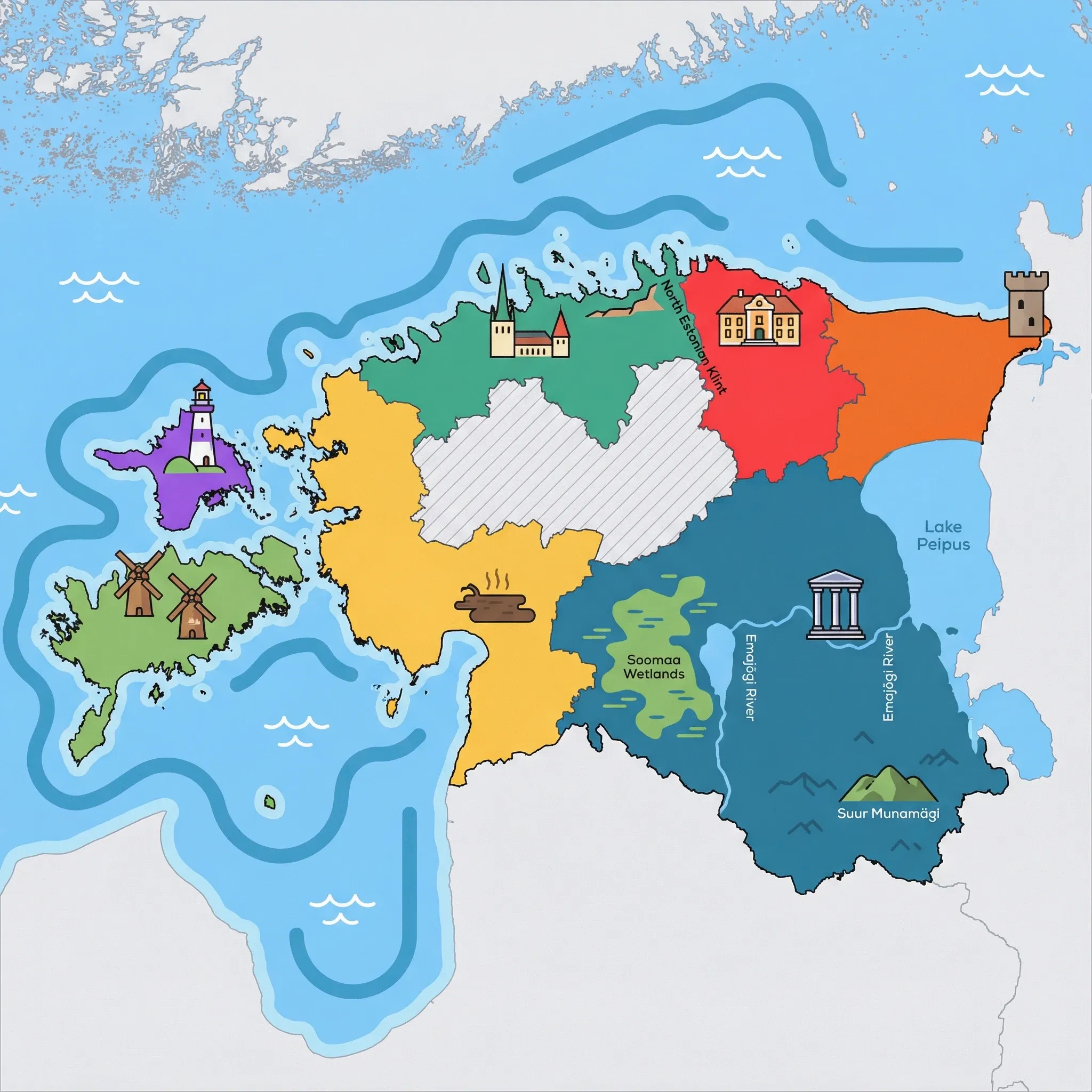
Click a region to explore
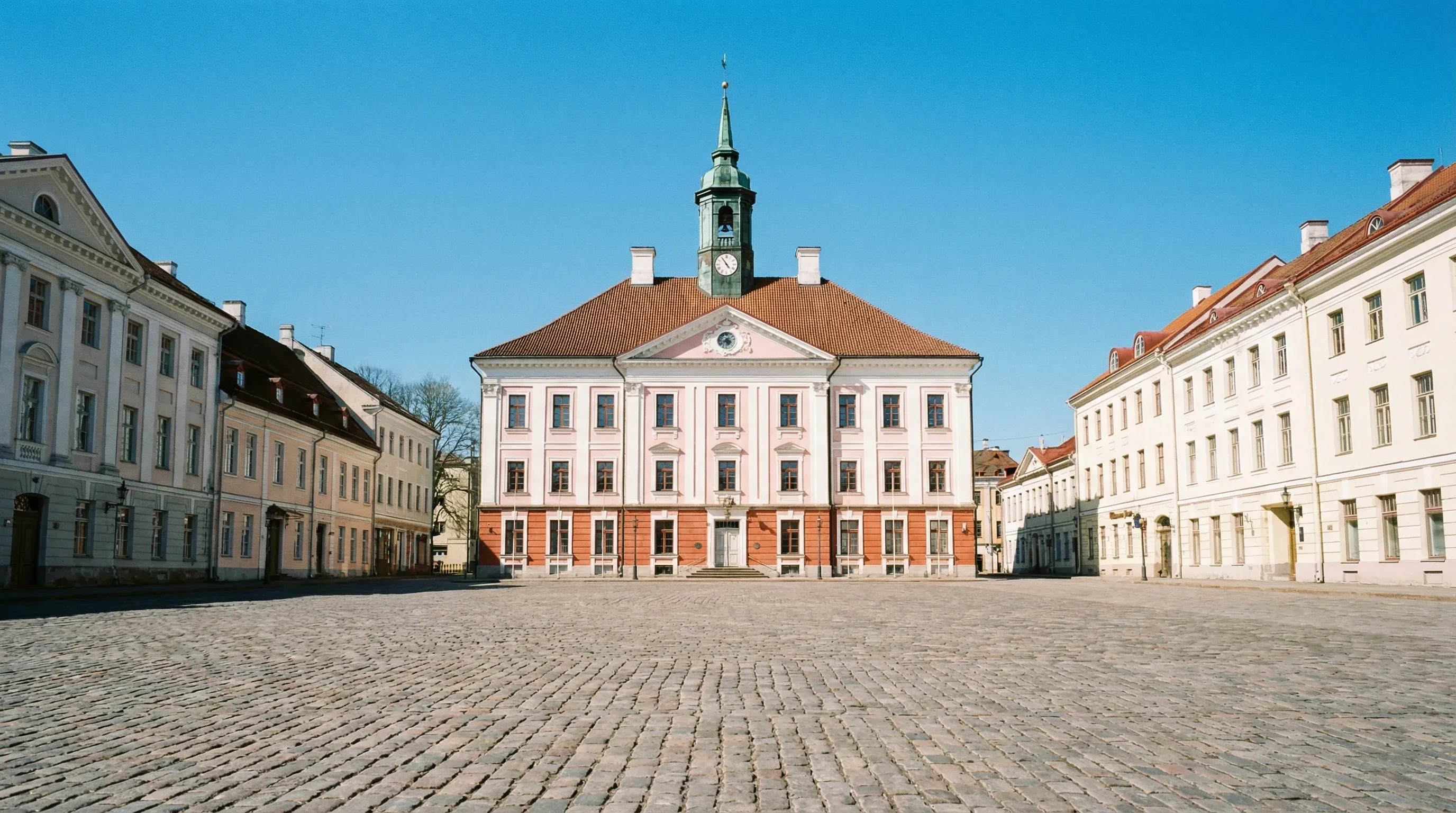
Southern Estonia is defined by its rolling hills, deep lakes, and the intellectual spirit of Tartu. Known as the "City of Good Thoughts," Tartu is a university town that feels youthful and energetic. For families, it is less crowded than Tallinn and incredibly walkable. The atmosphere is relaxed and bohemian, with parks everywhere and a river winding through the center. Beyond the city, the landscape changes to the "Estonian Alps" around Otepää—while not high by global standards, these hills are the center of winter sports and summer hiking.
This region is also the cradle of Estonian culture. In the far southeast lies Setomaa, home to the Seto people who have their own distinct language, singing traditions (UNESCO listed), and colorful folk costumes. It feels like entering a different country. The region is perfect for families who want to mix education with physical activity. One day you can be doing chemistry experiments, and the next you can be kick-sledding across a frozen lake or climbing the observation tower on the highest peak in the Baltics.
Key Attractions
The number one attraction for families in the entire country is the Science Centre AHHAA in Tartu. It is the biggest of its kind in the Baltics, featuring a planetarium, a chaotic water world, and hands-on exhibits that explain physics and biology in a fun way. You can easily spend a whole day here. Nearby, the Aura Centre water park offers slides and relaxation for after the museum. In the city center, Tartu Old Town and the Tartu Town Hall Square are beautiful, featuring the famous "Kissing Students" fountain.
Heading into the countryside, the Estonian Agricultural Museum near Tartu is great for seeing farm animals and machinery. For nature, Suur Munamägi is the highest peak in the Baltics; the tower at the top offers views into Russia and Latvia. The Suur Taevaskoda ("Heaven's Hall") sandstone cliffs offer a magical, easy hike along the river that feels like a scene from a fantasy movie. In winter, the Tehvandi Sports Center in Otepää is the place for skiing and sledding.
Practical Advice
Tartu is great year-round. Otepää is best in winter (snow sports) or summer (lake swimming). The Setomaa region is fascinating but requires a car to explore properly.
Food & Drink
Typical meal times: Lunch 12:00 pm to 3:00 pm. Dinner 6:00 pm to 9:00 pm. Tartu has a vibrant cafe culture due to the students.
Typical meal costs: Slightly cheaper than Tallinn. Main courses €10–18 (approx. $11–20 USD / £8.50–15 GBP). Student specials often available.Dietary requirements: Very good in Tartu; many hipster cafes cater to vegan and gluten-free needs. Harder in deep rural south.
Signature dishes:
- Kohuke – A chocolate-coated curd snack, an absolute favorite for Estonian children (and adults). Found in every supermarket.
- Sibulapirukas (Onion Pie) – Famous in the region near Lake Peipus, where Old Believers grow onions.
- Sõir – A traditional Seto cheese served warm with caraway seeds.
Why this score?
Southern Estonia offers a gentler form of adventure, characterized by the country's 'highest' hills, skiing in Otepää, and canoeing in the Soomaa wetlands. It is less rugged than the islands or the northern coast but provides excellent, accessible outdoor recreation for families with young children.
Why this score?
Tartu is home to the University of Tartu Hospital, the country's premier teaching hospital and a leader in medical research. Families here have access to top-tier specialized medical services and highly trained English-speaking professionals, rivaling the quality of care found in the capital.
Why this score?
Tartu, as the intellectual and cultural capital, attracts a steady stream of tourists interested in its university heritage and science centers. The surrounding southern region, with its rolling hills, is a popular domestic choice and is increasingly recognized internationally as a hub for cultural and nature-based tourism.

Tartu offers good value. A family ticket to <a data-attraction-id="24609">Science Centre AHHAA</a> is approx €35–45 (approx. $38–49 USD / £30–38 GBP). Hotels are generally €60–100 (approx. $65–110 USD / £50–85 GBP). Rural tourism farms in the south can be very cheap, around €50 (approx. $55 USD / £42 GBP) for a family room.
Family Travel Notice
Be familiar with international child custody regulations and the Hague Convention if travelling as a single parent or with non-biological children.

Getting Here & Around
Getting Here
- Train – Fast, comfortable Elron trains run from Tallinn to Tartu (2 hours). The station is a short walk or bus ride from the center.
- Bus – Lux Express buses run hourly between Tallinn and Tartu (2.5 hours). They are very comfortable with screens.
- Airport – Tartu Airport (TAY) has limited connections (often just Helsinki), so check current schedules.
Getting Around
- Walking – Tartu Old Town is compact and best seen on foot.
- Bike Share – Tartu has an excellent bike-share system (electric and regular) called Tartu Smart Bike, with child seats on some bikes.
- Car – Necessary for visiting Suur Munamägi or Setomaa.
Nearby Airports (1 airport)
Tartu Airport
TAYTartu
View full flight map for Estonia →
Official Links

Packing List
If visiting in winter, plastic sliders are essential for the Otepää hills (buy locally or pack).
Tartu has public drinking taps and tap water is excellent quality.
Tartu is a university city; people dress slightly smarter than in the beach resorts.
Legally mandatory for pedestrians at night or dusk. Locals wear them on coats to avoid fines.
Summer days have up to 19 hours of daylight; essential for getting children to sleep.
Ticks are common in forests and tall grass from spring to autumn; quick removal is key.
Many northern beaches are rocky or pebbly, making them uncomfortable for bare feet.

Activities & Best Times

Hiking, wildlife, outdoor exploration, ecotourism
Extensive network of forest trails and unique bog landscapes, complemented by the well-regarded Elistvere Animal Park for wildlife encounters. Summer months offer peak accessibility and long daylight, while the 'fifth season' and autumn colors provide distinct shoulder opportunities.

Urban tourism, museums, historical sites, architecture
Tartu offers a sophisticated university atmosphere with historic architecture and a vibrant cafe culture in its Old Town. Summer peak months align with outdoor festivals and pleasant walking weather, while December provides an authentic Northern European Christmas experience.

Sport tourism, fitness activities, active recreation
Excellent infrastructure for active families, including professional-grade adventure parks and the expansive South segment of the Forest Trail. Summer is the primary season for trekking and climbing, with transitional months offering cooler conditions for hiking.

Learning experiences, scientific sites, historical education
Anchored by the world-class Science Centre AHHAA and the University of Tartu's scientific museums, offering engaging, hands-on learning. These indoor attractions provide consistent value year-round, though they peak during the international family travel season.

Scenic drives, countryside tours, route-based travel
The Onion Route and the Old Post Road offer authentic, culturally rich scenic drives through historic villages and lakeside landscapes. Optimal driving conditions and seasonal local markets make summer the peak period, with spring and autumn offering quieter but scenic touring.

Winter sports, ski resorts, snow activities
The regional hub for Nordic and alpine skiing in the Baltics, featuring professionally maintained tracks at Tehvandi and Kuutsemägi. Best enjoyed during the reliable snow window of Jan-Feb, with fluctuating conditions in the shoulder months of Dec and Mar.
Amusement parks, family entertainment venues
Features high-quality facilities like the Aura Water Centre and the seasonal Vudila Playland, which is highly tailored for family fun. Peak interest is centered on the summer school holidays when outdoor parks are fully operational.

Attractions (26 total)



Public Holidays & Calendar Next 12 months
Public holidays, festivals, cultural celebrations, and seasonal natural phenomena coming up in Tartu & Southern Estonia over the next 12 months.
Loading holidays and events...

Travel Advisory
Consensus across all international agencies indicates that Estonia is a safe destination with no significant security threats. Travellers should use common sense and standard safety practices.
Safety Topics
Traveller Advice (6 groups)

Maintain standard situational awareness, keep valuables secure in high-traffic areas, and verify current border conditions if planning to transit near the Russian frontier.
Be familiar with international child custody regulations and the Hague Convention if travelling as a single parent or with non-biological children.

Female visitors are generally safe but should be cautious when walking alone late at night due to occasional reports of harassment.

While legal protections exist, social attitudes can be conservative in certain areas. Public displays of affection may occasionally attract negative attention or verbal abuse.

A working holiday program is available for young citizens of specific countries, allowing for longer-term stays and employment.

Verify the legality of all prescription medications with Estonian health authorities and ensure they are carried in clearly labeled original packaging.
Agency Summaries
Travellers are encouraged to follow standard safety routines. There are no major security concerns, although some incidents of verbal harassment toward minority groups have been noted.
Standard safety measures are sufficient. Be aware that land border crossings with Russia may experience sudden closures or delays.
The country is considered safe and modern. Visitors should stay alert for petty crime such as pickpocketing in crowded tourist zones and at night.
No significant travel risks identified. Long-term visitors staying over 90 days must register their place of residence locally.
No high-level warnings are in place. Travellers should maintain standard personal security and ensure they have appropriate health coverage for their stay.
There is no specific travel advisory for this destination. New Zealanders are advised to follow the same safety protocols they would at home.
Information is provided for general guidance only and does not constitute travel, safety, medical, or legal advice. Conditions may change. Users are responsible for independently verifying information before travel.