

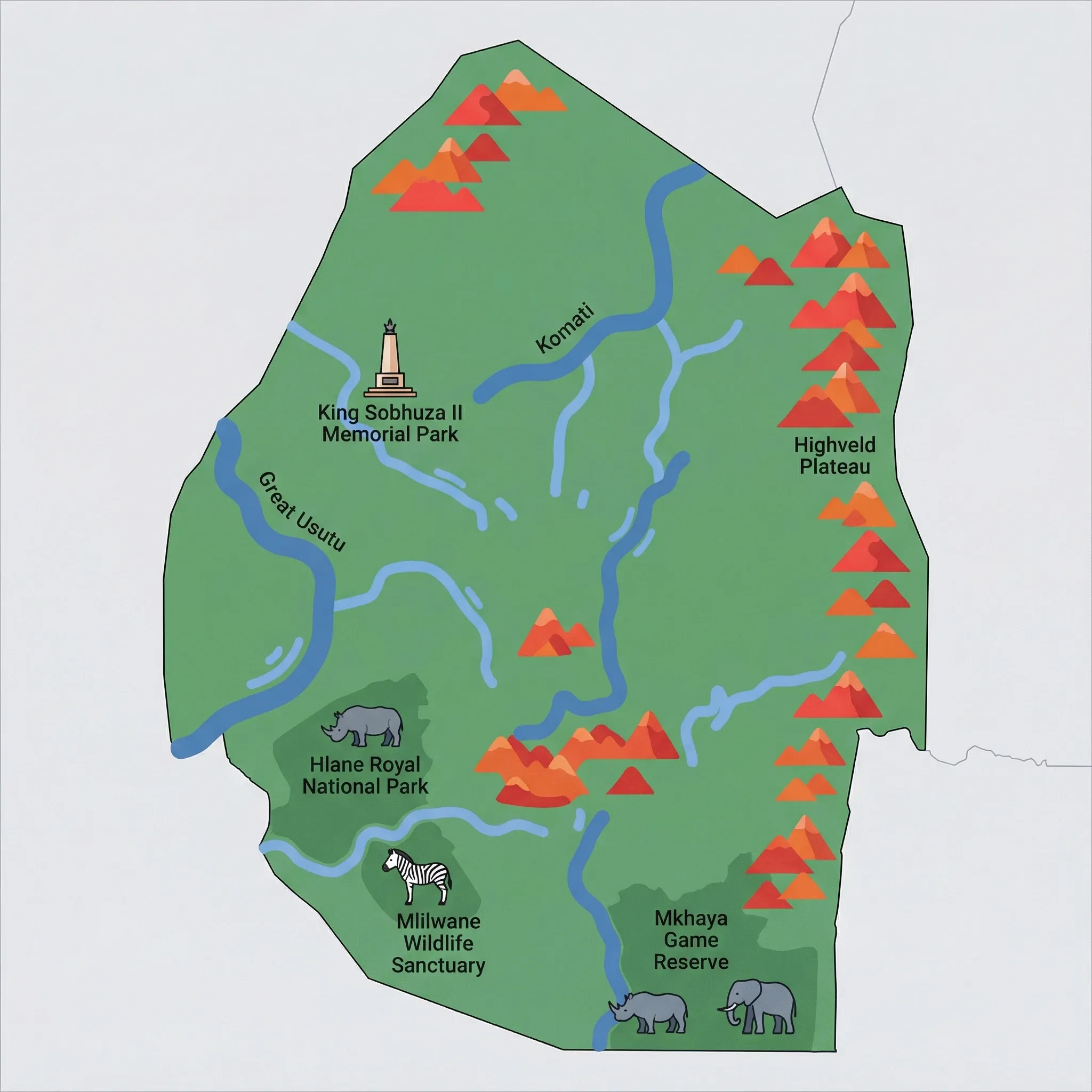
Eswatini is one of the few remaining absolute monarchies in the world, a tiny landlocked nation that feels like a throwback to a gentler era of travel. Often overshadowed by its larger neighbour, South Africa, this mountainous kingdom offers a completely different vibe: relaxed, culturally rich, and incredibly safe. For families, the Eswatini experience is defined by accessibility. Unlike vast safari parks elsewhere where you might drive for hours without seeing a thing, Eswatini’s reserves are compact and teeming with wildlife. The landscape shifts dramatically from the cool, pine-covered peaks of the Highveld to the hot, acacia-dotted savannas of the Lowveld in less than two hours.
What truly sets Eswatini apart for parents is the "tame" nature of its most popular sanctuaries. While you can find the Big Five here, the country specialises in intimate wildlife encounters where kids can safely walk, cycle, or horse-ride alongside impalas, warthogs, and zebras. The Swazi people are famously warm and welcoming, and the vibrant living culture-from the spectacular Reed Dance to daily village life-adds an educational layer that goes far beyond just spotting animals. It is a place where you can watch glassblowers create magic from recycled bottles in the morning and track rhinos on foot in the afternoon.
Key Attractions
Your first stop should undoubtedly be Mlilwane Wildlife Sanctuary in the Ezulwini Valley. This pioneering conservation area is the country's most family-friendly destination. Because there are no lions or elephants in this specific section, families are free to explore the network of trails on foot, mountain bike, or horseback. Sleeping in a traditional "beehive" hut here-waking up to find a warthog snoozing on your doorstep-is a childhood memory in the making.
For a more intense wildlife experience, head to the Lowveld. Hlane Royal National Park is the home of the heavyweights: lions, elephants, and white rhinos roam this bushveld terrain. The waterhole near the main camp is a hive of activity, often allowing you to watch hippos and elephants without even leaving the restaurant area. Nearby, Mkhaya Game Reserve offers one of Africa's best chances to see the endangered black rhino in the wild. While Mkhaya is more exclusive, its guided open-rover safaris are world-class and deeply educational for older children.
Practical Advice
Best time to visit: The dry winter months (May to September) are best for game viewing as vegetation is thin and animals congregate around waterholes. However, mornings and evenings can be freezing. Summer (October to March) is lush and green but hot, with higher chances of rain.
Health & Safety: The Highveld (Mbabane, Ezulwini) is generally malaria-free, but the Lowveld (Hlane, Mkhaya) is a malaria risk area, especially in summer; consult a doctor about prophylaxis for children. Tap water is treated in towns but bottled water is recommended for short-term visitors to avoid tummy upsets.
Food & Drink
Typical meal times: Lunch is typically 12:00 pm to 2:00 pm, and dinner from 6:00 pm to 9:00 pm. Lodges often serve set dinners around 7:00 pm.
Typical meal costs: 150–250 SZL (approx. $8–14 USD / €7.50–12.50 EUR) for a main course in a lodge or good restaurant. Local takeaway meals can be found for under 80 SZL (approx. $4.50 USD / €4 EUR).
Dietary requirements: Vegetarian options are increasingly common in tourist hubs, usually featuring locally grown spinach, pumpkin, and avocado. Gluten-free requires more explanation outside major hotels. Nuts (especially peanuts) are a common ingredient in sauces.
Family-friendly dining: Swazi culture loves children, and you will be welcomed everywhere. Most tourist restaurants offer kids' menus or half-portions. Finger foods like grilled maize and fruit are readily available at roadside stalls.
Signature dishes:
- Sishwala – A thick, hearty porridge made from maize and beans, often served with a side of vegetables or meat stew. It’s a staple comfort food.
- Braai – The local barbecue, featuring grilled meats (chicken, beef, boerewors sausage) and maize pap. A social weekend tradition families will encounter often.
- Umncweba – Dried, cured meat similar to biltong. A salty, chewy snack that is perfect for car journeys and surprisingly popular with kids.
- Siphuphe setindlubu – A traditional porridge made from ground nuts and pumpkin, offering a sweeter, nutty flavour profile that children often enjoy.

Eswatini is very affordable compared to premier safari destinations like Botswana. A family of four can expect to spend around 4,500–6,500 SZL (approx. $250–360 USD / €230–330 EUR) per day. This covers mid-range family accommodation (often self-catering chalets), supermarket supplies or modest restaurant meals, car rental, and park entrance fees. Luxury lodges will push this higher, but self-drive safaris keep costs down.
Age Suitability




Did you know? Eswatini welcomes approximately 393,000 international visitors per year. Most visitors come from Africa.
Why this score?
The kingdom offers a variety of rugged outdoor experiences, including zip-lining in Malolotja Nature Reserve and hiking the world's second-largest monolith, Sibebe Rock. The terrain is physically demanding and mountainous, though its compact size and relatively accessible wildlife sanctuaries like Mlilwane keep it from reaching extreme wilderness status.
Why this score?
Medical facilities in Eswatini are very limited and often lack specialized equipment or consistent supplies. While basic private clinics exist in Mbabane and Manzini, most serious medical emergencies or complex procedures require medical evacuation to nearby South African cities like Johannesburg.
Why this score?
With fewer than 400,000 annual visitors, Eswatini is a niche destination primarily serving as a secondary stop for travelers touring South Africa. While the Ezulwini Valley and craft markets like Swazi Candles are established, it lacks the global name recognition and high-volume infrastructure of major international hubs.
Eswatini is excellent value. The currency, the Lilangeni (E), is pegged 1:1 with the South African Rand (ZAR), which is accepted everywhere. Family-friendly chalets in reserves cost E1,200–2,500 (approx. $65–135 USD / €60–125 EUR) per night. Park entry fees are very low compared to neighbors, often E50–80 (approx. $2.70–4.30 USD / €2.50–4 EUR) per person.

Getting There & Around
Getting There
- By Air – King Mswati III International Airport (SHO) is the primary gateway, with daily flights connecting from Johannesburg and other regional hubs.
- By Road – Most families arrive by car from South Africa. The Oshoek/Ngwenya border post is the busiest and open longest (7:00 am – 10:00 pm). Smaller borders like Golela (for KwaZulu-Natal) are quieter.
- Entry Requirements – US, UK, and most EU citizens do not need a visa for tourist stays up to 30 days. Check your government website for the latest visa requirements, or use the IATA Travel Centre entry-requirements checker.
Getting Around
- Car Hire – The absolute best way to explore. Roads are generally good (though watch for potholes), and driving is on the left. You can easily drive across the whole country in a few hours.
- Shuttles – Private transfer services connect the main tourist hub of Ezulwini with incredible reserves like Hlane Royal National Park, though they offer less flexibility than a rental car.
- Driving Tips – Avoid driving at night. Rural roads are unlit and wandering livestock (cows, goats) pose a significant safety hazard after dark.

Packing List
Eswatini uses the large 3-pin round plug (South African style) which most universal travel adapters do not include.
Even in summer, evenings in the Highveld are cool. In winter (May-Aug), night temperatures can drop near freezing.
The roads, especially into the Highveld and towards Mbabane, are scenic but very winding.
Essential for self-drive safaris in Hlane or Mkhaya to spot animals from your vehicle.
Unlike many safari destinations, you can walk in reserves like Mlilwane; sturdy shoes protect against thorns and uneven ground.

Activities & Best Times

Adventure & Nature
Very GoodHiking, wildlife, outdoor exploration, ecotourism
Eswatini offers distinctive wilderness experiences like 'walk-in-wildlife' at Mlilwane and high-altitude trekking in Malolotja. Wildlife viewing is best during the dry winter (May–September) when animals congregate at waterholes, whereas summer rains make trails slippery and the bush too thick for spotting.

Festivals & Seasonal
Very GoodEvents, celebrations, seasonal attractions
Current rating of 'marginal' contradicts the evidence: MTN Bushfire Festival (internationally recognized), Umhlanga Reed Dance (major), and Incwala Ceremony (major). Three major festivals, including one with international recognition, clearly exceed 'marginal' standards. The notes themselves describe the festival as 'internationally recognized,' which is incompatible with a 'marginal' rating.

Sports & Active
Very GoodSport tourism, fitness activities, active recreation
Features purpose-built infrastructure for canopy tours, mountain biking, and technical hiking up Sibebe Rock. Activities are centered in the winter dry season to ensure trail safety and avoid the high risk of lightning and flash flooding in the mountainous terrain during summer.

City & Cultural
GoodUrban tourism, museums, historical sites, architecture
While Eswatini has strong cultural tourism (major festivals, cultural villages), it lacks urban cultural infrastructure (museums, galleries, historic cities) typically associated with 'city_cultural' ratings. The cultural offerings are authentic and significant, but 'very_good' should require substantial urban cultural institutions or heritage sites. Downgrading to 'good' better reflects the nature of the cultural tourism on offer.

Road Trips & Scenic
GoodScenic drives, countryside tours, route-based travel
Scenic routes like the MR1 Northern Highlands and Ezulwini Valley offer spectacular mountain vistas and well-maintained roads. The dry season provides the best visibility and safest driving conditions, avoiding the highland mists and heavy storms of the summer months.




Public Holidays & Calendar Next 12 months
Public holidays, festivals, cultural celebrations, and seasonal natural phenomena coming up in Eswatini over the next 12 months.
Loading holidays and events...

Travel Advisory
While several agencies recommend normal precautions, a significant number of major agencies advise elevated caution due to risks of civil unrest and crime. A tie between levels resulted in the higher risk classification.
Safety Topics
Traveller Advice (3 groups)

Stay informed via local media and avoid all political gatherings or protests. Ensure you have robust travel insurance covering medical evacuation to South Africa, as local healthcare is limited. Be particularly vigilant at night and when driving near border regions.

Same-sex sexual acts are legally prohibited and the LGBTQ+ community faces significant societal discrimination. Travellers should exercise discretion and be aware of these legal and social risks.

Female travellers should avoid walking alone, especially after dark or in isolated areas, due to risks of harassment or assault.
Agency Summaries
New Zealanders are advised to maintain standard security awareness and ensure they have comprehensive insurance that includes medical evacuation.
Visitors should maintain a high level of vigilance due to persistent risks of civil unrest and political demonstrations that can escalate into violence.
Standard safety precautions are advised. Visitors should be aware of limited medical facilities and the high prevalence of HIV/AIDS.
Travellers should remain vigilant for signs of disturbances and avoid all protests or marches, although the overall security situation has shown improvement.
Travellers are advised to exercise increased caution due to prevalent crime and the potential for sporadic civil unrest. Demonstrations may turn violent with little warning.
A high degree of caution is recommended because of the threat of civil unrest. Petty and violent crime, including carjackings, are significant concerns.
Information is provided for general guidance only and does not constitute travel, safety, medical, or legal advice. Conditions may change. Users are responsible for independently verifying information before travel.