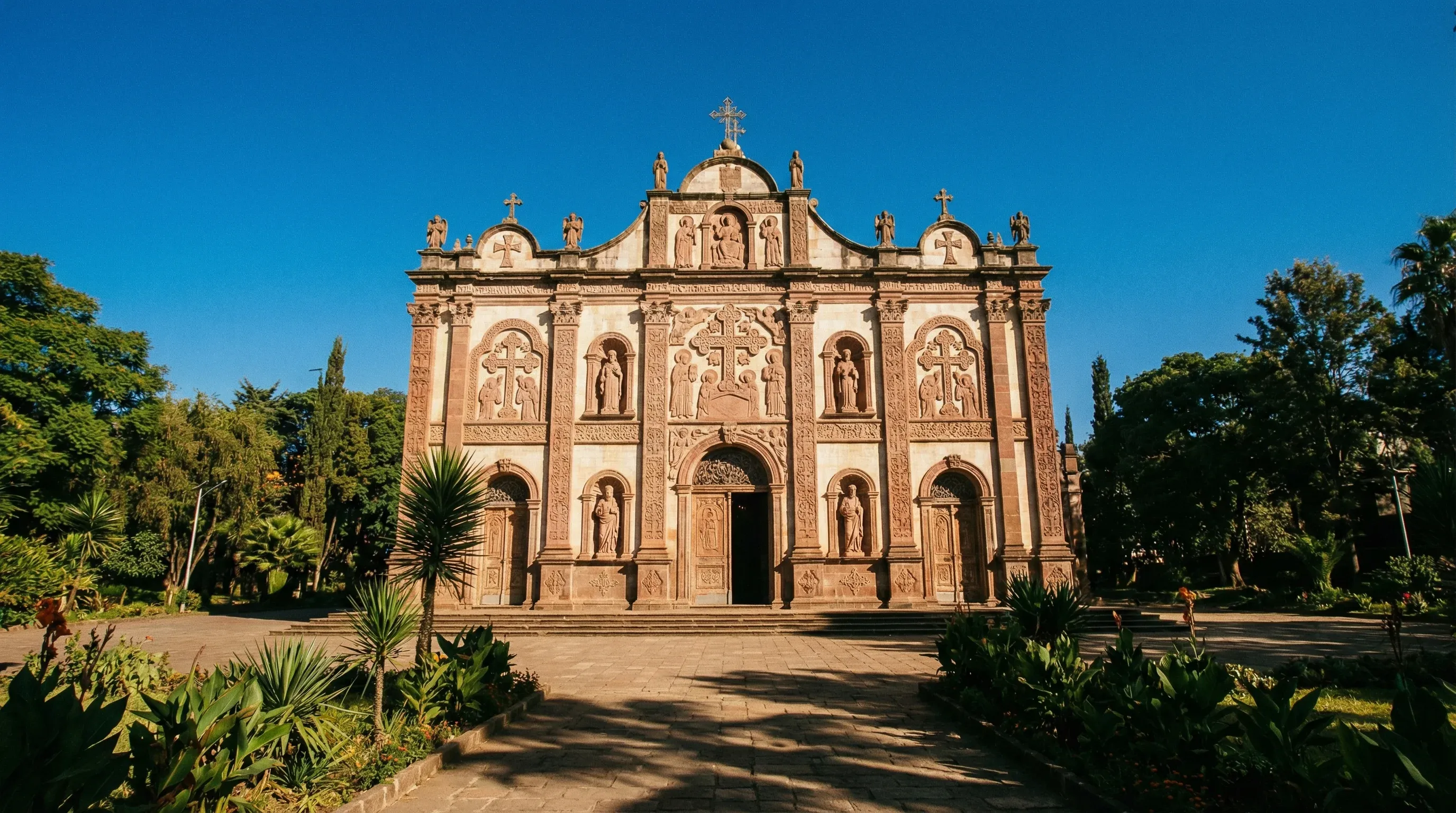

Addis Ababa
The beating heart of the highlands where humanity began ☕️
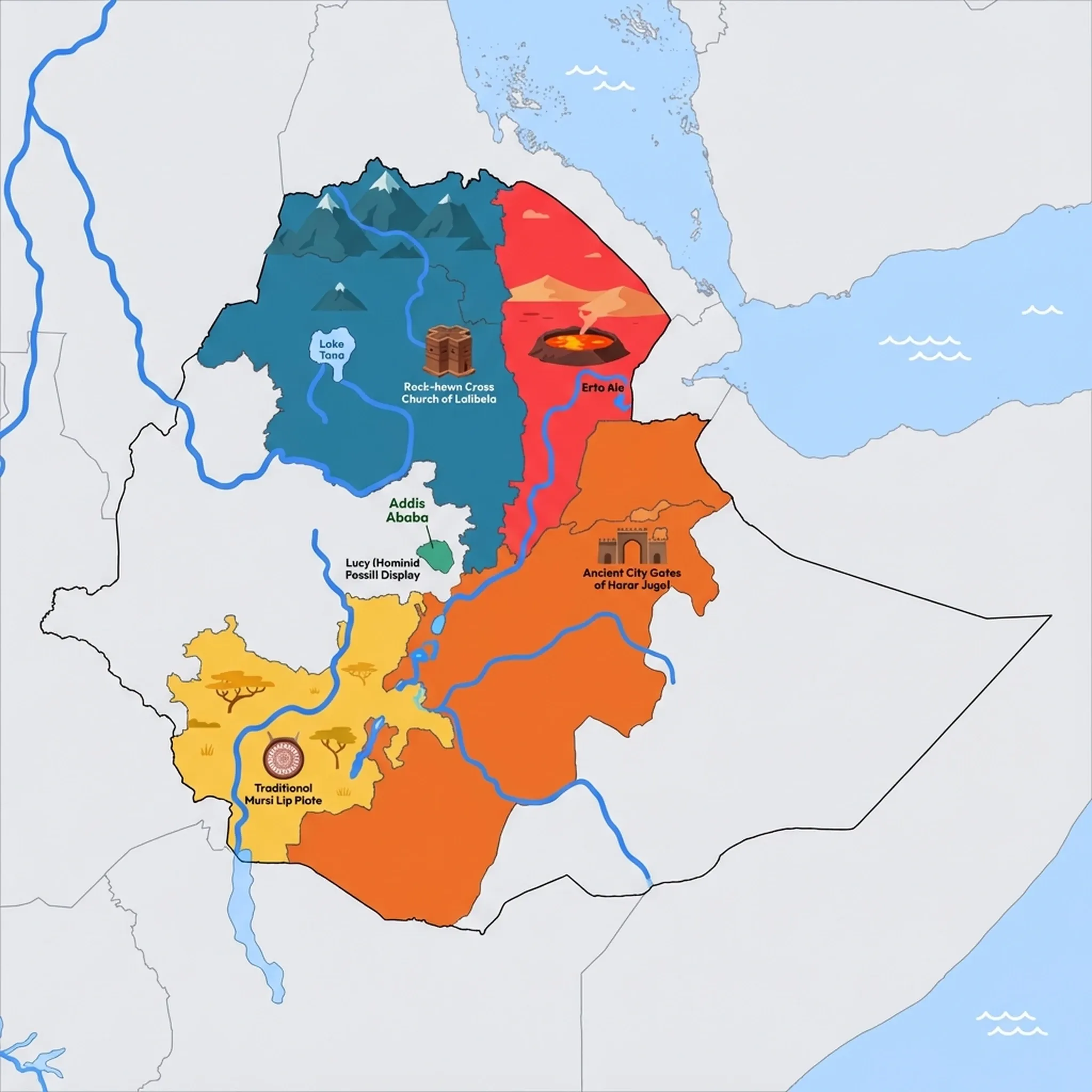
Click a region to explore
⚠️ SAFETY WARNING: Due to the potential for civil unrest and urban crime, government agencies (including the USA, UK, CA, AU, and NZ) advise travelers to reconsider travel (L2) to Addis Ababa or exercise a high degree of caution. While the capital is generally more stable than rural regions, security situations can change quickly. Petty crime, such as pickpocketing in crowded areas like Mercato, is a concern. Families are strongly urged to consult their own government's official travel advisory before considering a trip, as circumstances and risk assessments vary.
Addis Ababa, meaning "New Flower" in Amharic, sits high in the Entoto Mountains, making it the third-highest capital city in the world. For families, this altitude means the weather is often pleasantly cool, avoiding the scorching heat found elsewhere in Africa. It is a sprawling, energetic metropolis where donkey carts share the road with modern light rail trains, offering a sensory explosion for adventurous children. The city serves as the diplomatic capital of Africa and is the perfect grounding point to understand the country's deep Orthodox Christian roots and imperial history before heading further afield. The atmosphere is generally welcoming, with a culture deeply rooted in hospitality.
Culturally, Addis is a treasure trove. Families can spend days exploring the blend of imperial palaces and modern parks. The city has undergone a significant beautification in recent years, making it more pedestrian-friendly than in the past. Unity Park, located within the Grand Palace compound, is a standout addition that mixes history with a zoo and beautifully landscaped gardens, providing a safe and engaging space for children to run around. The air here is filled with the scent of roasting coffee beans—Ethiopia's gift to the world—and even young children will be fascinated by the elaborate traditional coffee ceremonies performed in almost every hotel and restaurant.
Key Attractions
No family trip to Addis is complete without meeting "Lucy," the 3.2-million-year-old hominid skeleton housed at the National Museum of Ethiopia. Seeing one of humanity's oldest ancestors is a profound educational moment for school-aged children. The museum is compact enough not to overwhelm young ones but rich in paleontological history. Just a short drive away, Meskel Square offers a look at the sheer scale of the city; it is a massive gathering place that is particularly electric during festivals.
If you are visiting in January, the festival of Timkat (Ethiopian Epiphany) transforms the streets into a colorful sea of white-robed pilgrims and ceremonial umbrellas, a spectacle that captivates visitors of all ages. For a break from the urban sprawl, a drive up Mount Entoto offers panoramic views and fresh eucalyptus-scented air, along with historic churches that tell the story of Emperor Menelik II. The newer Entoto Park includes adventure activities like zip-lining and go-karting, which are fantastic for burning off energy.
Practical Advice
The best time to visit is during the dry season from October to May. The main rainy season (June to September) can be very wet and muddy. Addis is high up (over 2,300 meters), so altitude sickness is possible; take it easy for the first day and stay hydrated. Nights can be surprisingly cold, so bring warm layers. For moving around with kids, ride-hailing apps are far safer and more convenient than public minibuses.
Food & Drink
Typical meal times: Lunch is the main meal of the day, typically served from 12:30 pm to 2:00 pm. Dinner is usually eaten later, from 7:00 pm to 9:00 pm.
Typical meal costs: A meal at a good mid-range restaurant will cost between 600–1,500 ETB (approx. $5–13 USD / €4.50–12 EUR) per person. International hotel dining will be higher.
Dietary requirements: Ethiopia is a paradise for vegetarians and vegans due to the Orthodox "fasting" tradition (no animal products on Wednesdays and Fridays). Gluten-free travelers should note that while teff (the grain used for injera) is naturally gluten-free, some city restaurants mix in wheat flour, so always ask for "pure teff."
Signature dishes:
- Injera with Shiro – A spongy, sour flatbread served with a smooth, spiced chickpea stew. It is the staple meal and fun for kids as it is eaten with hands.
- Tibs – Sautéed meat (usually beef or lamb) with rosemary, onions, and peppers, often served sizzling in a clay pot.
- Spris – A spectacular layered fruit juice drink (avocado, mango, papaya) that is thick, colorful, and beloved by children.
Why this score?
The region is largely urban and serves as the country's modern administrative center with developed infrastructure. While Mount Entoto offers some hiking and panoramic views, the experience is predominantly metropolitan with museums, markets, and hotels. It lacks the ruggedness and physical challenges found in Ethiopia's more remote interior regions.
Why this score?
Addis Ababa offers the best healthcare in Ethiopia, including private facilities like the Nordic Medical Centre that cater specifically to expats and tourists. However, compared to global standards, services are still basic and may require evacuation for complex emergencies. It is the only region in the country where international-standard diagnostics are reasonably accessible.
Why this score?
As the primary international gateway and a major diplomatic hub for Africa, Addis Ababa sees a steady stream of international transit and business travelers. While not a global mega-destination, attractions like the National Museum and Unity Park draw most of the country's 500,000+ annual visitors. Its popularity is moderate, serving as the essential starting point for any Ethiopian itinerary.

Addis Ababa is more expensive than the countryside but affordable by international standards. A comfortable family hotel room costs between 5,000–12,000 ETB (approx. $45–105 USD / €40–95 EUR) per night. Local meals are very cheap, but imported goods and western-style restaurants charge premiums closer to 1,500–2,500 ETB (approx. $13–22 USD / €12–20 EUR) per person.

Getting Here & Around
Getting Here
- Airports – Bole International Airport (ADD) is the main hub, located just 5–8 km from the city center. It is one of Africa's busiest transit hubs with direct flights from Europe and North America.
- Driving – While possible to drive from neighboring countries, borders are often fraught with delays and security issues. Most families arrive by air.
Getting Around
- Ride-Hailing – Apps like Feres and Ride are the safest and most convenient way for families to navigate. They function like Uber and avoid the need to haggle.
- Light Rail – The tram system crosses Meskel Square and is cheap, but often extremely overcrowded, making it difficult with strollers or small children.
- Taxis – Blue and white Lada taxis are everywhere but require firm negotiation before getting in. They are generally older vehicles without rear seatbelts.
Nearby Airports (1 airport)
Addis Ababa Bole International Airport
ADDAddis Ababa
View full flight map for Ethiopia →
Official Links

Packing List
Vehicle pollution in Addis can be heavy; useful for sensitive lungs or during traffic jams.
At 2,355m altitude, evenings drop to 10°C (50°F) or lower, surprising many visitors.
Orthodox chanting from churches often begins at 3:00 am and is amplified by loudspeakers.
Essential as injera is eaten with hands and washing facilities aren't always up to standard.
Power cuts are frequent even in hotels; essential for navigating rooms or streets after dark.
You must remove shoes at all churches; stone floors in Lalibela and other sites are cold and uneven.
Required for modesty in churches; white cotton (Netela) is preferred but any modest covering works.
Budget accommodation carpets and mattresses can sometimes host fleas; a barrier helps peace of mind.
ATMs can be unreliable or empty; clean, post-2013 USD bills are essential for emergencies and some fees.
Altitude sickness and stomach bugs are common; these help recovery in remote areas with limited pharmacy access.

Activities & Best Times

Hiking, wildlife, outdoor exploration, ecotourism
Entoto Natural Park and the Menagesha Suba Forest provide high-altitude hiking and unique endemic birdwatching near the city. Peak visitation follows the dry season from October to May, while heavy Kiremt rains in July and August make mountain trails muddy and difficult.

Urban tourism, museums, historical sites, architecture
As the diplomatic capital of Africa, it offers world-class museums like the National Museum (housing Lucy) and vibrant urban spaces like Unity Park. Cultural sites are accessible year-round, though the dry, sunny months from October to May are best for exploring the sprawling Mercato and botanical gardens.

Learning experiences, scientific sites, historical education
Ethiopian National Museum (Lucy fossil, human evolution exhibits), National Museum of Ethiopia, and Ethnological Museum make this a strong educational destination by African standards. 'Marginal' significantly underrates these institutions.

Events, celebrations, seasonal attractions
UNESCO-recognized Meskel and Timkat festivals with hundreds of thousands of participants warrant 'good' rating. These are nationally significant events with international tourist draw.

Scenic drives, countryside tours, route-based travel
The city is a gateway to the spectacular Blue Nile Gorge and Rift Valley scenic drives, offering dramatic highland vistas. Visibility and road conditions are excellent in the dry season, but mountain fog and heavy rain during July and August present significant driving hazards.

Sport tourism, fitness activities, active recreation
Entoto Natural Park provides dedicated high-altitude cycling and hiking routes that are popular with professional athletes and active families. Peak conditions occur in the dry, temperate months, while the extreme precipitation of July and August hinders outdoor training.

Spa retreats, wellness centers, peaceful getaways
The historic Filwoha Hot Springs offer a traditional thermal experience within the city, though it lacks the infrastructure of a modern global spa resort. The baths remain functional year-round, serving as a restorative stop regardless of the exterior weather.
Amusement parks, family entertainment venues
Local entertainment options include Kuriftu Water Park and Bora Amusement Park, primarily serving domestic travelers and resident families. Operations are best during the dry season, whereas heavy rainfall in July and August limits the appeal of these outdoor facilities.




Public Holidays & Calendar Next 12 months
Public holidays, festivals, cultural celebrations, and seasonal natural phenomena coming up in Addis Ababa over the next 12 months.
Loading holidays and events...

Travel Advisory
International consensus is split between caution and recommending the avoidance of non-essential trips. While urban centers like Addis Ababa offer more stability, the presence of active conflict in multiple regions and a high risk of civil unrest justify a significant warning.
Safety Topics
Traveller Advice (4 groups)

Media professionals require specific government accreditation to operate. There is a documented risk of detention for those reporting on sensitive security or political matters.

Same-sex sexual activity is criminalized and can result in significant prison terms. Public displays of affection are culturally inappropriate and may lead to harassment or legal issues.

Women traveling alone may face persistent harassment. It is safer to travel in groups and follow local standards of modest dress to minimize unwanted attention.

Aid workers face elevated risks of kidnapping and being caught in crossfire in border regions and areas with active insurgencies.
Agency Summaries
The Australian government warns that the safety landscape is volatile and could decline rapidly. Citizens are encouraged to evaluate if their travel is essential, particularly given the risks of armed conflict and civil disturbances in various provinces.
Ireland recommends a heightened sense of vigilance for anyone visiting. There are significant warnings against travel to most areas outside the capital due to active fighting between local militias and national forces.
British officials highlight severe security risks in several regions, including Tigray and Amhara, where travel is strongly discouraged. Although some tourist hubs are open, the overall environment is impacted by the threat of terrorism and ongoing political tension.
New Zealanders are advised to stay highly alert and avoid any large gatherings or protests, as these can quickly become violent. Travel outside urban centers should be planned with extreme care.
American citizens are urged to rethink visits to the country because of potential for civil unrest, armed clashes, and kidnapping in peripheral zones. Consular aid is severely limited outside of the capital, and communications can be disrupted without notice.
Canadian authorities advise against all trips that are not absolutely necessary due to widespread violence, internal conflict, and criminal threats. While the capital city is somewhat more stable, travelers there must still maintain an extremely high level of alertness.
Information is provided for general guidance only and does not constitute travel, safety, medical, or legal advice. Conditions may change. Users are responsible for independently verifying information before travel.