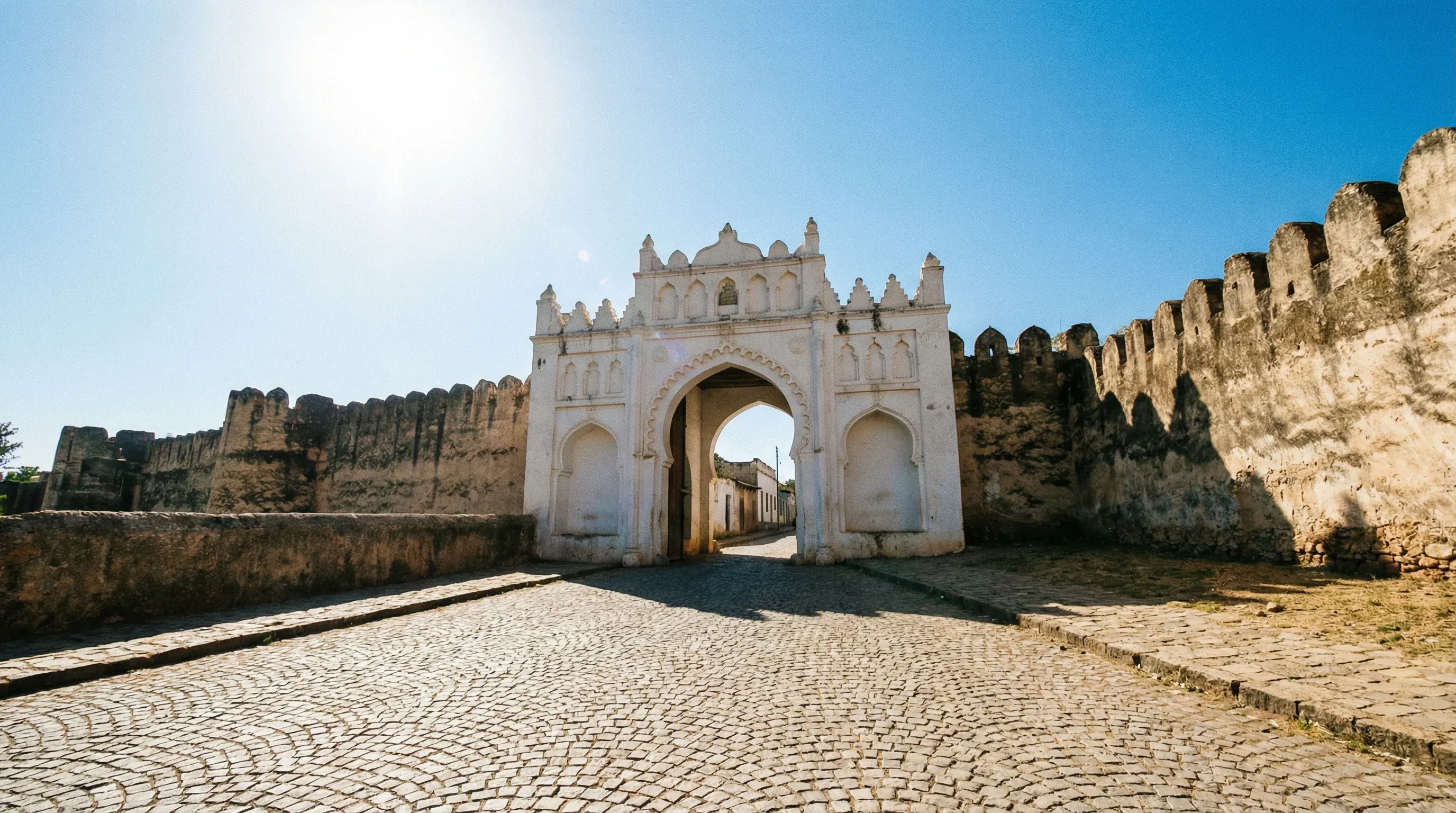

Eastern Ethiopia (Harar)
Where wild hyenas roam the colorful walled city 🕌
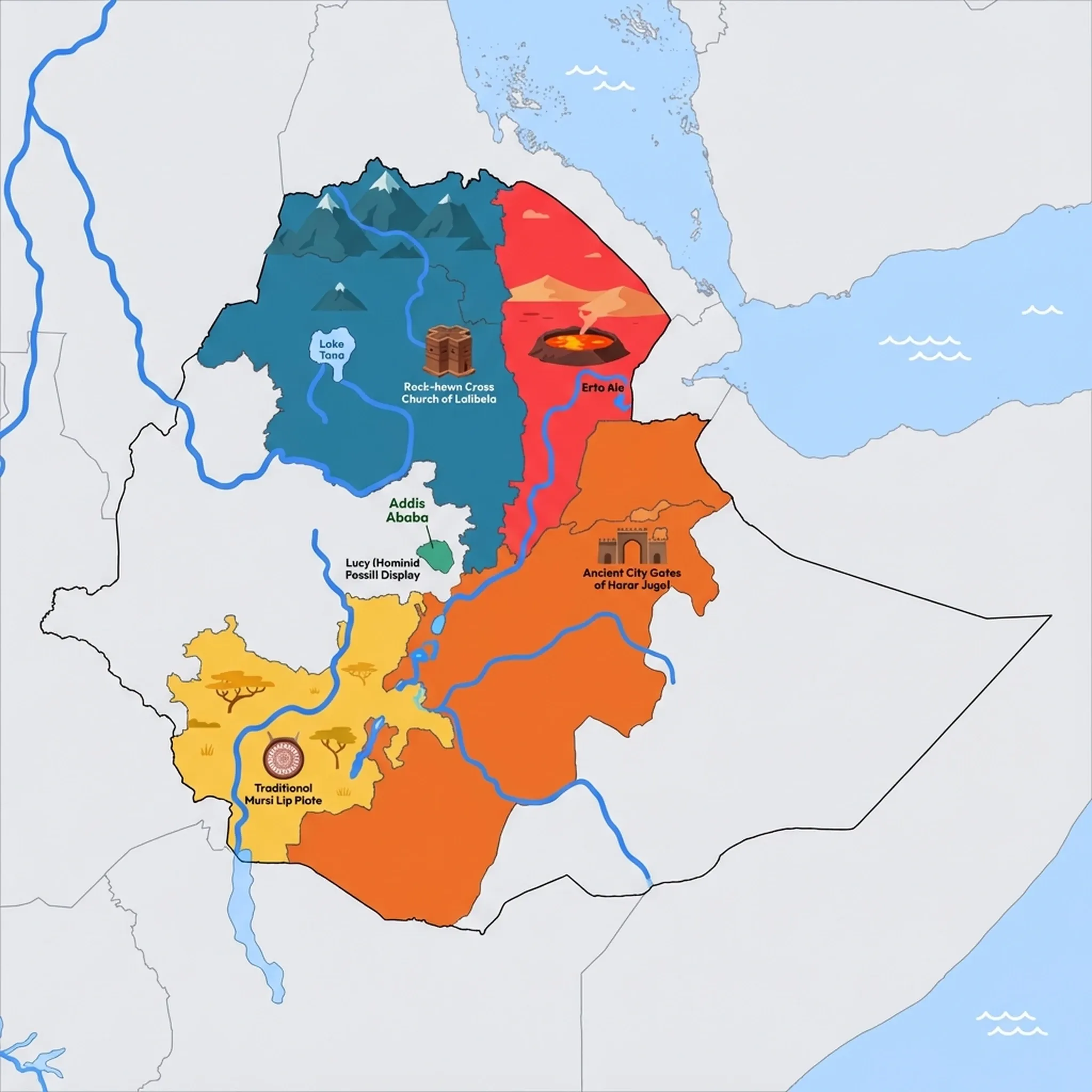
Click a region to explore
⚠️ SAFETY WARNING: Government agencies (including the UK, USA, and Canada) advise travelers to reconsider travel (L2) to this region. While the city of Harar itself is generally stable, the surrounding Somali region and border areas can be volatile with risks of civil unrest and inter-communal violence. Travel after dark on roads connecting towns is discouraged. Families are strongly urged to consult their own government's official travel advisory before considering a trip, as circumstances and risk assessments vary.
Stepping into Harar is like entering a different world. The old walled city, known as Jugol, is a UNESCO World Heritage site and a maze of 368 alleyways squeezed into just one square kilometer. Unlike the broad avenues of Addis Ababa, Harar is intimate, colorful, and deeply historic. For families, the car-free streets of the old town are fascinating to explore on foot, with vibrant markets selling spices and colorful fabrics. The architecture is unique, with traditional Adare houses featuring elaborate interior decor of baskets and bowls, which many guesthouses allow visitors to tour.
The atmosphere here is more relaxed and tropical than the northern highlands. The influence of the nearby Red Sea and trade routes is evident in the food, the dress, and the language. It is a city of peace, known for the harmonious coexistence of Muslims and Christians. However, the most famous attraction for kids is undoubtedly the "Hyena Men" of Harar. For generations, these men have fed wild hyenas outside the city walls to prevent them from attacking livestock. Seeing these powerful predators being fed meat from a stick—or even from the mouth of a brave guide—is a National Geographic moment come to life.
Key Attractions
The heart of the experience is Harar Jugol, the fortified historic town. Walking the walls gives a great vantage point, and exploring the Arthur Rimbaud Center (dedicated to the French poet who lived here) offers a history lesson in a beautiful heritage building. Just outside the city, the nightly hyena feeding is the main event. Unlike a zoo, these are wild animals that emerge from the darkness when called by name.
Nearby, the city of Dire Dawa offers a different vibe with its colonial-era railway architecture. Between the two cities lies the Babile Elephant Sanctuary, though sightings of the rare black-maned lions and elephants can be difficult and require local expertise. Exploring the markets of Harar is an attraction in itself, where kids can see blacksmiths hammering out tools and tailors sewing brilliant velvet robes.
Practical Advice
Harar is best visited year-round, though it can be warm. To get there, most families fly into Dire Dawa and take a 1-hour minibus or taxi ride up the escarpment to Harar. The old city is not stroller-friendly due to cobblestones and steps; a baby carrier is essential for toddlers. Dress modestly (shoulders and knees covered) to respect the local Islamic culture.
Food & Drink
Typical meal times: Lunch is 12:00 pm to 2:00 pm. Dinner is often eaten communally and late, around 8:00 pm.
Typical meal costs: Very affordable. A hearty meal costs 300–600 ETB (approx. $2.50–5.25 USD / €2.30–4.80 EUR).
Dietary requirements: Vegetarian food is available but less dominant than in the Orthodox Christian north. However, fresh fruits (mangoes, cactus fruit) are abundant and safe if peeled.
Signature dishes:
- Fatira – A popular breakfast dish of flaky, fried flatbread often stuffed with egg and honey or vegetables, cut into small squares. Kids usually love this.
- Camel Meat – Available in specialized butcheries/restaurants. It’s a local delicacy, somewhat chewy but flavorful.
- Hulbet Marqa – A porridge-like dish with a spicy red sauce and butter, traditionally eaten by the Adare people.
Why this score?
The region offers moderate adventure through the immersive experience of the ancient walled city and the unique nightly ritual of feeding wild hyenas. While the city itself is navigable, trips to the surrounding Babile Elephant Sanctuary involve rough roads and minimal facilities. It provides a good balance of cultural exploration without the extreme physical demands of the northern highlands or the southern valley.
Why this score?
Healthcare facilities in Harar and nearby Dire Dawa are very limited and generally do not meet international standards for foreign families. While basic clinics exist for minor issues, there is a lack of specialized care and English-speaking medical staff. Most significant medical concerns would require immediate transport to Addis Ababa.
Why this score?
Harar is a UNESCO World Heritage site known for its unique culture and the 'hyena men,' but it receives far fewer visitors than the Northern Historic Circuit. It remains a niche destination for cultural enthusiasts and historians rather than a mainstream tourist hub. The regional infrastructure is geared more toward domestic travelers and small groups of international backpackers.

Harar is one of the most budget-friendly regions. A stay in a traditional cultural guesthouse is a unique and cheap experience, costing 1,500–3,500 ETB (approx. $13–30 USD / €12–28 EUR). Entry fees to museums and the hyena feeding are nominal, often under 500 ETB (approx. $4.50 USD / €4 EUR).

Getting Here & Around
Getting Here
- Airports – Dire Dawa Airport (DIR) is the nearest hub. Ethiopian Airlines flies daily from Addis Ababa (approx. 1 hour).
- Road – From Dire Dawa airport, it is a 50km (approx. 1 hour) drive to Harar Jugol through scenic mountains.
Getting Around
- Bajaj (Tuk-tuk) – The primary mode of transport outside the walled city. They are colorful, fun for kids, and very cheap.
- Walking – Inside Harar Jugol, walking is the only option. The alleys are too narrow for cars.
Nearby Airports (2 airports)
Aba Tenna Dejazmatch Yilma International
DIRDire Dawa
Jijiga Airport
JIJJijiga
View full flight map for Ethiopia →

Packing List
The old walled city has confusing alleys that can be pitch black after sunset.
Harar is conservative; long skirts/trousers are respectful and help blend in.
Essential for the hyena feeding areas and walking the uneven, sometimes dirty, market alleys.
With over 80 mosques in a small area, the call to prayer is beautiful but loud and early (4:30 am).
Power cuts are frequent even in hotels; essential for navigating rooms or streets after dark.
You must remove shoes at all churches; stone floors in Lalibela and other sites are cold and uneven.
Required for modesty in churches; white cotton (Netela) is preferred but any modest covering works.
Budget accommodation carpets and mattresses can sometimes host fleas; a barrier helps peace of mind.
ATMs can be unreliable or empty; clean, post-2013 USD bills are essential for emergencies and some fees.
Altitude sickness and stomach bugs are common; these help recovery in remote areas with limited pharmacy access.

Activities & Best Times

Urban tourism, museums, historical sites, architecture
The UNESCO-listed Harar Jugol is one of Islam's holiest cities, featuring a dense network of historic alleyways and unique architectural heritage. Visitation peaks in the dry, cooler winter months which are ideal for exploring the labyrinthine old town on foot.

Hiking, wildlife, outdoor exploration, ecotourism
While the hyena feeding is unique, the region's adventure_nature offerings are limited compared to Simien Mountains or Danakil. 'Very_good' suggests a primary adventure destination, which overstates the case.

Sport tourism, fitness activities, active recreation
Offers high-altitude trekking and hiking routes around Mount Kondudu and Gara Muleta for active families seeking off-the-beaten-path trails. Peak months avoid the heavy rains that make highland trails slippery and dangerous.

Spa retreats, wellness centers, peaceful getaways
Erer Gota offers historic thermal springs, though international-standard wellness infrastructure remains limited. The cooler dry months provide the most comfortable environment for visiting natural hot spring sites.

Scenic drives, countryside tours, route-based travel
Features dramatic landscapes like the Valley of Marvels, though driving conditions can be challenging for families. The dry season ensures the best road stability and visibility across the Eastern Highlands.




Public Holidays & Calendar Next 12 months
Public holidays, festivals, cultural celebrations, and seasonal natural phenomena coming up in Eastern Ethiopia (Harar) over the next 12 months.
Loading holidays and events...

Travel Advisory
International consensus is split between caution and recommending the avoidance of non-essential trips. While urban centers like Addis Ababa offer more stability, the presence of active conflict in multiple regions and a high risk of civil unrest justify a significant warning.
Safety Topics
Traveller Advice (4 groups)

Media professionals require specific government accreditation to operate. There is a documented risk of detention for those reporting on sensitive security or political matters.

Same-sex sexual activity is criminalized and can result in significant prison terms. Public displays of affection are culturally inappropriate and may lead to harassment or legal issues.

Women traveling alone may face persistent harassment. It is safer to travel in groups and follow local standards of modest dress to minimize unwanted attention.

Aid workers face elevated risks of kidnapping and being caught in crossfire in border regions and areas with active insurgencies.
Agency Summaries
The Australian government warns that the safety landscape is volatile and could decline rapidly. Citizens are encouraged to evaluate if their travel is essential, particularly given the risks of armed conflict and civil disturbances in various provinces.
Ireland recommends a heightened sense of vigilance for anyone visiting. There are significant warnings against travel to most areas outside the capital due to active fighting between local militias and national forces.
British officials highlight severe security risks in several regions, including Tigray and Amhara, where travel is strongly discouraged. Although some tourist hubs are open, the overall environment is impacted by the threat of terrorism and ongoing political tension.
New Zealanders are advised to stay highly alert and avoid any large gatherings or protests, as these can quickly become violent. Travel outside urban centers should be planned with extreme care.
American citizens are urged to rethink visits to the country because of potential for civil unrest, armed clashes, and kidnapping in peripheral zones. Consular aid is severely limited outside of the capital, and communications can be disrupted without notice.
Canadian authorities advise against all trips that are not absolutely necessary due to widespread violence, internal conflict, and criminal threats. While the capital city is somewhat more stable, travelers there must still maintain an extremely high level of alertness.
Information is provided for general guidance only and does not constitute travel, safety, medical, or legal advice. Conditions may change. Users are responsible for independently verifying information before travel.