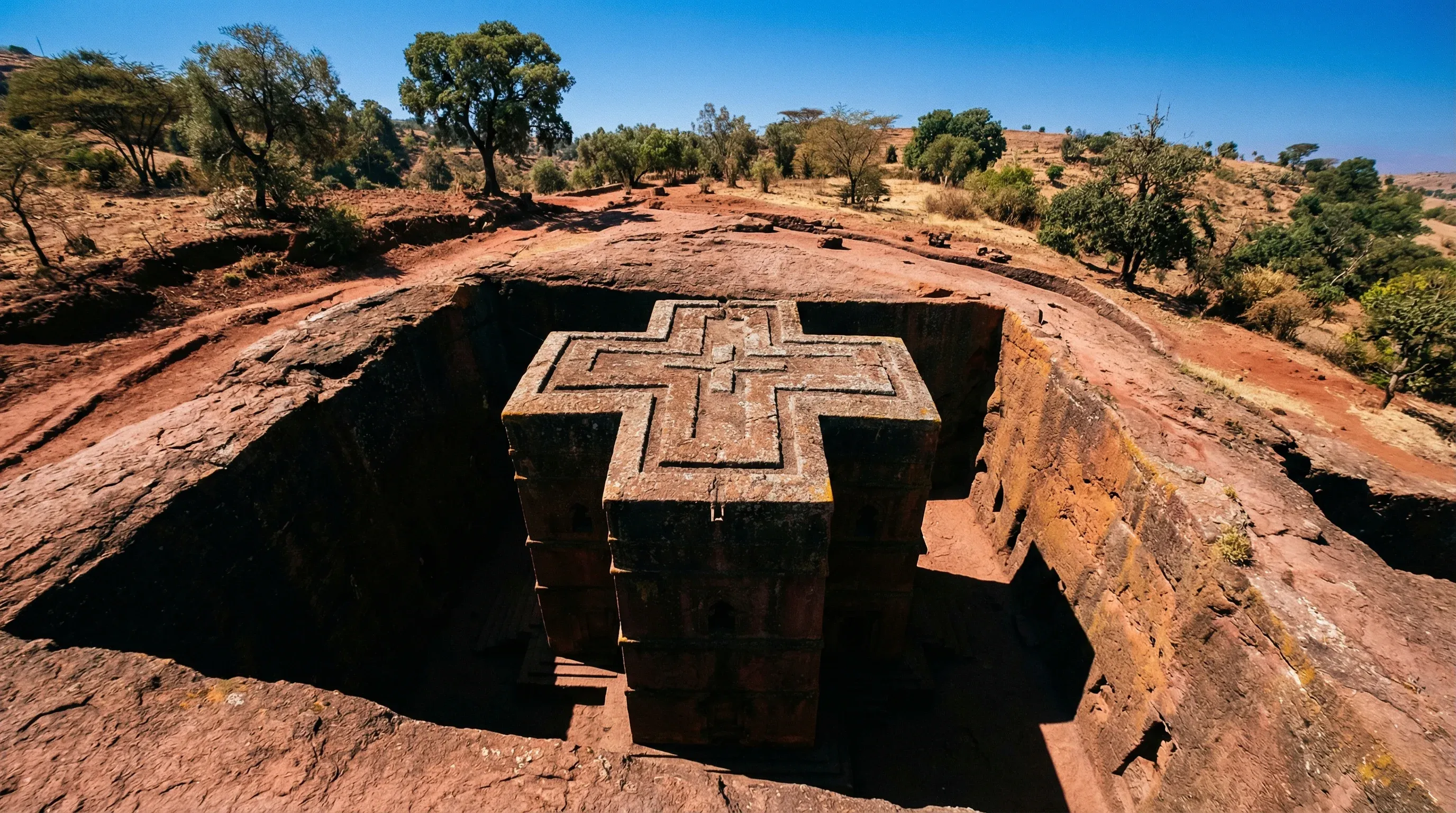

Northern Historic Circuit (Lalibela, Gondar, Axum, Simien Mountains)
Castles in the clouds and ancient legends 🏰
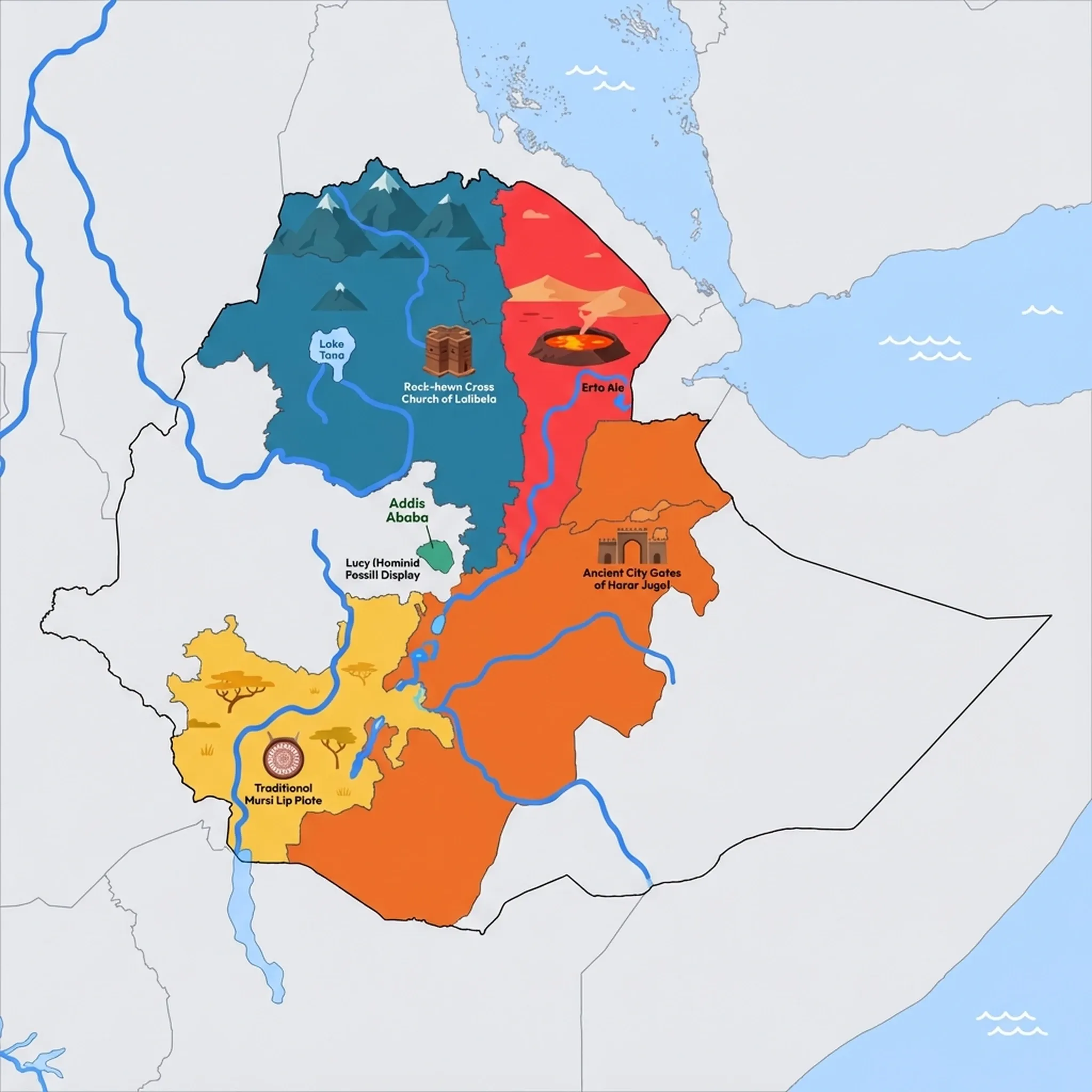
Click a region to explore
⚠️ SAFETY WARNING: The Northern Historic Circuit is currently affected by severe security risks. Government agencies (including UK, USA, CA, AU, NZ) have issued "Do Not Travel" (L3) or "Reconsider Travel" (L2) advisories for large parts of the Amhara and Tigray regions due to ongoing armed conflict, militia activity, and civil unrest. The situation is fluid; airports may close and roads can be blocked without warning. Travel to Lalibela, Gondar, or the Simien Mountains should only be undertaken if confirmed safe by reliable local operators at the time of travel. Families are strongly urged to consult their own government's official travel advisory before considering a trip, as circumstances and risk assessments vary.
If accessible, this region offers the most iconic sights of Ethiopia. It is a land of legends, believed by many to be the home of the Ark of the Covenant. For families, the history here is tangible—you don't just look at it in a glass case, you walk through it. In Lalibela, you descend into trenches to enter monolithic churches carved straight into the bedrock, a feat of engineering that fascinates children and adults alike. Gondar feels like a page out of a European storybook with its stone castles, yet firmly rooted in African history.
Beyond the history, the natural beauty is staggering. The Simien Mountains offer some of the most dramatic scenery on the continent. This is one of the few places in Africa where you can safely walk amongst wild primates; the Gelada baboons are herbivorous and generally ignore humans, allowing for incredible wildlife encounters that are not scary for kids. The cool, crisp mountain air and the stunning vistas provide a refreshing break from the heat of the lowlands.
Key Attractions
The Rock-Hewn Churches of Lalibela are the headline act. The most famous, Church of Saint George (Bete Giyorgis), is carved in the shape of a cross and is visually stunning. Kids love the "Indiana Jones" feel of navigating the tunnels connecting the churches. In Gondar, the Fasil Ghebbi (Royal Enclosure) allows families to explore a complex of six castles. Nearby, Fasilides' Bath is a peaceful spot where huge tree roots strangle the stone walls, creating a jungle-ruin atmosphere.
Nature lovers must visit the Simien Mountains National Park. Even a day trip can yield sightings of Gelada baboons and Walia Ibex. Further south, Lake Tana offers boat trips to island monasteries like Ura Kidane Mehret Monastery, which is famous for its colorful, comic-strip-like religious murals that easily hold a child's attention.
Practical Advice
Due to the distances and road safety, flying between these towns (Addis-Bahir Dar-Gondar-Lalibela) is the only recommended transport method for families. The altitude is high (often over 2,500m), so bring warm clothes and sunscreen. Medical facilities are basic, so carry a robust first-aid kit.
Food & Drink
Typical meal times: Lunch 12:00 pm – 2:00 pm. Dinner 7:00 pm – 9:00 pm.
Typical meal costs: Tourist restaurants in these towns charge 500–1,000 ETB (approx. $4.50–8.75 USD / €4–8 EUR) per main dish.
Dietary requirements: Very easy for vegetarians due to fasting traditions. "Fasting food" (Yetsom Beyaynetu) is a vegan platter available everywhere.
Signature dishes:
- Doro Wat – The national dish: a spicy chicken stew with a hard-boiled egg. It is rich and flavorful, usually reserved for special occasions.
- Fresh Fish (Asa) – In Bahir Dar and Gondar, fresh tilapia or Nile perch from Lake Tana is fried or grilled—a kid-friendly alternative to spicy stews.
- Tej – Honey wine (for parents), often served in beaker-like glass flasks called berele.
Why this score?
The region offers notable outdoor adventure, particularly high-altitude trekking in the Simien Mountains National Park, home to endemic wildlife and steep escarpments. Exploring the rock churches involves physical scrambling through narrow tunnels and uneven terrain. While town-based infrastructure is improving, the rural areas remain rugged and require a high degree of physical activity.
Why this score?
Despite its status as a major tourist circuit, medical facilities in towns like Lalibela and Axum remain very basic and ill-equipped for emergencies. Gondar and Bahir Dar have larger hospitals, but they still lack the advanced equipment and international insurance processing found in the capital. Travelers are advised to rely on city-based services only for stabilization before moving to Addis Ababa.
Why this score?
This is Ethiopia's most famous tourism corridor, home to the world-renowned rock-hewn churches of Lalibela and the castles of Gondar. While it is the highlight for most leisure travelers, its absolute volume remains low compared to more accessible African destinations like the Kenyan coast. It attracts a mix of cultural pilgrims, hikers, and history buffs on organized tours.

Flights add to the cost, but ground costs are reasonable. A good hotel is 3,500–8,000 ETB (approx. $30–70 USD / €28–65 EUR). Entrance fees for sites like Lalibela are priced for foreigners (approx $50 USD per adult, valid for multiple days), which is significantly higher than other Ethiopian attractions. Plan this into your budget.

Getting Here & Around
Getting Here
- Airports – The "Historic Route" is connected by a network of airports: Lalibela (LLI), Gondar (GDQ), Bahir Dar (BJR), and Axum (AXU). Ethiopian Airlines operates a daily shuttle circuit.
- Bus – Not recommended for families due to long travel times, winding roads, and security risks.
Getting Around
- Bajaj (Tuk-tuk) – The standard way to move within Gondar and Bahir Dar. They are fun and cheap.
- Boat – Essential for exploring Lake Tana monasteries. Ensure the boat has life jackets for children before boarding.
- Walking – The best way to see the Rock-Hewn Churches of Lalibela. Wear slip-on shoes as you must remove them to enter every church.
Nearby Airports (7 airports)
Axum
AXUAxum
Bahir Dar
BJRBahar Dar
Combolcha Airport
DSEDessie
Gonder
GDQGondar
Lalibella
LLILalibela
Mekele
MQXMakale
Indaselassie Airport
SHCShire
View full flight map for Ethiopia →

Packing List
Old church carpets in Lalibela can sometimes host fleas; spray ankles/socks before visiting.
You must remove shoes at every church; stone floors are cold and uneven, so thick socks are vital.
Great for spotting birds on Lake Tana and watching baboon troops in the Simien Mountains.
Even short drives in the Simien Mountains or to Blue Nile Falls involve winding, bumpy roads.
Power cuts are frequent even in hotels; essential for navigating rooms or streets after dark.
Required for modesty in churches; white cotton (Netela) is preferred but any modest covering works.
Budget accommodation carpets and mattresses can sometimes host fleas; a barrier helps peace of mind.
ATMs can be unreliable or empty; clean, post-2013 USD bills are essential for emergencies and some fees.
Altitude sickness and stomach bugs are common; these help recovery in remote areas with limited pharmacy access.

Activities & Best Times

Hiking, wildlife, outdoor exploration, ecotourism
Features the world-renowned Simien Mountains and Lake Tana, offering unique endemic wildlife like Gelada baboons and spectacular escarpments. The dry months from October to March provide the clear vistas and stable conditions necessary for high-altitude trekking and wildlife spotting.

Urban tourism, museums, historical sites, architecture
Home to unparalleled UNESCO World Heritage sites including the rock-hewn churches of Lalibela and the castles of Gondar. Dry season is peak for cultural exploration as it ensures comfortable walking conditions and full access to outdoor religious and architectural monuments.

Learning experiences, scientific sites, historical education
Multiple UNESCO World Heritage sites (Lalibela, Gondar, Axum), Simien Mountains Visitor Center, and Lake Tana monasteries make this an outstanding educational destination. World-class heritage sites are inherently educational.

Scenic drives, countryside tours, route-based travel
The Northern Historic Circuit is one of Africa's most iconic scenic drives, highlighted by the dramatic Limalimo Pass. Best experienced in the dry season when roads are safest and visibility of the highland scenery is optimal for sophisticated travelers.

Sport tourism, fitness activities, active recreation
Offers world-class trekking routes in the Simien and Gheralta mountains that challenge experienced hikers with high-altitude terrain. Activity is concentrated in the dry months to avoid the hazardous conditions and trail erosion caused by heavy summer rains.

Events, celebrations, seasonal attractions
Hosts the world-famous Timkat (Epiphany) and Genna (Christmas) festivals in January, providing deep authentic immersion into Ethiopian Orthodox traditions. While these are bucket-list events, the primary international draw is concentrated heavily in this single month.

Spa retreats, wellness centers, peaceful getaways
Contains historic and natural thermal sites like Fasilides' Bath and Wanzaye Hot Springs. While culturally significant, the wellness infrastructure is modest compared to global destination spas, appealing mainly as a unique restorative side-trip.

Attractions (17 total)



Public Holidays & Calendar Next 12 months
Public holidays, festivals, cultural celebrations, and seasonal natural phenomena coming up in Northern Historic Circuit (Lalibela, Gondar, Axum, Simien Mountains) over the next 12 months.
Loading holidays and events...

Travel Advisory
International consensus is split between caution and recommending the avoidance of non-essential trips. While urban centers like Addis Ababa offer more stability, the presence of active conflict in multiple regions and a high risk of civil unrest justify a significant warning.
Safety Topics
Traveller Advice (4 groups)

Media professionals require specific government accreditation to operate. There is a documented risk of detention for those reporting on sensitive security or political matters.

Same-sex sexual activity is criminalized and can result in significant prison terms. Public displays of affection are culturally inappropriate and may lead to harassment or legal issues.

Women traveling alone may face persistent harassment. It is safer to travel in groups and follow local standards of modest dress to minimize unwanted attention.

Aid workers face elevated risks of kidnapping and being caught in crossfire in border regions and areas with active insurgencies.
Agency Summaries
The Australian government warns that the safety landscape is volatile and could decline rapidly. Citizens are encouraged to evaluate if their travel is essential, particularly given the risks of armed conflict and civil disturbances in various provinces.
Ireland recommends a heightened sense of vigilance for anyone visiting. There are significant warnings against travel to most areas outside the capital due to active fighting between local militias and national forces.
British officials highlight severe security risks in several regions, including Tigray and Amhara, where travel is strongly discouraged. Although some tourist hubs are open, the overall environment is impacted by the threat of terrorism and ongoing political tension.
New Zealanders are advised to stay highly alert and avoid any large gatherings or protests, as these can quickly become violent. Travel outside urban centers should be planned with extreme care.
American citizens are urged to rethink visits to the country because of potential for civil unrest, armed clashes, and kidnapping in peripheral zones. Consular aid is severely limited outside of the capital, and communications can be disrupted without notice.
Canadian authorities advise against all trips that are not absolutely necessary due to widespread violence, internal conflict, and criminal threats. While the capital city is somewhat more stable, travelers there must still maintain an extremely high level of alertness.
Information is provided for general guidance only and does not constitute travel, safety, medical, or legal advice. Conditions may change. Users are responsible for independently verifying information before travel.