
Omo Valley & South
Ancient traditions in the Great Rift Valley 🐊
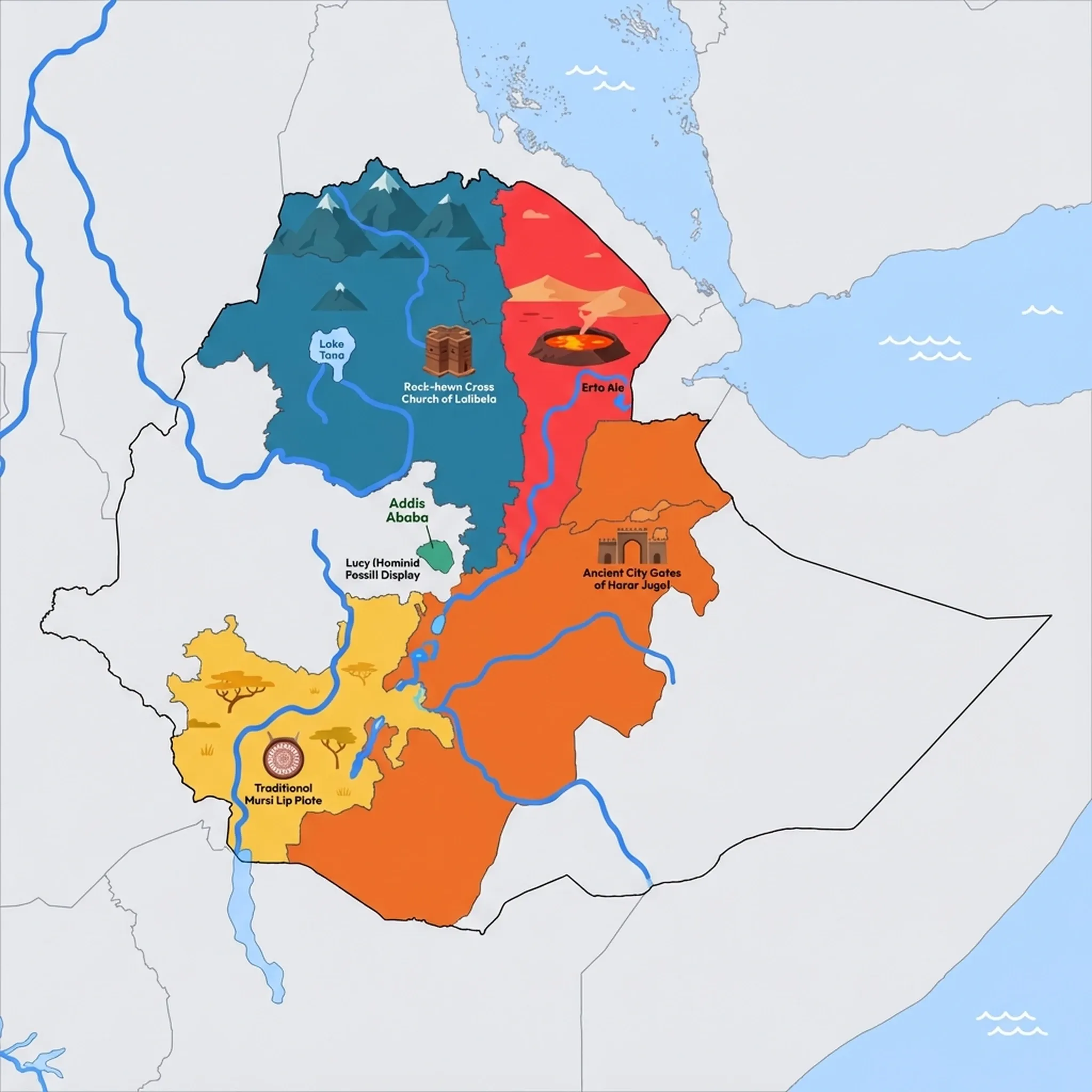
Click a region to explore
⚠️ SAFETY WARNING: Government agencies (including USA, UK, CA, AU) advise travelers to reconsider travel (L2) to the Omo Valley and Southern Nations regions. While popular for tourism, the area experiences periodic inter-tribal conflicts and clashes that can affect road safety. Travel near the borders with Kenya and South Sudan is particularly high-risk. Visitors should only travel with experienced, reputable guides who understand the local political climate. Families are strongly urged to consult their own government's official travel advisory before considering a trip, as circumstances and risk assessments vary.
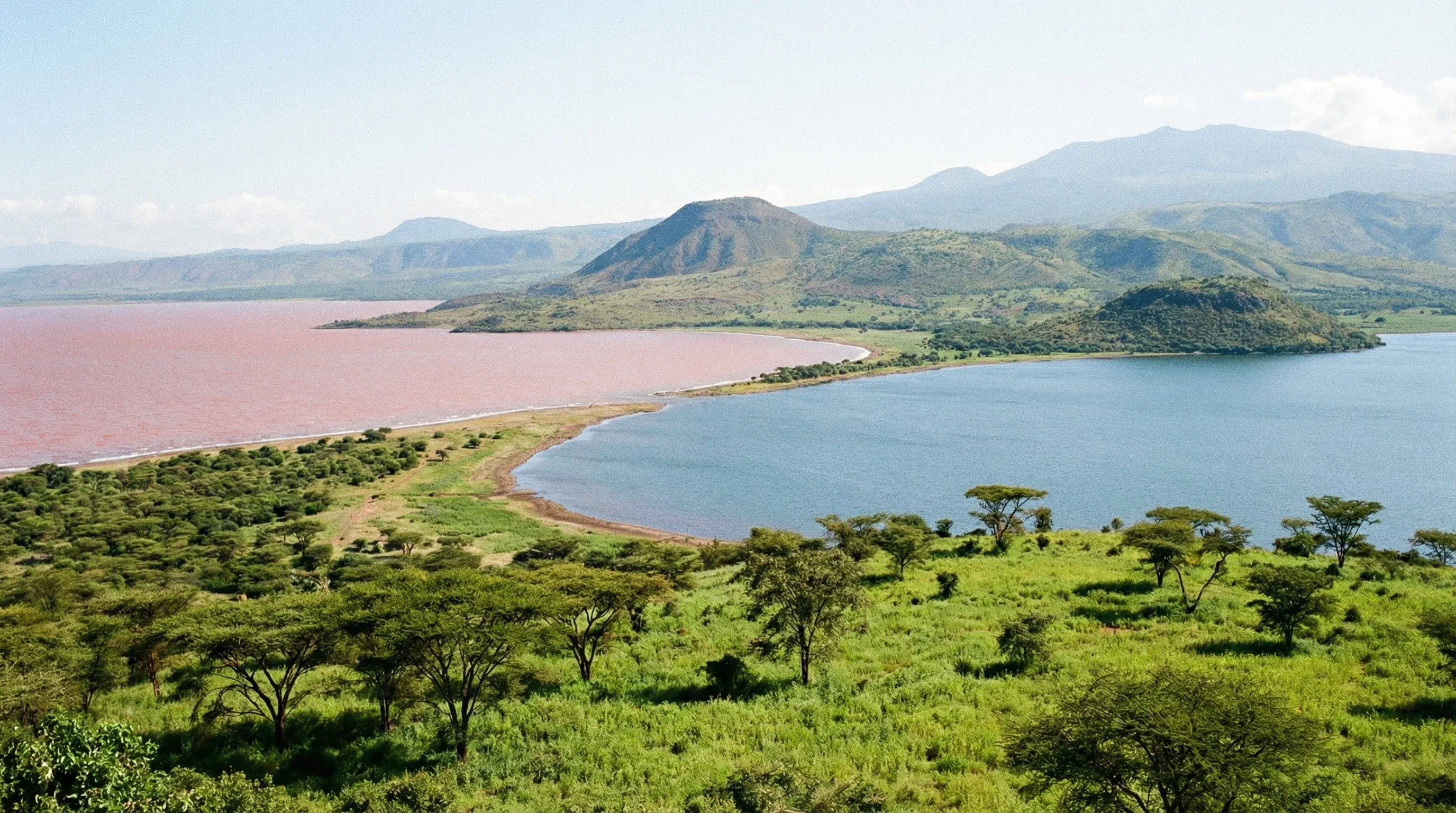
The South of Ethiopia offers a stark contrast to the Christian highlands. This is the Great Rift Valley, a place of red earth, acacia trees, and incredible cultural diversity. For families, the primary draw is the opportunity to meet the diverse ethnic groups of the Omo Valley, such as the Mursi, Hamer, and Karo people. These encounters can be profound educational experiences, teaching children about the vast diversity of human culture. However, it requires sensitivity; ethical tourism is crucial here to ensure interactions are respectful and not just "human safaris."
Beyond the tribes, the nature is spectacular. Arba Minch, meaning "Forty Springs," serves as the gateway to the south. Here, the twin lakes of Abaya and Chamo are separated by a stunning ridge known as the "Bridge of God." A boat trip on Lake Chamo is often a highlight for kids, offering safe, close-up views of one of the largest concentrations of Nile crocodiles in Africa, along with pods of hippos. The Konso Cultural Landscape, a UNESCO site, features amazing stone-walled terraces and villages that are like living museums of agricultural engineering.
Key Attractions
Start at Nechisar National Park near Arba Minch. While the roads can be rough, the "Crocodile Market" on Lake Chamo (actually a sandbar where crocs sunbathe) is a guaranteed wildlife sighting. Further south, the Lower Valley of the Omo offers access to various villages. Turmi is a good base for visiting the Hamer people, known for their bull-jumping ceremonies (though these are rites of passage and not scheduled for tourists, you may get lucky).
The Konso Cultural Landscape is particularly good for families because the Konso people live in settled, fortified stone towns that are fascinating to walk through, and they are generally very welcoming to visitors. In Jinka, the South Omo Research Centre & Museum provides excellent context before visiting the Mursi villages in Mago National Park.
Practical Advice
This is a malarial zone, so prophylaxis and mosquito nets are essential. Travel involves long hours in 4x4 vehicles on dust roads, which can be tiring for small children. The best time to visit is the dry season (August–October and December–January). Avoid the rainy season (April–May) when roads become impassable mud.
Food & Drink
Typical meal times: Breakfast 7:00 am. Lunch 12:30 pm – 2:00 pm. Dinner 7:30 pm.
Typical meal costs: 400–800 ETB (approx. $3.50–7 USD / €3.20–6.50 EUR) for meals in lodge restaurants. Basic local spots are cheaper.
Dietary requirements: Options are more limited than in the north. Expect simple grilled meats, pasta, and rice. Vegetarians will rely heavily on cooked vegetables and salads.
Signature dishes:
- Kocho – A thick, chewy flatbread made from the fermented stem of the Enset (false banana) plant. It has a distinct, cheese-like flavor.
- Kurkufa – A dish from the Konso region made of maize and herbs, cooked into dumplings.
- Nile Perch – Freshly caught from the rift valley lakes, often served grilled with lime.
Why this score?
Visiting the Omo Valley is significantly adventurous due to the remote, wild terrain of the Great Rift Valley and the necessity of 4x4 travel. The experience involves navigating river crossings, bush camping, and intensive cultural interactions in areas with almost no modern development. The isolation and lack of standard amenities provide a high-intensity adventure experience for families.
Why this score?
Medical services in the deep south are extremely minimal, with only basic health posts available in larger villages like Jinka or Turmi. Arba Minch has the most reliable regional hospital, but it is still far below international standards for tourist care. This region poses significant risks for medical emergencies due to the long distances and poor road connectivity to the capital.
Why this score?
The Omo Valley is a world-famous destination for ethnographic tourism and photography, but its distance from the capital keeps visitor numbers relatively low. It is primarily visited by specialized cultural tours rather than general family tourists. Infrastructure consists of a limited number of lodges and camps focused on specific tribal villages.

Accommodation in the south ranges from basic camping to mid-range lodges. A family room in a decent lodge costs 4,500–9,000 ETB (approx. $40–80 USD / €36–72 EUR). However, the real cost is the vehicle rental (approx $150 USD/day) and the specific "village fees" and "photo fees" charged by tribes, which can add up quickly.

Getting Here & Around
Getting Here
- Airports – Arba Minch (AMH) and Jinka (BCO) have airports with flights from Addis Ababa. Flying saves days of driving.
- Driving – The drive from Addis Ababa is long (one or two days) but scenic, passing through the Rift Valley lakes region.
Getting Around
- 4x4 Vehicle – Essential. The roads in the Lower Valley of the Omo are unpaved, rough, and cross riverbeds. You must hire a driver/guide.
- Boat – Required for seeing hippos and crocs on Lake Chamo.
Nearby Airports (3 airports)
Arba Mintch
AMHArba Mintch
Awasa Airport
AWAAwasa
Jinka
BCOJinka
View full flight map for Ethiopia →

Packing List
Better to give as gifts to village schools or chiefs than giving sweets/cash directly to children.
Roads are unpaved and extremely dusty; open windows in the heat mean the car fills with dust.
Electricity in remote lodges (Jinka/Turmi) is often generator-based and turned off at night.
This is a lower altitude, tropical region where malaria-carrying mosquitoes are present.
Power cuts are frequent even in hotels; essential for navigating rooms or streets after dark.
You must remove shoes at all churches; stone floors in Lalibela and other sites are cold and uneven.
Required for modesty in churches; white cotton (Netela) is preferred but any modest covering works.
Budget accommodation carpets and mattresses can sometimes host fleas; a barrier helps peace of mind.
ATMs can be unreliable or empty; clean, post-2013 USD bills are essential for emergencies and some fees.
Altitude sickness and stomach bugs are common; these help recovery in remote areas with limited pharmacy access.

Activities & Best Times

Hiking, wildlife, outdoor exploration, ecotourism
Features iconic wilderness areas like Nechisar and Mago National Parks, offering unique wildlife encounters and dramatic Rift Valley landscapes. Peak visitation occurs in the drier windows of June-August and December-February when roads are navigable and wildlife is easier to spot.

Urban tourism, museums, historical sites, architecture
Home to multiple UNESCO World Heritage sites and the globally unique tribal cultures of the Lower Omo Valley, providing an exceptionally authentic experience. Heavy rains in April and May create significant access challenges to remote villages, making the dry seasons the only viable time for high-quality cultural immersion.

Scenic drives, countryside tours, route-based travel
The Southern Ethiopia Cultural Route and Great Rift Valley Scenic Drive provide spectacular vistas and cultural stops, but require robust 4x4 vehicles. Road travel is highly seasonal; the 'black cotton' soil becomes dangerously impassable during the peak rains of April and May.

Sport tourism, fitness activities, active recreation
The Dorze Highlands and Konso landscapes offer significant trekking routes that combine physical challenge with living heritage. Optimal conditions for hiking are during the dry months when trails are stable and the heat is moderated by higher altitudes.

Learning experiences, scientific sites, historical education
The South Omo Museum and Konso Cultural Centre offer important ethnographic insights, though they function best as supplements to broader regional exploration. Access follows general regional patterns, with peak months offering the most reliable entry during dry conditions.




Public Holidays & Calendar Next 12 months
Public holidays, festivals, cultural celebrations, and seasonal natural phenomena coming up in Omo Valley & South over the next 12 months.
Loading holidays and events...

Travel Advisory
International consensus is split between caution and recommending the avoidance of non-essential trips. While urban centers like Addis Ababa offer more stability, the presence of active conflict in multiple regions and a high risk of civil unrest justify a significant warning.
Safety Topics
Traveller Advice (4 groups)

Media professionals require specific government accreditation to operate. There is a documented risk of detention for those reporting on sensitive security or political matters.

Same-sex sexual activity is criminalized and can result in significant prison terms. Public displays of affection are culturally inappropriate and may lead to harassment or legal issues.

Women traveling alone may face persistent harassment. It is safer to travel in groups and follow local standards of modest dress to minimize unwanted attention.

Aid workers face elevated risks of kidnapping and being caught in crossfire in border regions and areas with active insurgencies.
Agency Summaries
The Australian government warns that the safety landscape is volatile and could decline rapidly. Citizens are encouraged to evaluate if their travel is essential, particularly given the risks of armed conflict and civil disturbances in various provinces.
Ireland recommends a heightened sense of vigilance for anyone visiting. There are significant warnings against travel to most areas outside the capital due to active fighting between local militias and national forces.
British officials highlight severe security risks in several regions, including Tigray and Amhara, where travel is strongly discouraged. Although some tourist hubs are open, the overall environment is impacted by the threat of terrorism and ongoing political tension.
New Zealanders are advised to stay highly alert and avoid any large gatherings or protests, as these can quickly become violent. Travel outside urban centers should be planned with extreme care.
American citizens are urged to rethink visits to the country because of potential for civil unrest, armed clashes, and kidnapping in peripheral zones. Consular aid is severely limited outside of the capital, and communications can be disrupted without notice.
Canadian authorities advise against all trips that are not absolutely necessary due to widespread violence, internal conflict, and criminal threats. While the capital city is somewhat more stable, travelers there must still maintain an extremely high level of alertness.
Information is provided for general guidance only and does not constitute travel, safety, medical, or legal advice. Conditions may change. Users are responsible for independently verifying information before travel.