

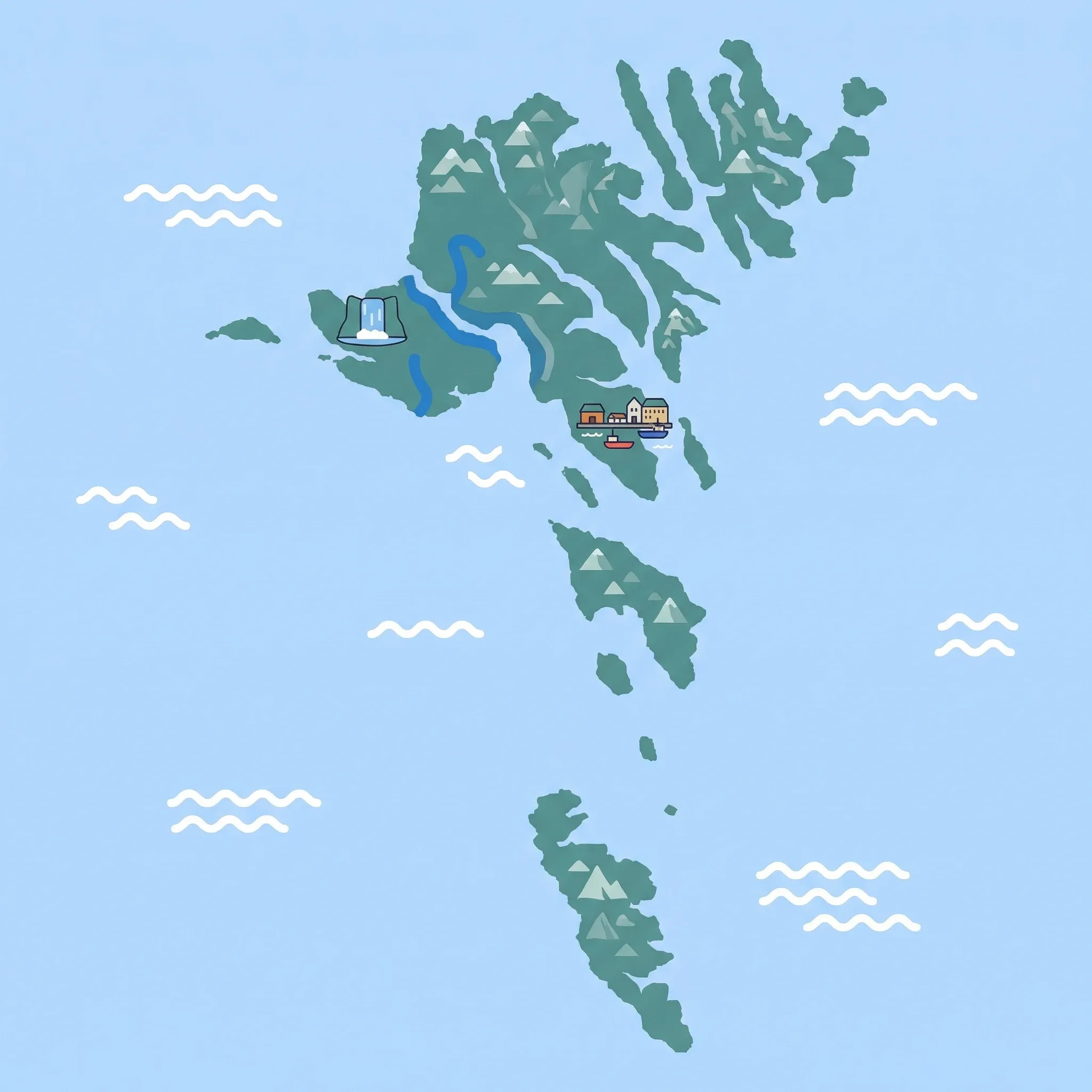
Rising from the North Atlantic like a collection of emerald jewels, the Faroe Islands are a destination that redefines the concept of a family holiday. This archipelago of 18 volcanic islands is rugged, treeless, and stunningly beautiful-a place where the air is impossibly fresh and the ocean is never more than three miles away. For families, it offers a rare chance to disconnect from digital distractions and reconnect with nature in its rawest form. The Faroese people are incredibly welcoming, and the islands are exceptionally safe, making them a stress-free environment for parents, though the dramatic terrain requires supervision for younger children.
Life here moves at the pace of the weather, affectionately known by locals as the "Land of Maybe." Plans might change with the shifting fog, but that is part of the charm. Families can spend mornings hiking easy grassy trails to viewpoints that look like optical illusions, afternoons eating fresh waffles in grass-roofed villages, and evenings listening to folklore about trolls and seal women. Whether you are watching puffins dive into the sea or driving through subsea tunnels lit with colourful art, the Faroe Islands provide a sense of wonder that is hard to find elsewhere in Europe.
Key Attractions
The islands are packed with natural wonders that are accessible even for little legs. A must-visit is Lake Sørvágsvatn, the famous "floating lake" that appears to hover above the ocean; the hike is relatively easy and the optical illusion delights children. For a fairytale experience, drive to the village of Mulafossur Waterfall in Gásadalur, where a spectacular waterfall drops straight into the sea, backed by soaring green mountains. It is one of the most photographed spots on the islands and requires very little walking to see.
History comes alive at Kirkjubøur, the islands' oldest settlement. Families can explore the ruins of Magnus Cathedral and visit Kirkjubøargarður (The King's Farm), one of the oldest inhabited wooden houses in the world, which has been occupied by the same family for 17 generations. To see the islands' wildlife, take a boat tour to the Vestmanna Sea Cliffs. These towering rock faces are teeming with seabirds, and the boat rides often navigate through narrow grottos that feel like a pirate adventure. Finally, the National Museum of the Faroe Islands (Natural History) in Tórshavn offers engaging exhibits on geology and Viking history, perfect for a rainy day.
Practical Advice
The weather is the boss here. It can be sunny, rainy, windy, and foggy all within one hour. Dress in layers and always carry waterproofs. The best time to visit is May to August, when the days are long (nearly 24 hours of daylight in mid-summer) and the puffins are nesting. Book your rental car and accommodation months in advance, as supply is limited. While the islands are safe, the terrain is steep-always keep a close eye on children near cliff edges.
Food & Drink
Typical meal times: Lunch is usually served from 12:00 pm to 2:00 pm, and dinner from 6:00 pm to 9:00 pm. Outside the capital, options can be limited and close early.
Typical meal costs: 120–200 DKK (approx. $17–29 USD / €16–27 EUR) for a casual lunch; 400–800 DKK (approx. $58–115 USD / €53–107 EUR) for a nice dinner. Fine dining can exceed 1,500 DKK.
Dietary requirements: Tórshavn has good options for vegetarians and gluten-free needs, but in remote villages, menus are heavy on meat and fish. Supermarkets are well-stocked if you need to self-cater.
Family-friendly dining: Most restaurants are welcoming to children, but highchairs may not be available in smaller cafés. Pizza and burgers are widely available in Tórshavn and larger towns alongside local cuisine.
Signature dishes:
- Ræst – Fermented lamb or fish, dried in the wind. It has a very strong, unique flavour that is a true taste of the Faroes.
- Faroese Salmon – Renowned globally for its quality, served fresh, smoked, or cured. It is much fresher here than anywhere else.
- Skerpikjøt – Wind-dried mutton leg, usually eaten in thin slices on buttered bread (drýlur).
- Fish and Chips – While British in origin, the incredible freshness of the local cod makes this a popular and kid-friendly staple.
Safety
The Faroe Islands are one of the safest places on earth regarding crime, which is virtually non-existent. The main risks are environmental. Cliffs are often unfenced and drop hundreds of metres into the sea; never let children roam unsupervised near edges. The weather changes rapidly, so hiking requires preparation-fog can descend in minutes, obscuring paths. Always check the weather forecast and tell someone where you are going. Sheep roam freely on the roads, so drive carefully, especially around blind corners.

The Faroe Islands are an expensive destination, similar to Iceland or Norway. A family of four can expect to spend around 2,500–4,000 DKK (approx. $360–580 USD / €335–535 EUR) per day for mid-range accommodation, car rental, and meals. Supermarket prices are high as most goods are imported.
Age Suitability





Why this score?
The region is defined by dramatic volcanic landscapes, including the sheer sea cliffs of Vestmanna and the steep, exposed hiking trails of the Kallur Lighthouse. Visitors must frequently contend with rapidly shifting North Atlantic weather and rugged terrain that requires a high degree of self-reliance. Despite an exceptional sub-sea tunnel network that facilitates inter-island travel, the core experience remains focused on wilderness exploration and remote coastal adventures.
Why this score?
Medical services are delivered to a high Scandinavian standard, particularly at the National Hospital in Tórshavn where English is widely spoken by professional staff. The islands maintain a sophisticated emergency response system, including specialized helicopter search and rescue capabilities essential for the rugged geography. However, due to the small population, patients requiring highly specialized medical procedures or advanced trauma care are typically evacuated to mainland Denmark.
Why this score?
The Faroe Islands remain a niche destination with roughly 120,000 annual visitors, placing it significantly below mainstream European travel hubs. While iconic sites like Múlafossur Waterfall and the Mykines bird colonies have gained substantial social media fame, the archipelago's remote location and limited flight capacity keep it an emerging spot. It lacks mass-market infrastructure, catering primarily to a specific segment of nature and photography enthusiasts.
The Faroe Islands are one of the more expensive destinations in Europe. Accommodation is limited and high-demand; expect to pay DKK 1,200–2,500 (approx. $175–360 USD / €160–335 EUR) per night for a family room. Car rental is particularly pricey, often exceeding DKK 800–1,200 (approx. $115–175 USD / €105–160 EUR) per day. Grocery shopping is cheaper than eating out, but fresh produce is costly.

Getting There & Around
Getting There
- By Air – Atlantic Airways and SAS fly daily to Vágar Airport (FAE). Direct flights operate from Copenhagen, Billund, and Reykjavik, with seasonal routes from Edinburgh, Paris, and New York. The approach through the fjord is spectacular.
- By Sea – The Smyril Line ferry Norröna sails from Hirtshals (Denmark) and Seyðisfjörður (Iceland) to Tórshavn. The journey from Denmark takes about 36 hours and allows you to bring your own car.
- Entry Requirements – The Faroe Islands are NOT part of the Schengen Area. A Schengen visa is not valid here. If you require a visa for Denmark, you must obtain a specific visa that states "Valid for Faroe Islands". Nordic citizens can enter with ID; EU citizens need a passport (or national ID in some cases). Check your government website for the latest visa requirements, or use the IATA Travel Centre entry-requirements checker.
Getting Around
- Car Hire – The best way for families to explore. The roads are excellent, and subsea tunnels connect the main islands. Look out for "Buttercup Routes" (scenic drives). Note that subsea tunnels have a toll (approx. 175 DKK return), usually paid automatically via the rental agency.
- Helicopters – Surprisingly affordable as they are subsidized public transport. A flight from Vagar to Mykines is scenic and cheap, but they are primarily for locals, so tourists can only book one-way to prevent day-tripping.
- Ferries – Essential for reaching islands like Kalsoy (famous for the "seal woman" statue). Foot passengers are cheap, but vehicle slots must be booked well in advance for popular routes.
- Buses – The red city buses in Tórshavn are free to use. The blue country buses (Strandfaraskip Landsins) connect villages but are less frequent.

Packing List
Rain often falls horizontally due to high winds; umbrellas are useless and jeans stay wet for days.
Summer brings nearly 24 hours of daylight, and many accommodations have thin curtains.
Essential for spotting puffins, seals, and other wildlife on the cliffs and in the fjords.
Roads are winding and inter-island ferry crossings can be choppy.
Cafés are sparse in remote areas; pack your own hot cocoa for chilly scenic stops.

Activities & Best Times

Adventure & Nature
ExcellentHiking, wildlife, outdoor exploration, ecotourism
A world-class destination for dramatic volcanic landscapes, sheer sea cliffs, and major seabird colonies like Mykines. Peak summer offers maximum daylight and necessary trail safety, while the long off-season is plagued by extreme North Atlantic gales and hazardous conditions.

Road Trips & Scenic
Very GoodScenic drives, countryside tours, route-based travel
The Faroe Islands offer internationally recognized scenic driving experiences with dramatic coastal roads, mountain passes, and unique subsea tunnel system connecting islands. The island-hopping road trip experience is distinctive and rivals other top European scenic driving destinations. Should be upgraded from 'good' to 'very_good'.

Sports & Active
Very GoodSport tourism, fitness activities, active recreation
Offers exceptional, internationally recognized hiking routes like the Trælanípa and Kallur Lighthouse trails. Mid-summer provides the most stable weather for these exposed routes, while high winds and heavy precipitation make active exploration dangerous for families in the off-season.

City & Cultural
GoodUrban tourism, museums, historical sites, architecture
While Tórshavn has authentic Nordic character and the historic Tinganes district, it lacks the scale and cultural density for 'very_good' on international standards. Population ~14,000, limited major museums/cultural institutions. Better calibrated as 'good' compared to major Nordic cultural capitals.

Beach & Sea
MarginalBeach resorts, marine activities: diving, snorkelling, kite surfing, wind surfing, sailing
Features stunningly beautiful black sand beaches at Saksun and Tjørnuvík, primarily suited for scenic appreciation and cold-water surfing. The very short peak window offers the only tolerable conditions for coastal recreation, though water temperatures remain extremely low year-round.

Educational & Exploratory
MarginalLearning experiences, scientific sites, historical education
The National Museum of the Faroe Islands provides deep insights into Viking history and North Atlantic ecology. These facilities are most accessible during the peak tourism season, as many educational sites operate on very limited schedules or close entirely during the dark winter months.

Attractions (23 total)



Public Holidays & Calendar Next 12 months
Public holidays, festivals, cultural celebrations, and seasonal natural phenomena coming up in Faroe Islands over the next 12 months.
Loading holidays and events...

Travel Advisory
While many agencies maintain a baseline level of safety for the Faroe Islands, several major authorities have elevated their advice for the Kingdom of Denmark to L1/Level 2 due to persistent concerns regarding the threat of terrorism in the region. Localized risks include severe and unpredictable weather conditions.
Safety Topics
Traveller Advice (3 groups)

While generally safe and tolerant, travellers should review official resources for information on local attitudes and legal protections before visiting.

Be aware that the Faroe Islands are not part of the EU or the Schengen Area, although they are part of the Kingdom of Denmark. Confirm passport validity and specific entry requirements before arrival, as they differ slightly from mainland Denmark.

Outdoor enthusiasts must be extremely cautious as weather conditions in the mountains and at sea can become life-threatening with almost no warning. Seek local guidance before hiking or sailing and ensure you have specialized travel insurance that covers emergency medical evacuation.
Agency Summaries
No specific travel restrictions are in place, though visitors are reminded that no destination is perfectly safe. The threat of terrorism in Denmark is acknowledged, and travellers are advised to be aware of local conditions and the potential for rapid weather changes in the islands.
Heightened caution is advised due to security concerns related to terrorism. The advisory also warns of limited search and rescue and medical infrastructure in remote Arctic and North Atlantic regions.
Australia maintains its lowest advisory level for the region but advises travellers to stay alert to the threat of terrorism. It highlights that medical facilities in the Faroe Islands are limited and may require expensive evacuation for serious conditions.
Visitors should follow standard safety measures and keep informed via local media. Emphasis is placed on the risks associated with sudden weather changes during outdoor activities like hiking and sailing.
Travellers should remain highly vigilant while in the Kingdom of Denmark, which includes the Faroe Islands, primarily due to the ongoing threat of terrorist activity in the region.
Heightened awareness is recommended throughout the Kingdom of Denmark because of the risk of terrorism. Specific safety information for the Faroe Islands notes that medical resources are limited compared to the mainland.
Information is provided for general guidance only and does not constitute travel, safety, medical, or legal advice. Conditions may change. Users are responsible for independently verifying information before travel.