
Click a region to explore
Overview
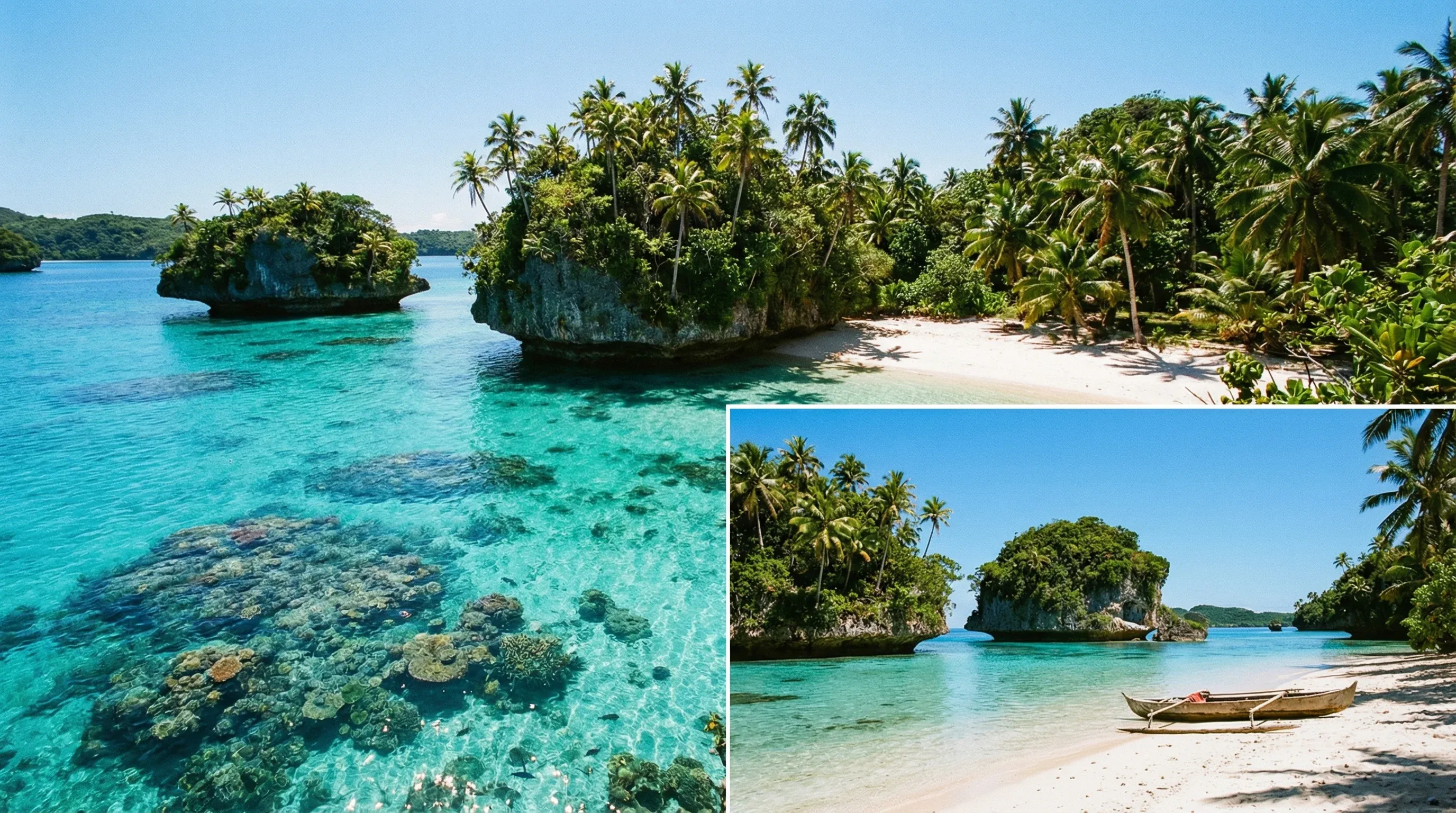
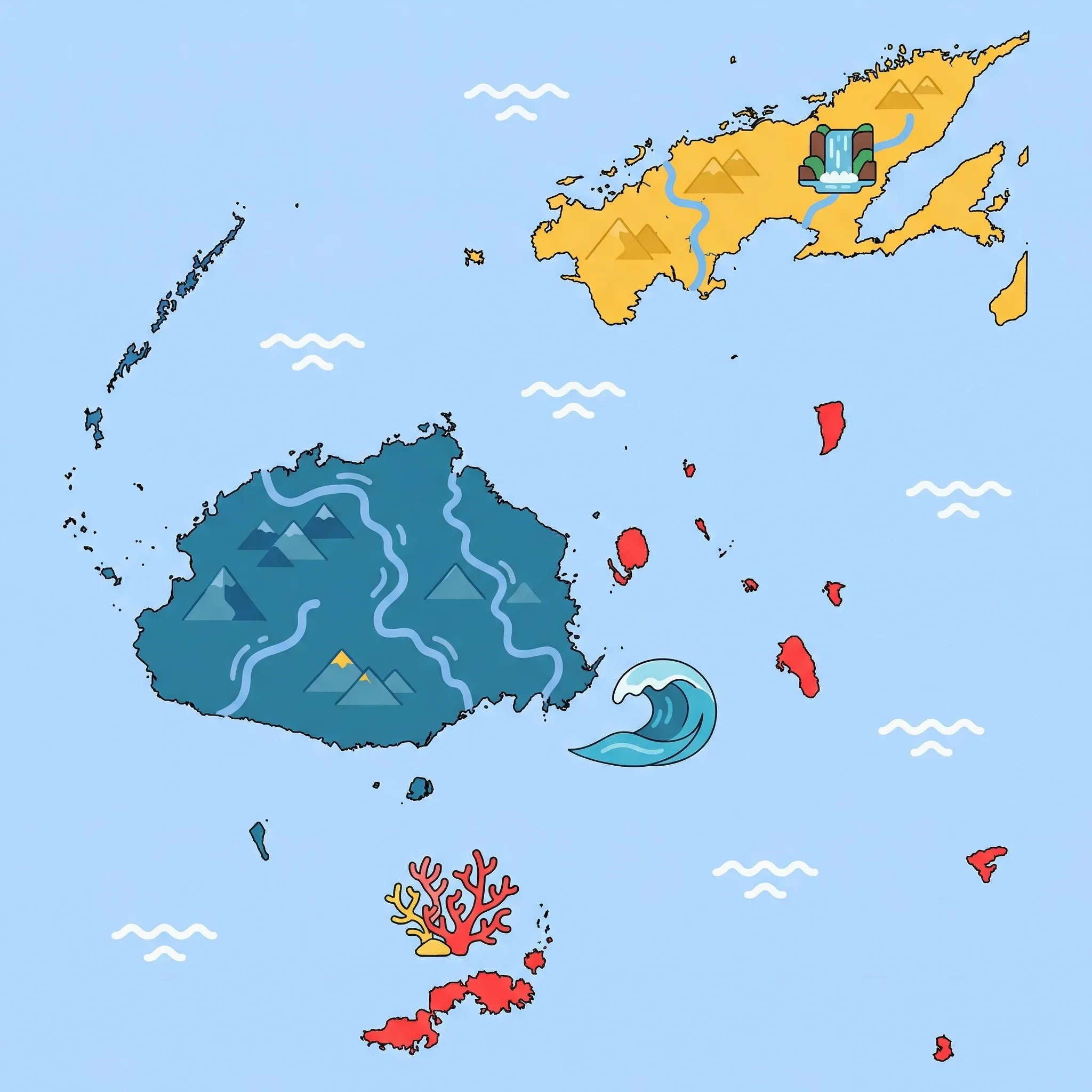
The Outer Islands of Fiji—comprising the Lomaiviti, Kadavu, and Lau groups—represent the archipelago at its most authentic and unhurried. Far from the polished tourist machinery of the mainland, these scattered islands offer families a glimpse into the real Fiji, where village life dictates the rhythm of the day and nature remains spectacularly wild. For parents, the appeal lies in the digital detox and the chance to show children a way of life deeply connected to the ocean and community. The climate here is tropical and breezy, though the Lau group can be drier and windier, making it a haven for sailing.
While travel here requires more logistics than the main island, the rewards are immense. Children will love the sense of expedition—riding small ferries, spotting spinner dolphins alongside the boat, and exploring beaches where their footprints are the only ones. The vibe is rugged and raw; instead of kids' clubs and swimming pools, entertainment comes from hermit crab races, jumping off jetties with local children, and learning to weave coconut fronds. It is a region best suited for active families comfortable with rustic amenities and eager for cultural exchange.
Key Attractions
The crown jewel of the Lomaiviti Group is the Levuka Historical Port Town on the island of Ovalau. As Fiji's first capital and a UNESCO World Heritage site, it feels like a movie set frozen in the late 19th century. Families can wander down Beach Street, past colorful colonial wooden buildings that look exactly as they did in the 1800s. It is a fantastic living classroom for older children, offering a tangible connection to the Pacific's colonial past without being stuffy or enclosed.
Beyond the history of Levuka, the attractions here are natural. Kadavu is home to the Great Astrolabe Reef, one of the world's premier diving and snorkeling sites, yet shallow and calm enough in parts for beginners. In the Lau Group, the attraction is the isolation itself—limestone islets, hidden lagoons, and traditional villages where visitors are welcomed with genuine curiosity. These islands offer unparalleled opportunities for snorkeling with manta rays and exploring caves that feature in local legends.
Practical Advice
Best time to visit: The dry season (May to October) is safer for inter-island ferries and offers cooler temperatures for hiking. The Lau Group is less humid but can be choppy for sailors during trade winds.
Family logistics: This is not a destination for strollers or families dependent on convenience stores. Bring absolutely everything you need, including medications and specific toddler foods. Accommodation ranges from simple village homestays to exclusive dive resorts. Cash is king—ATMs are rare or non-existent outside main hubs.
Food & Drink
Typical meal times:
Breakfast is early, around 7:00 am to 8:30 am. Lunch is usually served from 12:00 pm to 1:30 pm, and dinner is communal and early, typically 6:30 pm to 8:00 pm.
Typical meal costs:
Dining is almost exclusively within guesthouses or resorts. A family lunch costs around $40–70 FJD (approx. $18–32 USD / €16–29 EUR). Dinner in a mid-range lodge costs $50–90 FJD (approx. $22–40 USD / €20–37 EUR) per person, though village homestays often include meals in the accommodation price.
Dietary requirements:
Options are limited. The diet is heavily seafood and root-crop based. Vegetarians will eat well (taro, cassava, rourou), but gluten-free or specific allergy-friendly alternatives (like dairy substitutes) are virtually unknown in remote areas. Bring your own specialty snacks.
Signature dishes:
- Kokoda – Raw fish marinated in lemon juice and coconut milk, often served in a coconut shell or with taro chips.
- Lovo – A feast of chicken, fish, and pork wrapped in banana leaves and slow-cooked in an underground earth oven.
- Rourou Peti – Taro leaves stuffed with a rich coconut cream and onion mixture, soft and comforting for children.
Why this score?
Visiting these islands requires a high level of self-sufficiency, often involving small-plane charters or local boats to navigate remote atolls. The lack of commercial amenities and the rugged wilderness of areas like Kadavu and the Lau Archipelago offer a significant and authentic adventure experience.
Why this score?
Medical infrastructure is minimal and limited to basic nursing stations in local villages that are ill-equipped for serious cases. Emergency medical evacuation to the mainland is the only viable option for complex treatments, which is both difficult and costly to arrange.
Why this score?
The Outer Islands receive very few international tourists due to limited transport links and the lack of traditional resort infrastructure. While the UNESCO-listed town of Levuka and the Great Astrolabe Reef draw specialized travelers, the majority of the region remains off the beaten path for most visitors.

Costs are polarized. Village homestays are very affordable, while exclusive private-island resorts in Lau or Kadavu are luxury. Transport is the main cost driver. A basic family bungalow might cost $150–250 FJD (approx. $68–113 USD / €62–103 EUR) per night, while boat transfers can add $100–300 FJD (approx. $45–135 USD / €41–123 EUR) per trip.

Getting Here & Around
Getting Here
- Airports – Fiji Link operates flights from Nadi (NAN) or Suva (SUV) to smaller airstrips like Vunisea (Kadavu) and Bureta (Ovalau). Flights are scenic but use small Twin Otter aircraft.
- Ferry – Goundar Shipping Services runs ferries from Suva to Levuka (Ovalau) and Koro. The journey to Levuka Historical Port Town takes about 4–5 hours. Services to the Lau Group are infrequent and long (often 24+ hours).
- Private Charter – Seaplanes or private boats are the primary access for exclusive resorts in the remote Lau archipelago.
Getting Around
- Boat – Small fiberglass boats (fibres) are the main taxi service between islands and coastal villages. Life jackets for children are not always provided locally—bring your own if possible.
- Walking – On smaller islands and within towns like Levuka Historical Port Town, walking is the only necessary transport.
- Carrier – On islands with roads (like Ovalau or Kadavu), local transport is often a 'carrier'—a light truck with a covered seating area in the back. It's bumpy but fun for short trips.
Nearby Airports (3 airports)
Vunisea Airport
KDVKandavu
Lakeba Island Airport
LKBLakeba
Vanuabalavu
VBVVanuabalavu
View full flight map for Fiji →

Packing List
Essential for wading; coral cuts are common and many beaches have rocky entries.
Electricity in remote villages and eco-lodges is often limited to generator hours.
A required cultural gift if you plan to visit any traditional village (buy in Suva/Nadi first).
Small boats often lack child sizes; essential for safety on inter-island transfers.
Required for covering knees and shoulders when visiting villages or temples; serves as a versatile towel.
The tropical sun is intense; these protect kids better than sunscreen during long water sessions.
Boat transfers are frequent and often wet; keeps electronics and change of clothes dry.
Strictly necessary to protect Fiji's delicate marine ecosystems; can be expensive or hard to find locally.
Mosquitoes are active day and night, and dengue fever is a risk in tropical areas.

Activities & Best Times

Hiking, wildlife, outdoor exploration, ecotourism
Intrepid families will find authentic wilderness immersion through rugged volcanic trekking on Kadavu and exploration of remote marine reserves. Peak months offer the most stable conditions for hiking trails like Nabukelevu, whereas the humid wet season from December to March makes jungle trekking difficult and potentially hazardous.

Beach resorts, marine activities: diving, snorkelling, kite surfing, wind surfing, sailing
The region features world-class marine environments like the Great Astrolabe Reef and Fulaga Lagoon, offering exceptional diving and snorkeling in pristine, non-commercialized settings. The peak season runs from May to October when dry weather ensures optimal underwater visibility and calm seas, while the December to March cyclone season brings significant rain and wind.

Urban tourism, museums, historical sites, architecture
While Levuka is a significant UNESCO heritage site, a single historic port town does not justify 'very_good' rating. The scale and density of cultural offerings is insufficient compared to international standards. 'good' appropriately reflects a noteworthy heritage site without overstating the region's cultural tourism depth.




Public Holidays & Calendar Next 12 months
Public holidays, festivals, cultural celebrations, and seasonal natural phenomena coming up in Outer Islands over the next 12 months.
Loading holidays and events...

Travel Advisory
All six major agencies agree that Fiji is safe for travel with standard safety awareness. No country-wide elevated warnings are in place, though travelers should remain vigilant regarding petty crime and seasonal weather events.
Safety Topics
Traveller Advice (3 groups)

Female visitors should be cautious when walking alone, particularly in downtown Suva and other urban centers at night. Incidents of harassment and sexual assault have been reported.

Those participating in water sports like scuba diving should verify the current status of the country's limited hyperbaric chambers and ensure their insurance covers medical evacuation.

While same-sex relationships are legal, they are not universally accepted by the local population. It is recommended to avoid public displays of affection, especially in rural or traditional village settings.
Agency Summaries
Visitors should maintain standard safety awareness. While generally safe, urban centers like Suva and Nadi see frequent petty crimes like theft and bag-snatching. Female travelers should be particularly cautious of harassment.
Standard security awareness is required. Visitors should watch out for theft and assault, particularly in poorly lit urban areas after dark. Financial fraud and seasonal cyclones are the primary non-security risks.
Most visits are trouble-free, but travelers should be aware of local safety and health risks. Petty theft occurs in cities. Road conditions are often poor, and maritime safety standards vary.
Irish citizens should follow standard safety measures. Be aware of the tropical climate's impact on travel, including cyclone risks. Consular support is provided via the embassy in Canberra.
Travelers should follow standard safety protocols. Increased vigilance is recommended in specific areas like Colo-I-Suva Forest Park due to trail-side robberies. Avoid resisting robbery attempts and be careful at night.
Fiji is currently under a green advisory level. Travelers are encouraged to be mindful of opportunistic crime in urban areas. Significant health updates include a recently declared HIV outbreak and risks of mosquito-borne viruses.
Information is provided for general guidance only and does not constitute travel, safety, medical, or legal advice. Conditions may change. Users are responsible for independently verifying information before travel.