
Click a region to explore
Overview
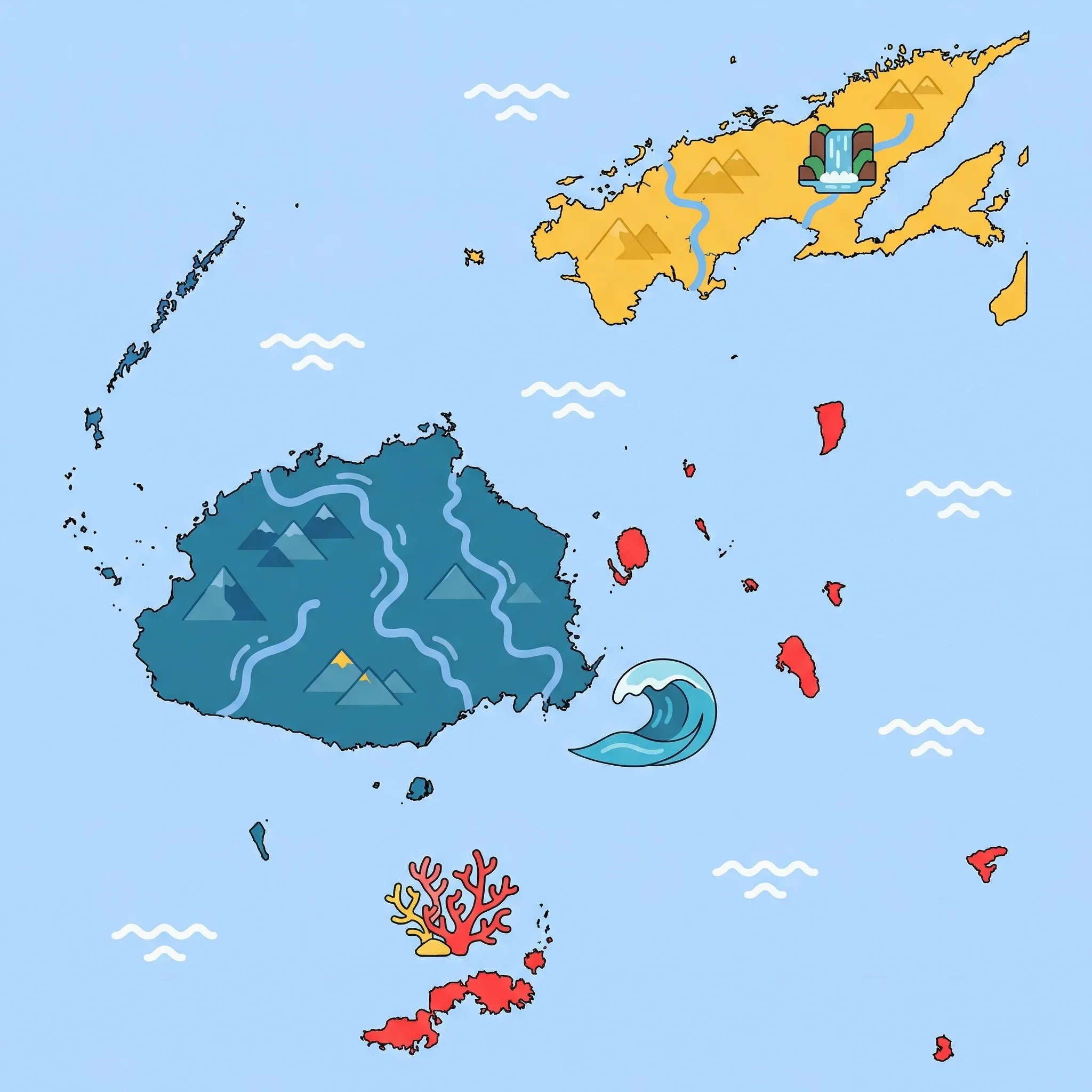
Vanua Levu and Taveuni, often grouped together as the 'North', offer a lush, green counterpoint to the dry, sunny west of the main island. This is the Fiji of postcards: dense emerald rainforests tumbling down to meet turquoise reefs. For families, the pace here is gentle and nature-focused. Taveuni, known as the Garden Island, is effectively one giant botanical park where children can slide down natural rock waterslides and hike through jungles that feel prehistoric. Vanua Levu, particularly around the charming town of Savusavu, offers a safe, protected harbor environment perfect for kayaking and swimming with younger kids.
The culture here is deeply hospitable and less commercialized than Nadi. Families will find themselves adopting 'Fiji time' almost immediately. The lack of mega-resorts means accommodation is often in boutique eco-lodges or family-run plantations where hosts know your name. It's an educational playground where kids can visit pearl farms, learn about copra (coconut) processing, and snorkel on the Rainbow Reef—famous for its soft corals that bloom like underwater flowers. While rain is more common here (keeping everything green), the showers are usually warm and passing.
Key Attractions
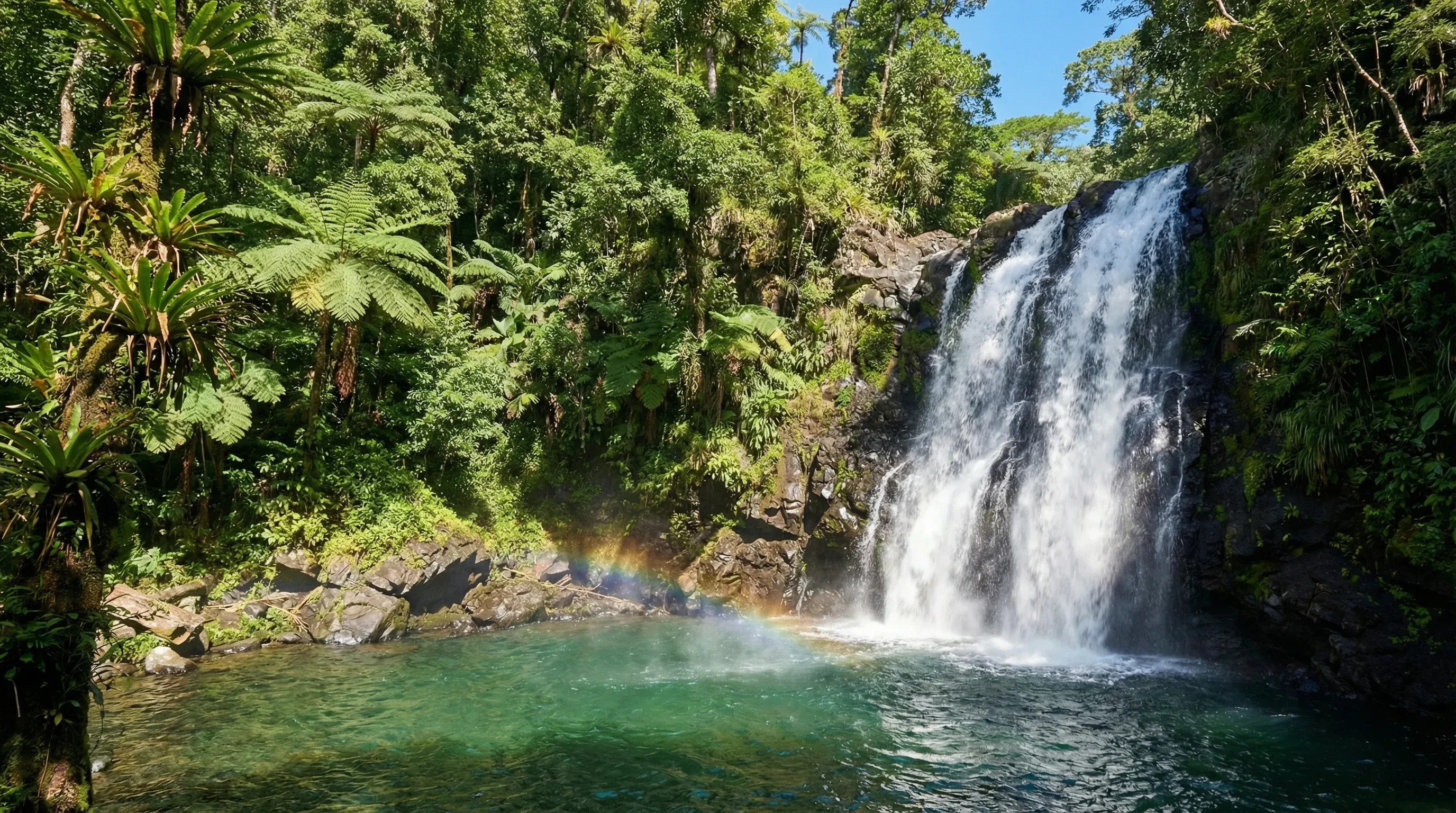
Nature is the primary attraction in this region. On Taveuni, the Bouma National Heritage Park is unmissable; the Tavoro Waterfalls offer three tiers of falls, the first of which is easily accessible for children and has a large, cool swimming pool at its base. Another unique geographical quirk kids love is the International Date Line marker on Taveuni—you can stand with one foot in 'today' and one in 'yesterday'.
In Savusavu (Vanua Levu), the geothermal hot springs are a fascinating science lesson in action; locals often cook cooking pots of root crops in the steaming water near the shoreline. Just offshore, the protected Natewa Bay offers calm waters for dolphin watching. For older children who snorkel, the Somosomo Strait between the two islands hosts the Rainbow Reef and the Great White Wall, often cited among the top dive sites on the planet for their explosion of color.
Practical Advice
Best time to visit: The drier months of May to October are best, although Taveuni stays green year-round. December to March can be very humid and wet.
Family logistics: Renting a 4WD is recommended if you want to explore Vanua Levu independently. Taveuni has limited roads, so most families rely on resort transfers or arranged taxis. Medical facilities are basic (local hospitals in Savusavu and Taveuni), so serious issues require evacuation to Viti Levu.
Food & Drink
Typical meal times:
Lunch is typically 12:00 pm to 2:00 pm. Dinner runs from 6:00 pm to 8:30 pm. In Savusavu, cafes may close early (around 3:00 pm or 4:00 pm) before reopening for dinner.
Typical meal costs:
Local cafes in Labasa or Savusavu are cheap: $15–25 FJD (approx. $7–11 USD / €6–10 EUR) per dish. Resort dining is pricier: $45–85 FJD (approx. $20–38 USD / €18–35 EUR) for a main course. Fresh fruit from roadside stalls is incredibly cheap and high quality.
Dietary requirements:
Fresh fruit and vegetables are abundant. Savusavu has a good expat community, so finding vegetarian or gluten-free options is easier there than in remote areas. Labasa has a strong Indian influence, offering excellent vegetarian curries.
Signature dishes:
- Fresh Lobster – Often caught locally and grilled simply with lemon and garlic butter; more affordable here than in many other parts of the world.
- Curried Goat – A specialty in Labasa and Vanua Levu due to the large Indo-Fijian population, usually served with rice and chutney.
- Vakalolo – A steamed pudding made from cassava and coconut, sweetened with brown sugar and wrapped in banana leaves.
Why this score?
Known as the Garden Island, Taveuni offers notable adventure opportunities through the lush rainforests of Bouma National Heritage Park and the world-class diving at Rainbow Reef. The terrain is physically demanding and less developed than the main island, requiring travelers to be active and independent.
Why this score?
Medical facilities are very limited, with regional hospitals in Labasa and Savusavu providing only basic services that may not meet international standards. Tourists in more remote areas like Taveuni have almost no access to immediate emergency care beyond small clinics.
Why this score?
This region is a niche destination that attracts eco-conscious travelers and divers rather than mass-market tourists. While Savusavu is a popular hub for international yachting, the visitor numbers are significantly lower than those seen in the western islands.

Slightly cheaper than the exclusive Mamanuca resorts but more expensive than the main island's backpacker belt. A mid-range family bure (cottage) costs $300–500 FJD (approx. $135–225 USD / €123–205 EUR) per night. Market food is cheap, with bunches of bananas or drinking coconuts costing just $2–5 FJD (approx. $0.90–2.25 USD / €0.80–2.00 EUR).

Getting Here & Around
Getting Here
- Airports – Fiji Link connects Nadi (NAN) to Savusavu (SVU) and Labasa (LBS) on Vanua Levu, and Matei (TVU) on Taveuni. The flight to Savusavu is a spectacular 60-minute scenic route.
- Ferry – Goundar Shipping operates overnight ferries from Suva to Savusavu and Taveuni. It is an affordable option but can be crowded and long (12+ hours), generally less recommended for young families than flying.
Getting Around
- Taxi – Taxis are the main way to get around Savusavu and Taveuni. They are generally unmetered in rural areas, so agree on a price beforehand.
- Car – 4WD rental is available in Savusavu and Labasa. Essential if you plan to drive the Hibiscus Highway. Driving is on the left.
- Bus – Open-window buses run along the main coastal roads. They are very cheap and a fun cultural experience for kids, but schedules operate on 'island time'.
Nearby Airports (2 airports)
Labasa Airport
LBSLabasa
Savusavu Airport
SVUSavusavu
View full flight map for Fiji →
Official Links

Packing List
Sudden tropical downpours are common on Taveuni; keeps electronics safe during hikes.
Rainforest areas have more mosquitoes than the dry western coast.
Trails to waterfalls like Bouma are often wet, muddy, and require crossing streams.
Rental gear quality varies; having your own mask ensures a good fit for kids at Rainbow Reef.
Essential for protecting feet from sharp coral and stonefish on beaches and in waterfall pools.
Required for covering knees and shoulders when visiting villages or temples; serves as a versatile towel.
The tropical sun is intense; these protect kids better than sunscreen during long water sessions.
Strictly necessary to protect Fiji's delicate marine ecosystems; can be expensive or hard to find locally.
Mosquitoes are active day and night, and dengue fever is a risk in tropical areas.

Activities & Best Times

Hiking, wildlife, outdoor exploration, ecotourism
Known as Fiji's 'Garden Island,' Taveuni offers world-class immersion in Bouma National Heritage Park and Waisali Rainforest, featuring iconic waterfalls and rare birdlife. The dry season is essential for trekking and exploring rainforest reserves as heavy summer rains make trails muddy and difficult to navigate.

Sport tourism, fitness activities, active recreation
Steep hiking trails to Des Voeux Peak and the natural rock waterslides at Waitavala provide rigorous physical activity within stunning natural environments. Activity is centered in the drier months to ensure safe footing on trails and manageable water levels for canyoning and slides.

Beach resorts, marine activities: diving, snorkelling, kite surfing, wind surfing, sailing
Home to the world-renowned Rainbow Reef and Waitabu Marine Park, the region offers exceptional diving and snorkeling with high marine biodiversity. Peak conditions occur during the cooler dry season when underwater visibility is at its best, while the wet summer months can see increased swell and lower clarity.

Scenic drives, countryside tours, route-based travel
The Hibiscus Highway and Taveuni's coastal drive offer spectacular Pacific vistas and access to remote rural villages. Driving is most reliable during the dry season to avoid road washouts and ensure clear, scenic views of the coastline and mountain interiors.

Urban tourism, museums, historical sites, architecture
Yachting culture and marina infrastructure do not constitute cultural heritage tourism. There are no museums, UNESCO sites, or significant cultural institutions mentioned. This classification appears to confuse lifestyle amenities with cultural tourism offerings.

Spa retreats, wellness centers, peaceful getaways
The natural hot springs in Savusavu and Vunimoli offer an authentic, albeit rustic, wellness experience for travelers seeking thermal treatments. These are best visited during the cooler months when the thermal waters provide a pleasant contrast to the air temperature, whereas the humid summer makes them less appealing.


Public Holidays & Calendar Next 12 months
Public holidays, festivals, cultural celebrations, and seasonal natural phenomena coming up in Vanua Levu & Taveuni over the next 12 months.
Loading holidays and events...

Travel Advisory
All six major agencies agree that Fiji is safe for travel with standard safety awareness. No country-wide elevated warnings are in place, though travelers should remain vigilant regarding petty crime and seasonal weather events.
Safety Topics
Traveller Advice (3 groups)

Female visitors should be cautious when walking alone, particularly in downtown Suva and other urban centers at night. Incidents of harassment and sexual assault have been reported.

Those participating in water sports like scuba diving should verify the current status of the country's limited hyperbaric chambers and ensure their insurance covers medical evacuation.

While same-sex relationships are legal, they are not universally accepted by the local population. It is recommended to avoid public displays of affection, especially in rural or traditional village settings.
Agency Summaries
Visitors should maintain standard safety awareness. While generally safe, urban centers like Suva and Nadi see frequent petty crimes like theft and bag-snatching. Female travelers should be particularly cautious of harassment.
Standard security awareness is required. Visitors should watch out for theft and assault, particularly in poorly lit urban areas after dark. Financial fraud and seasonal cyclones are the primary non-security risks.
Most visits are trouble-free, but travelers should be aware of local safety and health risks. Petty theft occurs in cities. Road conditions are often poor, and maritime safety standards vary.
Irish citizens should follow standard safety measures. Be aware of the tropical climate's impact on travel, including cyclone risks. Consular support is provided via the embassy in Canberra.
Travelers should follow standard safety protocols. Increased vigilance is recommended in specific areas like Colo-I-Suva Forest Park due to trail-side robberies. Avoid resisting robbery attempts and be careful at night.
Fiji is currently under a green advisory level. Travelers are encouraged to be mindful of opportunistic crime in urban areas. Significant health updates include a recently declared HIV outbreak and risks of mosquito-borne viruses.
Information is provided for general guidance only and does not constitute travel, safety, medical, or legal advice. Conditions may change. Users are responsible for independently verifying information before travel.