
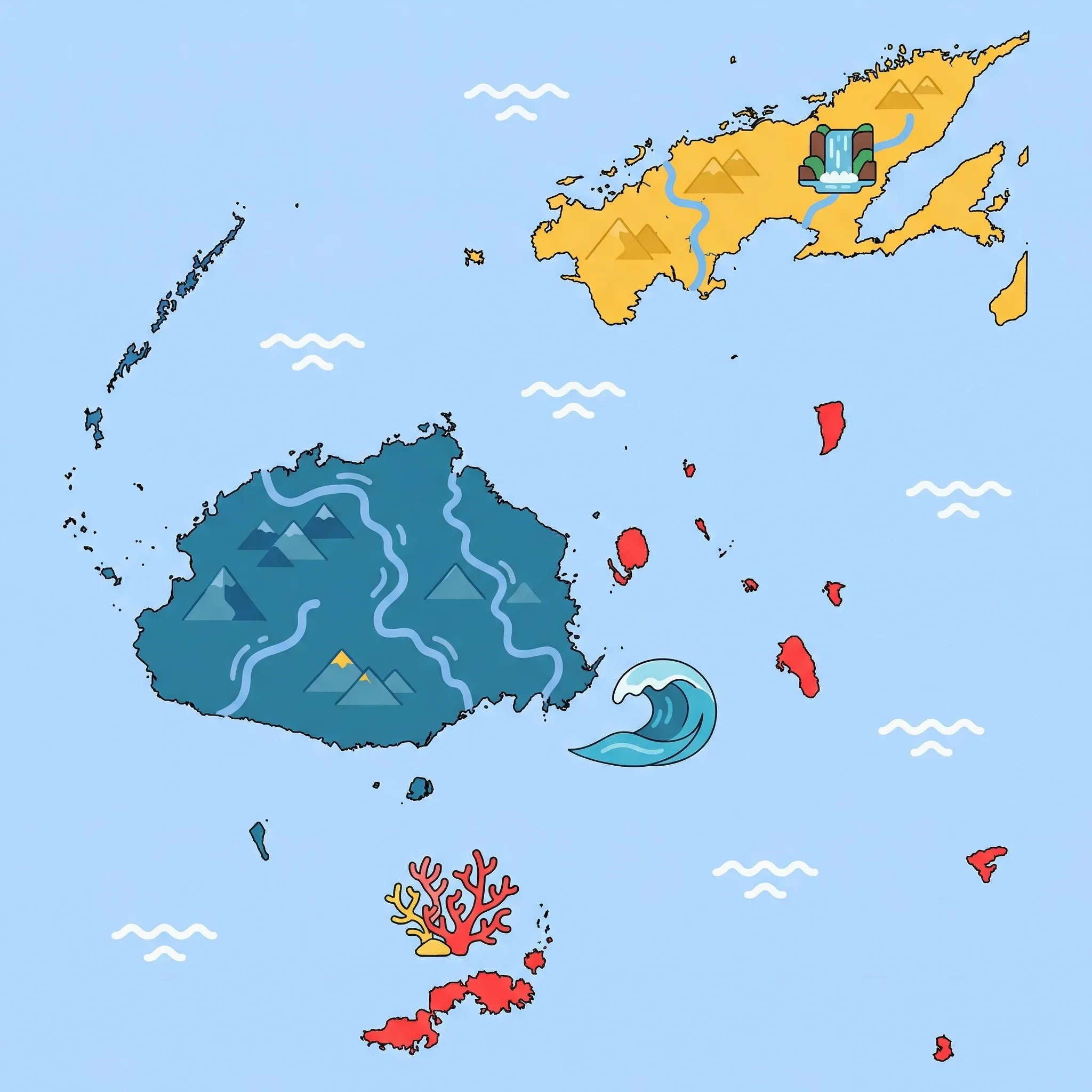
Click a region to explore
Overview
Viti Levu and its offshore island chains are what most families picture when they dream of Fiji. This region offers the perfect 'soft landing' for travelers: excellent infrastructure, world-class family resorts, and a diversity of landscapes ranging from the sun-baked sugar cane fields of the west to the lush interior highlands. Nadi acts as the gateway, where families can immediately connect with local culture at the vibrant Sri Siva Subramaniya Temple, the largest Hindu temple in the Southern Hemisphere, offering a splash of Dravidian color and history.
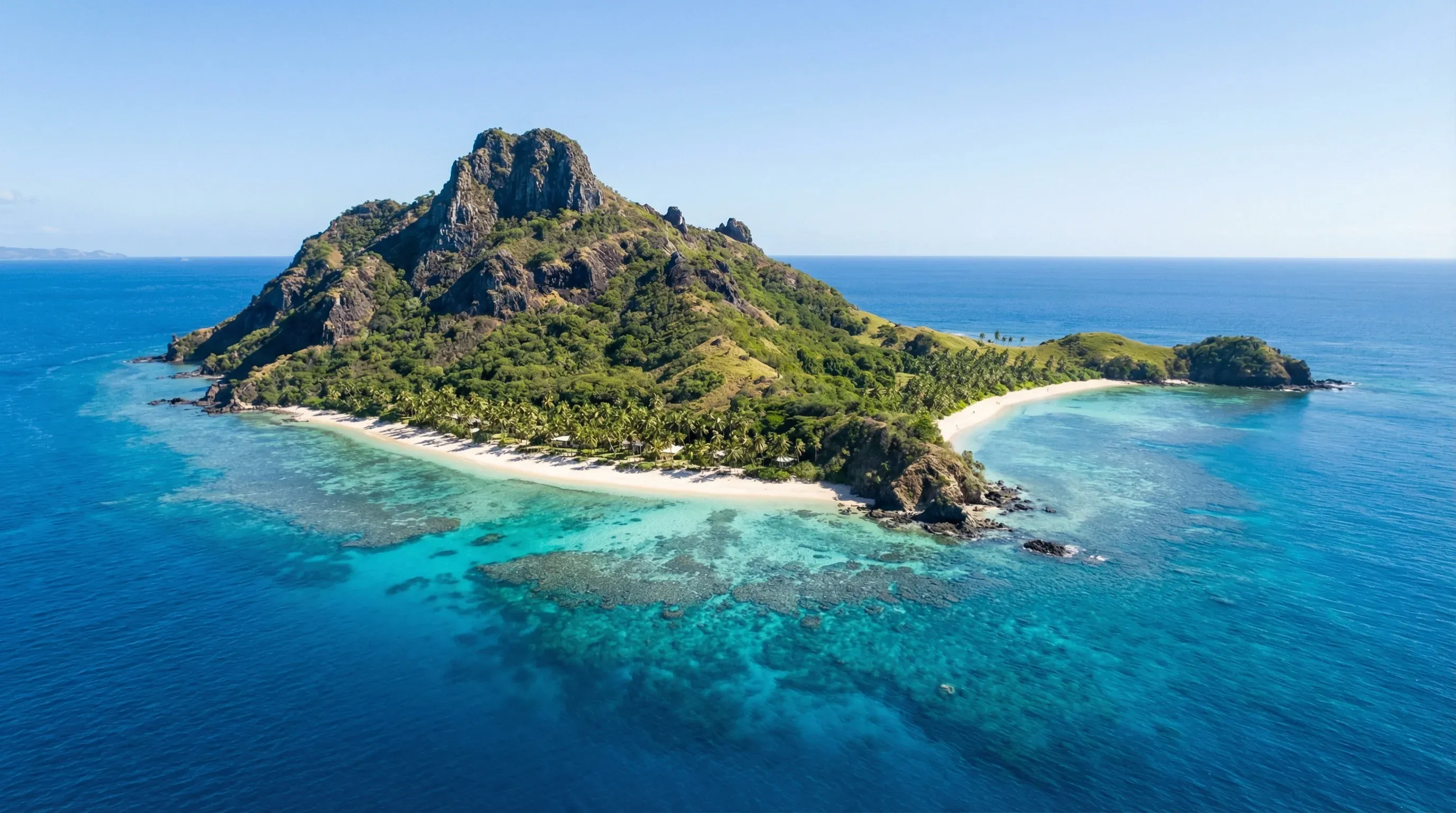
Just off the coast lie the Mamanuca and Yasawa archipelagos. The Mamanucas are famous for their proximity to the mainland and calm, kid-friendly lagoons, making them the top choice for families with toddlers. Further north, the Yasawas offer dramatic volcanic peaks and deeper isolation. Back on the main island, the capital Suva provides a more urban cultural experience, while the Coral Coast offers miles of reef directly accessible from the beach. The variety here is unmatched—you can be hiking through rainforests in Colo-i-Suva Forest Park in the morning and building sandcastles on a private island by sunset.
Key Attractions
For a dose of culture, the Fiji Museum in Suva is excellent for children, housing massive double-hulled war canoes (drua) that spark the imagination about ancient voyagers. It is located within the Thurston Gardens, perfect for a post-museum run-around. Near the capital, active families should head to Colo-i-Suva Forest Park. This lush rainforest reserve features easy walking trails, clear natural swimming pools, and rope swings that local kids use fearlessly—a refreshing break from the coastal heat.
In Nadi, the Sri Siva Subramaniya Temple is a must-visit for its intricate architecture and bright murals; it's a quiet, respectful place to introduce children to Fiji's significant Indo-Fijian heritage. Out in the islands, the attractions are the beaches themselves, but don't miss the Sawa-i-Lau Caves in the Yasawas—a limestone cave system where you can swim in a cathedral-like cavern, a thrilling adventure for older children.
Practical Advice
Best time to visit: The dry season (May to October) is ideal for the Mamanucas and Yasawas. The 'Suva side' (east) rains year-round but is lush and green.
Family logistics: Denarau Island is the hub for families wanting ease—connected by a causeway, it has flat paths for strollers and extensive resort facilities. The 'Bula Bus' is an open-air bus that loops around the resorts, which kids love. If visiting the Yasawas, be prepared for long boat transfers (up to 4–5 hours) on the Yasawa Flyer; consider breaking the journey.
Food & Drink
Typical meal times:
Resorts serve all day, but local restaurants follow standard hours: Lunch 12:00 pm to 2:00 pm, Dinner 6:00 pm to 9:00 pm. Sunday is a quiet day with many local spots closed.
Typical meal costs:
Resort buffet prices are high: $60–100 FJD (approx. $27–45 USD / €25–41 EUR) per adult, with kids often eating free or half-price. Local restaurants in Nadi or Suva are much cheaper: $15–30 FJD (approx. $7–14 USD / €6–12 EUR) for a hearty curry or stir-fry.
Dietary requirements:
Excellent. Due to the high volume of international tourists, gluten-free, vegetarian, and dairy-free requests are understood and catered for in most hotels and Nadi/Suva restaurants. The Indo-Fijian influence ensures plenty of delicious vegetarian options.
Signature dishes:
- Fish Suruwa – A rich Fijian-style fish curry made with coconut milk, turmeric, and chili, often served with roti.
- Nama (Sea Grapes) – Little green beads of seaweed that pop in your mouth, often served fresh as a salad with lemon and chili (locally called 'sea caviar').
- Babakau – Fried triangular dough, similar to a doughnut, often eaten for breakfast with butter and jam.
Why this score?
While the region offers outdoor activities like the Sigatoka River Safari and forest trekking, the tourism model is primarily centered around developed resorts and accessible amenities. Most adventure options are commercially managed and tailored for families, prioritizing safety and convenience over extreme ruggedness.
Why this score?
The main cities of Suva and Nadi house Fiji's most capable hospitals and private clinics, which can handle common medical issues for international travelers. However, facilities are still basic compared to global hubs, and specialized care often requires evacuation to Australia or New Zealand.
Why this score?
As the gateway to Fiji, this region captures the vast majority of the country's inbound tourists through Nadi International Airport and the Denarau resort hub. The Mamanuca and Yasawa island chains are world-renowned for their beaches and established holiday infrastructure, maintaining a moderate but consistent international flow.

This region has the widest cost variance. Denarau and the outer island resorts are generally expensive, with family suites costing $600–1,500 FJD (approx. $270–675 USD / €245–615 EUR) per night. However, mainland Coral Coast resorts and Nadi hotels offer good mid-range value. A bottle of water in a resort might cost $10 FJD ($4.50 USD), compared to $2 FJD ($0.90 USD) in a supermarket.

Getting Here & Around
Getting Here
- Airports – Nadi International Airport (NAN) is the main gateway. Suva has a smaller international airport (Nausori, SUV) mostly for regional flights.
- Ferry – The 'Yasawa Flyer' and South Sea Cruises catamarans depart daily from Port Denarau to the Mamanuca and Yasawa islands. It is a well-oiled machine transferring hundreds of tourists daily.
- Driving – Queens Road connects Nadi to Suva along the southern Coral Coast (approx. 3–4 hours). It is a sealed, scenic drive passing many villages.
Getting Around
- Bus – The 'Bula Bus' in Denarau is an open-air wooden bus that loops between resorts and the port ($8 FJD per day). Public express buses between Nadi and Suva are cheap and air-conditioned.
- Taxi – Plentiful in Nadi and Suva. Always ask for the meter or agree on a price before getting in. Taxis can also be hired for half-day tours to places like the Sri Siva Subramaniya Temple.
- Boat – Water taxis and resort transfers are the only way to move between the offshore islands.
Nearby Airports (2 airports)
Nadi International
NANNadi
Nausori International
SUVSuva
View full flight map for Fiji →

Packing List
The sun is intense, and you will be in the water for hours; sunscreen alone often isn't enough.
Protect the delicate coral ecosystems you came to see; many standard brands harm the reef.
Required for visiting villages or temples like the Sri Siva Subramaniya Temple (shoulders/knees covered).
The boat ride to the Yasawas can be rough, especially the 4-hour leg to the northern islands.
Essential for protecting feet from sharp coral and stonefish on beaches and in waterfall pools.
Required for covering knees and shoulders when visiting villages or temples; serves as a versatile towel.
The tropical sun is intense; these protect kids better than sunscreen during long water sessions.
Boat transfers are frequent and often wet; keeps electronics and change of clothes dry.
Mosquitoes are active day and night, and dengue fever is a risk in tropical areas.

Activities & Best Times

Beach resorts, marine activities: diving, snorkelling, kite surfing, wind surfing, sailing
The Mamanuca and Yasawa islands, Blue Lagoon, and Natadola Beach are internationally famous beach destinations that consistently rank among the world's best beaches. The region competes directly with Maldives and Caribbean destinations in terms of water clarity, sand quality, and marine environments. The current 'good' rating significantly undervalues Fiji's global reputation as a premier beach destination.

Hiking, wildlife, outdoor exploration, ecotourism
Extensive natural attractions including the Sigatoka River Safari and Sawa-i-Lau Caves provide authentic immersion in Fiji's volcanic and riverine ecosystems. The cooler dry season is essential for trekking and river adventures to avoid heavy monsoon rains and high humidity.

Urban tourism, museums, historical sites, architecture
Suva and Nadi offer significant cultural depth through the Fiji Museum and the Garden of the Sleeping Giant, showcasing Pacific heritage and botanical diversity. While cultural sites are accessible year-round, the dry season provides the most comfortable conditions for exploring urban markets and heritage gardens.

Scenic drives, countryside tours, route-based travel
The Queens Road (Coral Coast) and Kings Road (Sun Coast) offer well-regarded scenic drives through diverse coastal and rural landscapes. Traveling during the dry season ensures safer road conditions and clear vistas of the Pacific coastline and the Nausori Highlands.

Sport tourism, fitness activities, active recreation
Purpose-built infrastructure like EcoTrax cycling and major hiking routes such as the Mt Batilamu Track cater to active travelers. These facilities are best utilized during the peak dry months to avoid trail washouts and the physical strain of high-summer tropical heat.

Spa retreats, wellness centers, peaceful getaways
The Tifajek Mud Pool & Hot Spring provides a unique, authentic natural wellness experience rooted in local geothermal features. While the region has many hotel spas, this specific facility represents the primary dedicated wellness draw for those seeking restorative natural baths.

Amusement parks, family entertainment venues
Big Bula Waterpark on Denarau Island offers family-oriented entertainment, though it lacks the international scale of major global theme parks. Best visited in the drier months to ensure full facility operation and pleasant outdoor conditions for children.




Public Holidays & Calendar Next 12 months
Public holidays, festivals, cultural celebrations, and seasonal natural phenomena coming up in Viti Levu & Western Islands (Nadi, Mamanuca, Yasawa) over the next 12 months.
Loading holidays and events...

Travel Advisory
All six major agencies agree that Fiji is safe for travel with standard safety awareness. No country-wide elevated warnings are in place, though travelers should remain vigilant regarding petty crime and seasonal weather events.
Safety Topics
Traveller Advice (3 groups)

Female visitors should be cautious when walking alone, particularly in downtown Suva and other urban centers at night. Incidents of harassment and sexual assault have been reported.

Those participating in water sports like scuba diving should verify the current status of the country's limited hyperbaric chambers and ensure their insurance covers medical evacuation.

While same-sex relationships are legal, they are not universally accepted by the local population. It is recommended to avoid public displays of affection, especially in rural or traditional village settings.
Agency Summaries
Visitors should maintain standard safety awareness. While generally safe, urban centers like Suva and Nadi see frequent petty crimes like theft and bag-snatching. Female travelers should be particularly cautious of harassment.
Standard security awareness is required. Visitors should watch out for theft and assault, particularly in poorly lit urban areas after dark. Financial fraud and seasonal cyclones are the primary non-security risks.
Most visits are trouble-free, but travelers should be aware of local safety and health risks. Petty theft occurs in cities. Road conditions are often poor, and maritime safety standards vary.
Irish citizens should follow standard safety measures. Be aware of the tropical climate's impact on travel, including cyclone risks. Consular support is provided via the embassy in Canberra.
Travelers should follow standard safety protocols. Increased vigilance is recommended in specific areas like Colo-I-Suva Forest Park due to trail-side robberies. Avoid resisting robbery attempts and be careful at night.
Fiji is currently under a green advisory level. Travelers are encouraged to be mindful of opportunistic crime in urban areas. Significant health updates include a recently declared HIV outbreak and risks of mosquito-borne viruses.
Information is provided for general guidance only and does not constitute travel, safety, medical, or legal advice. Conditions may change. Users are responsible for independently verifying information before travel.