
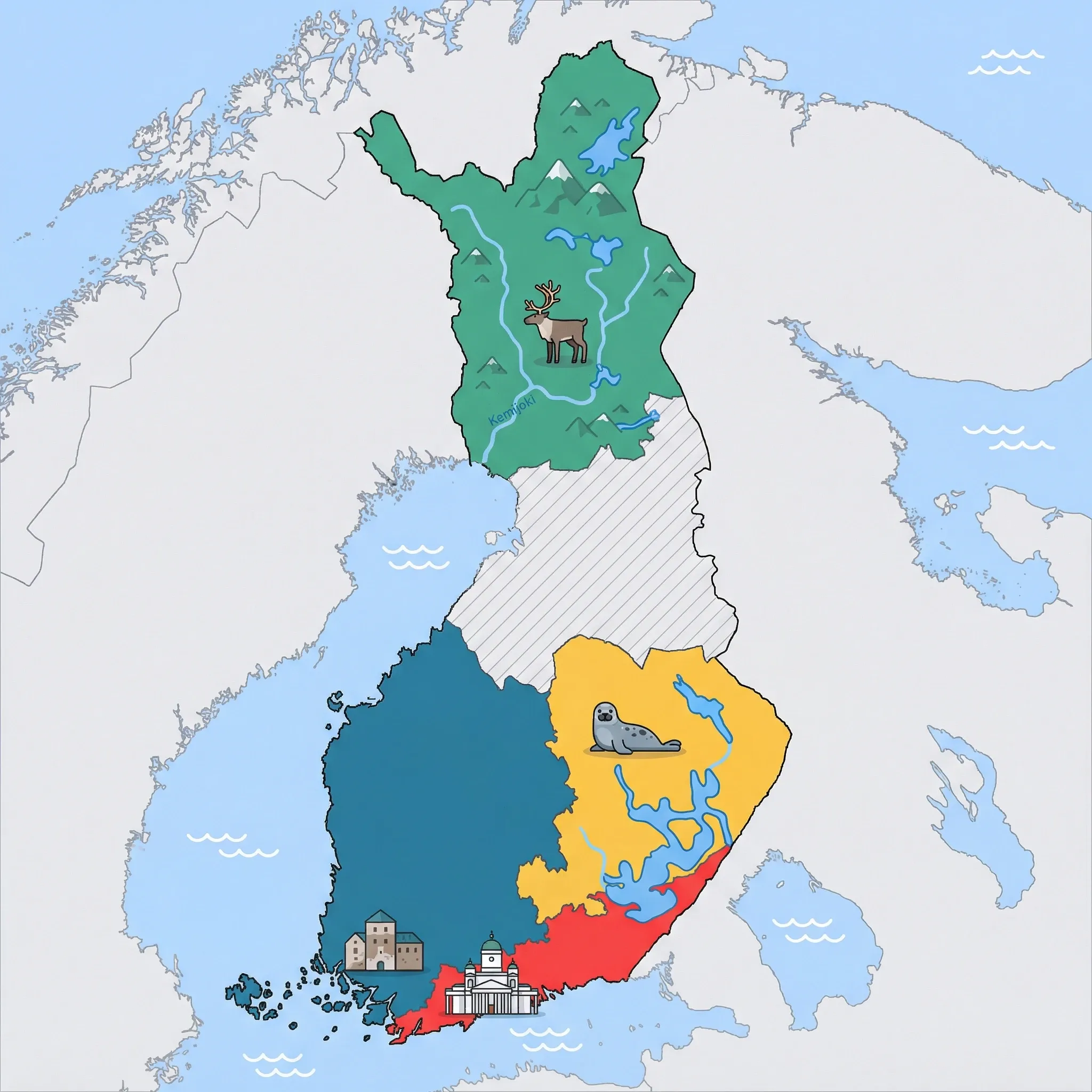
Click a region to explore
Safety Note: Winter temperatures in Lapland can drop below -30°C (-22°F). Frostbite is a real risk for young children. Ensure you have professional thermal clothing (often provided by tour operators) and limit time outdoors with infants during extreme cold snaps.
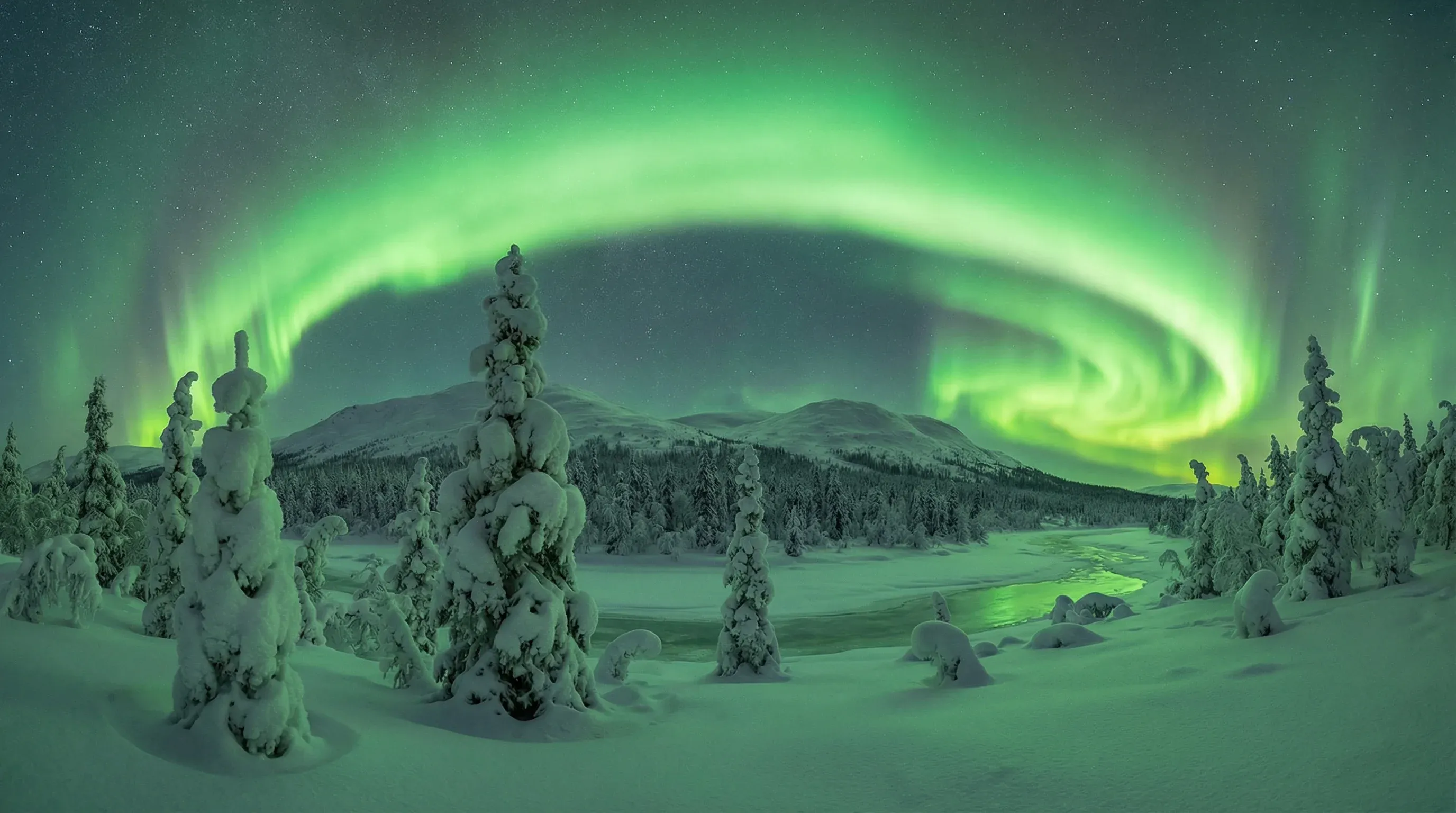
Finnish Lapland is not just a destination; it is the realization of a childhood dream. Covering the northern third of Finland, this vast Arctic wilderness offers a stark, breathtaking beauty that changes dramatically with the seasons. In winter, the region is blanketed in deep, powdery snow, illuminated by the ethereal blue twilight of the "Kaamos" (polar night) and the dancing green ribbons of the Aurora Borealis. It is a playground for winter sports, husky safaris, and snowmobile adventures. In summer, the Midnight Sun bathes the fells in golden light for 24 hours a day, allowing for hiking and wildlife watching around the clock. The air here is statistically the cleanest in the world, and the silence of the wilderness is profound.
For families, the primary draw is the connection to Christmas mythology. Rovaniemi, the regional capital, has successfully positioned itself as the Official Hometown of Santa Claus. Beyond the commercialism, there is a genuine warmth and hospitality in Lapland, rooted in the indigenous Sámi culture. Visitors can learn about reindeer herding traditions that have existed for centuries. Whether you are staying in a log cabin with a roaring fire or a glass igloo designed for watching the stars, Lapland offers an immersive escape into a winter wonderland that feels removed from the rest of the world.
Key Attractions
Rovaniemi is the gateway to the region and home to the iconic Santa Claus Village. Located right on the Arctic Circle line, this open-air complex allows families to meet Santa in his office (for free, though photos cost extra), cross the magical circle, and send postcards from the official Main Post Office. Just nearby is SantaPark, an underground cavern theme park that is particularly excellent for younger children, featuring Elf School, gingerbread decorating, and an ice gallery. It is warmer than the outdoor village, making it a great refuge on freezing days.
For a deeper understanding of the region, Arktikum in Rovaniemi is a stunning glass-tunneled science center and museum. It explains Arctic nature, the Northern Lights, and history in a way that is accessible to older children. To see Arctic animals, a trip to Ranua Wildlife Park is essential. Unlike a standard zoo, this park features long wooden boardwalks through the forest where you can see polar bears, lynx, and wolves in spacious natural enclosures. Further north, the Siida – Sami Museum and Nature Centre in Inari is a world-class facility dedicated to the indigenous Sámi people, offering a profound cultural lesson for families. Active families should head to Ylläs Ski Resort, which has excellent ski schools and some of the longest runs in Finland.
Practical Advice
Best time to visit: December to March for snow and Northern Lights. December is magical but very crowded and expensive. March offers the best balance of snow depth and longer daylight hours.
Logistics: Book activities (husky sledding, Santa visits) months in advance for December travel. Clothing is key: layer merino wool, fleece, and windproof outers.
Food & Drink
Typical meal times: Lunch 11:00 am to 2:00 pm. Dinner 5:00 pm to 9:00 pm. Resorts serve later, but rural kitchens close early.
Typical meal costs: Expensive. A main course is often €25–40 (approx. $27–43 USD / £21–34 GBP). Pizzas/burgers cost €15–20 (approx. $16–21 USD / £13–17 GBP).
Dietary requirements: Vegetarian options are available but can be limited to one or two choices in wilderness lodges. Reindeer meat is the staple.
Signature dishes:
- Poronkäristys (Sautéed Reindeer) – Thinly sliced reindeer meat fried in butter, served with mashed potatoes and lingonberry jam. The absolute classic.
- Leipäjuusto (Squeaky Cheese) – A mild, grilled cheese that squeaks when you eat it, traditionally served warm with cloudberry jam.
- Lohikeitto – Creamy salmon soup with potatoes and dill, perfect for warming up after snow activities.
Why this score?
The Arctic climate and vast wilderness of the fells provide a notable outdoor challenge for families, involving activities like husky sledding and snowmobiling in sub-zero temperatures. While the infrastructure for tourists is excellent, the remote nature of the taiga and tundra requires significant preparation.
Why this score?
Modern medical clinics are available in hubs like Rovaniemi and Levi specifically to cater to tourists, but the vast geography means emergency response times can be slow in remote areas. Serious medical emergencies often require stabilization before long-distance transfer to larger southern hospitals or Oulu University Hospital via air medevac.
Why this score?
Lapland is a major international draw, particularly in winter, thanks to the global branding of Rovaniemi as the home of Santa Claus and the Northern Lights. It receives heavy charter traffic from Europe and Asia, placing it on par with well-known European outdoor destinations like the Bavarian Alps.

Lapland is the most expensive region in Finland, especially during the Christmas season. Accommodation prices skyrocket in December. A night in a glass igloo can range from €400–900 (approx. $430–970 USD / £340–765 GBP). Guided activities (huskies, snowmobiles) are pricey, often costing €100–180 (approx. $108–195 USD / £85–155 GBP) per person.

Getting Here & Around
Getting Here
- Airports – Rovaniemi (RVN), Kittilä (KTT), and Ivalo (IVL) are the main gateways. During winter, there are direct seasonal flights from various European cities (e.g., London, Paris). Otherwise, connect via Helsinki.
- Train – The "Santa Claus Express" night train from Helsinki to Rovaniemi/Kemijärvi is a bucket-list experience. Double-decker sleeper cabins have ensuite showers and are very family-friendly.
Getting Around
- Car – Rental cars are equipped with studded tires and engine heaters. Driving on snow is safe if you are cautious, but watch out for reindeer on the roads—they are a major hazard.
- Bus – Long-distance buses connect Rovaniemi to ski resorts like Levi and Ylläs. They are reliable and sync with flight arrivals.
- Tours – Many families rely on transfer services provided by activity companies (e.g., getting to a husky farm).
Nearby Airports (4 airports)
Ivalo
IVLIvalo
Kemi Tornio
KEMKemi/Tornio
Kittila
KTTKittila
Rovaniemi
RVNRovaniemi
View full flight map for Finland →
Official Links

Packing List
Cotton kills in the Arctic; wool is essential against the skin.
It is pitch black by 3:00 pm in winter; locals all wear reflectors to be seen by cars.
Lifesavers for children during long husky rides or aurora hunting.
Water-based creams freeze on your skin; use oil-based protectants.
Cold drains phone batteries in minutes.
Legally required by Finnish law when walking in the dark; attaches to coats or bags to make you visible to cars.
Essential for saunas (often required in public mixed/family saunas) and hotel pools, even in mid-winter.
Crucial for sleeping in summer when the sun may not set at all (Midnight Sun), especially for children.
The winter air is extremely dry and cold; standard lotions often aren't enough to prevent cracked skin.
Finnish Lakeland in July can be full of mosquitoes; bring a strong spray if staying in a summer cottage.
You must remove outdoor shoes when entering Finnish homes and some rental cottages; warm indoor slippers are great.

Activities & Best Times

Hiking, wildlife, outdoor exploration, ecotourism
A world-class destination for Arctic wilderness, providing unique access to the Northern Lights and Midnight Sun. Peak seasons offer stable snow for winter safaris and the vibrant 'ruska' autumn colors, while May is avoided due to the spring thaw and mud.

Urban tourism, museums, historical sites, architecture
Strongly defined by authentic Sámi heritage and the unique Arctic character of hubs like Rovaniemi and Inari. The culture is best experienced during the festive December peak or the summer Midnight Sun, though it lacks the urban depth of major global capitals.

Sport tourism, fitness activities, active recreation
Boasts significant infrastructure for trekking and organized adventure sports, including internationally recognized trail networks and activity parks. These facilities are primarily optimized for use during the brief summer window when terrain is accessible and safe.
Amusement parks, family entertainment venues
Features SantaPark, an internationally recognized festive venue that offers a sophisticated and authentic Christmas experience. Visitation is highly seasonal, peaking during the global holiday window in December when the full range of attractions is operational.

Learning experiences, scientific sites, historical education
World-class facilities like the Siida Sámi Museum and Arktikum provide destination-level learning about Arctic ecology and indigenous history. These sites are most engaging during the region's broader peak travel months when guided programs are most frequent.

Scenic drives, countryside tours, route-based travel
Features celebrated routes like the Northern Lights Route, offering spectacular fell scenery and well-maintained Arctic roads. Peak conditions occur in late summer and early autumn when visibility is high and roads are free of heavy ice and snow.

Winter sports, ski resorts, snow activities
Home to major resorts like Levi and Ylläs, offering exceptionally reliable snow cover and high-quality family infrastructure. The peak period of February to April provides the best balance of daylight and snow depth compared to the dark, freezing mid-winter.

Beach resorts, marine activities: diving, snorkelling, kite surfing, wind surfing, sailing
Offers a unique but niche Arctic beach experience on the Bothnian Bay, appealing primarily as a novelty to well-travelled families. Suitability is limited to the peak of the northern summer when air temperatures allow for coastal recreation.

Events, celebrations, seasonal attractions
Anchor events like the Midnight Sun Film Festival draw international visitors, but the regional calendar is otherwise focused on local traditions. The peak is strictly limited to June for the film festival and December for festive celebrations.

Attractions (20 total)



Public Holidays & Calendar Next 12 months
Public holidays, festivals, cultural celebrations, and seasonal natural phenomena coming up in Finnish Lapland over the next 12 months.
Loading holidays and events...

Travel Advisory
All major agencies agree that Finland is a low-risk destination. Standard safety awareness is sufficient for most travellers.
Safety Topics
Traveller Advice (3 groups)

Carry valid identification at all times. Be aware of new EU biometric entry and exit requirements. Ensure you are equipped for extreme cold if visiting during the winter months.

Finland is generally very progressive and safe for LGBTQ+ travellers, with strong legal protections and social acceptance.

Arctic provinces are remote and emergency services may face significant delays. Always share your itinerary with others and ensure your insurance covers medical evacuation from isolated wilderness areas.
Agency Summaries
Finland maintains a safe environment, though New Zealanders are reminded of the general terrorism threat in Europe. Petty crime exists in cities, and the border with Russia is closed. Special care is needed for those travelling to Arctic or remote northern regions.
Most visits to Finland are trouble-free. Travellers should remain vigilant against petty crime like pickpocketing in crowded areas during the summer. Although the risk of terrorism is present as in most European countries, no specific high-level warnings are in place.
Finland is considered a very safe destination with low crime rates. Visitors are advised to follow standard safety routines. Special attention should be given to passport validity for the Schengen Area and preparing for severe winter weather.
Australia advises standard safety measures while noting an elevated national terrorism threat level. Be aware of petty theft and credit card fraud in urban centers. Significant winter weather can impact travel, and land borders with Russia are currently inaccessible.
Travellers should maintain standard safety awareness similar to what they would in Canada. Authorities have noted that land borders with Russia remain closed and maritime routes are restricted. While the country is generally safe, there is an elevated awareness regarding terrorism, and those visiting Arctic regions should be prepared for extreme conditions and limited emergency response.
Ireland advises standard vigilance. Visitors should ensure their passports are valid for their entire stay and be aware of registration requirements for longer visits. The country offers high security but standard travel insurance is recommended.
Information is provided for general guidance only and does not constitute travel, safety, medical, or legal advice. Conditions may change. Users are responsible for independently verifying information before travel.