
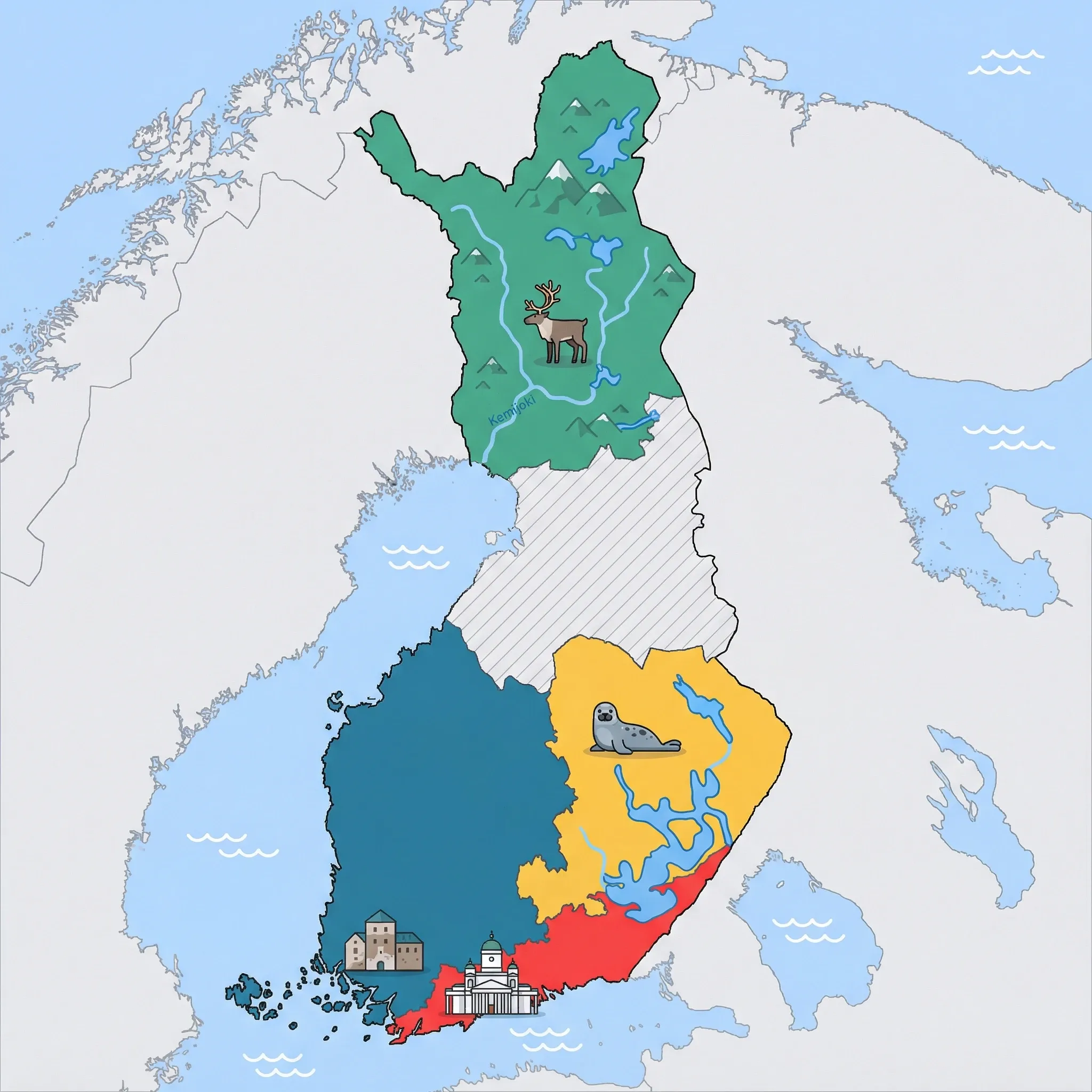
Click a region to explore
Helsinki is often cited as one of the world's most family-friendly cities, and for good reason. Compact, clean, and surrounded by the sea, it offers a stress-free urban break where strollers are welcome everywhere and nature is never more than a tram ride away. The architecture is a striking mix of neoclassical grandeur, Art Nouveau romance, and sleek Nordic modernism. The South Coast extends beyond the capital, offering charming wooden towns and rugged coastal scenery. The atmosphere is relaxed; there is no chaotic rush here. In summer, the city spills outside with pop-up cafes, market stalls selling fresh berries, and locals picnicking in the sprawling parks.
For families, the infrastructure is a dream. Public transport is accessible (and free for adults pushing a stroller), playgrounds are high-quality and fenced, and museums almost always have dedicated children's sections. You can spend the morning exploring a high-tech museum, the afternoon island-hopping on a ferry, and the evening eating cinnamon buns in a wooden cabin by the sea. It is a region that effortlessly combines educational value with simple outdoor fun.
Key Attractions
The crown jewel for active families is Linnanmäki, Finland’s oldest and most popular amusement park. Entry to the park is free, as are several small rides for toddlers, while the wooden roller coaster is a classic thrill for older kids. For curious minds, Heureka, The Finnish Science Centre in Vantaa (a short train ride from the center) is brilliant. It is fully interactive, with planetarium shows and exhibits that encourage touching and testing, making science fun for all ages. Another hit is the Natural History Museum of Helsinki, identifiable by the giraffe on the balcony and packed with dinosaur skeletons and dioramas.
If you want to escape the city, Nuuksio National Park is reachable by public transport. It offers marked trails that are easy enough for children, beautiful lakes for swimming, and designated campfire spots for grilling sausages. For a cultural day trip, Old Porvoo is a must. This medieval town, with its iconic red ochre warehouses and cobblestone streets, feels like a toy village. Children enjoy the toy museum and the artisan chocolate shops, while parents appreciate the historic atmosphere.
Practical Advice
Best time to visit: June to August for warm weather and island hopping. December for Christmas markets (though it is dark and slushy). May is lovely and less crowded.
Logistics: The HSL app is essential for public transport tickets. In Helsinki, adults with a child in a stroller travel free on trams, buses, and the metro.
Food & Drink
Typical meal times: Lunch 11:00 am to 2:00 pm. Dinner 5:00 pm to 8:00 pm. Helsinki has plenty of late-night options, but family restaurants quiet down early.
Typical meal costs: Lunch specials are €11–15 (approx. $12–16 USD / £9–13 GBP). Dinner mains €20–30 (approx. $21–32 USD / £17–25 GBP). Coffee and bun €6–8 (approx. $6–9 USD / £5–7 GBP).
Dietary requirements: excellent. Vegan and gluten-free options are standard in almost every cafe and restaurant in the capital.
Signature dishes:
- Korvapuusti (Cinnamon Bun) – The Finnish version is larger and has a distinct shape (like 'slapped ears') and a strong cardamom flavor.
- Lohikeitto (Salmon Soup) – Creamy salmon soup with dill and rye bread, available in market halls and cafes.
- Hernekeitto (Pea Soup) – Traditionally eaten on Thursdays, often served with a pancake for dessert.
Why this score?
The region is highly urbanized and developed, with most tourist activities occurring in city centers or on paved museum paths. Even the nearby Nuuksio National Park is extremely accessible and managed with family-friendly facilities, offering very little ruggedness compared to the rest of the country.
Why this score?
Helsinki offers world-class medical facilities, including the Helsinki University Hospital (HUS), which is among the best in Europe. International visitors have immediate access to specialized care, private clinics, and high-level pharmacies where English is spoken fluently by almost all staff.
Why this score?
As the country's primary gateway, this region sees the highest volume of international arrivals and cruise ship passengers. Attractions like the Suomenlinna sea fortress and the historic center of Helsinki make it a well-known European capital destination, though it remains quieter than 'mega-destinations' like Paris.

Helsinki is priced like other Nordic capitals. Accommodation is the biggest expense, with family rooms costing €150–250 (approx. $160–270 USD / £125–210 GBP) per night. Transport is reasonable if you buy day passes. Eating out at dinner is pricey, but lunch buffets offer great value.

Getting Here & Around
Getting Here
- Airports – Helsinki Airport (HEL) is the main international hub. It is consistently voted one of the best airports in the world and is connected to the city center by a 30-minute train ride.
- Ferry – massive cruise ferries arrive daily from Tallinn (2 hours), Stockholm (overnight), and Travemünde. The terminals are centrally located.
- Train – The central station is the hub for all long-distance trains from Lakeland and Lapland.
Getting Around
- Public Transport – The HSL network (trams, metro, buses, local trains, and the Suomenlinna ferry) is world-class. It is clean, punctual, and stroller-friendly.
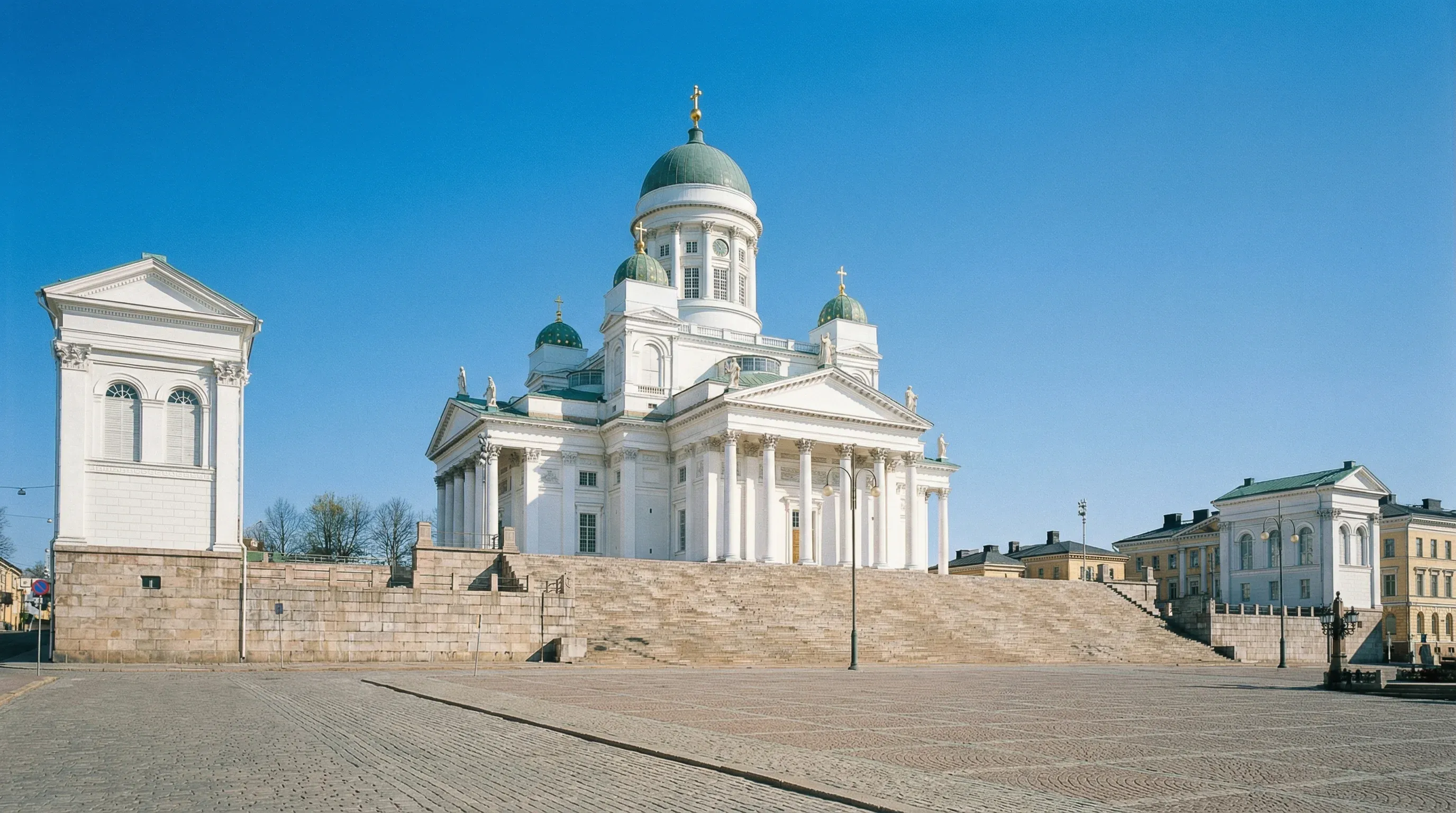
- Walking – Helsinki is compact. You can easily walk from Helsinki Cathedral to the market square and the design district.
- City Bikes – Excellent network of yellow city bikes available in summer, suitable for older children and teens.
Nearby Airports (2 airports)
Helsinki Airport
HELHelsinki
Lappeenranta
LPPLappeenranta
View full flight map for Finland →
Official Links

Packing List
Old Porvoo and parts of Helsinki have uneven cobblestones.
Coastal breezes can be chilly even on sunny summer days.
Tap water is delicious and safe; don't buy plastic bottles.
Legally required by Finnish law when walking in the dark; attaches to coats or bags to make you visible to cars.
Essential for saunas (often required in public mixed/family saunas) and hotel pools, even in mid-winter.
Crucial for sleeping in summer when the sun may not set at all (Midnight Sun), especially for children.
The winter air is extremely dry and cold; standard lotions often aren't enough to prevent cracked skin.
Finnish Lakeland in July can be full of mosquitoes; bring a strong spray if staying in a summer cottage.
You must remove outdoor shoes when entering Finnish homes and some rental cottages; warm indoor slippers are great.

Activities & Best Times

Hiking, wildlife, outdoor exploration, ecotourism
The Helsinki archipelago and nearby national parks offer high-quality coastal hiking and treetop adventures with excellent infrastructure. Summer and early autumn provide ideal conditions for exploring the unique granite coastline and forested trails.

Urban tourism, museums, historical sites, architecture
'Excellent' should be reserved for cities with globally dominant cultural institutions or UNESCO heritage density (Paris, Rome, Kyoto, London). Helsinki has exceptional Nordic design and unique architecture (Suomenlinna, Rock Church) but lacks the historical depth and museum scale of 'excellent' tier. 'Very_good' correctly positions it as a strong Nordic design capital without overstating its global cultural significance.

Sport tourism, fitness activities, active recreation
The region features exceptional cycling routes like the Coastal Route and professional-grade adventure parks. Activity peaks in the warmer months when dedicated infrastructure and maritime winds are most favorable for active exploration.

Learning experiences, scientific sites, historical education
Heureka Science Centre and Haltia are internationally recognized facilities offering world-class discovery experiences for families. While these are mostly indoor attractions, peak tourism aligns with summer travel and winter holiday breaks.

Scenic drives, countryside tours, route-based travel
Historic routes like the King's Road and Ironworks Trail offer well-curated journeys through Finnish heritage and coastal landscapes. Driving conditions are optimal in summer when coastal towns like Porvoo are at their most picturesque and accessible.

Winter sports, ski resorts, snow activities
Accessible ski centers like Palohein$ and Talma provide reliable winter sports infrastructure for families near the capital. The season is strictly limited to the core winter months when snow production and natural cover are most stable.
Amusement parks, family entertainment venues
Linnanm$ki and Serena Water Park offer high-standard family entertainment that meets international quality expectations. These parks are primarily seasonal, with peak visitation during the warm summer school holiday period.
Beach resorts, marine activities: diving, snorkelling, kite surfing, wind surfing, sailing
Baltic Sea conditions are suboptimal by international standards. Water temperatures rarely exceed 18°C even in peak summer (vs. 25-28°C Mediterranean/Caribbean). Season is short (June-August only). 'Good' should be reserved for year-round or warm-water beach destinations. The island beaches are a nice local amenity but not a primary draw for international beach holidays.

Events, celebrations, seasonal attractions
High-caliber events like the Helsinki Festival and Flow Festival attract international interest, alongside the traditional Lucia and Christmas celebrations. These events are highly concentrated in the late summer and mid-winter periods.

Spa retreats, wellness centers, peaceful getaways
The historic Yrj$nkatu Swimming Hall provides an authentic Finnish sauna experience of exceptional quality. The appeal is strongest during the colder months when traditional sauna culture is most restorative and atmospheric.

Attractions (26 total)



Public Holidays & Calendar Next 12 months
Public holidays, festivals, cultural celebrations, and seasonal natural phenomena coming up in Helsinki & South Coast over the next 12 months.
Loading holidays and events...

Travel Advisory
All major agencies agree that Finland is a low-risk destination. Standard safety awareness is sufficient for most travellers.
Safety Topics
Traveller Advice (3 groups)

Carry valid identification at all times. Be aware of new EU biometric entry and exit requirements. Ensure you are equipped for extreme cold if visiting during the winter months.

Finland is generally very progressive and safe for LGBTQ+ travellers, with strong legal protections and social acceptance.

Arctic provinces are remote and emergency services may face significant delays. Always share your itinerary with others and ensure your insurance covers medical evacuation from isolated wilderness areas.
Agency Summaries
Finland maintains a safe environment, though New Zealanders are reminded of the general terrorism threat in Europe. Petty crime exists in cities, and the border with Russia is closed. Special care is needed for those travelling to Arctic or remote northern regions.
Most visits to Finland are trouble-free. Travellers should remain vigilant against petty crime like pickpocketing in crowded areas during the summer. Although the risk of terrorism is present as in most European countries, no specific high-level warnings are in place.
Finland is considered a very safe destination with low crime rates. Visitors are advised to follow standard safety routines. Special attention should be given to passport validity for the Schengen Area and preparing for severe winter weather.
Australia advises standard safety measures while noting an elevated national terrorism threat level. Be aware of petty theft and credit card fraud in urban centers. Significant winter weather can impact travel, and land borders with Russia are currently inaccessible.
Travellers should maintain standard safety awareness similar to what they would in Canada. Authorities have noted that land borders with Russia remain closed and maritime routes are restricted. While the country is generally safe, there is an elevated awareness regarding terrorism, and those visiting Arctic regions should be prepared for extreme conditions and limited emergency response.
Ireland advises standard vigilance. Visitors should ensure their passports are valid for their entire stay and be aware of registration requirements for longer visits. The country offers high security but standard travel insurance is recommended.
Information is provided for general guidance only and does not constitute travel, safety, medical, or legal advice. Conditions may change. Users are responsible for independently verifying information before travel.