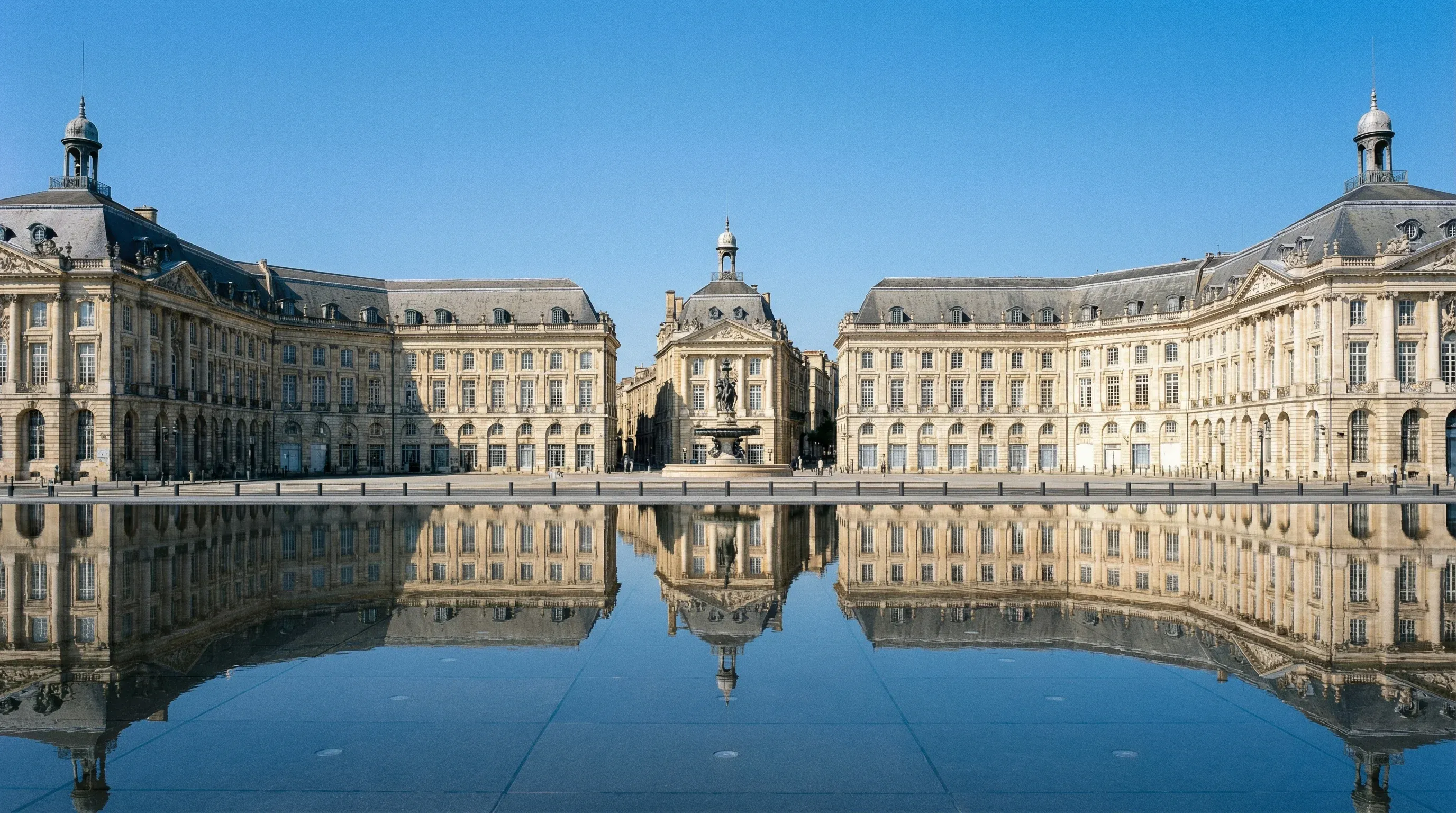

Bordeaux & Southwest France
Surf huge dunes, explore ancient caves, and taste the good life 🌊🍷
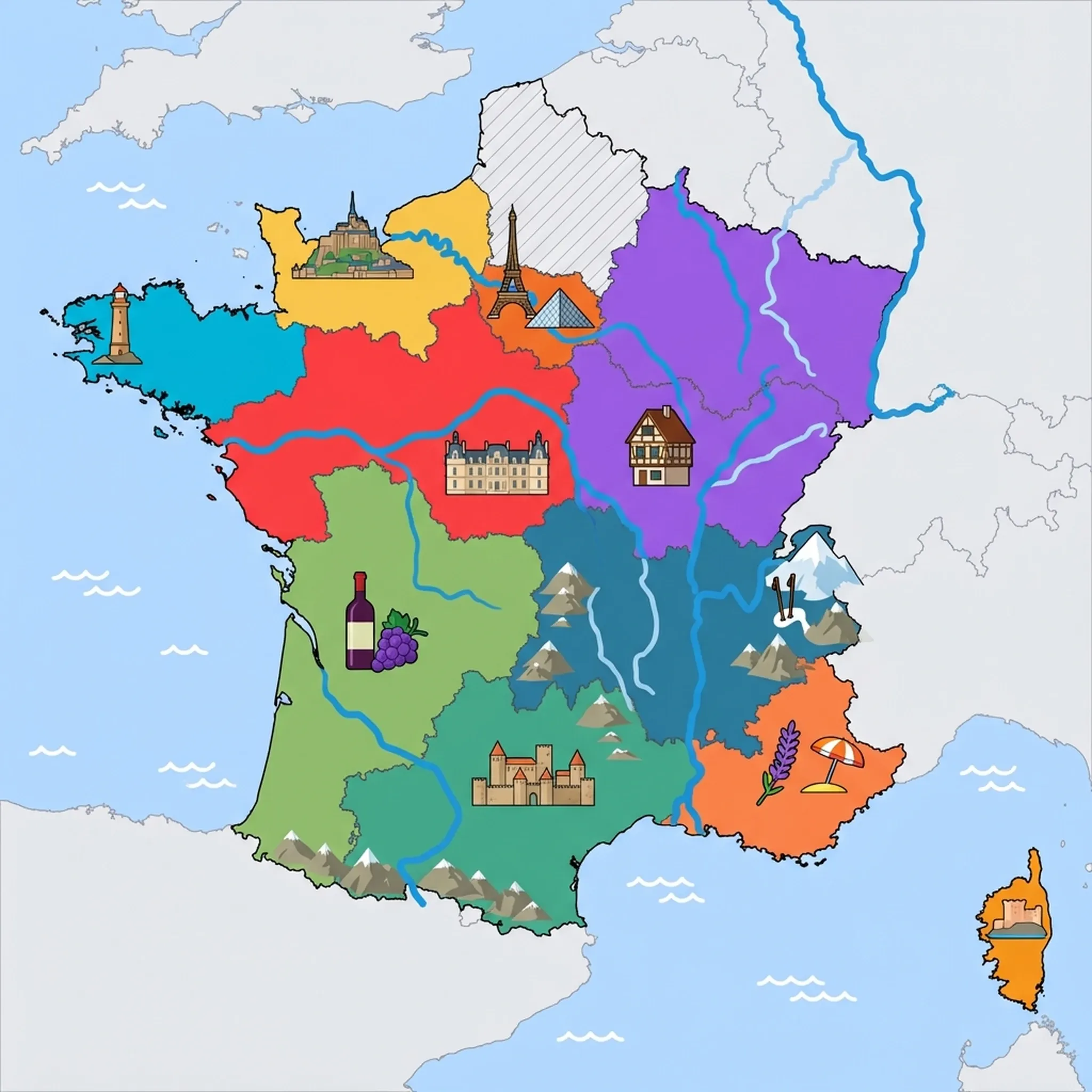
Click a region to explore
Southwest France, administratively known as Nouvelle-Aquitaine, is a region of striking contrasts that offers families an incredible breadth of experiences. Stretching from the marshlands of the Marais Poitevin in the north to the Spanish border in the south, this area encompasses the sophisticated city of Bordeaux, the pine-fringed beaches of the Atlantic coast, and the lush, river-threaded valleys of the Dordogne. The climate is generally mild and sunny, influenced by the ocean, with long, warm summers that extend well into October, making it a fantastic destination for outdoor holidays. For families, the region feels less frenetic than the Riviera but equally rich in culture and natural beauty.
The coastal vibe is distinctively laid-back, dominated by surf culture in towns like Biarritz and Hossegor. Here, families can spend days on endless stretches of golden sand, cycling through vast pine forests on dedicated cycle paths (pistes cyclables), or tackling the highest sand dune in Europe. Moving inland, the landscape shifts to the rolling hills of the Dordogne and Lot departments, often described as 'fairy-tale' France. This is a land of 1000 castles, lazy canoe trips down the river past limestone cliffs, and some of the world's most significant prehistoric sites. It is a region where children can genuinely engage with history, not just look at it behind glass, whether they are walking through a reconstructed prehistoric cave or watching a trebuchet launch at a medieval fortress.
Key Attractions
The undisputed highlight for active children is the Dune du Pilat. Climbing this mountain of sand offers incredible views and the fun of running full-tilt back down. For a journey into the deep past, Lascaux IV - International Centre for Cave Art is a world-class facility that recreates prehistoric paintings with stunning accuracy, using technology to make the experience accessible for kids. Further north, families seeking thrills should visit Futuroscope, a unique theme park focused on multimedia, cinematography, and audio-visual techniques that is unlike any standard roller-coaster park.
In the Dordogne area, the Château de Castelnaud is a must-visit; it houses a museum of medieval warfare with armor and weapons that captivates young imaginations. If you venture towards the coast near Biarritz, the Aquarium de Biarritz provides a fascinating look at the Bay of Biscay's marine life, located right on the rocky shoreline.
Practical Advice
The best time to visit is late spring (May-June) or early autumn (September). July and August are hot and crowded, particularly on the coast and in the Dordogne tourist hubs. If visiting the Dordogne, a car is essential as public transport is sparse in rural areas. However, Bordeaux itself is very walkable and has an excellent tram system.
Food & Drink
Typical meal times: Lunch is strictly 12:00 pm to 2:00 pm. Dinner usually starts around 7:30 pm or 8:00 pm.
Typical meal costs: A family meal in a mid-range bistro costs €70–110 (approx. $75–120 USD / £60–95 GBP). 'Formule' menus at lunch offer great value.
Dietary requirements: This is duck and meat country. Vegetarians can find options (often goat cheese salads or omelets), but vegan options are rare outside major cities like Bordeaux.
Signature dishes:
- Confit de Canard – Duck leg slow-cooked in its own fat until tender and crispy, usually served with garlicky potatoes.
- Cannelés – Small, caramelized pastries with a custard center, flavored with rum and vanilla—a Bordeaux specialty kids love.
- Gâteau Basque – A buttery almond cake from the south, filled with either pastry cream or black cherry jam.
Why this score?
While the Dune du Pilat and Atlantic surfing provide physical thrills, the region is highly developed with excellent tourist infrastructure. Most visitors engage in low-intensity activities like river cruising, wine tasting, or visiting managed cave sites like Lascaux.
Why this score?
Bordeaux is home to some of France's top-rated university hospitals (CHU Bordeaux), providing excellent care and specialized services. The coastal resorts are well-equipped with seasonal clinics that are accustomed to treating international tourists.
Why this score?
This region is a major international draw, anchored by the global reputation of Bordeaux's wine tourism and the surfing mecca of Biarritz. The Dordogne Valley is particularly famous among British and North American travelers for its prehistoric caves and medieval villages.

Bordeaux city and the Biarritz coast can be expensive, similar to Paris prices. However, the rural Dordogne and countryside are good value. An average family hotel room costs €100–160 (approx. $108–175 USD / £85–135 GBP) per night. Market produce is cheap and excellent for picnics.
Family Travel Notice
Minors traveling alone or with only one parent may need specific written authorization and documentation to exit or enter the country, according to local regulations.

Getting Here & Around
Getting Here
- Airports – Bordeaux-Mérignac (BOD) is the main hub. Biarritz (BIQ) and Bergerac (EGC) serve specific areas.
- Train – The TGV takes just 2 hours from Paris to Cité du Vin in Bordeaux.
- Driving – The A10 connects Paris to Bordeaux (approx. 5.5 hours).
Getting Around
- Car – Essential for exploring the Dordogne villages and coastal beaches.
- Train – Regional TER trains connect major towns like Arcachon, Bayonne, and Sarlat.
- Cycling – The region has extensive flat cycle paths, especially along the coast and rivers.
Nearby Airports (8 airports)
Biarritz
BIQBiarritz
Bordeaux–Mérignac Airport
BODBordeaux
Vallee de la Dordogne Airport
BVEBrive-La-Gaillarde
Roumaniere
EGCBergerac
Bellegarde
LIGLimoges
Lherm
LRHLa Rochelle
Biard
PISPoitiers
Pau Pyrenees
PUFPau
View full flight map for France →
Official Links

Packing List
Essential for removing sticky sand from legs after climbing the Dune du Pilat.
River beds in the Dordogne can be stony and slippery during canoe trips.
To transport cheese and butter safely during hot summer drives between markets.
River valleys and marshlands can have mosquitoes in the evenings.
Loose swim shorts are banned in most public pools for hygiene; men/boys must wear tight trunks.
Rarely provided in French hotels; pack your own if you are used to washing with them.
Supermarkets do not provide free bags and often charge for sturdy ones; keep a tote handy.
Strictly required to prove age for free/discounted entry at museums and on transport.

Activities & Best Times

Urban tourism, museums, historical sites, architecture
A world-class destination featuring the UNESCO-listed architecture of Bordeaux and the prehistoric wonders of the Dordogne Valley. Peak months avoid the high summer heat and crowds while benefiting from long daylight hours and vibrant street life.

Hiking, wildlife, outdoor exploration, ecotourism
Diverse natural landscapes ranging from the Pyrénées National Park to the wetlands of Marais Poitevin offer high-quality wildlife and hiking experiences. Late spring through early autumn provides optimal trail access and wildlife viewing conditions.

Learning experiences, scientific sites, historical education
The region offers significant scientific engagement through major aquariums and science centers like Cap Sciences. These facilities provide year-round interest, but are most vibrant during the extended summer tourism season.

Sport tourism, fitness activities, active recreation
Excellent infrastructure for long-distance cycling along the Vélodyssée and hiking the GR10 across the Pyrenees. These routes are best tackled when high-altitude passes are clear and daylight is maximized.
Amusement parks, family entertainment venues
Futuroscope stands as a globally unique, high-tech educational theme park that appeals specifically to sophisticated families. Primary operations and water park availability peak during the summer months.

Beach resorts, marine activities: diving, snorkelling, kite surfing, wind surfing, sailing
Home to the iconic Dune du Pilat and world-class surfing in Biarritz, though the Atlantic waters remain cooler than Mediterranean benchmarks. Peak visitation aligns with the warmest sea temperatures and summer school holidays in July and August.

Events, celebrations, seasonal attractions
Features internationally significant events like the Bordeaux Wine Festival and the Angoulême Comics Festival. These specific events drive peak suitability during their respective winter and summer schedules.

Spa retreats, wellness centers, peaceful getaways
Historic thermal bath towns like Salies-de-Béarn offer authentic French spa culture and restorative environments. While indoor facilities exist, the overall experience is best enjoyed when the surrounding countryside is accessible in warmer months.

Scenic drives, countryside tours, route-based travel
Celebrated routes through the Médoc vineyards and the Dordogne Valley offer some of Europe's most scenic driving. Late spring and early autumn provide the best light for photography and pleasant temperatures for stopping at viewpoints.

Winter sports, ski resorts, snow activities
Pyrenean resorts like Gourette offer an authentic, family-friendly alpine experience that is less commercialized than the northern Alps. The season is relatively short, with reliable snow cover typically concentrated in January and February.

Attractions (40 total)



Public Holidays & Calendar Next 12 months
Public holidays, festivals, cultural celebrations, and seasonal natural phenomena coming up in Bordeaux & Southwest France over the next 12 months.
Loading holidays and events...

Travel Advisory
The majority of international agencies advise travelers to exercise increased caution. This assessment is primarily driven by a persistent and high threat of terrorism, as well as frequent civil unrest and strikes that can impact travel logistics.
Safety Topics
Traveller Advice (3 groups)

Minors traveling alone or with only one parent may need specific written authorization and documentation to exit or enter the country, according to local regulations.

Exercise caution when walking alone after dark and be vigilant in nightlife venues. There have been reports of drink spiking and the use of sedative drugs in bars and clubs.

Ensure you carry valid photo identification at all times, as this is a legal requirement. Monitor local media for updates on strikes or protests that may affect public transportation or access to major sites.
Agency Summaries
Safety concerns are more significant than typically found in New Zealand. Key risks include the highest level of terrorism alerts, frequent civil unrest, and common petty theft in tourist areas.
Travelers should maintain a high level of vigilance due to a consistent threat of terrorist activity. The national security alert system is currently at an elevated level. Petty crime and residential break-ins are also reported frequently.
Visitors should be aware that terrorist attacks are considered very likely. Significant travel disruption may arise from frequent industrial actions and protests across the country.
Increased awareness is recommended because of potential terrorism and civil disturbances. Public demonstrations and industrial strikes occur regularly and can disrupt transportation services.
Vigilance is advised regarding personal security and potential terror threats. Travelers must carry valid photographic identification at all times and follow instructions from local law enforcement.
Exercise heightened caution due to the risk of terrorism. Be mindful of serious street crimes, including violent theft and assault, especially in major urban centers during peak travel seasons.
Information is provided for general guidance only and does not constitute travel, safety, medical, or legal advice. Conditions may change. Users are responsible for independently verifying information before travel.