
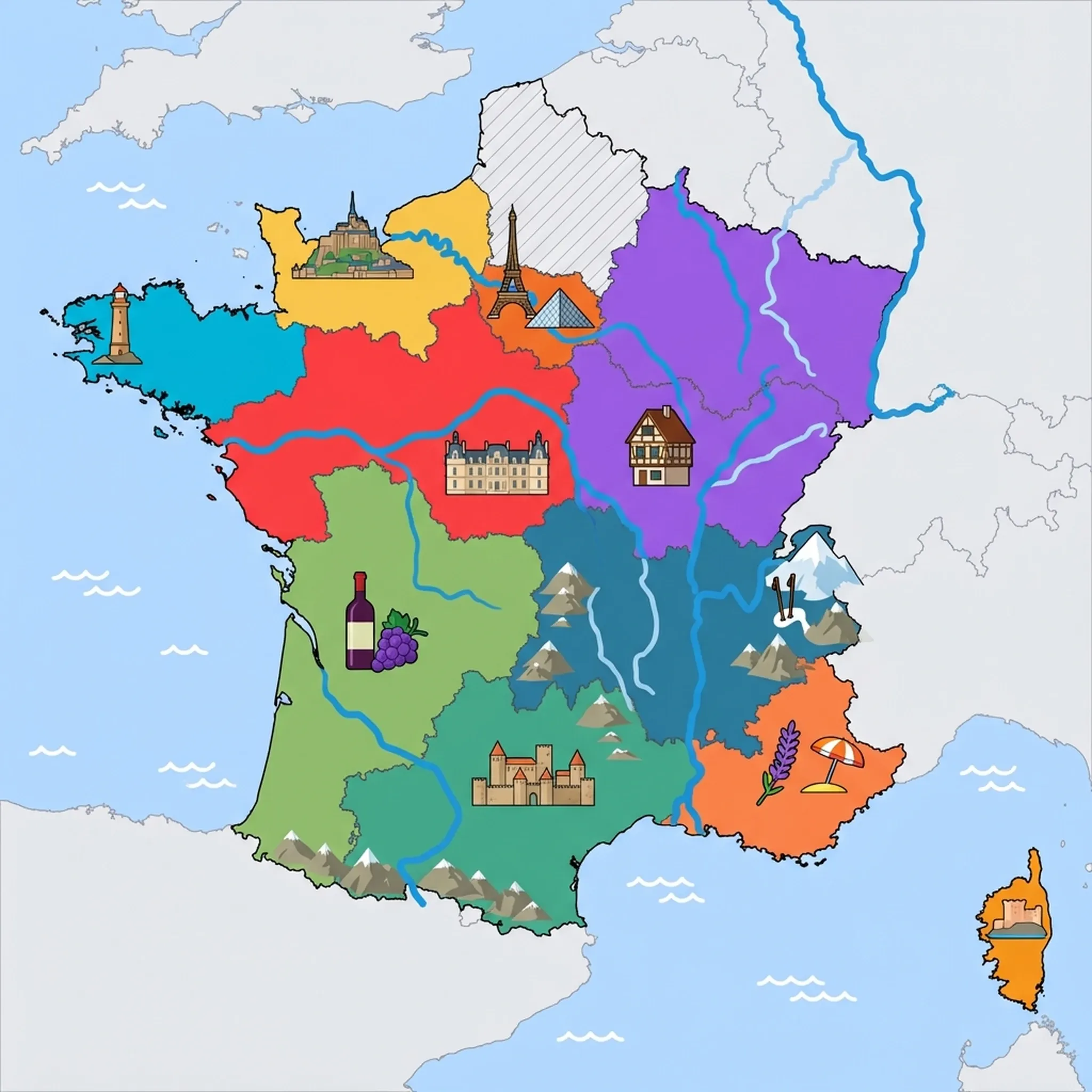
Click a region to explore
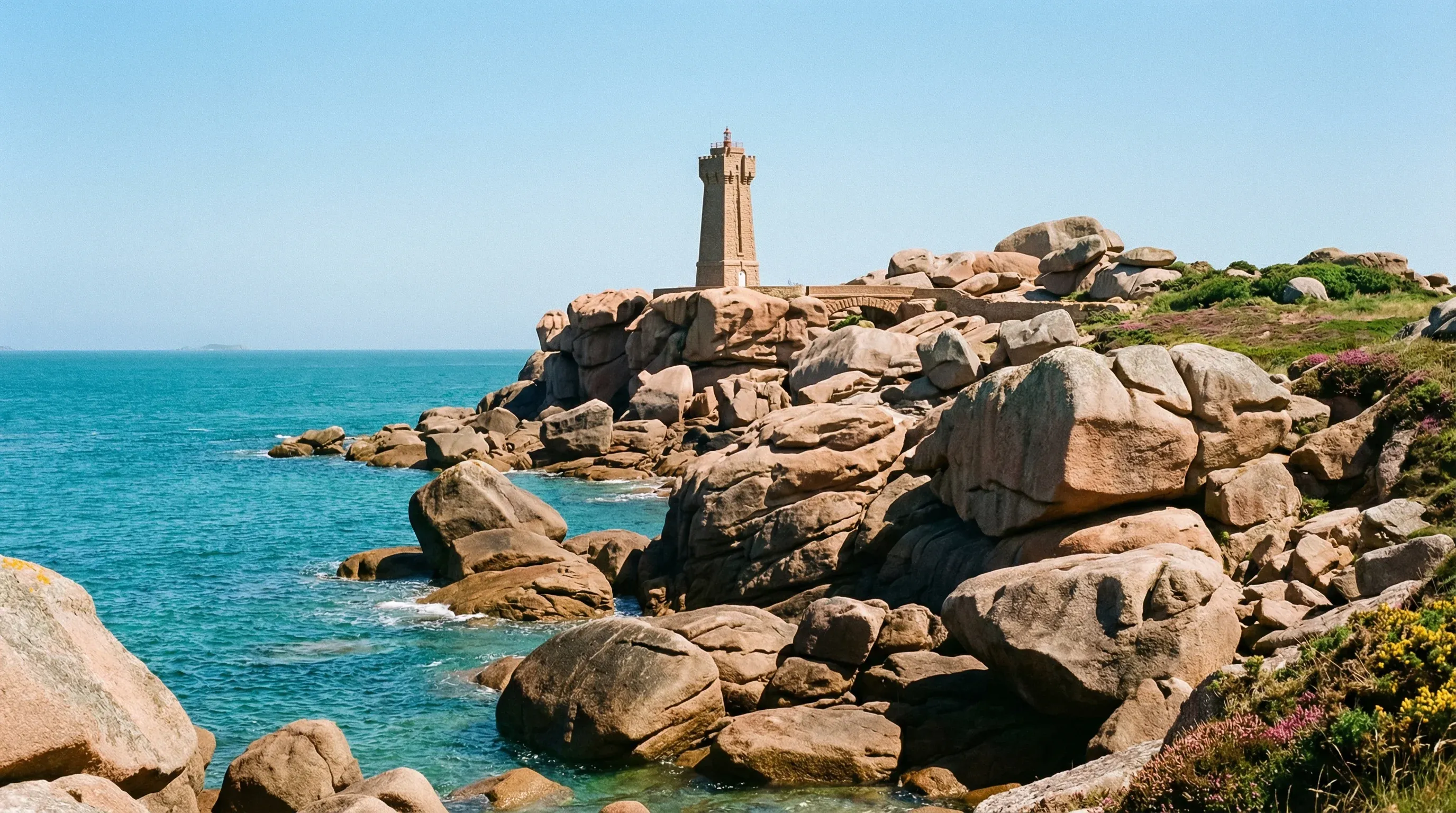
Brittany (Bretagne) occupies the northwestern peninsula of France, thrusting out into the Atlantic Ocean. It is a region defined by the sea, with a rugged, indented coastline that stretches for hundreds of miles, featuring pink granite boulders, emerald waters, and dramatic cliffs. For families, Brittany offers a breath of fresh air—literally. The air is crisp and iodized, the pace of life is slower, and the landscape is lush and green. Culturally, it is distinct from the rest of France, retaining a strong Celtic heritage visible in its music, festivals, and legends of King Arthur and Merlin, particularly in the Brocéliande Forest.
This is arguably the most family-friendly region in France for younger children. The beaches are numerous and clean, often with "clubs de plage" (beach clubs) that offer supervised activities. The climate is mild; while it has a reputation for rain, the weather changes quickly, often cycling through sun and clouds several times a day. It rarely gets uncomfortably hot, which is a massive advantage over the sweltering south during July and August. The region is also dotted with lighthouses, fortified towns, and megalithic sites that spark curiosity without overwhelming little legs.
Key Attractions
The walled city of Saint-Malo is iconic; children can walk the ramparts pretending to be corsairs (pirates) before visiting the Grand Aquarium de Saint-Malo, one of the best in France, featuring a submarine ride. Further west, the Carnac Stones offer a real-life Asterix and Obelix experience with thousands of ancient standing stones arranged in mysterious lines. For a quintessential castle experience, Fort La Latte is a spectacular clifftop fortress that looks exactly how a knight's castle should.
Nature lovers should head to the Gulf of Morbihan, an inland sea dotted with islands that can be explored by boat. If you are near Brest, Océanopolis is another massive ocean discovery center that combines science with fun seal exhibits. For a day of pure play, La Récré des 3 Curés is a charming, manageable theme park perfect for under-12s.
Practical Advice
Pack for all seasons, even in summer. A sunny morning can turn into a breezy afternoon. The best time to visit is June to September. August is busy with French holidaymakers, but the region absorbs crowds well due to its size.
Food & Drink
Typical meal times: Lunch 12:00 pm to 2:00 pm. Crêperies serve all day (service continu) more often than standard bistros.
Typical meal costs: Very affordable. A crêperie meal for a family costs €50–80 (approx. $55–85 USD / £40–70 GBP).
Dietary requirements: Excellent for gluten-free travelers. Traditional savory galettes are made with 100% buckwheat flour (sarrasin) and are naturally gluten-free (always ask to confirm).
Signature dishes:
- Galettes – Savory buckwheat pancakes filled with cheese, ham, and egg (a 'complète') or other ingredients.
- Kouign-amann – A dense, caramelized cake made of bread dough, butter, and sugar. Incredibly rich and delicious.
- Far Breton – A dense custard flan with prunes, a staple family dessert.
Why this score?
The region offers significant outdoor appeal with the rugged GR34 coastal path and extensive sailing opportunities. However, the terrain is rarely remote, and the abundance of family-oriented campsites and hotels keeps the adventure level moderate.
Why this score?
Major cities like Rennes and Brest host large, modern medical facilities with high standards of care. English-speaking staff are common in the larger hospitals and the coastal areas that cater heavily to foreign retirees and sailors.
Why this score?
Brittany is a well-known region with a strong flow of international visitors, particularly from neighboring European countries like the UK and Germany. Iconic sites like Saint-Malo and the Carnac stones maintain a steady global profile, though it remains slightly more domestic than the Riviera.

Brittany is generally cheaper than the south of France. Accommodation is reasonably priced, especially campsites and gîtes. A mid-range family room is €90–140 (approx. $98–150 USD / £75–120 GBP). Dining at crêperies keeps food costs low, with galettes costing €8–12 (approx. $9–13 USD / £7–10 GBP).
Family Travel Notice
Minors traveling alone or with only one parent may need specific written authorization and documentation to exit or enter the country, according to local regulations.

Getting Here & Around
Getting Here
- Ferry – Direct ferries from the UK (Portsmouth, Plymouth) to Saint-Malo and Roscoff.
- Train – High-speed TGV connects Paris to Rennes in 1.5 hours and Saint-Malo in 2.5 hours.
- Airports – Rennes (RNS), Brest (BES), and Nantes (NTE) (historically Brittany) serve the region.
Getting Around
- Car – The best way to explore the jagged coastline. Note: Expressways in Brittany are toll-free!
- Walking – The GR34 Sentier des Douaniers (Customs Officer's Path) follows the entire coastline.
- Ferry – Island hopping to Ouessant or Belle-Île is a fun day trip mode.
Nearby Airports (3 airports)
Guipavas
BESBrest
Lann Bihoue
LRTLorient
St Jacques
RNSRennes
View full flight map for France →
Official Links

Packing List
Coastal winds can be chilly even on sunny July days.
Great for spotting seabirds and seals off the granite coast.
Essential for exploring the rich tidal pools at low tide.
Wide, windy beaches make this one of the best places in Europe for kites.
Loose swim shorts are banned in most public pools for hygiene; men/boys must wear tight trunks.
Rarely provided in French hotels; pack your own if you are used to washing with them.
Supermarkets do not provide free bags and often charge for sturdy ones; keep a tote handy.
Strictly required to prove age for free/discounted entry at museums and on transport.

Activities & Best Times

Hiking, wildlife, outdoor exploration, ecotourism
Offers exceptional coastal immersion via the GR34 trail and unique geological sites like Pointe du Raz. Peak visitation aligns with stable weather for exploring rugged peninsulas and rural heritage sites.

Urban tourism, museums, historical sites, architecture
A region rich in distinct Celtic identity, medieval walled cities, and high-quality fine arts museums in Rennes and Quimper. December is a peak period for its atmospheric traditional markets and festive heritage.

Learning experiences, scientific sites, historical education
Océanopolis and the Grand Aquarium de Saint-Malo provide internationally significant marine science experiences. These facilities are primary motivators for families, with peak demand during national school holiday periods.

Sport tourism, fitness activities, active recreation
The region excels in cycling infrastructure, particularly the EuroVelo 1 and 4 routes, along with extensive adventure parks. Optimal conditions occur during the drier months when terrain is safest for active pursuit.

Beach resorts, marine activities: diving, snorkelling, kite surfing, wind surfing, sailing
Features dramatic Atlantic coastlines like the Pink Granite Coast and the beaches of Saint-Malo. While aesthetically world-class, the swimming season is brief due to cool water temperatures and maritime weather.

Events, celebrations, seasonal attractions
Lorient Interceltique Festival is a major international Celtic culture event drawing global visitors. The Great Tides of Saint-Malo are a unique natural spectacle attracting significant tourism. Rating should reflect international significance of these events.

Scenic drives, countryside tours, route-based travel
Celebrated coastal routes such as the Route des Phares offer stunning maritime vistas and authentic rural stops. Best driven in late spring and summer when visibility is high and lighthouses are most accessible.

Amusement parks, family entertainment venues
Home to solid regional amusement and water parks like La Récré des 3 Curés that serve family travelers well. Operational seasons are strictly limited to the warmer months and school holiday windows.

Attractions (30 total)



Public Holidays & Calendar Next 12 months
Public holidays, festivals, cultural celebrations, and seasonal natural phenomena coming up in Brittany over the next 12 months.
Loading holidays and events...

Travel Advisory
The majority of international agencies advise travelers to exercise increased caution. This assessment is primarily driven by a persistent and high threat of terrorism, as well as frequent civil unrest and strikes that can impact travel logistics.
Safety Topics
Traveller Advice (3 groups)

Minors traveling alone or with only one parent may need specific written authorization and documentation to exit or enter the country, according to local regulations.

Exercise caution when walking alone after dark and be vigilant in nightlife venues. There have been reports of drink spiking and the use of sedative drugs in bars and clubs.

Ensure you carry valid photo identification at all times, as this is a legal requirement. Monitor local media for updates on strikes or protests that may affect public transportation or access to major sites.
Agency Summaries
Safety concerns are more significant than typically found in New Zealand. Key risks include the highest level of terrorism alerts, frequent civil unrest, and common petty theft in tourist areas.
Travelers should maintain a high level of vigilance due to a consistent threat of terrorist activity. The national security alert system is currently at an elevated level. Petty crime and residential break-ins are also reported frequently.
Visitors should be aware that terrorist attacks are considered very likely. Significant travel disruption may arise from frequent industrial actions and protests across the country.
Increased awareness is recommended because of potential terrorism and civil disturbances. Public demonstrations and industrial strikes occur regularly and can disrupt transportation services.
Vigilance is advised regarding personal security and potential terror threats. Travelers must carry valid photographic identification at all times and follow instructions from local law enforcement.
Exercise heightened caution due to the risk of terrorism. Be mindful of serious street crimes, including violent theft and assault, especially in major urban centers during peak travel seasons.
Information is provided for general guidance only and does not constitute travel, safety, medical, or legal advice. Conditions may change. Users are responsible for independently verifying information before travel.