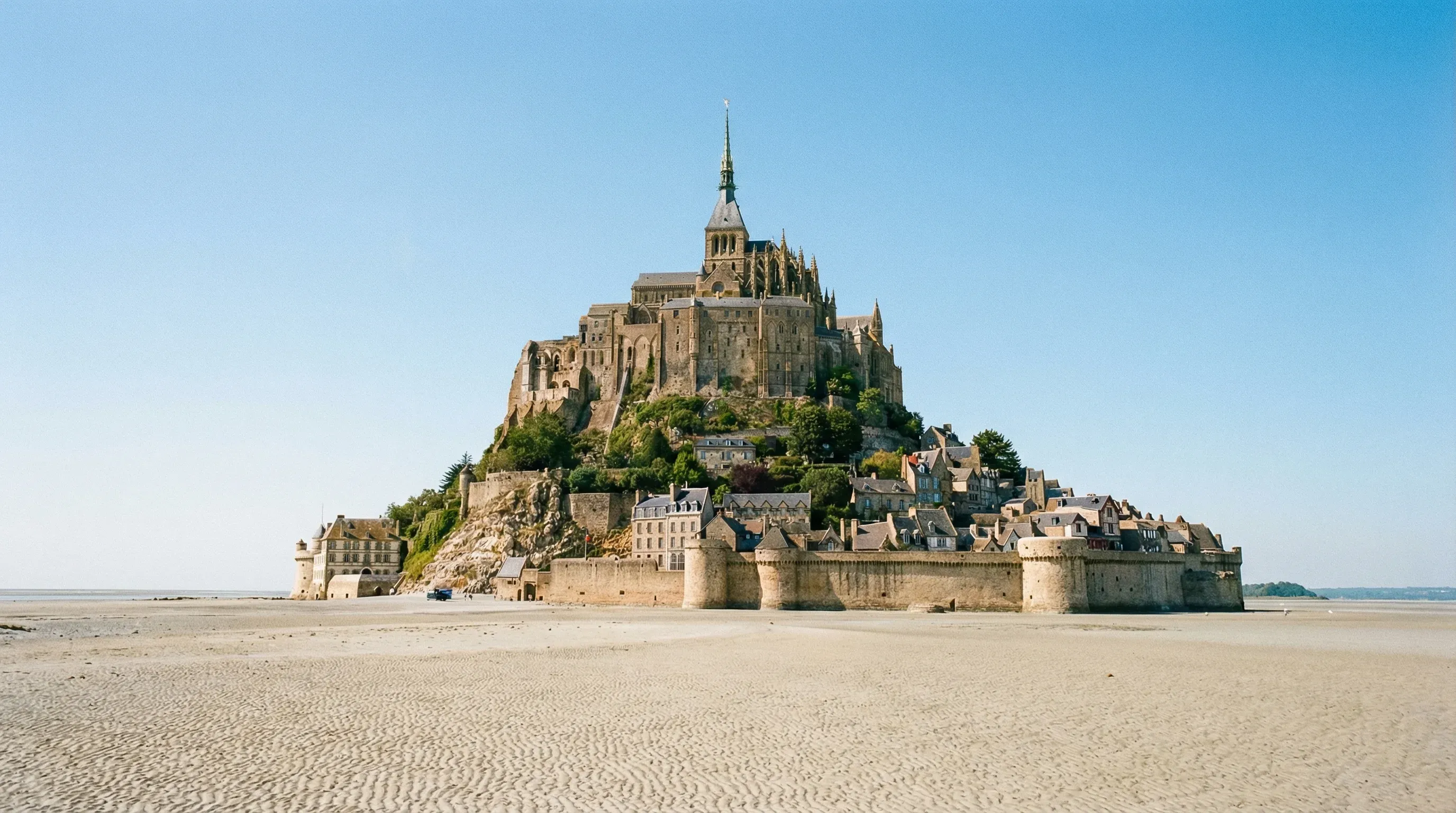

Normandy
D-Day beaches, medieval abbeys, and creamy camembert 🐮⚔️
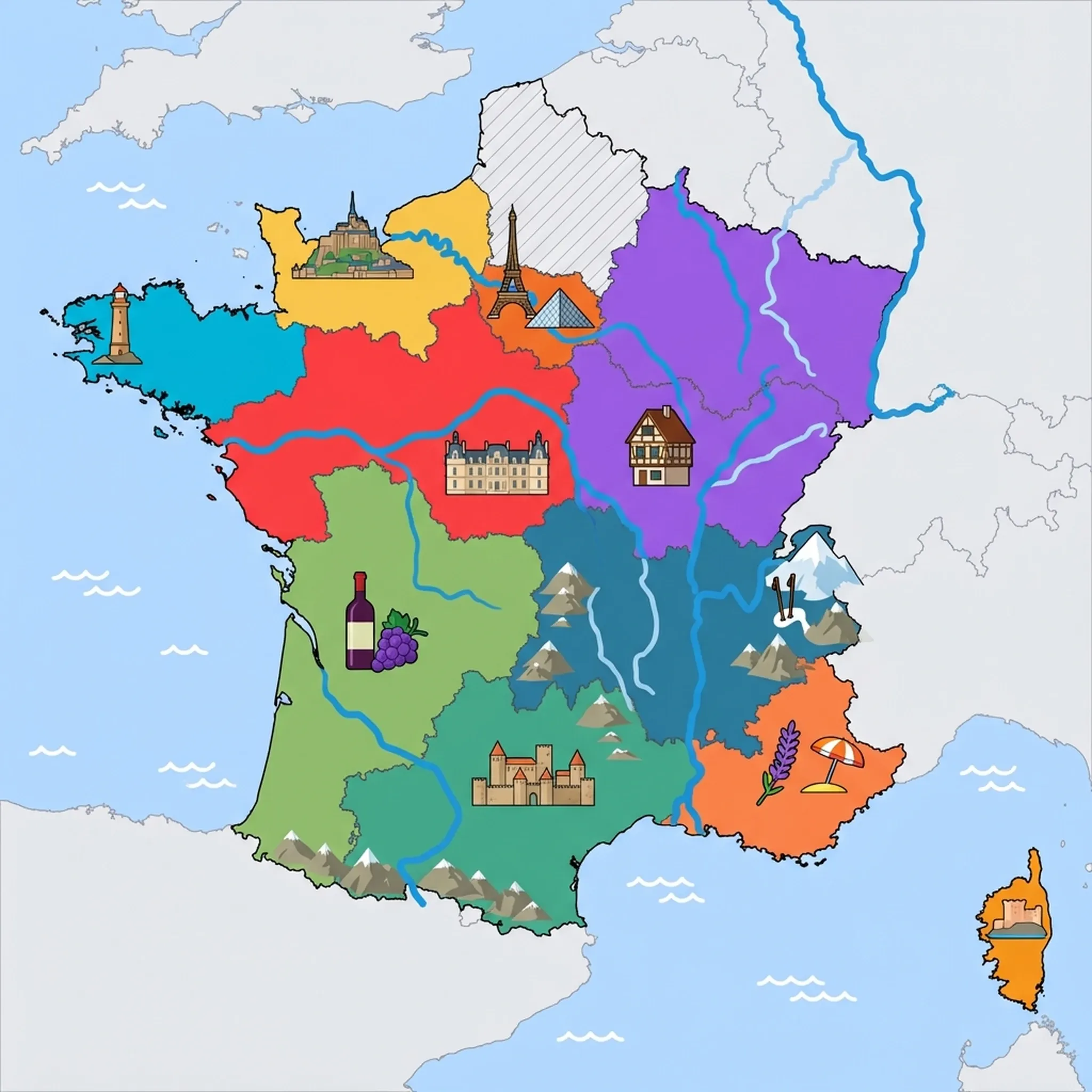
Click a region to explore
Normandy is a region of immense historical weight and simple pastoral pleasures. Located on the English Channel, just a short hop from Paris or the UK, it is famous for its emerald-green countryside, apple orchards, and dairy cows. For families, Normandy serves as a fantastic open-air classroom. The D-Day landing beaches offer a sobering but essential history lesson that is handled with great sensitivity at various museums, making it accessible even for younger generations. Beyond the war history, the region traces its roots to the Vikings and William the Conqueror.
Geographically, it features dramatic chalk cliffs in the east and long, flat sandy beaches in the west. The weather is changeable—lush green grass requires rain—but the coastline is bracing and beautiful. It is less crowded than the south, and the people are known for their reserved but genuine welcome. It’s an easy road-trip destination where you can drive from a medieval tapestry in Bayeux to a working farm making cider and cheese in the same afternoon.
Key Attractions
The crown jewel is Mont Saint-Michel, an abbey perched on a rocky island that gets cut off by the highest tides in Europe. Walking up its narrow, winding streets feels like entering a fantasy novel. For a deep dive into the ocean, La Cité de la Mer in Cherbourg is exceptional; it houses a retired nuclear submarine that families can board. Nature lovers will be awed by the Cliffs of Étretat, giant natural arches carved by the sea.
For history, the Alabaster Coast Route (Côte d'Albâtre) offers stunning drives, while the Cathédrale Notre-Dame de Rouen (painted by Monet) dominates the skyline of the region's capital. Kids needing a break from history will love Festyland, a history-themed amusement park near Caen with rides suitable for younger children.
Practical Advice
Visit Mont Saint-Michel in the evening or very early morning to avoid the crush of day-trippers. Rain gear is essential year-round. D-Day museums can be emotional; preview them to ensure they are age-appropriate.
Food & Drink
Typical meal times: Lunch 12:00 pm - 2:00 pm. Dinner 7:00 pm - 9:00 pm.
Typical meal costs: Moderate. Family meal €70–110 (approx. $75–120 USD / £60–95 GBP).
Dietary requirements: Cream and butter are everywhere. Seafood is abundant. Vegetarians will find cheese-based dishes.
Signature dishes:
- Moules à la Normande – Mussels cooked with cider, cream, and shallots.
- Teurgoule – A slow-cooked rice pudding flavored with cinnamon, a comfort food classic.
- Camembert – The world-famous soft cheese; try it baked (rôti) with bread.
Why this score?
Adventure is primarily found along the dramatic Alabaster Coast cliffs and the tidal flats of Mont Saint-Michel. However, the region's tourism is largely focused on cultural and historical sites with paved access and high-density infrastructure.
Why this score?
Normandy features a robust healthcare network centered on the university hospitals of Rouen and Caen. These facilities are accustomed to handling the needs of the millions of foreign tourists who visit the coastal sites each year.
Why this score?
The combination of Mont Saint-Michel, a global 'bucket list' site, and the historic D-Day landing beaches ensures a constant flow of international visitors. It is a primary destination for American, British, and Canadian travelers seeking military history.

Normandy is great value compared to Paris. Accommodation is plentiful, from farm stays (gîtes) to seaside hotels. Expect to pay €90–140 (approx. $98–150 USD / £75–120 GBP) for a family room. Cider and cheese bought farm-direct are very cheap.
Family Travel Notice
Minors traveling alone or with only one parent may need specific written authorization and documentation to exit or enter the country, according to local regulations.

Getting Here & Around
Getting Here
- Ferry – Direct links from UK (Portsmouth, Poole) to Caen, Cherbourg, and Le Havre.
- Train – Paris St-Lazare to Rouen/Caen takes 1.5 to 2 hours.
- Driving – Easy access from Paris via A13 (approx. 2 hours).
Getting Around
- Car – The only practical way to see the D-Day beaches and rural villages.
- Cycling – The La Vélomaritime (EuroVelo 4) offers great coastal riding.
- Train – connects major cities, but doesn't reach the coastal battlefields well.
Nearby Airports (2 airports)
Carpiquet
CFRCaen
St Gatien
DOLDeauville
View full flight map for France →
Official Links

Packing List
Rain can come sideways on the coast; jeans take too long to dry.
Essential for visiting outdoor sites like the D-Day cemeteries.
The vast, windy beaches of the landing sites are perfect for flying kites.
Muddy farm visits and beach walks are better with dry feet.
Loose swim shorts are banned in most public pools for hygiene; men/boys must wear tight trunks.
Rarely provided in French hotels; pack your own if you are used to washing with them.
Supermarkets do not provide free bags and often charge for sturdy ones; keep a tote handy.
Strictly required to prove age for free/discounted entry at museums and on transport.

Activities & Best Times

Hiking, wildlife, outdoor exploration, ecotourism
Home to the unique ecosystem of Mont Saint-Michel Bay and the spectacular Alabaster Coast, the region provides world-class natural landscapes for exploration. Peak visitation occurs during late spring and summer when trails are dry and wildlife centers like Cerza Safari Park are most active.

Urban tourism, museums, historical sites, architecture
Normandy is a cultural powerhouse featuring the UNESCO-listed Mont Saint-Michel, Monet's gardens at Giverny, and profound WWII heritage sites. While summer offers peak accessibility, December is a notable shoulder month for traditional Christmas markets in historic cities like Rouen.

Learning experiences, scientific sites, historical education
The region features internationally significant educational facilities, most notably La Cité de la Mer and the comprehensive WWII museum complexes. These sites offer deep historical and scientific engagement that is best experienced during the main tourism season when all exhibits and guided tours are available.

Sport tourism, fitness activities, active recreation
Boasts significant infrastructure for active tourism, including the Véloscénie cycling route and the GR 21 hiking trail along the Alabaster Coast. The active season is concentrated in the sunnier months to ensure safe conditions for coastal hiking and long-distance cycling.

Beach resorts, marine activities: diving, snorkelling, kite surfing, wind surfing, sailing
Normandy offers iconic coastal scenery like the Étretat cliffs and historic D-Day beaches, though the English Channel waters remain brisk even in summer. High season is limited to the warmest summer months when water activities and coastal resorts are fully operational.

Events, celebrations, seasonal attractions
D-Day Festival (June) is an internationally significant commemoration drawing global visitors. Deauville American Film Festival has international recognition. These are destination-level events.

Scenic drives, countryside tours, route-based travel
Established routes like the Cider Route and the D-Day Landing Beaches provide exceptional thematic driving experiences through authentic rural landscapes. Optimal conditions occur from late spring through early autumn, ensuring clear visibility of the coastal cliffs and blooming countryside.
Amusement parks, family entertainment venues
Regional parks like Festyland and high-quality aquatic centers like Les Bains des Docks provide solid family entertainment. Operation is strictly seasonal for outdoor parks, with peak crowds and full service coinciding with French summer school holidays.

Spa retreats, wellness centers, peaceful getaways
Bagnoles-de-l'Orne serves as a historic thermal spa destination, though the region lacks the density of wellness facilities found in global benchmarks. The season is primarily driven by the warmer months when the surrounding forest environment enhances the restorative experience.

Attractions (29 total)



Public Holidays & Calendar Next 12 months
Public holidays, festivals, cultural celebrations, and seasonal natural phenomena coming up in Normandy over the next 12 months.
Loading holidays and events...

Travel Advisory
The majority of international agencies advise travelers to exercise increased caution. This assessment is primarily driven by a persistent and high threat of terrorism, as well as frequent civil unrest and strikes that can impact travel logistics.
Safety Topics
Traveller Advice (3 groups)

Minors traveling alone or with only one parent may need specific written authorization and documentation to exit or enter the country, according to local regulations.

Exercise caution when walking alone after dark and be vigilant in nightlife venues. There have been reports of drink spiking and the use of sedative drugs in bars and clubs.

Ensure you carry valid photo identification at all times, as this is a legal requirement. Monitor local media for updates on strikes or protests that may affect public transportation or access to major sites.
Agency Summaries
Safety concerns are more significant than typically found in New Zealand. Key risks include the highest level of terrorism alerts, frequent civil unrest, and common petty theft in tourist areas.
Travelers should maintain a high level of vigilance due to a consistent threat of terrorist activity. The national security alert system is currently at an elevated level. Petty crime and residential break-ins are also reported frequently.
Visitors should be aware that terrorist attacks are considered very likely. Significant travel disruption may arise from frequent industrial actions and protests across the country.
Increased awareness is recommended because of potential terrorism and civil disturbances. Public demonstrations and industrial strikes occur regularly and can disrupt transportation services.
Vigilance is advised regarding personal security and potential terror threats. Travelers must carry valid photographic identification at all times and follow instructions from local law enforcement.
Exercise heightened caution due to the risk of terrorism. Be mindful of serious street crimes, including violent theft and assault, especially in major urban centers during peak travel seasons.
Information is provided for general guidance only and does not constitute travel, safety, medical, or legal advice. Conditions may change. Users are responsible for independently verifying information before travel.