
Cayenne
A colorful collision of Parisian style and Amazonian spirit 🐆
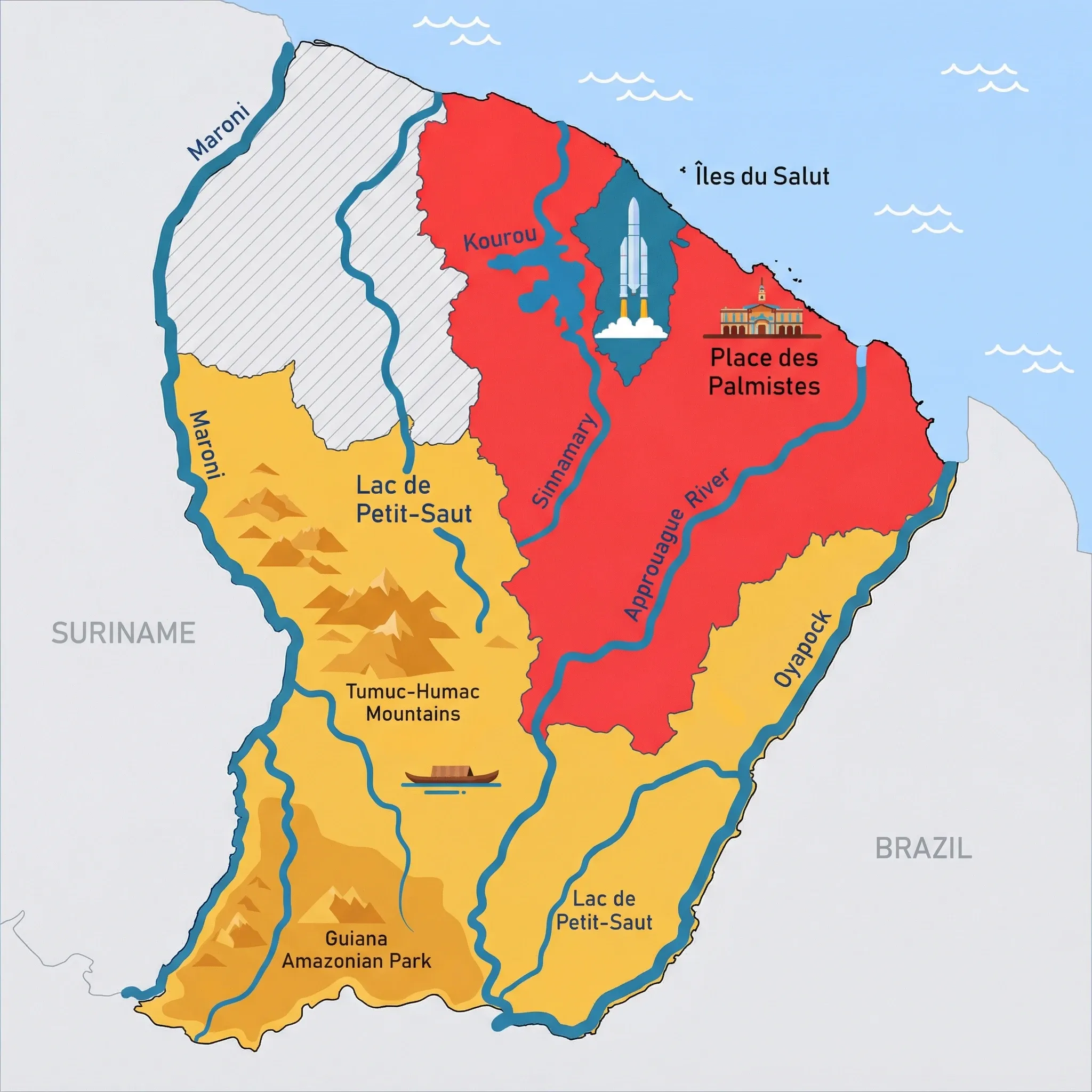
Click a region to explore
Overview
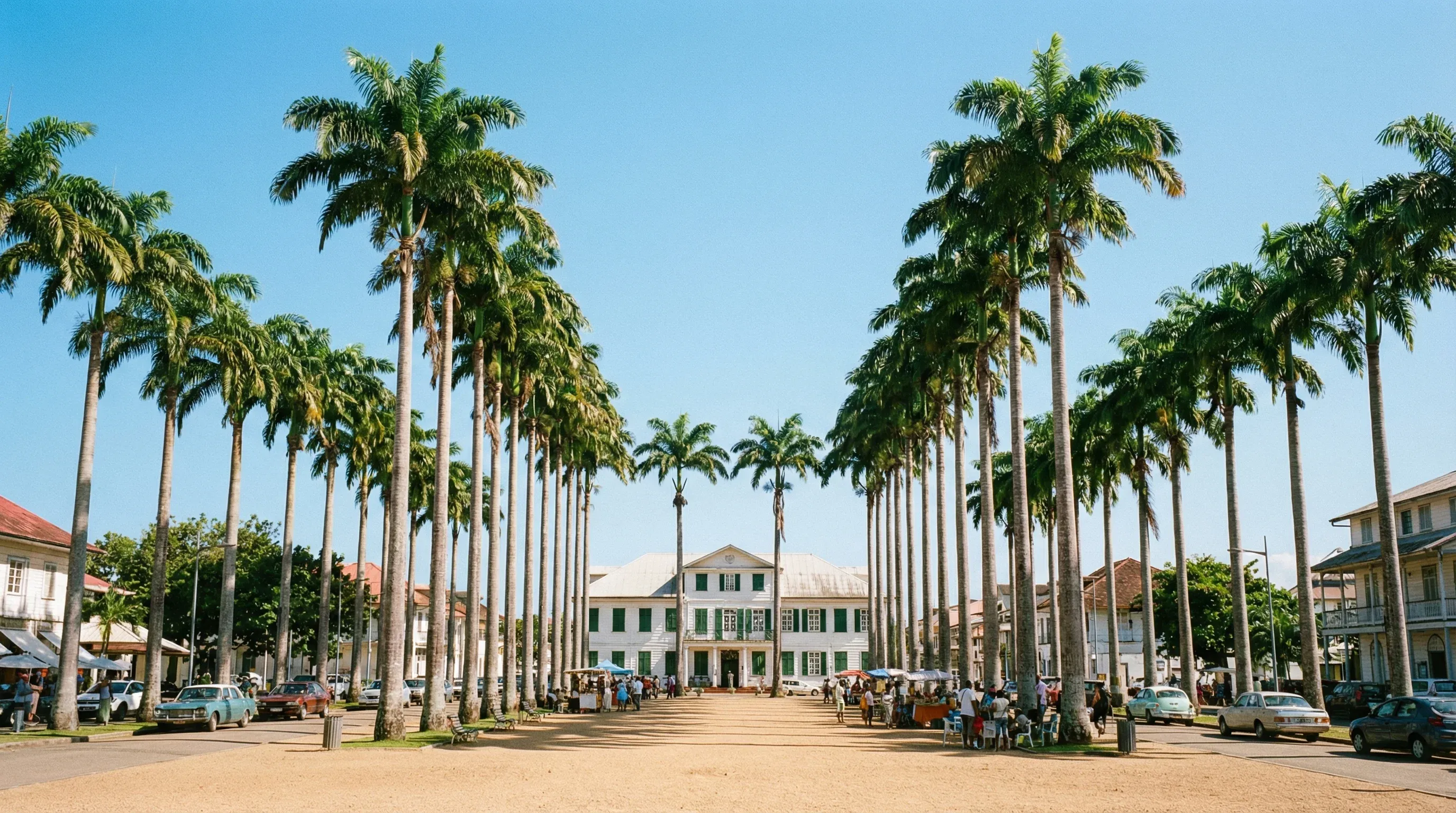
Cayenne is a fascinating cultural melting pot where French infrastructure meets the humid, verdant energy of the Amazon. Unlike the dense rainforest of the interior, the capital offers families a relatively accessible introduction to Guyanese life, with paved streets, French pharmacies, and reliable Wi-Fi, yet the jungle is never far away. The city centers around the majestic Place des Palmistes, a palm-lined square that comes alive in the evenings with food trucks and playing children. For families, the appeal lies in the unique atmosphere—it feels like a slice of Europe transported to the tropics, where you can buy fresh croissants in the morning and exotic jungle fruits in the afternoon.
The vibe is laid-back but vibrant, heavily influenced by Creole traditions. While the heat can be intense, the coastal location provides a refreshing Atlantic breeze, especially in the neighboring suburb of Remire-Montjoly, where families flock to the beaches on weekends. It is an excellent base for acclimatizing to the region before venturing deeper inland. Visitors should be aware that while generally safe during the day, some areas of the city center can be sketchy after dark; it is advisable to stick to main squares and tourist areas or take taxis at night.
Key Attractions
For a dose of education that doesn't feel like school, the Musée Départemental Alexandre-Franconie is a must-visit. It is an old-school cabinet of curiosities packed with stuffed caimans, colorful butterflies, and historical artifacts that fascinate children with the sheer diversity of the region's nature. It’s manageable in size and centrally located near the main market.
When the kids need to burn off energy, the Jardin Botanique de Cayenne offers a lush, green escape within the city limits. It is the largest green space in the capital, perfect for a shaded picnic or a game of hide-and-seek among massive tropical trees. Nearby, the ruins of Fort Cépérou offer a short climb with panoramic views over the colorful corrugated rooftops of the city—a great spot for a family photo.
Practical Advice
The best time to visit is during the dry season (August to November) to avoid the heaviest rains. Shops often close for a long lunch break between 1:00 pm and 4:00 pm, so plan your day accordingly. Sundays are very quiet in the city center with most businesses closed.
Food & Drink
Typical meal times: Lunch is strictly observed from 12:00 pm to 2:30 pm. Dinner usually starts around 7:30 pm, with food trucks (roulottes) serving later into the night.
Typical meal costs: Sit-down meals are priced similarly to mainland France. Expect to pay €70–110 (approx. $75–120 USD / £60–95 GBP) for a family meal. Street food is cheaper, around €15–25 (approx. $16–27 USD / £13–21 GBP) for four people.
Dietary requirements: Vegetarian options are available but not abundant; side dishes of lentils, beans, and gratin are common. Gluten-free travelers should be aware that bread and fried items are staples.
Signature dishes:
- Bouillon d’awara – A thick, slow-cooked stew made from the pulp of the awara palm fruit, traditionally eaten at Easter but available year-round in some spots.
- Colombo – A curry-like stew of chicken or pork, spiced with a specific blend of seeds and turmeric, reflecting the region's diverse heritage.
- Marinades – Small, deep-fried dough fritters (often cod or shrimp based) sold cheaply at markets and food trucks; a favorite snack for kids.
Why this score?
While located on the edge of the Amazon, Cayenne is a developed urban area with paved roads and standard city amenities. Adventure is limited to easy coastal walks at Remire-Montjoly and seasonal turtle watching, which are accessible to most families without specialized gear or guides. It serves more as a comfortable base for expeditions rather than an adventurous destination itself.
Why this score?
Cayenne hosts the Centre Hospitalier de Cayenne, which operates under French medical standards and is the most advanced facility in the region. While it offers reliable emergency care and specialized services compared to neighboring South American territories, it can face staffing shortages and is not a global medical hub. For families, it provides the most secure medical environment in the country with standard European pharmaceutical access.
Why this score?
As the capital and main entry point, Cayenne receives the majority of French Guiana's 86,000 annual visitors, most of whom are French nationals on business or visiting family. While the Central Market and Place des Palmistes are local highlights, it remains a very niche destination on the global stage with limited traditional tourism infrastructure. The region lacks the high-volume international pull required for a higher score, functioning primarily as a functional administrative hub.

French Guiana operates on the Euro and imports many goods from France, making it expensive relative to South American neighbors. A mid-range hotel in Cayenne costs €100–160 (approx. $110–175 USD / £85–135 GBP) per night. Supermarket prices are 20–30% higher than in mainland France. Dining out is comparable to Paris prices, though local food trucks offer good value meals for €6–10 (approx. $6.50–11 USD / £5–8.50 GBP).
Family Travel Notice
Parents traveling with minors should be aware of specific legal protocols regarding child custody and may need to consult legal counsel for property or residency-related stays.

Getting Here & Around
Getting Here
- Airports – Cayenne-Félix Eboué Airport (CAY) is the main international gateway, located about 13 km (20 mins) from the city center. Flights arrive daily from Paris (Orly) and regional Caribbean hubs.
- Driving – The airport is connected to the city via the RN1/RN2 roads. Taxis are available but expensive; renting a car is highly recommended for families.
Getting Around
- Car – Renting a car is essential for families to move between Cayenne, the beaches of Remire-Montjoly, and attractions like the Jardin Botanique de Cayenne comfortably.
- Taxis – Available but meters are rarely used; negotiate the price before getting in. There is no reliable Uber-style service.
- Walking – The historic city center is walkable, but the heat makes walking long distances difficult for young children.
Nearby Airports (1 airport)
Rochambeau
CAYCayenne
View full flight map for French Guiana →
Official Links

Packing List
Essential for charging devices; many visitors from the Americas forget the voltage/plug difference.
Tropical downpours in Cayenne are sudden and heavy; umbrellas are often useless in the wind.
City centers can be noisy at night with scooters and street music; helpful for light sleepers.
Sun is extremely strong near the equator, even on cloudy days in the city.
Absolutely mandatory for entry. You will be denied boarding or entry without the original physical booklet.
Essential for keeping cameras and spare clothes dry during pirogue (canoe) trips and sudden tropical downpours.
Useful for night walks to spot caimans or turtles, and for navigating eco-lodges or carbets which often have limited electricity.
Amazonian rain is intense and soaks through standard light jackets instantly; a full poncho covers your backpack too.
Humidity is very high, so regular cotton towels never dry. Quick-dry antibacterial towels are essential.

Activities & Best Times

Hiking, wildlife, outdoor exploration, ecotourism
Cayenne offers immediate access to primary jungle via trails like Vidal and the Grand Matoury reserve, providing authentic wildlife encounters for families. The dry season from August to November is essential for trail accessibility and optimal wildlife spotting.

Urban tourism, museums, historical sites, architecture
A unique blend of French administration and Amazonian Creole culture, centered on the historic Place des Palmistes and Fort Cépérou. Peak times include the vibrant Carnival season and the driest months for comfortable exploration of the city's markets and botanical gardens.

Learning experiences, scientific sites, historical education
As the capital with the Musée Alexandre-Franconie and proximity to the Space Centre, this should be rated 'good' not 'marginal'. The museum provides deep historical insight into the complex colonial and penal history, and the capital offers educational infrastructure.

Events, celebrations, seasonal attractions
Hosting the 'world's longest Carnival' (January-February) is a significant draw. While not Rio-scale, a multi-month Carnival celebration combined with critical sea turtle nesting seasons warrants 'good' not 'marginal'.

Scenic drives, countryside tours, route-based travel
Scenic drives like the Route des Plages offer beautiful coastal views and access to the peninsula's diverse environments. The dry season ensures safe, clear driving conditions and the best visibility for the Atlantic vistas.

Sport tourism, fitness activities, active recreation
Robust coastal and jungle trail networks provide excellent opportunities for family hiking and trail running in tropical environments. The heavy rainfall between April and June can make trails hazardous and uncomfortably humid for active sports.

Beach resorts, marine activities: diving, snorkelling, kite surfing, wind surfing, sailing
Beaches like Remire-Montjoly offer Atlantic recreation, though waters are often silty due to river runoff; peak months provide the driest conditions for coastal visits. High rainfall and seasonal sediment from the Amazon make the water quality less consistent than Caribbean benchmarks.




Public Holidays & Calendar Next 12 months
Public holidays, festivals, cultural celebrations, and seasonal natural phenomena coming up in Cayenne over the next 12 months.
Loading holidays and events...

Travel Advisory
All six major agencies agree that French Guiana is a low-risk destination where standard safety precautions are sufficient. No significant security threats or travel restrictions are currently reported.
Safety Topics
Traveller Advice (5 groups)

Parents traveling with minors should be aware of specific legal protocols regarding child custody and may need to consult legal counsel for property or residency-related stays.

Travelers requiring specific accessibility infrastructure should research facilities in advance, as conditions in the territory may differ from mainland France.

Solo female travelers should be cautious after dark and are advised against walking alone in isolated or poorly lit areas to minimize the risk of harassment or petty crime.

Those exploring the Amazon interior or engaging in diving should use well-established tour operators and verify safety equipment, such as oxygen availability and access to hyperbaric chambers.

While French laws apply, travelers should review general safety guidance for sexual and gender minorities before visiting.
Agency Summaries
New Zealand does not maintain a specific warning for French Guiana but emphasizes the necessity of comprehensive travel and medical insurance, including provisions for emergency air evacuation.
The UK provides standard safety guidance for French Guiana, noting low overall crime but highlighting specific robbery risks in parts of Cayenne after dark. Driving follows French laws, and medical preparations are essential.
The U.S. Department of State classifies French Guiana at the lowest risk level. Travelers are encouraged to maintain standard safety awareness, particularly in urban centers and when exploring remote jungle areas.
As an overseas department of France, French Guiana is part of the EU, and Irish citizens enjoy visa-free entry. Travelers should follow local authority guidance and stay informed via local news.
Australia advises travelers to use standard safety measures. Guidance focuses on administrative requirements and the lack of a resident embassy, with consular services provided via the High Commission in Trinidad and Tobago.
French Guiana is generally considered safe, with risk levels comparable to Canada. Visitors should remain vigilant against petty crime in cities and exercise caution regarding property investments and legal disputes.
Information is provided for general guidance only and does not constitute travel, safety, medical, or legal advice. Conditions may change. Users are responsible for independently verifying information before travel.