
Leeward Islands (Bora Bora, Huahine, Raiatea)
Where legendary lagoons meet ancient legends 🌺🛶
Click a region to explore
Overview
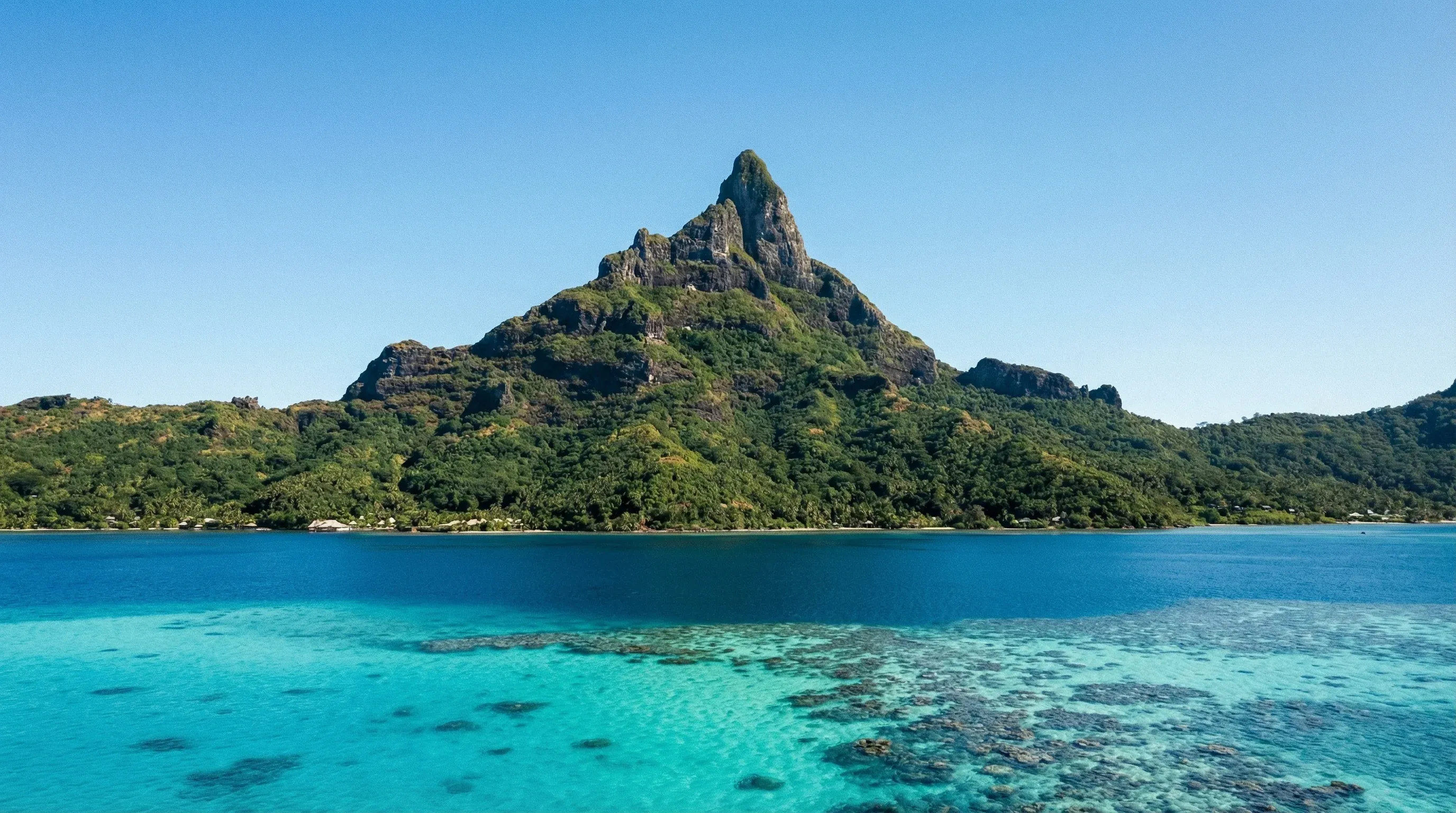
The Leeward Islands (Îles Sous-le-Vent) represent the quintessential Polynesian dream, yet they offer far more than just honeymoon clichés. For families, this archipelago is a massive, warm-water playground where the boundaries between the ocean and the land blur. Geographically, these are "high islands" surrounded by barrier reefs, creating calm, shallow lagoons that are essentially giant, safe swimming pools for children. The vibe here shifts dramatically from island to island. Bora Bora is the glamorous superstar, dazzling with its fifty shades of blue and luxury resorts, but Raiatea and Huahine offer a grounded, authentic, and wilder experience that many families find more relaxing and culturally enriching.
Culturally, this is the spiritual heart of the Polynesian Triangle. Visiting these islands allows children to connect with the stories of the great navigators who set sail from here to colonize Hawaii and New Zealand. The climate is tropical and humid, with the trade winds (Alizés) often providing a cooling breeze. While Bora Bora dazzles with infrastructure, islands like Huahine (the "Garden Island") feel like stepping back in time, where life moves at the speed of a bicycle and locals wave at every passing car. For adventurous families, the proximity of the islands—Taha'a shares a lagoon with Raiatea—allows for easy island-hopping day trips that keep the itinerary varied and exciting.
One of the most compelling reasons for families to visit the Leeward Islands is the marine accessibility. Unlike the open ocean, the lagoons are protected from heavy swells, making snorkeling safe for beginners and younger children. You don't need to be a master diver to see sea turtles, stingrays, and blacktip reef sharks; often, you can see them just by standing in waist-deep water near your hotel beach. The islands also offer a lush interior to explore, with 4x4 safari tours taking you through vanilla plantations on Taha'a or up steep peaks for panoramic views, ensuring that the days are filled with both education and adrenaline.
Key Attractions
The visual anchor of the entire archipelago is the majestic Mount Otemanu in Bora Bora. Rising 727 meters straight out of the lagoon, this extinct volcano is not climbable to the very top due to crumbling rock, but 4x4 tours take families to lower viewpoints that offer jaw-dropping perspectives of the indigo water below. Seeing the mountain framed by palm trees is the defining image of the trip. For a profound cultural experience, you must visit Taputapuatea Marae on the southeast coast of Raiatea. This UNESCO World Heritage site is considered the center of the Polynesian universe. It is a massive open-air temple complex made of stone and coral. Walking through it with a guide brings history to life, explaining how double-hulled canoes gathered here before long voyages. It is an evocative, peaceful place that gives children a sense of the scale of Polynesian history.
Practical Advice
The best time to visit is during the dry season (May to October), when humidity is lower and trade winds keep the air fresh. However, the shoulder months of April and November are excellent for lower prices and fewer crowds. Pack plenty of reef-safe sunscreen, as the sun is incredibly strong. Logistics between islands are best handled via the "Bora Bora Pass" offered by Air Tahiti, which allows you to visit multiple islands for a fixed price. Book inter-island flights well in advance.
Food & Drink
Typical meal times: Breakfast is early (6:30 am to 9:00 am). Lunch is served from 11:30 am to 2:00 pm. Dinner usually runs from 6:30 pm to 9:00 pm, though resort restaurants may stay open later.
Typical meal costs: Prices are high. A casual lunch (burger/salad) costs 2,000–3,500 XPF (approx. $18–32 USD / €17–29 EUR). A main dinner course in a resort is 3,500–6,000 XPF (approx. $32–55 USD / €29–50 EUR). Snack bars (Snacks) are cheaper options.
Dietary requirements: Resorts are very accommodating with allergies and kid-friendly meals (pasta, grilled chicken). Gluten-free options are available in hotels but harder to find in local "Snacks." Fresh fruit is abundant.
Signature dishes:
- Poisson Cru au Lait de Coco – The national dish: raw tuna marinated in lime juice and mixed with fresh coconut milk and vegetables. Mild and creamy, children often love it.
- Mahi Mahi with Vanilla Sauce – Grilled dorado fish served with a savory sauce made from local Taha'a vanilla beans.
- Po'e – A sweet, pudding-like dessert made from taro or bananas, cooked with coconut milk.
Why this score?
Tourism here is centered around high-end luxury resorts and calm, protected lagoons, which prioritize comfort over ruggedness. While hiking Mount Otemanu or exploring the Faaroa River offers some outdoor activity, the infrastructure is heavily manicured for a safe, relaxed family experience.
Why this score?
Bora Bora and Raiatea have localized medical clinics and some private doctors capable of handling minor injuries and stabilized conditions. However, there are no major surgical hospitals in this group, and all serious medical emergencies require an expensive medevac flight to Papeete.
Why this score?
While Bora Bora is a globally iconic brand, the high cost of travel and limited hotel capacity (only ~10,000 beds country-wide) keeps absolute visitor volumes moderate compared to global hubs. The region attracts a consistent flow of high-end international honeymooners and luxury travelers, making it the most famous but second most visited region in the territory.

Bora Bora drives the average up significantly; it is one of the most expensive destinations on earth. Overwater bungalows can range from 80,000–200,000 XPF (approx. $730–1,800 USD / €670–1,675 EUR) per night. Huahine and Raiatea are more moderate, with family pensions (guesthouses) costing 15,000–30,000 XPF (approx. $135–275 USD / €125–250 EUR) per night. Supermarket food is 2-3x mainland prices.
Family Travel Notice
Tahiti and Moorea are often recommended as the most suitable islands for families due to better infrastructure and facilities.

Getting Here & Around
Getting Here
- Airports – The main gateway is Bora Bora Airport (BOB) and Raiatea Airport (RFP). All flights originate from Tahiti (PPT) via Air Tahiti. The flight to Bora Bora offers spectacular views of Mount Otemanu from the left side of the plane.
- Ferry – The Aremiti 5 and other ferries connect Tahiti to Huahine, Raiatea, and Bora Bora several times a week, but the journey is long (several hours) and can be rough for children prone to seasickness.
Getting Around
- Boat Shuttles – In Bora Bora, the airport is on a motu (islet). Resorts provide boat transfers. The free Air Tahiti shuttle takes passengers to Vaitape (main town).
- Car Rental – Recommended on Huahine and Raiatea to explore independently. A car allows you to drive to the Taputapuatea Marae at your own pace.
- Bicycle – Huahine and the coastal roads of Raiatea are relatively flat and quiet, making cycling a popular family option.
Nearby Airports (4 airports)
Bora Bora
BOBBora Bora
Huahine
HUHHuahine
Maupiti
MAUMaupiti
Raiatea
RFPRaiatea
View full flight map for French Polynesia →

Packing List
Essential for protecting feet from sharp coral and stonefish in the lagoons.
The sun is intense; sunscreen washes off. Physical barriers are best for kids snorkeling.
Resorts may not provide them; great for drifting in the shallow lagoon water.
You will spend 80% of your time in or near the water.
Essential for all ages due to sharp coral and stonefish in the lagoons. Flip-flops are not sufficient for water entry.
The sun is far stronger here than in Europe or the US. Sunscreen washes off; UV shirts protect kids during long snorkel sessions.
Boat transfers and dinghy landings are common. Keeps phones and spare clothes dry when splashing across lagoons.
Rental gear often leaks on small faces. Having a well-fitted set ensures your child's first shark/ray encounter is fun, not salty.
Strictly encouraged to protect the reefs. Local options are expensive, so bring a supply of zinc-based or reef-safe cream.

Activities & Best Times

Beach resorts, marine activities: diving, snorkelling, kite surfing, wind surfing, sailing
Bora Bora is globally iconic for its lagoon and beaches. Matira Beach consistently ranks in 'world's best beaches' lists. The Bora Bora Lagoon is internationally synonymous with paradise-quality beach experiences. Rating this as merely 'good' is a severe calibration error - this should be 'excellent'.

Hiking, wildlife, outdoor exploration, ecotourism
With 12 supporting attractions including the Mount Pahia trek and vanilla plantations, the region offers deep immersion in tropical ecosystems. The drier winter months are essential for safe hiking on volcanic terrain and avoiding the heavy rains of the austral summer.

Urban tourism, museums, historical sites, architecture
Features the UNESCO-listed Taputapuatea Marae, a site of immense historical significance for Polynesian heritage. The clear-sky months offer the best conditions for exploring these open-air archaeological sites and traditional Maeva village structures.

Events, celebrations, seasonal attractions
The Hawaiki Nui Va'a outrigger canoe race is described in the notes as 'internationally significant.' This is the world's premier outrigger canoe race, attracting elite teams from across the Pacific. 'Marginal' contradicts the attraction's international status.

Scenic drives, countryside tours, route-based travel
Dedicated circle-island roads on Bora Bora, Huahine, and Raiatea provide scenic driving routes with world-class lagoon views. Driving conditions are most reliable during the dry season, avoiding the heavy downpours and potential road debris of the cyclone season.

Sport tourism, fitness activities, active recreation
Renowned for challenging mountain trails and organized cycling routes around the islands' perimeters. The cooler, drier trade-wind season provides the most comfortable and safe environment for high-exertion activities.




Public Holidays & Calendar Next 12 months
Public holidays, festivals, cultural celebrations, and seasonal natural phenomena coming up in Leeward Islands (Bora Bora, Huahine, Raiatea) over the next 12 months.
Loading holidays and events...

Travel Advisory
All major agencies agree that French Polynesia is a safe destination requiring only standard safety and security awareness. There are no significant nationwide threats.
Safety Topics
Traveller Advice (5 groups)

Review general guidance for sexual and gender minorities to ensure awareness of local cultural attitudes, though French law applies.

Female travellers should follow standard safety protocols and dress conservatively when visiting religious sites or attending church services.

Tahiti and Moorea are often recommended as the most suitable islands for families due to better infrastructure and facilities.

Ensure water sports and diving are conducted with reputable, insured companies. Wear protective reef shoes to avoid injuries from coral or stonefish.

Maintain standard vigilance against petty crime and ensure you have valid travel insurance that covers medical evacuation from remote islands.
Agency Summaries
Travellers should maintain a standard level of safety awareness as they would in Canada. There are no major security concerns, although occasional demonstrations occur and should be avoided.
No specific travel restrictions are in place. Visitors are advised to follow routine safety protocols and be aware of health entry requirements and local legal differences.
French Polynesia is considered a safe destination with low crime rates. Standard safety measures are sufficient for visitors, though awareness of local traffic and environmental hazards is recommended.
The overall security situation is stable. Visitors should stay informed about weather-related risks and follow standard personal safety practices, particularly in crowded areas.
There is no specific travel advisory for French Polynesia, indicating a low risk level. Travellers are encouraged to have comprehensive insurance and take standard precautions.
Irish citizens are advised to exercise a standard degree of caution and be mindful of their surroundings and personal belongings while travelling.
Information is provided for general guidance only and does not constitute travel, safety, medical, or legal advice. Conditions may change. Users are responsible for independently verifying information before travel.