
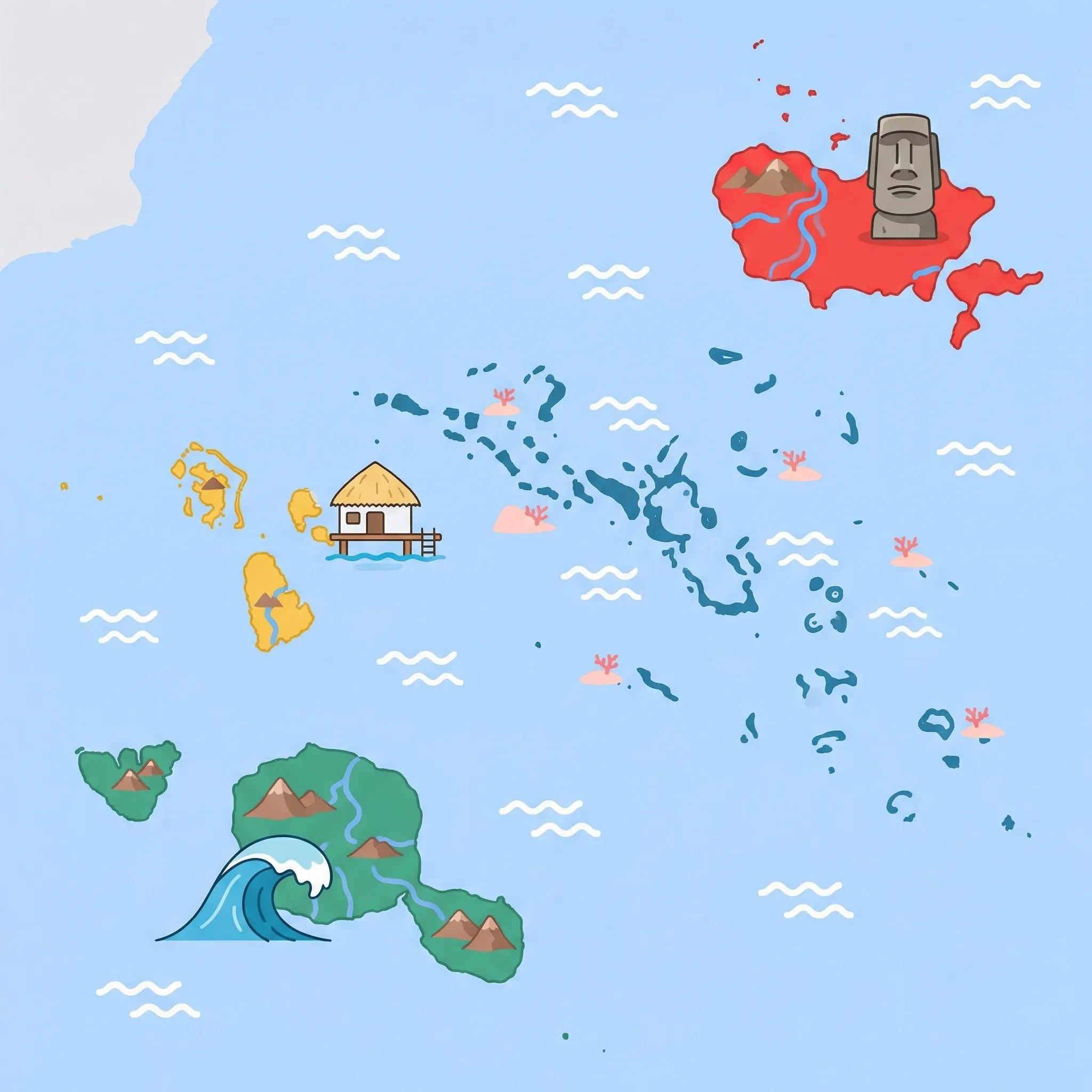
Click a region to explore
Overview
Tahiti is often unfairly treated as just a transit lounge, but for families, it is a treasure trove of culture and nature. It is the only place in French Polynesia that feels like a "city," with the bustling Papeete market, food trucks, and museums. The island is shaped like a figure-eight, with Tahiti Nui (the big loop) and Tahiti Iti (the wilder, smaller loop). The beaches here are mostly dramatic volcanic black sand, which fascinates children who have only seen white sand in pictures. The interior is a jagged kingdom of waterfalls and green valleys, accessible by 4x4 or easy hikes.
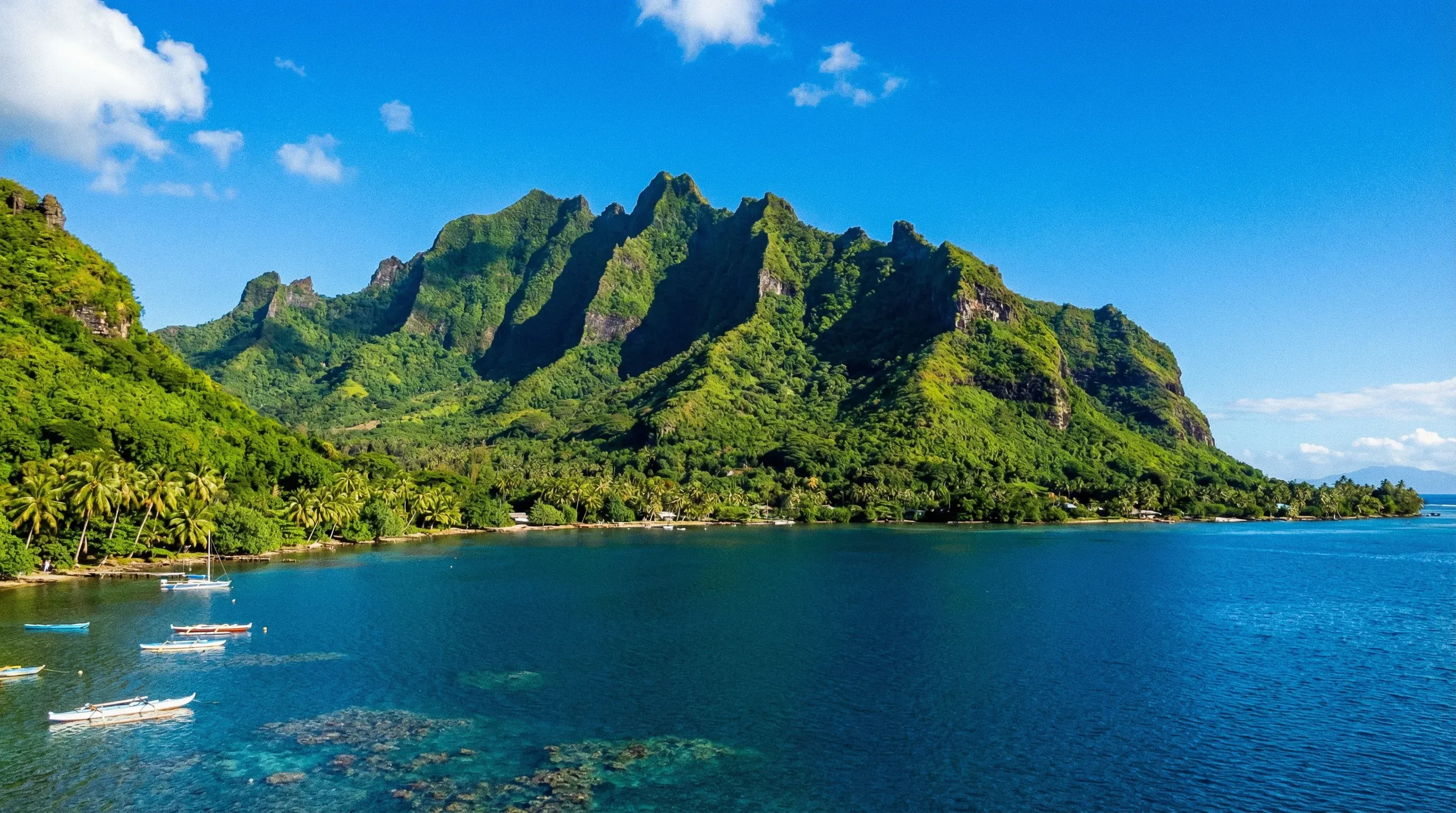
Just a 30-minute ferry ride away lies Moorea, often voted the best family island in the South Pacific. It is quieter than Tahiti but more accessible than Bora Bora. Moorea is famous for its "Lagoonarium" experiences where kids can stand in shallow clear water while stingrays and blacktip sharks glide harmlessly around their legs—an experience that is scary at first but quickly becomes the highlight of the holiday. The island feels like a garden, dominated by the jagged Mount Rotui separating the twin bays of Cook and Opunohu. The vibe is laid-back and active; it's easy to rent a car and circle the island in a few hours, stopping for fruit smoothies and snorkeling.
Key Attractions
In Tahiti, the Museum of Tahiti and the Islands is essential for understanding where you are. Recently renovated, it houses magnificent tikis, canoes, and artifacts that explain the Polynesian migration and mythology in a way that engages young minds. On the north coast, Point Venus Lighthouse sits on a beautiful black sand beach. It is a historic spot where Captain Cook observed the transit of Venus. The lighthouse itself is a Victorian-era beauty, and the surrounding park is popular with local families for picnics and swimming, giving tourists a chance to mingle with residents.
Practical Advice
Tahiti and Moorea are the most developed islands, meaning you have access to large supermarkets (Carrefour), pharmacies, and doctors, which provides peace of mind for parents. The ferry between Tahiti and Moorea is reliable and scenic. Avoid rush hour traffic in Papeete (yes, paradise has traffic jams) between 7:00 am–8:30 am and 4:00 pm–5:30 pm.
Food & Drink
Typical meal times: Standard times apply (Lunch 11:30 am–2:00 pm, Dinner 6:30 pm–9:30 pm). The "Roulottes" (food trucks) in Papeete open around 6:00 pm and stay open late.
Typical meal costs: Diverse range. A meal at a "Roulotte" is affordable: 1,500–2,500 XPF (approx. $14–23 USD / €12–21 EUR). Resort dining is 3,500–5,500 XPF (approx. $32–50 USD / €29–46 EUR).
Dietary requirements: Very easy. Supermarkets stock gluten-free and bio (organic) products. Restaurants in Papeete cater to all diets, including vegan.
Signature dishes:
- Casse-croûte – The Tahitian sandwich. A baguette stuffed with chow mein noodles, rotisserie chicken, and veggies. A carb-heavy favorite for lunch.
- Fafaru – Fish marinated in fermented seawater. It has a very strong smell (intense!) but a sweet taste. Only for adventurous eaters.
- Chao Men – Due to strong Chinese heritage, local chow mein is a staple dish found everywhere.
Why this score?
The interiors of Tahiti and Moorea feature dramatic peaks and the Papenoo Valley which offer genuine hiking and 4x4 exploration. However, the presence of paved circle-island roads and well-established tour operators keeps the adventure level accessible for the average traveler.
Why this score?
Papeete is home to the Centre Hospitalier de la Polynésie Française (CHPF), which is a modern, well-equipped facility and the best in the South Pacific. While it offers high-quality care and specialist services, the scores are capped at 6 because these services are largely concentrated in the capital city area only.
Why this score?
As the primary international gateway and economic hub, this region captures almost 100% of arrivals at Faa'a International Airport. Moorea is the most accessible island for families and cruise ships, resulting in a moderate but steady stream of international and domestic tourists year-round.

Tahiti and Moorea offer the widest range of budgets. While you can stay in luxury, there are many Airbnb options, family pensions, and hostels. Eating at food trucks (Roulottes) significantly cuts costs. A mid-range family stay is roughly 18,000–30,000 XPF (approx. $165–275 USD / €150–250 EUR) per night. Car rental is approx 8,000–12,000 XPF (approx. $73–110 USD / €67–100 EUR) per day.
Family Travel Notice
Tahiti and Moorea are often recommended as the most suitable islands for families due to better infrastructure and facilities.

Getting Here & Around
Getting Here
- Airports – Faa'a International Airport (PPT) in Tahiti is the international arrival point. Moorea has a small airport (MOZ) for connections to other islands.
- Ferry – The Aremiti and Terevau ferries connect Papeete (Tahiti) to Vaiare (Moorea). The crossing takes 30–45 minutes. It is cheap and reliable.
- Driving – Tahiti has a road circling the island. A car is recommended to visit Point Venus Lighthouse and the botanical gardens.
Getting Around
- Public Transport – 'Le Truck' (traditional open-air bus) has largely been replaced by modern buses on Tahiti. They are cheap but schedules can be "island time."
- Car – Highly recommended on both islands. It allows you to visit the Museum of Tahiti and the Islands independently.
- Scooter/E-Bike – Popular on Moorea, though roads can be narrow. Ensure you are comfortable riding with traffic.
Nearby Airports (2 airports)
Moorea
MOZMoorea
Faa\\'a International
PPTPapeete
View full flight map for French Polynesia →
Official Links

Packing List
French Polynesia uses French-style plugs (2 round pins); US/UK devices won't fit.
The channel between Tahiti and Moorea can be choppy on the ferry.
Single-use plastic bags are banned in supermarkets; you will need your own.
Rentals are available, but having a well-fitting mask for kids makes the lagoon much more enjoyable.
Essential for all ages due to sharp coral and stonefish in the lagoons. Flip-flops are not sufficient for water entry.
The sun is far stronger here than in Europe or the US. Sunscreen washes off; UV shirts protect kids during long snorkel sessions.
Boat transfers and dinghy landings are common. Keeps phones and spare clothes dry when splashing across lagoons.
Rental gear often leaks on small faces. Having a well-fitted set ensures your child's first shark/ray encounter is fun, not salty.
Strictly encouraged to protect the reefs. Local options are expensive, so bring a supply of zinc-based or reef-safe cream.

Activities & Best Times

Hiking, wildlife, outdoor exploration, ecotourism
Boasts dramatic volcanic topography, lush interior valleys like Papenoo, and legendary hiking trails such as Mount Aorai. The dry season is essential for safety on mountain ridges and for clear views of the island's unique peaks.
Beach resorts, marine activities: diving, snorkelling, kite surfing, wind surfing, sailing
Tahiti and Moorea offer world-class beaches (Temae Beach, Plage de Toaroto), crystal-clear lagoons, and iconic overwater bungalow resorts. This is one of the world's premier beach destinations and should be rated accordingly. The current 'good' rating severely undervalues the region's global beach reputation.

Urban tourism, museums, historical sites, architecture
While the region has authentic Polynesian heritage and significant historic sites, 'excellent' city/cultural ratings should be reserved for destinations with globally significant cultural institution density (Paris, Rome, Kyoto). Tahiti's offerings, while substantial, don't reach this threshold internationally.

Learning experiences, scientific sites, historical education
Home to high-quality scientific facilities like the Fare Natura Ecomuseum and Coral Gardeners, providing sophisticated families with deep insights into marine biology. These experiences are best paired with the dry season when lagoon conditions are optimal for conservation-focused activities.

Events, celebrations, seasonal attractions
The Heiva i Tahiti festival in July is the premier cultural celebration of Polynesia, attracting international visitors and featuring traditional dance, music, and sports. The notes describe it as 'internationally significant,' which contradicts the 'marginal' rating. Should be 'good' minimum.

Sport tourism, fitness activities, active recreation
Provides high-quality active infrastructure including mountain trekking routes and adventure parks like Tiki Parc Moorea. The lower humidity and reduced rainfall from May to October create ideal conditions for physically demanding outdoor sports.

Scenic drives, countryside tours, route-based travel
While scenic coastal roads exist, Tahiti and Moorea are relatively small islands with limited road networks (circle roads of ~50-60km each). Compared to true road trip destinations with extensive highway systems, this should be downgraded to 'marginal'.




Public Holidays & Calendar Next 12 months
Public holidays, festivals, cultural celebrations, and seasonal natural phenomena coming up in Tahiti & Moorea over the next 12 months.
Loading holidays and events...

Travel Advisory
All major agencies agree that French Polynesia is a safe destination requiring only standard safety and security awareness. There are no significant nationwide threats.
Safety Topics
Traveller Advice (5 groups)

Review general guidance for sexual and gender minorities to ensure awareness of local cultural attitudes, though French law applies.

Female travellers should follow standard safety protocols and dress conservatively when visiting religious sites or attending church services.

Tahiti and Moorea are often recommended as the most suitable islands for families due to better infrastructure and facilities.

Ensure water sports and diving are conducted with reputable, insured companies. Wear protective reef shoes to avoid injuries from coral or stonefish.

Maintain standard vigilance against petty crime and ensure you have valid travel insurance that covers medical evacuation from remote islands.
Agency Summaries
Travellers should maintain a standard level of safety awareness as they would in Canada. There are no major security concerns, although occasional demonstrations occur and should be avoided.
No specific travel restrictions are in place. Visitors are advised to follow routine safety protocols and be aware of health entry requirements and local legal differences.
French Polynesia is considered a safe destination with low crime rates. Standard safety measures are sufficient for visitors, though awareness of local traffic and environmental hazards is recommended.
The overall security situation is stable. Visitors should stay informed about weather-related risks and follow standard personal safety practices, particularly in crowded areas.
There is no specific travel advisory for French Polynesia, indicating a low risk level. Travellers are encouraged to have comprehensive insurance and take standard precautions.
Irish citizens are advised to exercise a standard degree of caution and be mindful of their surroundings and personal belongings while travelling.
Information is provided for general guidance only and does not constitute travel, safety, medical, or legal advice. Conditions may change. Users are responsible for independently verifying information before travel.