

Overview
Gabon is a rare gem in Central Africa-a country where 80% of the land is covered in dense rainforest and the human population is small and peaceful. For families willing to venture off the beaten path, it offers a safari experience unlike the savannahs of East Africa. Here, the jungle meets the ocean. You might spot forest elephants foraging on the beach in Coastal Parks (beaches, whales) or track mandrills through the savannah-forest mosaic. The country is politically stable and safe, but it is a destination for seasoned travelers; tourism infrastructure is focused on high-end eco-lodges, and independent travel can be logistically challenging.
The vibe is wild and unhurried. Children will be mesmerized by the sheer scale of nature, from the thunderous Kongou Falls to the gentle giants of the sea during whale season. While French is the official language and English is rarely spoken outside luxury lodges, the Gabonese people are welcoming. It is an educational journey into conservation, offering a chance to see Africa as it was before modern development.
Key Attractions
The crown jewel of Gabon is Loango National Park. Known globally for its "surfing hippos," this park offers a unique combination of savannah, lagoon, and beach environments. Families can take boat safaris to see elephants and buffaloes wandering the coastline, or visit between July and September to watch humpback whales breaching just offshore. It is one of the few places on Earth where you can see gorillas and whales in the same day.
For a more accessible family escape, Pointe-Denis Beach is a stunning peninsula just a short boat ride from the capital, Libreville. With calm waters and white sands, it is perfect for swimming and picnics, and it hosts leatherback turtles nesting between November and January. Further inland, Lopé National Park offers a different landscape of rolling savannahs and gallery forests, accessible via the famous Trans-Gabon Railway. It is the best place to spot huge troops of mandrills and learn about ancient rock art.
In the deep interior, the Eastern Rainforest calls to teenage adventurers. Ivindo National Park is home to the spectacular Kongou Falls, often called the most beautiful waterfall in Central Africa, and the Langoué Baï, a forest clearing that attracts gorillas and elephants. Back in the capital, the National Museum of Arts, Rites and Traditions provides essential cultural context, showcasing the famous white Bwiti masks and traditional instruments.
Practical Advice
Best time to visit: The dry season (June to September) is best for wildlife viewing, including whales and mandrills. The short dry season (December to January) is excellent for turtle nesting. The rainy seasons can make roads impassable. Visas & Health: A Yellow Fever vaccination certificate is mandatory for entry for all travelers over 9 months old-carry the original yellow card. Malaria prophylaxis is highly recommended for all family members. Visas are required for most nationalities; an e-visa system is available but apply weeks in advance.
Food & Drink
Typical meal times: Lunch is typically served from 12:30 pm to 2:30 pm, and dinner from 7:30 pm to 9:30 pm. Service can be relaxed (
Age Suitability





Did you know? Gabon welcomes approximately 269,000 international visitors per year. Most visitors come from Africa.

Explore Regions
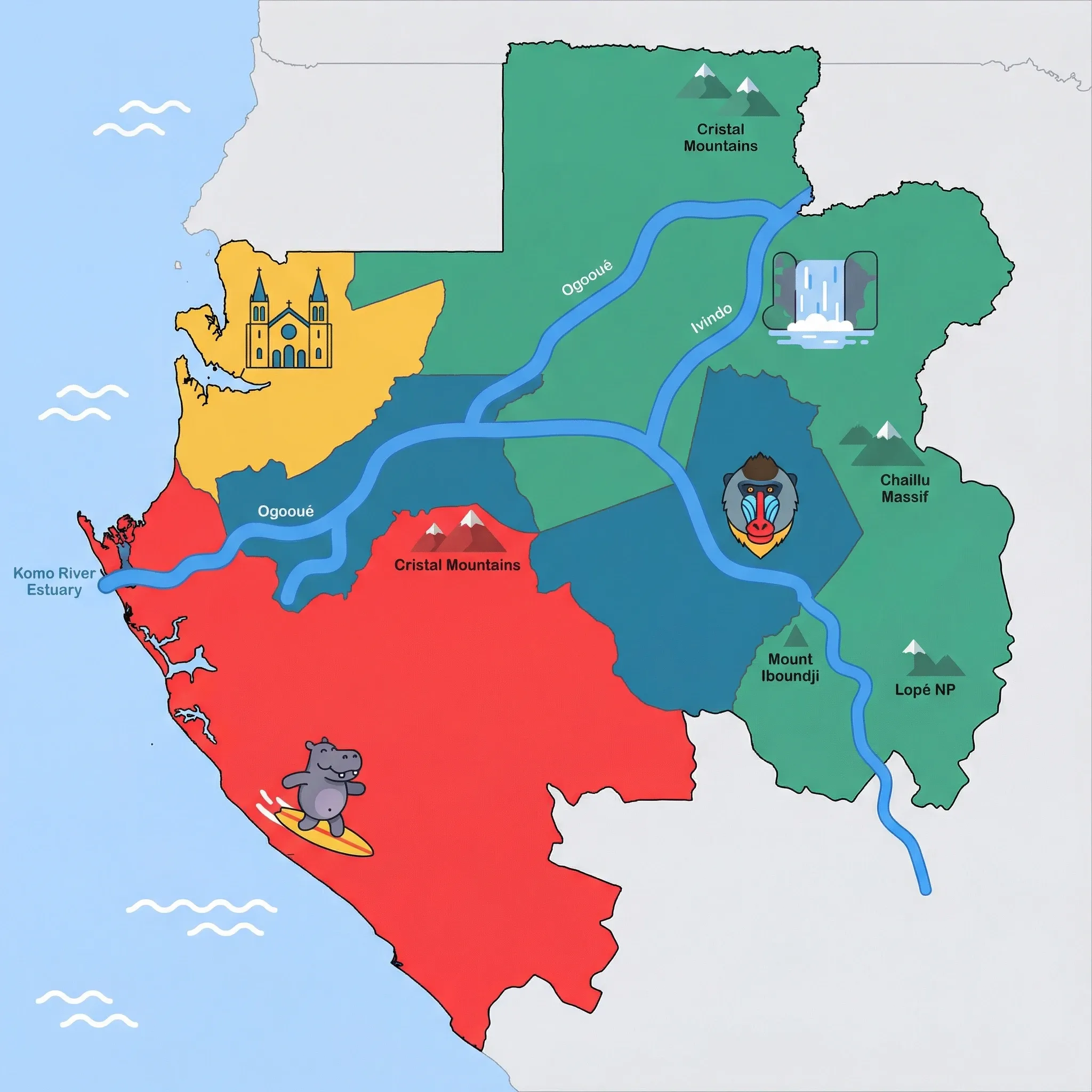
4 Regions
Coastal Parks (beaches, whales)
Where elephants walk the beach and whales breach offshore 🐋🐘
Eastern Rainforest
Deep jungle adventures and thundering waterfalls 🌿🌊
Libreville
Cosmopolitan culture meets golden sands 🏙️🏖️
Lopé NP (wildlife)
Where the rainforest meets the savannah 🦁🌳
Click on a region marker to explore details. Use the dropdown to color regions by activity suitability.

Getting There & Around

Activities & Best Times

Adventure & Nature
Very GoodHiking, wildlife, outdoor exploration, ecotourism
A unique forest-savannah mosaic offering world-class wildlife encounters, including mandrills and forest elephants. Dry seasons from June to August provide optimal visibility and trail access, while heavy rains in October and November make forest expeditions nearly impossible.
Libreville offers exceptional access to Akanda and Pongara National Parks for birding and humpback whale watching; the dry season ensures trail accessibility and optimal wildlife viewing conditions.
Features the unique 'Last Eden' ecosystem where forest elephants, buffalo, and hippos roam the Atlantic beaches. Peak months align with the long dry season and humpback whale migration, while heavy rains from October to May impede trail access.

City & Cultural
Very GoodUrban tourism, museums, historical sites, architecture
Home to the UNESCO-listed Lopé-Okanda cultural landscape, featuring globally significant Iron Age petroglyphs and archaeological sites. Travel is best during dry periods when remote heritage sites are accessible and the interface between culture and nature is most visible.
The city features the world-class National Museum of Arts and Traditions and vibrant artisan markets; peak months avoid the intense equatorial downpours that disrupt urban exploration.
Zero cultural attractions in database. Mission Saint-Anne should be added first, but even with that addition, a remote coastal region with one 19th-century mission does not warrant 'very_good' for city/cultural tourism. Downgrade to 'marginal' or remove classification entirely. The region's strengths are clearly nature-based (beaches, whales, wildlife), not urban culture.
Beach & Sea
GoodBeach resorts, marine activities: diving, snorkelling, kite surfing, wind surfing, sailing
Notes mention 'rare opportunities for beach camping and whale watching (July-Sept)'. The seasonal whale watching window (July-Sept) combined with the unique forest-meets-ocean landscape is a significant draw for nature-based beach tourism. While it lacks luxury resort infrastructure, this is a 'good' destination for eco-tourists seeking beach wilderness experiences, not 'marginal'.
Pointe-Denis and La Sablière offer high-quality coastal recreation across the estuary from the city; peak months align with the long dry season providing calm seas and lower humidity.

Sports & Active
GoodSport tourism, fitness activities, active recreation
Home to major coastal trekking routes and forest hikes like the Akaka and Pongara trails. The peak dry season (June–August) offers the firmest trail conditions and lower humidity for physically demanding expeditions.
Offers physically demanding trekking routes like the Mount Brazza Trail and Mikongo wildlife tracking paths. Peak conditions occur during the long dry season when trails are firm; rainy months create dangerous, slippery conditions and heavy mud.
Infrastructure supports coastal trekking to Phare de Gombé and VTT loops around Cap Estérias; peak dry months provide firm ground and manageable temperatures for active family pursuits.

Road Trips & Scenic
GoodScenic drives, countryside tours, route-based travel

Educational & Exploratory
MarginalLearning experiences, scientific sites, historical education

Public Holidays & Calendar Next 12 months
Public holidays, festivals, cultural celebrations, and seasonal natural phenomena coming up in Gabon over the next 12 months.
Loading holidays and events...
Climate & Weather
Coastal Parks (beaches, whales)
Show Details
| Month | Temp °C | Rain | Humidity |
|---|
Eastern Rainforest
Show Details
| Month | Temp °C | Rain | Humidity |
|---|
Libreville
Show Details
| Month | Temp °C | Rain | Humidity |
|---|
Lopé NP (wildlife)
Show Details
| Month | Temp °C | Rain | Humidity |
|---|

Travel Advisory
Gabon is generally stable, but multiple agencies recommend increased vigilance due to crime and potential political instability. While some agencies maintain a baseline level, half advise higher caution due to recent political transitions and urban crime risks.
Safety Topics
Traveller Advice (4 groups)

Stay informed via local news and avoid any political rallies or demonstrations. Adhere strictly to any nighttime curfews established by the government.

Review guidance on local attitudes and legal standing, as social sensitivities can vary and public displays of affection may attract negative attention.

Female travellers should consult gender-specific safety resources; there have been reports of physical assaults and risks associated with walking alone after dark.

Be aware that infrastructure for physical accessibility is limited throughout the country.
Agency Summaries
Travellers should be more vigilant due to concerns regarding crime, social unrest, and health issues. Increased crime rates are noted in Libreville and Port Gentil. A nighttime curfew is currently in effect.
There is a persistent risk of violent crime. Travellers should also be aware of health risks including various insect-borne diseases prevalent in the region.
While no specific warning is in place, travellers are encouraged to have comprehensive insurance and remain aware of potential health and safety risks in the region.
Irish citizens should exercise caution, stay informed of local developments, and avoid all large gatherings or protests. A curfew may be in effect and should be respected.
Travellers are advised to be cautious in crowded locations and near political gatherings, especially around election periods. Recent history includes heightened scrutiny of foreign visitors by local authorities.
Visitors should maintain heightened awareness due to a security environment that is currently stable but remains unpredictable and could change quickly.
Information is provided for general guidance only and does not constitute travel, safety, medical, or legal advice. Conditions may change. Users are responsible for independently verifying information before travel.