
Coastal Parks (beaches, whales)
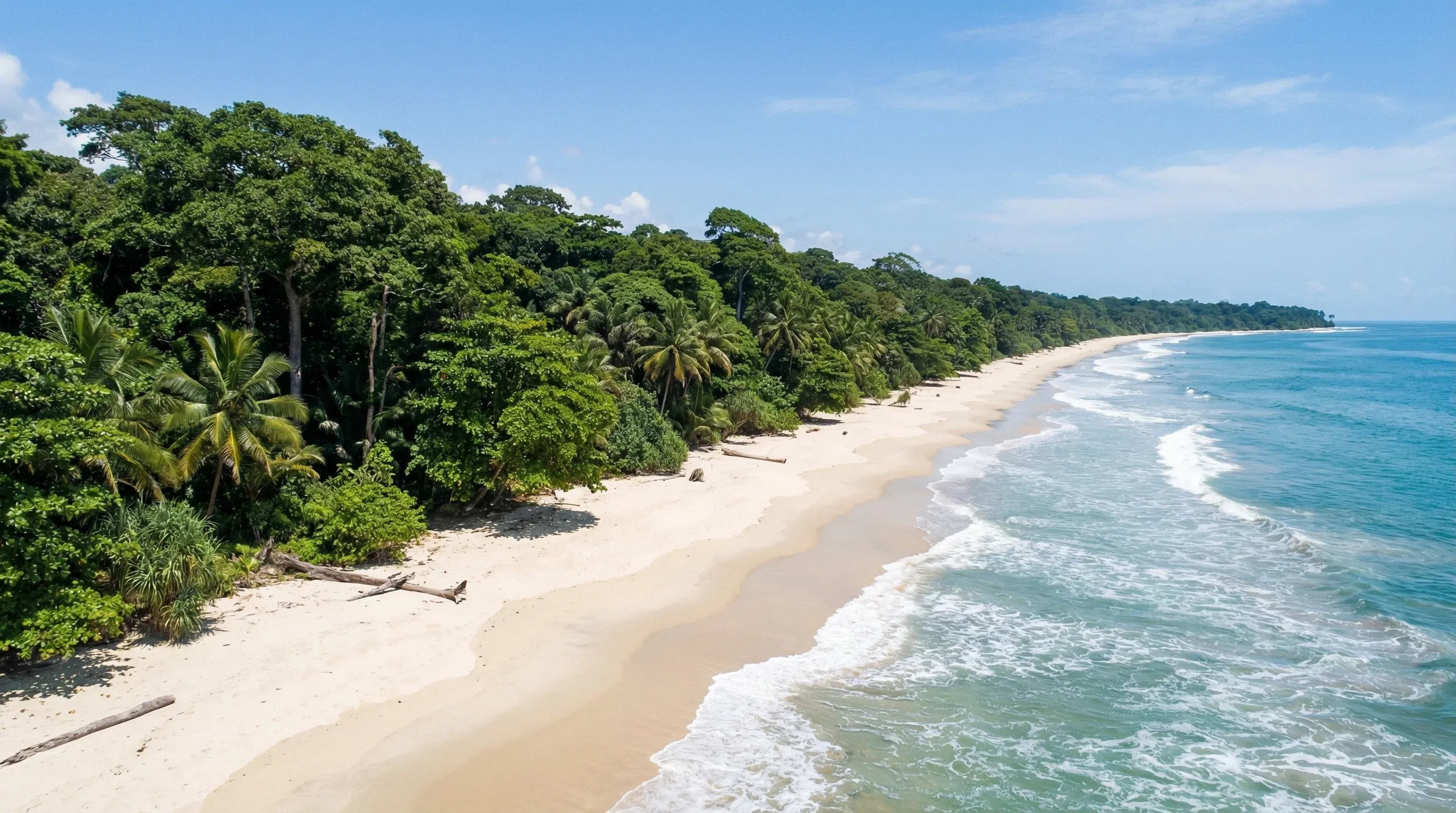
Where elephants walk the beach and whales breach offshore 🐋🐘
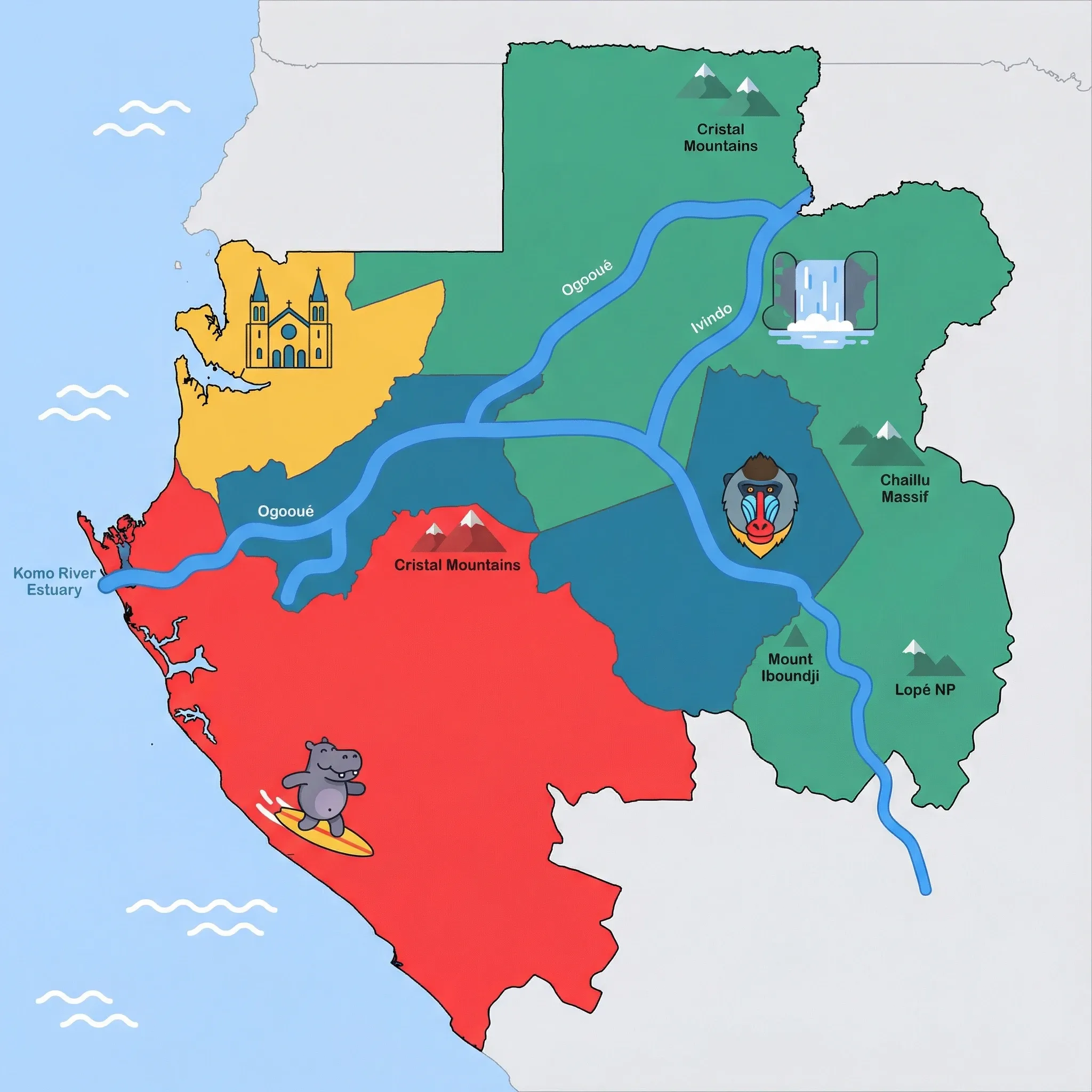
Click a region to explore
Overview
The Coastal Parks of Gabon represent one of the most unique wildlife experiences on the planet, often described by naturalists as the "Last Eden." For families willing to venture off the beaten path, this region offers a safari experience unlike anywhere else in Africa. Instead of arid savannas, you are exploring lush lagoons, mangroves, and pristine white-sand beaches where the rainforest spills directly into the Atlantic Ocean. The defining image of this region is the legendary "surfing hippo" or an elephant strolling along the tide line, sights that capture the imagination of children and adults alike. It is a humid, vibrant, and intensely wild environment where nature dictates the schedule.
Culturally and geographically, this region is defined by water. Life revolves around the lagoons and the ocean, with boat travel being as common as driving. For families, the appeal lies in the diversity of the ecosystem; in a single day, you might spot humpback whales breaching offshore, monkeys chattering in the canopy, and buffalo grazing in coastal grassy clearings. While the logistics of travel here are challenging and require patience—this is true expedition travel, not a manicured resort experience—the reward is an intimacy with nature that is vanishingly rare. It is best suited for families with older children or teenagers who can handle humidity, boat transfers, and the quiet patience required for wildlife tracking.
Key Attractions
The absolute crown jewel of the region is Loango National Park. This park is famous worldwide for its unique phenomenon of large mammals venturing onto the beach. For families, the best way to explore is often by boat along the Iguela Lagoon, which allows for safe and close-up viewing of elephants, buffalo, and hippos without the strenuous trekking required in dense forests. The park also offers catch-and-release sport fishing, which can be a thrilling activity for teenagers.
Beyond the headline mammals, the marine life here is spectacular. Between July and September, humpback whales migrate through these waters, often visible from the shore or on dedicated boat tours. Turtle nesting season (November to February) is another magical event where families can watch leatherback turtles lay their eggs under the cover of darkness, a profound educational experience for children. While the infrastructure is rustic, the guides are expert at spotting the gorillas and chimpanzees that inhabit the forest interiors, though primate trekking usually has age restrictions (often 15+) for safety.
Practical Advice
The best time to visit depends on what you want to see. The dry season (June to September) is best for general wildlife and whale watching. The rainy season (October to April) is hotter but offers the best chance to see animals on the beach and turtles nesting. Logistics are complex; access is typically by light aircraft or boat, and almost all travel must be arranged through lodge operators. Malarial prophylaxis is essential for all family members, and long sleeves are recommended to ward off tsetse flies.
Food & Drink
Typical meal times: Breakfast is usually served early, around 6:30 am to 8:00 am, to facilitate morning game viewing. Lunch is 12:30 pm to 2:00 pm, and dinner is 7:30 pm to 9:00 pm.
Typical meal costs: Most tourism in this region is lodge-based where meals are included in the package price. However, independent meals in gateway towns like Port-Gentil or Omboué cost around 10,000–18,000 XAF (approx. $16–30 USD / €15–27 EUR) for a main course.
Dietary requirements: Lodges can cater to most allergies and vegetarian diets if given advance notice (weeks in advance), as supplies are flown or boated in. In local villages, options are strictly fish/meat and starch.
Signature dishes:
- Poisson Salé – Salted fish stew, often rehydrated and cooked with vegetables, a staple that provides protein in remote areas.
- Oysters from the Lagoon – Enormous, fresh mangrove oysters, often roasted simply over fire (ensure they are fully cooked for children).
- Manioc (Cassava) – Served as 'bâtons' (fermented sticks wrapped in leaves), this is the primary carbohydrate accompanying almost every sauce-based dish.
Why this score?
The region offers rugged coastal rainforest experiences and boat-based lagoon navigation, but the presence of high-end lodges provides a layer of comfort for families. Exploring the beach for elephants and humpback whales requires significant coordination and travel via light aircraft or boat.
Why this score?
Medical facilities in the coastal parks are virtually non-existent beyond basic first aid at upscale lodges. Any serious medical emergency would require an expensive and time-consuming evacuation to Libreville or even out of the country.
Why this score?
While Loango is Gabon's most iconic destination for the 'surfing hippos,' total visitor numbers remain very low due to high costs and limited accessibility. It is a niche destination for wealthy eco-tourists rather than a mainstream international hotspot.

This is one of the most expensive regions in Central Africa due to remoteness. Tourism is low-volume and high-cost. A stay at a safari lodge typically costs 300,000–600,000 XAF (approx. $490–980 USD / €450–915 EUR) per person per night, usually all-inclusive. Independent travel is extremely difficult to organize. Boat transfers can cost 50,000–100,000 XAF (approx. $80–160 USD / €75–150 EUR) per trip.

Getting Here & Around
Getting Here
- Airports – Most travelers fly into Libreville (LBX) and then take a domestic flight to Port-Gentil (POG) or a private charter strip near Loango National Park.
- Boat – Regular ferry services connect Libreville to Port-Gentil (approx. 3–4 hours). From Port-Gentil or Omboué, lodge boats transfer guests to the parks.
- Driving – Not recommended for general tourists. Roads are unpaved, require 4x4 expertise, and can become impassable during rains.
Getting Around
- Boat – The primary mode of transport. Wildlife viewing and transfers between lodges in Loango National Park are almost exclusively done by small motorboats on the lagoons.
- 4x4 Safari Vehicles – Lodges use modified vehicles for beach and savannah drives. Be prepared for bumpy rides.
- Walking – Guided nature walks are common, but children must be strictly supervised due to the presence of elephants and buffalo.
Nearby Airports (2 airports)
Gamba
GAXGamba
Port Gentil
POGPort Gentil
View full flight map for Gabon →
Official Links

Packing List
Essential for protecting cameras and phones during frequent small boat transfers.
High humidity can fog up camera lenses and damage electronics; keep these in your bag.
Avoids attracting tsetse flies, which are drawn to bright colors and denim blue.
Lagoon crossings can be choppy and small planes are susceptible to turbulence.

Activities & Best Times

Hiking, wildlife, outdoor exploration, ecotourism
Features the unique 'Last Eden' ecosystem where forest elephants, buffalo, and hippos roam the Atlantic beaches. Peak months align with the long dry season and humpback whale migration, while heavy rains from October to May impede trail access.

Beach resorts, marine activities: diving, snorkelling, kite surfing, wind surfing, sailing
Notes mention 'rare opportunities for beach camping and whale watching (July-Sept)'. The seasonal whale watching window (July-Sept) combined with the unique forest-meets-ocean landscape is a significant draw for nature-based beach tourism. While it lacks luxury resort infrastructure, this is a 'good' destination for eco-tourists seeking beach wilderness experiences, not 'marginal'.

Sport tourism, fitness activities, active recreation
Home to major coastal trekking routes and forest hikes like the Akaka and Pongara trails. The peak dry season (June–August) offers the firmest trail conditions and lower humidity for physically demanding expeditions.

Urban tourism, museums, historical sites, architecture
Zero cultural attractions in database. Mission Saint-Anne should be added first, but even with that addition, a remote coastal region with one 19th-century mission does not warrant 'very_good' for city/cultural tourism. Downgrade to 'marginal' or remove classification entirely. The region's strengths are clearly nature-based (beaches, whales, wildlife), not urban culture.




Public Holidays & Calendar Next 12 months
Public holidays, festivals, cultural celebrations, and seasonal natural phenomena coming up in Coastal Parks (beaches, whales) over the next 12 months.
Loading holidays and events...

Travel Advisory
Gabon is generally stable, but multiple agencies recommend increased vigilance due to crime and potential political instability. While some agencies maintain a baseline level, half advise higher caution due to recent political transitions and urban crime risks.
Safety Topics
Traveller Advice (4 groups)

Stay informed via local news and avoid any political rallies or demonstrations. Adhere strictly to any nighttime curfews established by the government.

Review guidance on local attitudes and legal standing, as social sensitivities can vary and public displays of affection may attract negative attention.

Female travellers should consult gender-specific safety resources; there have been reports of physical assaults and risks associated with walking alone after dark.

Be aware that infrastructure for physical accessibility is limited throughout the country.
Agency Summaries
Travellers should be more vigilant due to concerns regarding crime, social unrest, and health issues. Increased crime rates are noted in Libreville and Port Gentil. A nighttime curfew is currently in effect.
There is a persistent risk of violent crime. Travellers should also be aware of health risks including various insect-borne diseases prevalent in the region.
While no specific warning is in place, travellers are encouraged to have comprehensive insurance and remain aware of potential health and safety risks in the region.
Irish citizens should exercise caution, stay informed of local developments, and avoid all large gatherings or protests. A curfew may be in effect and should be respected.
Travellers are advised to be cautious in crowded locations and near political gatherings, especially around election periods. Recent history includes heightened scrutiny of foreign visitors by local authorities.
Visitors should maintain heightened awareness due to a security environment that is currently stable but remains unpredictable and could change quickly.
Information is provided for general guidance only and does not constitute travel, safety, medical, or legal advice. Conditions may change. Users are responsible for independently verifying information before travel.