
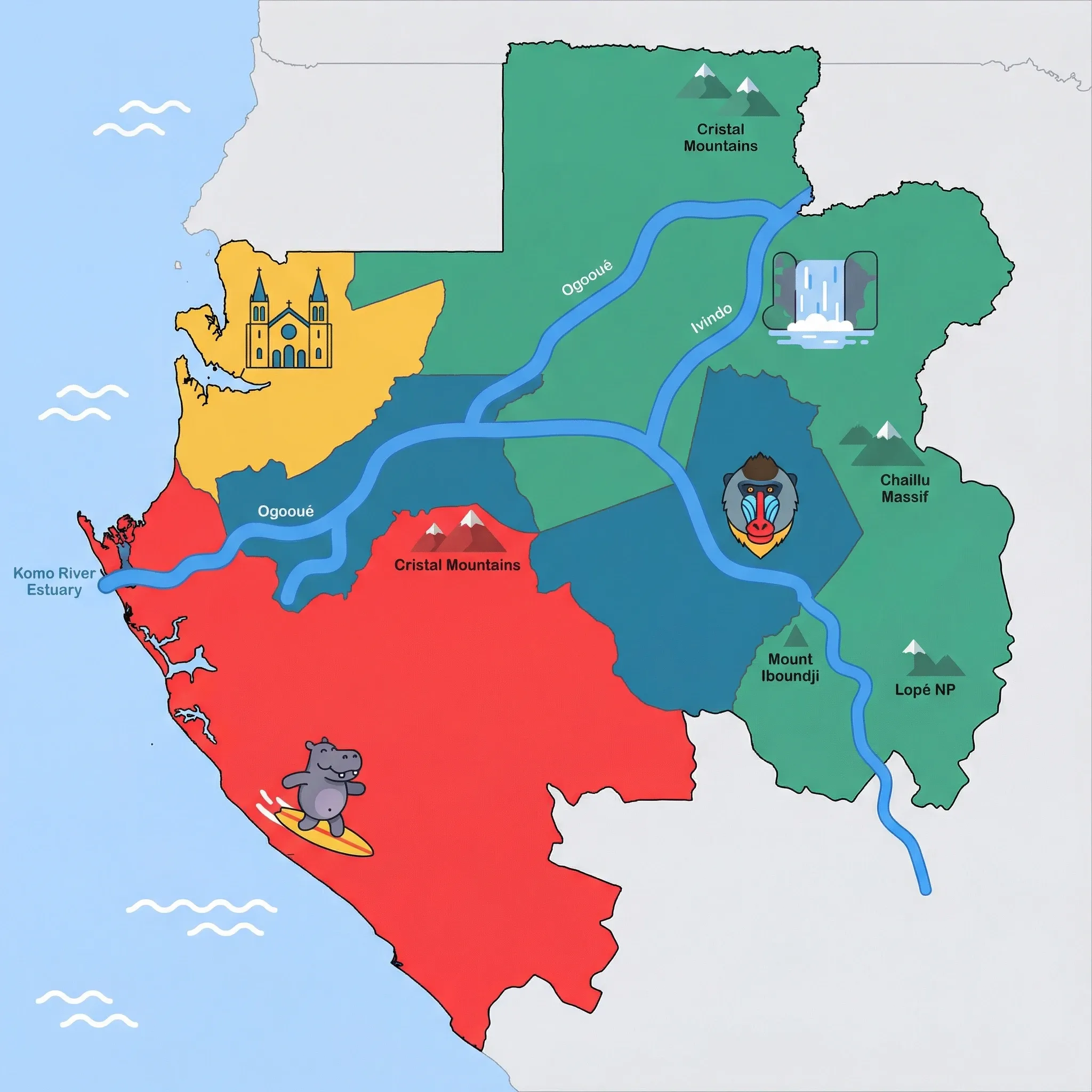
Click a region to explore
Overview
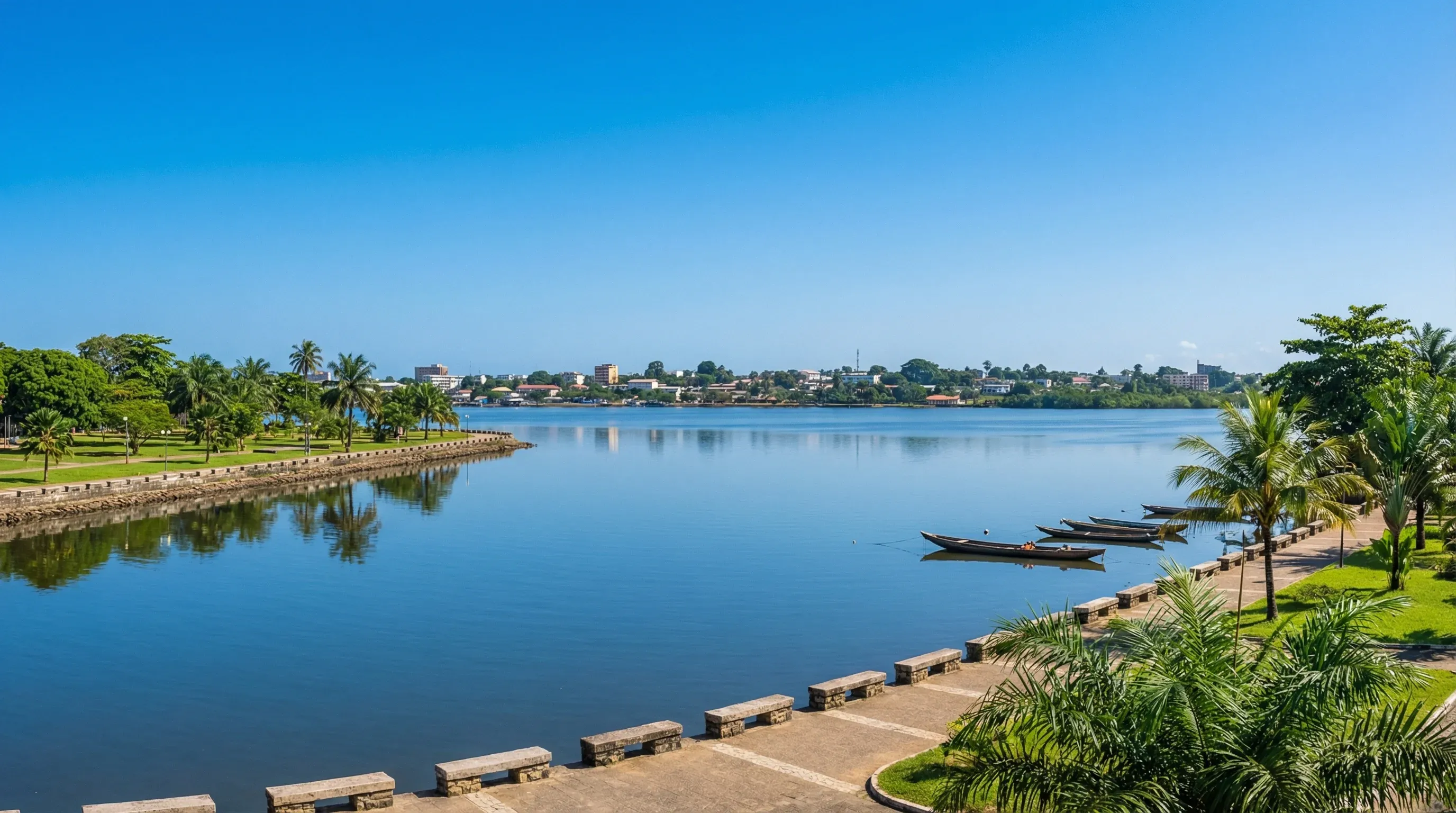
Libreville is one of Africa's most expensive and orderly cities, offering a gentle introduction to the region for families. Unlike the chaotic energy of many neighboring capitals, Libreville moves at a relaxed pace, with a seafront boulevard (the "Bord de Mer") that is perfect for evening strolls with an ice cream in hand. The city feels distinctively dual-natured: modern glass buildings and French bakeries sit alongside bustling African markets like Mont-Bouët. For parents, the availability of high-quality pharmacies, supermarkets, and reliable infrastructure provides peace of mind before heading into the interior.
The real magic for families, however, lies just across the estuary. A short boat ride transports you from the city center to Pointe-Denis Beach, a peninsula that feels like a deserted island paradise. Here, the water is calm and safe for swimming, and the jungle backs right up to the sand. It allows families to enjoy a "resort" style holiday with the option of day trips into the city for cultural education. The climate is tropical and humid year-round, but the ocean breeze in Libreville makes it pleasant.
Key Attractions
For a dose of culture, the National Museum of Arts, Rites and Traditions is a must-visit. It is small but exceptionally curated, featuring Bwiti masks and traditional instruments that offer a window into Gabon's spiritual heritage without being overwhelming for children. The digital guides and visual displays help keep younger visitors engaged.
The primary draw for relaxation is Pointe-Denis Beach. Located on the peninsula opposite the city, it sits on the edge of Pongara National Park. It is the perfect spot for building sandcastles, spotting leatherback turtles (in season), and seeing monkeys in the trees behind the beach hotels. The water is generally calm, making it much safer for children than the open Atlantic coast further south. Nearby, the St. Marie Cathedral and the L'Eglise St-Michel (famous for its 31 carved wooden columns) offer quick, interesting architectural stops in the city.
Practical Advice
Libreville is safe, but taxis can be confusing; agree on a price before getting in or use hotel cars. The best time to visit the beaches is the dry season (June-August) when temperatures are slightly cooler. Traffic can be heavy during rush hours (7:30 am and 5:00 pm). English is not widely spoken, so a translation app or phrasebook is very helpful.
Food & Drink
Typical meal times: Lunch is strictly 12:00 pm to 2:00 pm (many shops close). Dinner starts late, typically 7:30 pm to 10:00 pm.
Typical meal costs: Dining is pricey. A meal in a western-style restaurant costs 15,000–25,000 XAF (approx. $25–40 USD / €23–38 EUR). Street food or local "maquis" restaurants are cheaper, around 3,000–6,000 XAF (approx. $5–10 USD / €4.50–9 EUR).
Dietary requirements: Good. Libreville has supermarkets stocking gluten-free and western products. Restaurants are accustomed to international guests and can adapt dishes, though vegan options are rare outside expat areas.
Signature dishes:
- Poulet Nyembwe – The national dish: chicken slow-cooked in a rich, red palm nut pulp sauce. It has a unique, earthy flavor that kids often enjoy.
- Brochettes – Skewers of beef or chicken, marinated and grilled over charcoal, sold on street corners and very safe/tasty for families.
- Coupé-Coupé – Barbecued meat chopped into bite-sized pieces, served with spicy pepper sauce (ask for it on the side for kids) and bread.
Why this score?
Libreville is a relatively modern African capital with paved roads, restaurants, and hotels, offering little in the way of rugged adventure. Nearby Pointe-Denis offers a pleasant beach escape but is well-developed with regular ferry services.
Why this score?
Libreville hosts the best medical facilities in the country, including the Hôpital d'Instruction des Armées and private clinics used by the expat community. While functional for basic needs and stabilizing patients, they still fall short of international standards for complex procedures.
Why this score?
As the capital and primary international gateway, Libreville receives almost all of Gabon's 269,000 annual visitors, though many are business travelers. It lacks the global name recognition and tourist infrastructure found in higher-scoring African cities like Cape Town or Nairobi.

Libreville is consistently ranked as one of the most expensive cities in Africa. Mid-range hotels cost 80,000–120,000 XAF (approx. $130–195 USD / €120–180 EUR). A cappuccino costs around 3,000 XAF ($5 USD / €4.50 EUR). Taxis are relatively cheap, with short hops costing 1,000–2,000 XAF ($1.60–3.25 USD / €1.50–3 EUR) if negotiated well.

Getting Here & Around
Getting Here
- Airports – Léon Mba International Airport (LBX) is the main gateway to the country, located just 15 minutes from the city center.
- Boat – Ferries connect Libreville to Port-Gentil. Small shuttle boats run frequently from Michel Marine or Port Mole to Pointe-Denis Beach (20-30 mins).
- Driving – Taxis are plentiful. Driving yourself is stressful due to police checkpoints and aggressive local driving styles.
Getting Around
- Taxi – The most common transport. 'Petits taxis' (red/white) do shared routes; pay for all seats to make it private. 'Gros taxis' are more comfortable.
- Boat – Essential for visiting Pointe-Denis Beach. Most hotels on the peninsula run their own private shuttles.
- Walking – The 'Bord de Mer' (seafront) is walkable and scenic, but other areas lack sidewalks.
Nearby Airports (1 airport)
Libreville Leon M Ba
LBVLibreville
View full flight map for Gabon →

Packing List
Hotels rarely have international sockets; essential for charging devices.
Sudden, heavy downpours are common even in drier months; umbrellas are unwieldy in wind.
Useful for the boat crossings to Pointe-Denis and sudden rain squalls.
English is rarely spoken by taxi drivers or market vendors.

Activities & Best Times

Hiking, wildlife, outdoor exploration, ecotourism
Libreville offers exceptional access to Akanda and Pongara National Parks for birding and humpback whale watching; the dry season ensures trail accessibility and optimal wildlife viewing conditions.

Urban tourism, museums, historical sites, architecture
The city features the world-class National Museum of Arts and Traditions and vibrant artisan markets; peak months avoid the intense equatorial downpours that disrupt urban exploration.
Beach resorts, marine activities: diving, snorkelling, kite surfing, wind surfing, sailing
Pointe-Denis and La Sablière offer high-quality coastal recreation across the estuary from the city; peak months align with the long dry season providing calm seas and lower humidity.

Scenic drives, countryside tours, route-based travel
The Equator Road and Boulevard de l'Indépendance provide scenic transit; peak dry months are essential to avoid road washouts and maintain safe driving conditions in the region.

Sport tourism, fitness activities, active recreation
Infrastructure supports coastal trekking to Phare de Gombé and VTT loops around Cap Estérias; peak dry months provide firm ground and manageable temperatures for active family pursuits.




Public Holidays & Calendar Next 12 months
Public holidays, festivals, cultural celebrations, and seasonal natural phenomena coming up in Libreville over the next 12 months.
Loading holidays and events...

Travel Advisory
Gabon is generally stable, but multiple agencies recommend increased vigilance due to crime and potential political instability. While some agencies maintain a baseline level, half advise higher caution due to recent political transitions and urban crime risks.
Safety Topics
Traveller Advice (4 groups)

Stay informed via local news and avoid any political rallies or demonstrations. Adhere strictly to any nighttime curfews established by the government.

Review guidance on local attitudes and legal standing, as social sensitivities can vary and public displays of affection may attract negative attention.

Female travellers should consult gender-specific safety resources; there have been reports of physical assaults and risks associated with walking alone after dark.
Be aware that infrastructure for physical accessibility is limited throughout the country.
Agency Summaries
Travellers should be more vigilant due to concerns regarding crime, social unrest, and health issues. Increased crime rates are noted in Libreville and Port Gentil. A nighttime curfew is currently in effect.
There is a persistent risk of violent crime. Travellers should also be aware of health risks including various insect-borne diseases prevalent in the region.
While no specific warning is in place, travellers are encouraged to have comprehensive insurance and remain aware of potential health and safety risks in the region.
Irish citizens should exercise caution, stay informed of local developments, and avoid all large gatherings or protests. A curfew may be in effect and should be respected.
Travellers are advised to be cautious in crowded locations and near political gatherings, especially around election periods. Recent history includes heightened scrutiny of foreign visitors by local authorities.
Visitors should maintain heightened awareness due to a security environment that is currently stable but remains unpredictable and could change quickly.
Information is provided for general guidance only and does not constitute travel, safety, medical, or legal advice. Conditions may change. Users are responsible for independently verifying information before travel.