
Batumi & Black Sea Coast
Subtropical vibes, pebble beaches, and endless family entertainment 🐬🌴
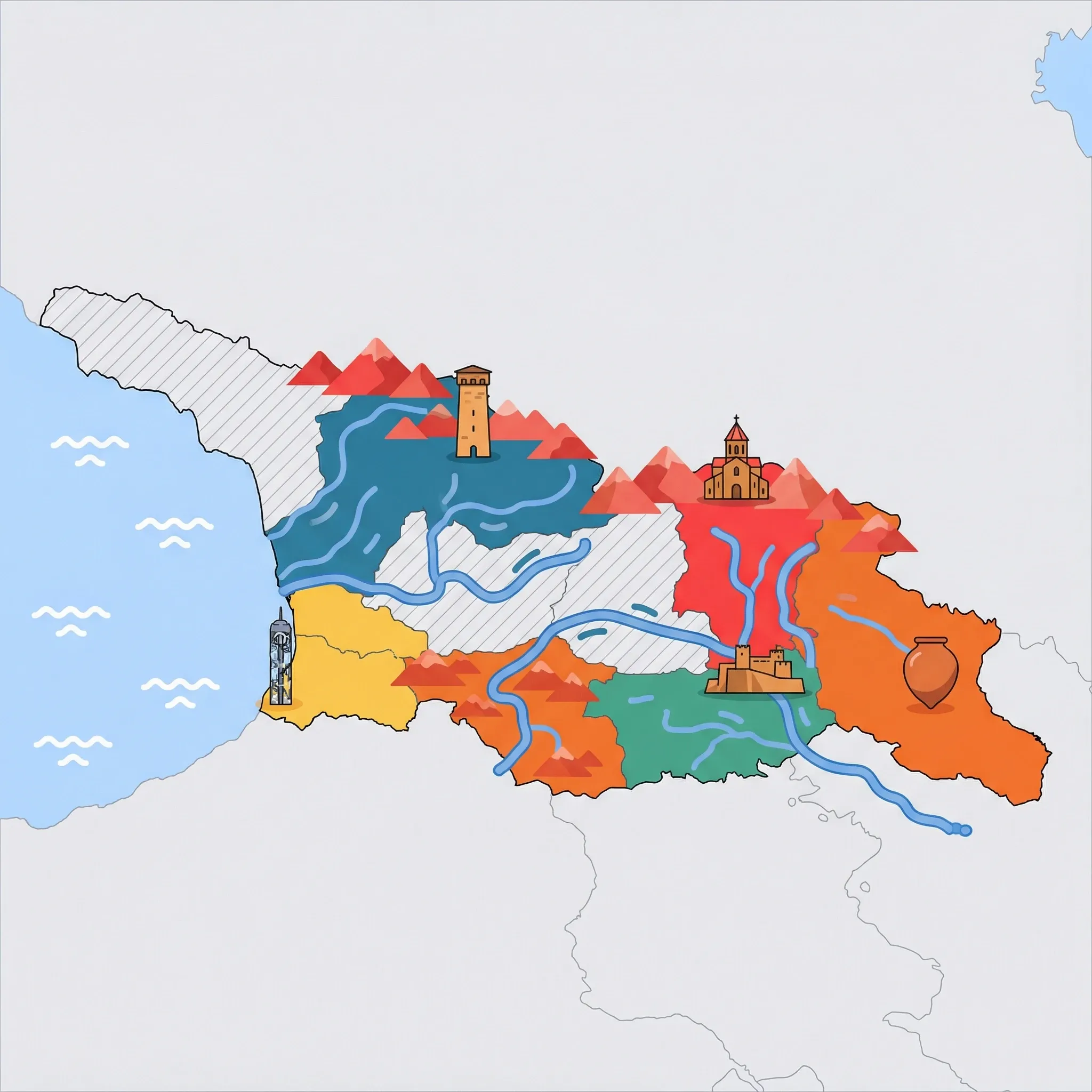
Click a region to explore
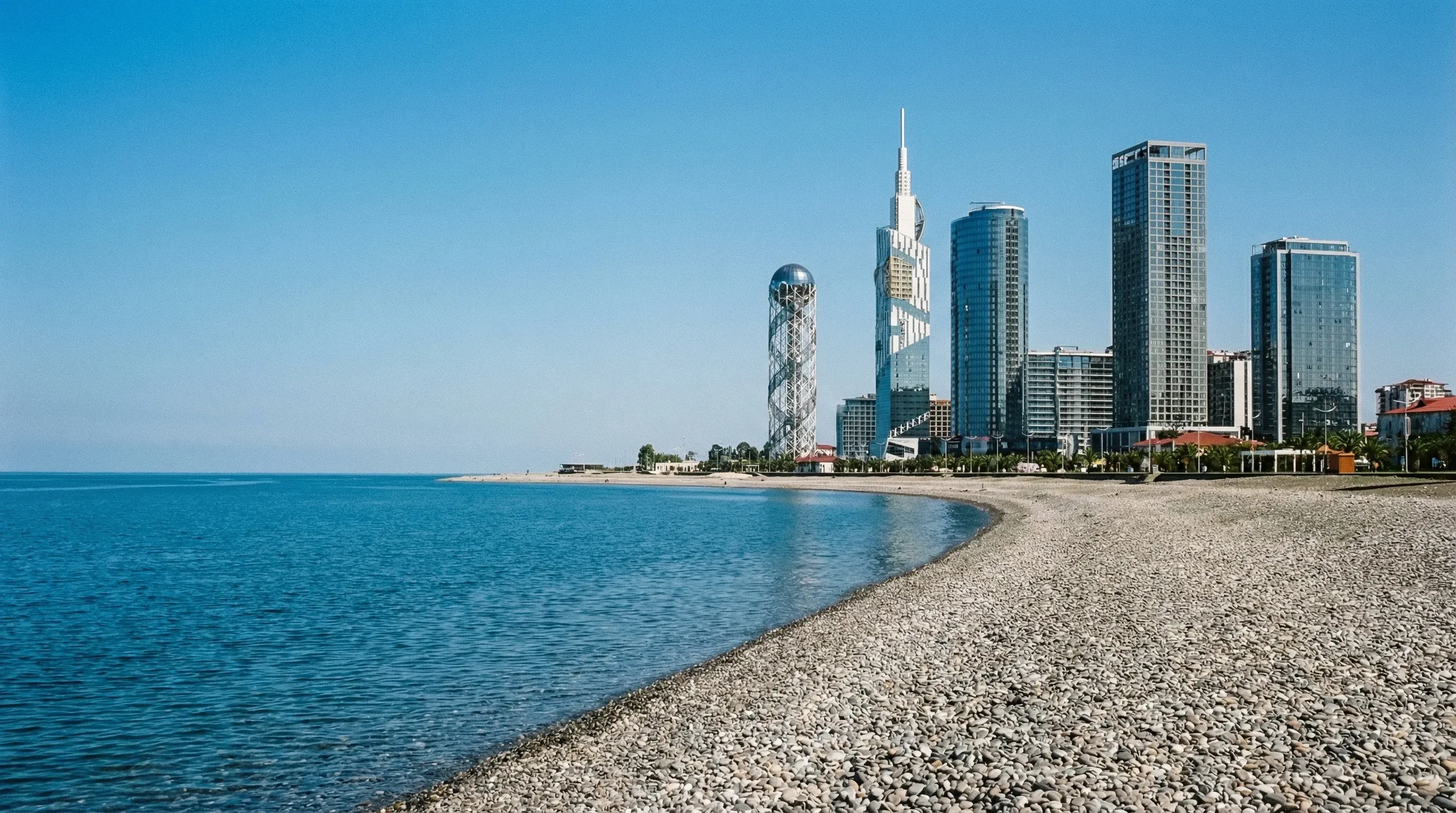
Batumi and the Adjara region offer a distinct flavor of Georgia, quite literally. Unlike the dry heat of the capital or the crisp alpine air of the mountains, the Black Sea coast is lush, humid, and unapologetically vibrant. For families, this is Georgia’s playground. The city of Batumi itself is a fascinating collage where 19th-century European architecture meets soaring, eccentric modern skyscrapers. The atmosphere is perpetually festive, especially in the summer months when the promenade comes alive with music, fountains, and the smell of the sea. Beyond the glitz of the city center, the region is hugged by lush green mountains that drop dramatically into the sea, offering a "jungle-like" environment that children find fascinating to explore.
The climate here is humid subtropical, meaning palm trees line the streets and tea plantations cover the hills. For parents, the relaxed café culture and the incredible local cuisine (distinct from the rest of Georgia) are major draws. For children, the appeal is immediate: warm water, pebble beaches that are great for stone-skimming, and a city designed for leisure. While the beaches are pebbly rather than sandy—which actually keeps the water clearer—renting sunbeds is cheap and easy. The region serves as a perfect end-of-trip relaxation spot after hiking in the mountains or sightseeing in Tbilisi, offering a mix of lazy beach days and easy nature walks.
Key Attractions
The crown jewel for family activities is undeniably Batumi Boulevard. Stretching for seven kilometers along the coast, this isn't just a walkway; it is a linear park packed with fountains, sculptures, playgrounds, and cafes. You can rent family-sized quadracycles or electric scooters to zip from one end to the other. Right near the start of the boulevard, the Ali and Nino Statue is a mesmerizing sight; the two massive steel figures pass through each other every 10 minutes, a slow-motion mechanical dance that captivates children and adults alike. For a break from the sun, the Batumi Dolphinarium is world-class and surprisingly affordable, offering shows that highlight the intelligence of the Black Sea bottlenose dolphins.
Nature-loving families should head slightly north to the Batumi Botanical Garden at Green Cape (Mtsvane Kontskhi). It is massive, organized into geographic zones, and offers an electric train service if little legs get tired. Further inland, Mtirala National Park (meaning "Crying Mountain" due to the rainfall) offers a true jungle adventure. The trails here are lush and green, with suspension bridges over rushing rivers and a zip-line course that older kids will adore. History buffs will appreciate a trip south to the Roman-era Gonio-Apsaros Fortress, where children can run along ancient walls and imagine Roman legions guarding the empire's edge.
Practical Advice
The best time to visit is late June to September for swimming, though July and August can be very humid. September is often considered the "velvet season" with warm water but cooler air. Be aware that the beaches are made of large pebbles; getting in and out of the water can be painful for tender feet, so pack water shoes. Mosquitos can be active in the evenings due to the humidity.
Food & Drink
Typical meal times: Lunch is usually taken late, from 1:00 pm to 3:00 pm. Dinner is a lively affair, typically starting around 8:00 pm and lasting late into the night.
Typical meal costs: A hearty meal for a family of four costs around 80–130 GEL (approx. $30–48 USD / €27–44 EUR).
Dietary requirements: Adjarian cuisine is dairy-heavy. Vegetarian options are plentiful (cheese, vegetables, walnuts), but vegans may struggle with the ubiquity of butter and cheese in signature dishes. Walnut allergies should be communicated clearly.
Signature dishes:
- Adjaruli Khachapuri – The region's icon: a boat-shaped bread filled with molten cheese and butter, topped with a raw egg yolk you stir in before eating. Kids love tearing off the "ears" of the boat to dip.
- Borano – A rich, hot dish of melted cheese and brown butter, essentially a Georgian fondue.
- Sinori – Thin lavash bread layers combined with cottage cheese and butter, soft and comforting for picky eaters.
Why this score?
The region is largely a developed seaside resort with high-end hotels and paved promenades. While Mtirala National Park offers lush hiking and an adventure park, the primary tourist experience revolves around urban beaches, casinos, and family-friendly botanical gardens.
Why this score?
As Georgia's second city, Batumi possesses modern private hospitals and clinics that are accustomed to treating foreign tourists. While services are reliable for most standard emergencies, specialized or complex pediatric care may still require a transfer to the capital, Tbilisi.
Why this score?
Batumi is a major regional hub attracting millions of visitors from neighboring Turkey, Israel, and the GCC countries annually. While it lacks the global household-name status of Mediterranean resorts, its massive hotel infrastructure and the Batumi Boulevard make it a premier summer destination in the Caucasus.

Batumi sees a significant price spike in July and August. Outside these months, it is very affordable. A modern family apartment near the beach costs 130–270 GEL (approx. $48–100 USD / €44–92 EUR) per night in high season. A casual lunch of Adjaruli Khachapuri and lemonade costs around 20–30 GEL (approx. $7.50–11 USD / €6.80–10 EUR) per person.

Getting Here & Around
Getting Here
- Airports – Batumi International Airport (BUS) is just 10 minutes from the city center. Kutaisi International Airport (KUT) is a budget hub 2 hours away, with direct shuttle buses connecting to Batumi.
- Train – The modern, double-decker Stadler train from Tbilisi to Batumi is comfortable, air-conditioned, and scenic, taking about 5 hours. It arrives at the central station near Ali and Nino Statue.
- Driving – The drive from Tbilisi takes 5–6 hours via the East-West highway. The road over the Rikoti Pass is scenic but can be slow due to traffic and construction.
Getting Around
- Walking & Cycling – The city center and Batumi Boulevard are perfectly flat and best explored on foot or by renting bikes/scooters.
- Public Transport – Batumi has a decent network of blue buses and marshrutkas (minibuses). You can pay with a contactless bank card on buses.
- Taxi – Apps like Bolt and Yandex Go work perfectly here and are very cheap for short hops to the Batumi Botanical Garden or airport.
Nearby Airports (2 airports)
Batumi
BUSBatumi
Kutaisi
KUTKutaisi
View full flight map for Georgia →
Official Links

Packing List
Essential for Batumi's beaches, which are made of large, sometimes sharp pebbles, not sand.
The humid subtropical climate makes mosquitos much more active here than in Tbilisi.
Sudden, heavy tropical-style downpours are common even in summer.
The sun at the Black Sea can be deceptive and very strong; extra protection for kids is wise.
Women must cover their heads to enter Orthodox churches; useful to keep one in your bag.
Essential for cleaning sticky hands after eating Khinkali (dumplings) the traditional way.
Even 'light' walks in Kazbegi or paved streets in Old Tbilisi can be steep, uneven, or muddy.
Street lighting in rural guesthouses and some historic city streets can be dim or inconsistent.
Some stricter monasteries require women to wear skirts (not trousers); wraps are often provided but own is better.
The local diet is very heavy on dough, cheese, and meat, which can be tough on sensitive stomachs.

Activities & Best Times

Hiking, wildlife, outdoor exploration, ecotourism
Home to the unique Colchic Rainforests (UNESCO Heritage) in Mtirala National Park, offering lush biodiversity and temperate jungle experiences rare in this part of the world. Summer provides optimal trail conditions, while the region's exceptionally high winter and autumn rainfall makes mountain exploration difficult during the off-season.

Urban tourism, museums, historical sites, architecture
Batumi offers a fascinating, eccentric blend of Belle Époque architecture, futuristic skyscrapers, and ancient history at Gonio Fortress. The peak summer months are vibrant and bustling, though discerning families may prefer the shoulder months to enjoy the botanical gardens and heritage sites without the peak humidity and crowds.

Scenic drives, countryside tours, route-based travel
The Trans-Adjarian Highway and Machakhela Valley offer dramatic, rugged drives through the Lesser Caucasus mountains with authentic rural encounters. Access to high passes like Goderdzi is strictly seasonal, with heavy snow blocking routes from late autumn through mid-spring.

Sport tourism, fitness activities, active recreation
The region features high-quality trekking and cycling infrastructure, particularly the trails around Mtirala and the coastal cycling routes. Activities are best enjoyed in the warmer months; however, the region's status as the wettest in the Caucasus means even summer visitors should prepare for sudden downpours.

Beach resorts, marine activities: diving, snorkelling, kite surfing, wind surfing, sailing
While popular regionally, the pebble beaches and variable water quality are modest compared to global benchmarks. The swimming season is relatively short, centered on the high summer months when Black Sea water temperatures become comfortable for families.

Winter sports, ski resorts, snow activities
Goderdzi offers impressive snow depths and 'cat-skiing' potential for adventurous families, though infrastructure remains in early development stages. The season is reliable in mid-winter, but the resort's remote location and limited amenities place it below established European alpine standards.

Attractions (15 total)



Public Holidays & Calendar Next 12 months
Public holidays, festivals, cultural celebrations, and seasonal natural phenomena coming up in Batumi & Black Sea Coast over the next 12 months.
Loading holidays and events...

Travel Advisory
Five out of six major agencies classify Georgia's overall risk as the lowest level, recommending standard safety awareness. While serious regional warnings exist for the breakaway territories of Abkhazia and South Ossetia, the country is generally considered stable for tourism.
Safety Topics
Traveller Advice (3 groups)

While same-sex acts are legal, social attitudes can be conservative. Members of the LGBTQ+ community may face discrimination or harassment in public settings.

As of early 2026, all visitors are required to have valid health and accident insurance with a minimum coverage of 33,000 GEL. Proof of insurance may be requested upon entry.

Female visitors should exercise caution, particularly when traveling alone at night. Instances of harassment and sexual assault have been reported; avoid isolated areas and use reputable taxi applications instead of hailing cabs on the street.
Agency Summaries
Most of Georgia is safe for travel with standard vigilance. Australian travelers are advised to completely avoid South Ossetia and Abkhazia because of high risks involving terrorism and unexploded ordnance.
While general travel is permitted, the authorities warn against visiting breakaway regions and areas near their administrative boundaries. Travelers are alerted to potential drink spiking in bars and the ongoing risk of political protests in the capital.
Standard safety measures are recommended for the majority of the country. A strict 'Do Not Travel' advisory is in effect for South Ossetia and Abkhazia due to the presence of Russian troops, landmines, and a lack of available emergency services.
Heightened vigilance is advised across the country due to civil unrest and the potential for crime targeting foreigners. Extreme danger exists in the separatist regions where the government has no control.
Visitors should maintain standard safety awareness throughout the country. However, travel is strongly discouraged to regions bordering Russia and the separatist territories of Abkhazia and South Ossetia due to military activity, landmines, and the risk of detention.
Travelers should observe standard safety protocols. It is important to avoid the occupied territories and be mindful of new mandatory health insurance requirements that came into effect recently.
Information is provided for general guidance only and does not constitute travel, safety, medical, or legal advice. Conditions may change. Users are responsible for independently verifying information before travel.