
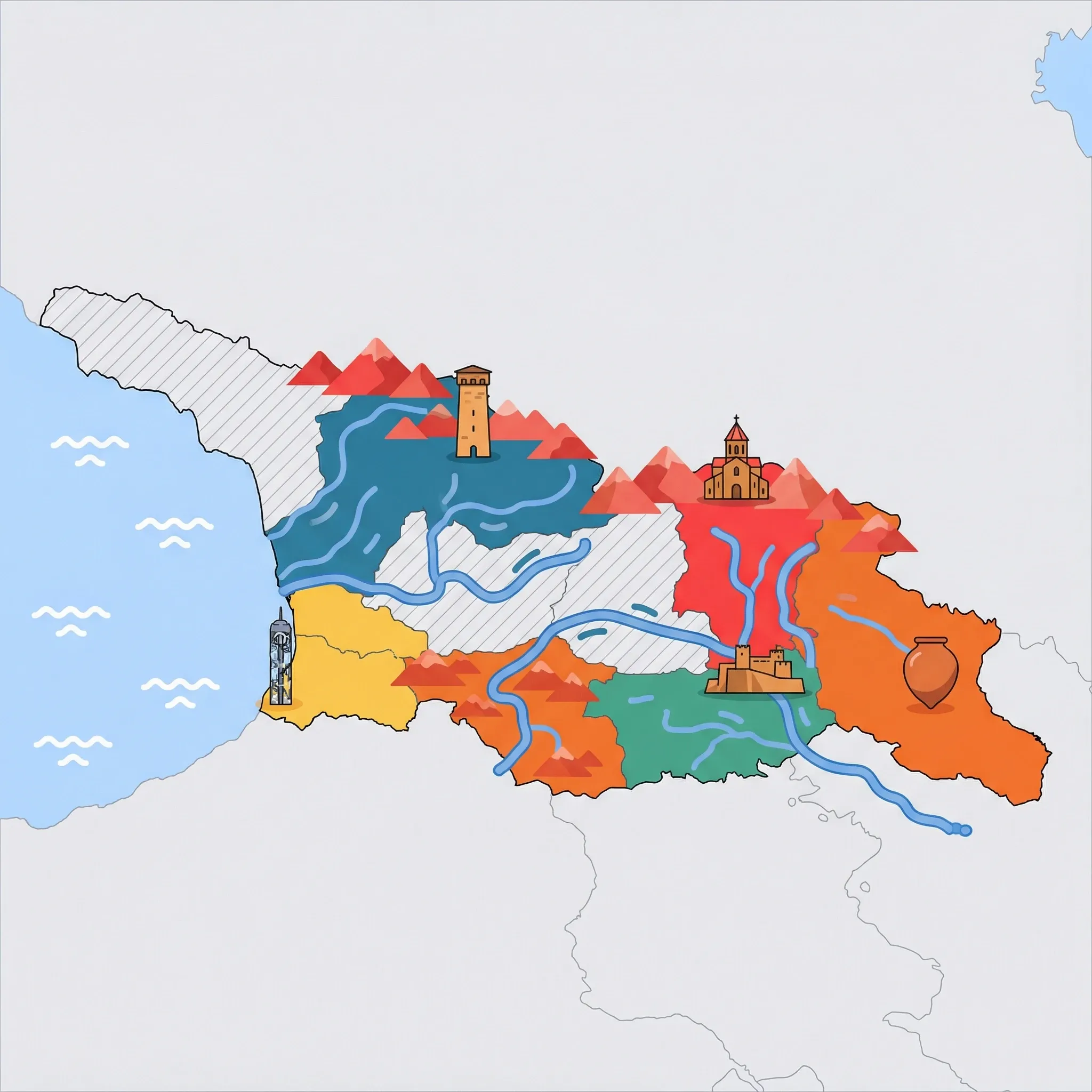
Click a region to explore
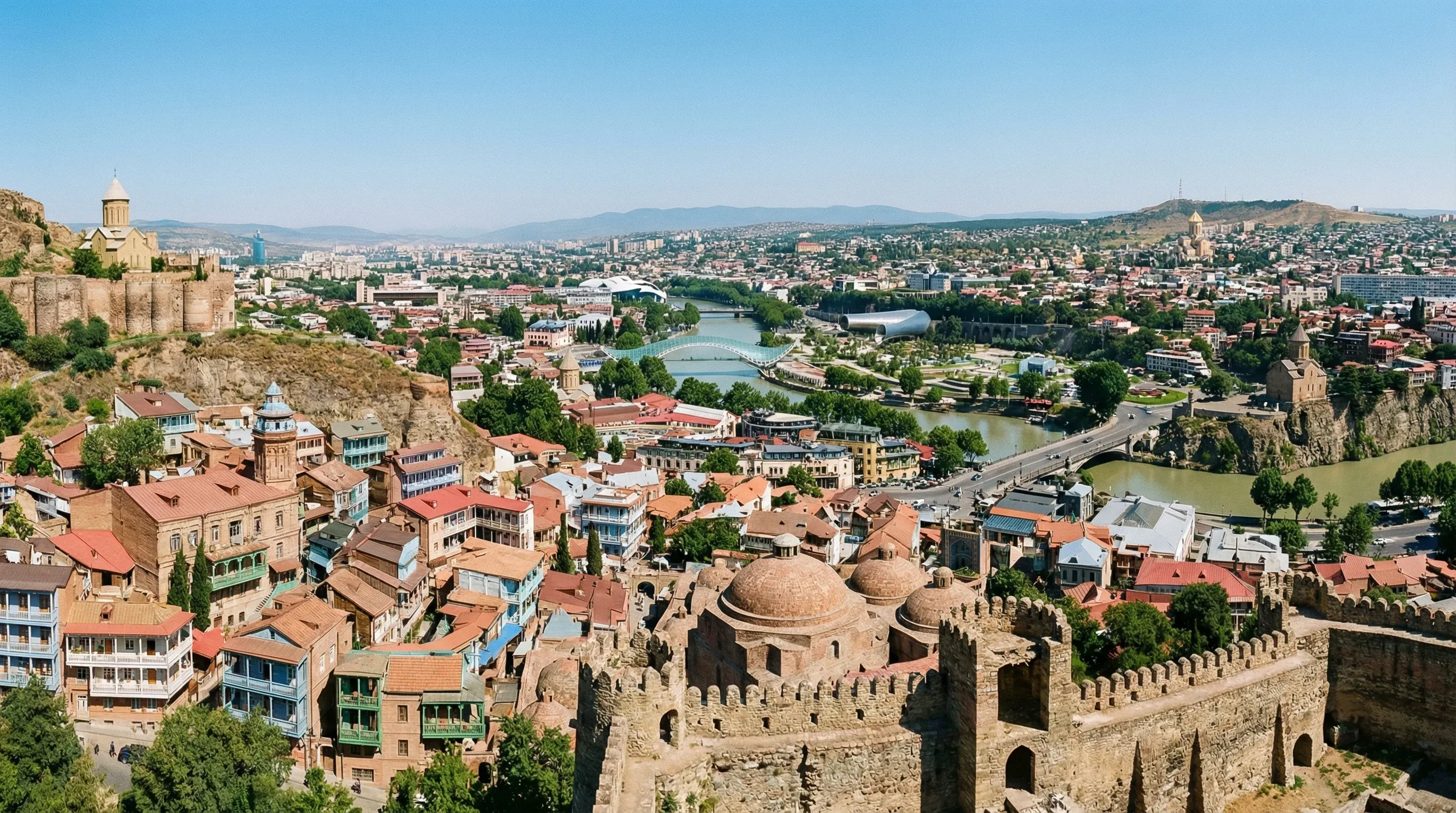
Tbilisi is a city that captures the heart instantly. It is messy, beautiful, historic, and incredibly safe. For families, it is a playground of sensory experiences. The city is built in a valley surrounded by hills, meaning you are constantly going up and down cable cars and funiculars, which counts as "transport entertainment" for kids. The Old Tbilisi district is a maze of crooked streets, carved wooden balconies, and friendly stray dogs (all tagged and vaccinated) that act as community pets. The smell of sulfur from the baths mixes with the scent of fresh bread from basement bakeries. It is a city where East meets West; you'll see futuristic glass bridges right next to 5th-century churches.
The culture here is very child-centric. Georgians adore children, and you will find that kids are welcomed everywhere, from fancy restaurants to late-night gatherings. There is plenty of green space, too. The city has escaped the "sterile" feel of many European capitals; here, tree roots buckle the pavements and vines grow wild, giving it a "secret garden" atmosphere. While traffic can be chaotic, the pedestrian zones are extensive. It is the perfect base for starting any Georgian adventure, offering all the modern amenities (malls, pharmacies, cinemas) alongside deep history.
Key Attractions
Start with the Narikala Fortress. You reach it via a cable car from Rike Park, which flies over the river and old town—a thrill in itself. From the top, you can walk down to the National Botanical Garden of Georgia, which has a waterfall right in the city center and plenty of shade. Across the valley, the Mtatsminda Park is a must-do. Accessible by a steep funicular train, it’s a vintage amusement park on top of the highest mountain, offering rides, donuts, and arguably the best view in the country.
For a unique cultural experience, visit Abanotubani, the bath district. Many bathhouses offer private rooms where families can soak in the hot sulfur water together (it smells like rotten eggs, which kids find hilarious). Slightly outside the center, the Open Air Museum of Ethnography is fantastic for families. It’s a collection of traditional houses from all over Georgia relocated to a hillside; kids can run in and out of the yards, see traditional crafts, and explore safely away from traffic. If the heat gets too much, the Tbilisi Zoo or the massive water park at the Tbilisi Sea are great escapes.
Practical Advice
Spring (May-June) and Autumn (September-October) are glorious. July and August can be stiflingly hot in the city bowl (35°C+). Most of the Old Town is cobblestoned and hilly, so leave the lightweight stroller at home and bring a carrier or a heavy-duty buggy.
Food & Drink
Typical meal times: Lunch 1:00 pm to 3:00 pm. Dinner 8:00 pm onwards.
Typical meal costs: Diverse range. A mid-range family meal is 80–140 GEL (approx. $30–52 USD / €27–48 EUR). Street food (Khachapuri) is ~4 GEL ($1.50).
Dietary requirements: Very easy. Tbilisi has a booming modern food scene with vegan cafes, gluten-free bakeries, and allergy-aware menus, alongside traditional spots.
Signature dishes:
- Khachapuri (Imeretian) – The classic cheese bread. It’s essentially a cheese pizza without the tomato sauce. Universal kid-pleaser.
- Khinkali – The city version of the dumplings, usually smaller and with more variety (mushroom, potato, cheese) than in the mountains.
- Lagidze Water – Not a food, but a drink. Traditional sodas made from natural syrups (chocolate, tarragon, cream, cherry). Try them at the shop near the Holy Trinity Cathedral of Tbilisi (Sameba).
Why this score?
Tbilisi is a highly developed metropolitan area where the primary activities include walking through historical districts, visiting museums, and dining. While the surrounding hills like Mtatsminda offer some light hiking, the environment is urban and provides very little rugged adventure.
Why this score?
Tbilisi offers the best healthcare in the Caucasus, with several Western-accredited private hospitals like the American Hospital Tbilisi. Many doctors are foreign-trained and speak English, and these facilities are specifically designed to accept international insurance and cater to foreign patients.
Why this score?
As the capital and primary entry point, Tbilisi is a well-known international destination with a high density of foreign tourists year-round. It offers a sophisticated tourism infrastructure, from the historic Old Town to modern landmarks like Rike Park, rivaling many Eastern European capitals.

Tbilisi accommodates all budgets. You can stay in a luxury hotel for $200+ or a family guesthouse for $40. Public transport is negligible (1 GEL per trip). Museum entry is usually cheap (5–15 GEL). A coffee costs around 7–10 GEL (approx. $2.60–3.70 USD / €2.40–3.40 EUR).

Getting Here & Around
Getting Here
- Airports – Tbilisi International Airport (TBS) is 20km from the center. Bus 337 connects to the city, or a taxi takes 20-30 mins.
- Train – Central Station connects to Batumi, Poti, and Zugdidi. It is located near the Station Square metro.
Getting Around
- Metro – Fast, deep, and very cheap. You need a "Metromoney" card. It connects the main non-historic parts of the city.
- Taxi – Apps like Bolt and Yandex Go are essential. They are extremely cheap (usually $3-5 for a ride across town) and save you from negotiating.
- Cable Car & Funicular – Both are part of the public transport network but require specific top-up cards. They are the best way to reach Narikala Fortress and Mtatsminda Park.
Nearby Airports (1 airport)
Lochini
TBSTbilisi
View full flight map for Georgia →
Official Links

Packing List
Old Tbilisi is paved with uneven cobblestones and is very hilly; flip-flops will break.
Required to enter functioning Orthodox churches like Sameba or Sioni.
Changes in water and rich, cheesy food can sometimes upset sensitive stomachs.
The city gets very direct sun, and you will be walking outside a lot.
Women must cover their heads to enter Orthodox churches; useful to keep one in your bag.
Essential for cleaning sticky hands after eating Khinkali (dumplings) the traditional way.
Even 'light' walks in Kazbegi or paved streets in Old Tbilisi can be steep, uneven, or muddy.
Street lighting in rural guesthouses and some historic city streets can be dim or inconsistent.
Some stricter monasteries require women to wear skirts (not trousers); wraps are often provided but own is better.
The local diet is very heavy on dough, cheese, and meat, which can be tough on sensitive stomachs.

Activities & Best Times

Urban tourism, museums, historical sites, architecture
A historic crossroads of Europe and Asia featuring the Narikala Fortress and world-class fine art museums. Peak visits occur during the mild spring and autumn months when the city's street life and outdoor cafes are most vibrant.

Hiking, wildlife, outdoor exploration, ecotourism
Exceptional urban-accessible hiking trails and the unique Open Air Museum of Ethnography provide immersive natural and rural experiences. Best explored from late spring to early autumn before winter temperatures and mud affect trail accessibility.

Sport tourism, fitness activities, active recreation
Offers significant infrastructure for urban hiking, cycling, and adventure parks like the Narikala Zipline. Peak months provide optimal weather for outdoor exertion, while winter months are less suitable due to cold and potential ice.

Spa retreats, wellness centers, peaceful getaways
Famous for its ancient, authentic sulfur bath district (Abanotubani) which offers a unique thermal experience in historic structures. These facilities are most appealing during the cooler months, providing a cozy contrast to the winter chill.

Scenic drives, countryside tours, route-based travel
Tbilisi serves as the gateway to the legendary Georgian Military Highway, offering breathtaking mountain scenery and high-quality scenic drives. Peak season is summer when high mountain passes are reliably clear of snow.
Amusement parks, family entertainment venues
Features regional-scale water parks and amusement facilities like Gino Paradise and Tbilisi Sea Club. These parks are best enjoyed during the hot summer months, though they remain secondary to the city's cultural draws.

Attractions (17 total)



Public Holidays & Calendar Next 12 months
Public holidays, festivals, cultural celebrations, and seasonal natural phenomena coming up in Tbilisi over the next 12 months.
Loading holidays and events...

Travel Advisory
Five out of six major agencies classify Georgia's overall risk as the lowest level, recommending standard safety awareness. While serious regional warnings exist for the breakaway territories of Abkhazia and South Ossetia, the country is generally considered stable for tourism.
Safety Topics
Traveller Advice (3 groups)

While same-sex acts are legal, social attitudes can be conservative. Members of the LGBTQ+ community may face discrimination or harassment in public settings.

As of early 2026, all visitors are required to have valid health and accident insurance with a minimum coverage of 33,000 GEL. Proof of insurance may be requested upon entry.

Female visitors should exercise caution, particularly when traveling alone at night. Instances of harassment and sexual assault have been reported; avoid isolated areas and use reputable taxi applications instead of hailing cabs on the street.
Agency Summaries
Most of Georgia is safe for travel with standard vigilance. Australian travelers are advised to completely avoid South Ossetia and Abkhazia because of high risks involving terrorism and unexploded ordnance.
While general travel is permitted, the authorities warn against visiting breakaway regions and areas near their administrative boundaries. Travelers are alerted to potential drink spiking in bars and the ongoing risk of political protests in the capital.
Standard safety measures are recommended for the majority of the country. A strict 'Do Not Travel' advisory is in effect for South Ossetia and Abkhazia due to the presence of Russian troops, landmines, and a lack of available emergency services.
Heightened vigilance is advised across the country due to civil unrest and the potential for crime targeting foreigners. Extreme danger exists in the separatist regions where the government has no control.
Visitors should maintain standard safety awareness throughout the country. However, travel is strongly discouraged to regions bordering Russia and the separatist territories of Abkhazia and South Ossetia due to military activity, landmines, and the risk of detention.
Travelers should observe standard safety protocols. It is important to avoid the occupied territories and be mindful of new mandatory health insurance requirements that came into effect recently.
Information is provided for general guidance only and does not constitute travel, safety, medical, or legal advice. Conditions may change. Users are responsible for independently verifying information before travel.