
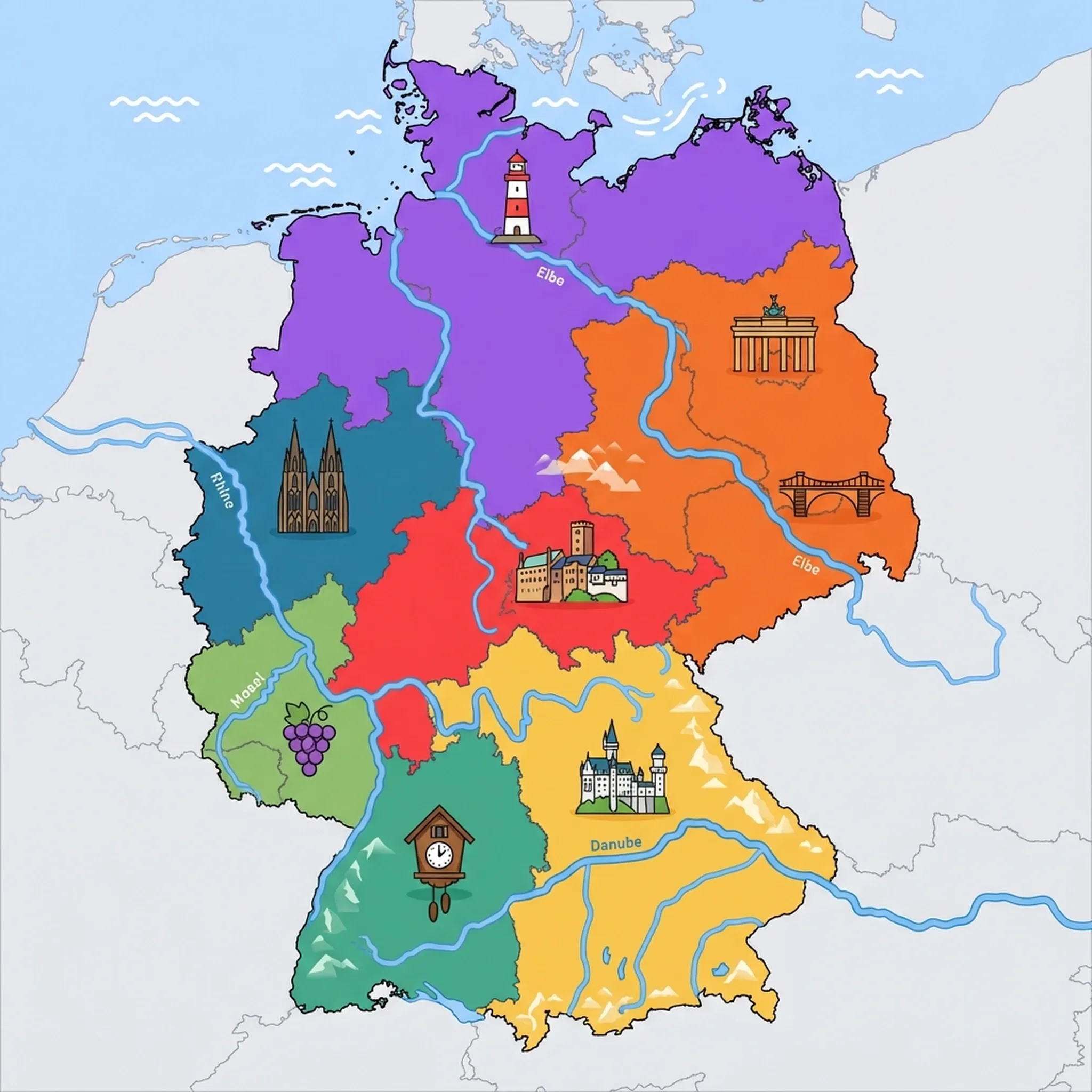
Click a region to explore
Overview
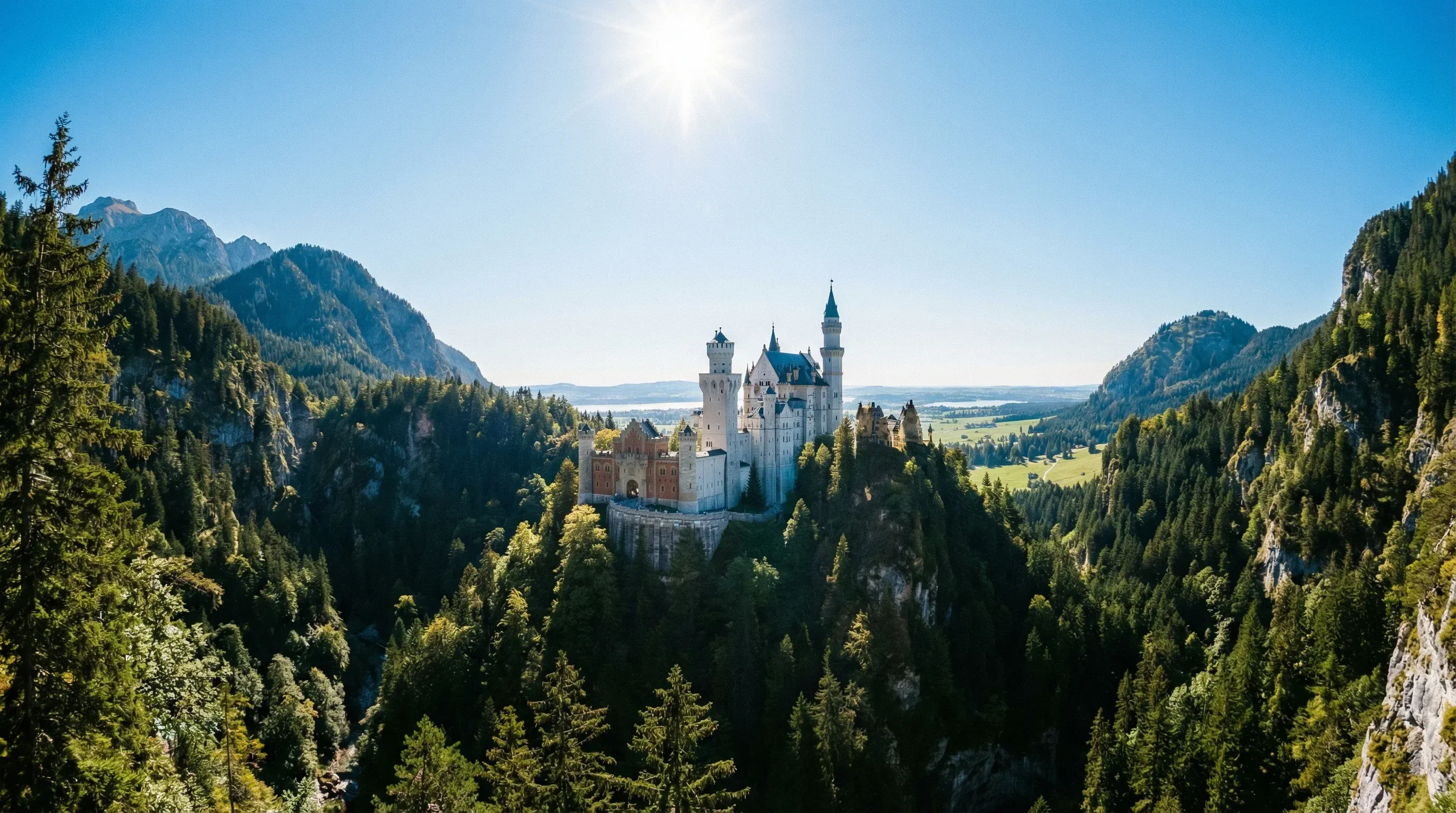
Bavaria (Bayern) is likely what you imagine when you think of Germany: leather breeches, brass bands, timber-framed houses, and snow-capped mountains. But beyond the clichés lies a region incredibly well-suited for families. The landscape rises from the rolling hills of Franconia in the north to the dramatic walls of the Alps in the south. The culture here is deeply traditional yet welcoming; 'Gemütlichkeit' (coziness/friendliness) is a way of life. For children, this means a land of actual castles and palaces that look like they belong in a Disney movie—because many of them inspired those very films. The infrastructure is world-class, making even the highest peaks accessible via cable cars and cogwheel trains.
Munich, the capital, is a green city where the 'Englischer Garten' allows for surfing, swimming, and picnicking right in the center. But the rural areas are the true draw. Farm stays ('Urlaub auf dem Bauernhof') are a massive trend here, where families can stay on working dairy farms, feed calves, and drive tractors. Safety is exceptional, and the public transport network reaches even remote trailheads. Whether you are exploring the salt mines of Berchtesgaden or taking a boat across an emerald Alpine lake, Bavaria offers a grandeur that captivates both toddlers and teenagers.
Key Attractions
The headline act for many families is the Legoland Deutschland Resort in Günzburg. It is beautifully designed for children aged 2-12, with Miniland replicas that fascinate adults too. For a brush with royal history, skip the long lines at Neuschwanstein and visit its neighbor, Hohenschwangau Castle, where King Ludwig II actually spent his childhood. It is yellow, bright, and easier to tour with kids. In Nuremberg, the Imperial Castle of Nuremberg (Kaiserburg) dominates the city and offers a look into the Holy Roman Empire with a deep well demonstration that kids love.
Nature is best experienced at Königssee in Berchtesgaden National Park. The electric boats glide silently over the fjord-like lake, offering an echo demonstration with a trumpet that bounces off the rock walls. Nearby, the Hellabrunn Zoo in Munich is a 'geo-zoo' where animals are grouped by continent, and the Fränkisches Freilandmuseum Bad Windsheim offers a sprawling outdoor space where kids can see how medieval villagers lived, complete with farm animals.
Practical Advice
Bavaria is a year-round destination: hiking and swimming in summer, skiing and markets in winter. Note that 'Oktoberfest' in Munich (late Sept to early Oct) makes accommodation incredibly expensive and crowded. For a quieter authentic experience, visit a local 'Volksfest' in a smaller town.
Food & Drink
Typical meal times: Lunch is 12:00 pm to 2:00 pm. Beer gardens are open all afternoon, but hot food kitchens may pause between 2:30 pm and 5:30 pm.
Typical meal costs: A meal in a traditional beer garden is good value; expect €50–80 (approx. $55–85 USD / £40–65 GBP) for a family of four.
Dietary requirements: Bavarian food is meat-heavy. However, 'Kässpatzen' (cheese noodles) and potato dishes are safe vegetarian bets. Vegan options are standard in Munich but require searching in rural Alpine villages.
Signature dishes:
- Weißwurst – White veal sausages flavored with parsley and lemon. Traditionally eaten only before noon with sweet mustard and a pretzel. You must peel the skin off before eating!
- Brezn (Pretzel) – The large, soft, salt-crusted Bavarian pretzel. A staple snack for toddlers and adults alike, often sold with butter ('Butterbrezn').
- Schweinshaxe – Roasted pork knuckle with crackling skin, usually served with a potato dumpling (Knödel) and gravy. One portion is often enough to feed an adult and a small child.
Why this score?
The Bavarian Alps provide a stunning backdrop for outdoor sports, including skiing, paragliding, and mountaineering. While the terrain is steep, the extensive cable car systems and well-maintained Alpine paths make these experiences very accessible for families and casual adventurers. It offers more verticality than northern Germany but remains firmly within a highly developed tourism framework.
Why this score?
Munich is a global hub for medical tourism, offering some of the best hospitals and specialized care in Europe. Throughout the state, even in smaller Alpine towns like Garmisch-Partenkirchen, medical facilities are top-tier and accustomed to treating international visitors. Language barriers are minimal in clinical settings, and emergency response in the mountains is highly efficient via specialized mountain rescue units.
Why this score?
Bavaria is the quintessential German destination for international travelers, home to iconic landmarks like Neuschwanstein Castle and the city of Munich. The region benefits from a massive influx of tourists for events like Oktoberfest and year-round Alpine tourism, making it a major international draw. It is arguably the most famous German region outside of Berlin, with a very high density of hotel beds and English-language services.

Munich is the most expensive city in Germany, but rural Bavaria is surprisingly affordable. A rustic guesthouse (Gasthof) room costs €100–150 (approx. $110–165 USD / £85–125 GBP). Beer garden meals are great value, costing around €15–18 (approx. $16–20 USD / £12–15 GBP) per main dish. Public transport passes like the Bayern-Ticket keep travel costs low.

Getting Here & Around
Getting Here
- Airports – Munich Airport (MUC) is a major international hub with excellent family facilities (free strollers, play areas). Nuremberg (NUE) and Memmingen (FMM) serve the north and west.
- Train – Munich Central Station is a key rail hub. High-speed trains connect to Berlin, Frankfurt, and Vienna. The regional 'Bayern-Ticket' allows budget travel across the state.
- Driving – The A9 and A8 connect Bavaria to the rest of Germany. Traffic around Munich can be heavy during holidays.
Getting Around
- Train – The 'Bayern-Ticket' is a fantastic deal for families, allowing unlimited regional train travel for a day (after 9:00 am on weekdays) for a flat group rate. It covers trains to Hohenschwangau Castle (via Füssen) and Berchtesgaden National Park.
- Car – Useful for the Alpine Road and reaching rural farm stays. Roads are excellent, but mountain passes require cautious driving.
- Cycling – Bavaria is a cycling paradise. Flat paths follow the Danube and Main rivers, perfect for families with trailers.
Nearby Airports (3 airports)
Memmingen Airport
FMMMemmingen
Munich Airport
MUCMunich
Nuremberg Airport
NUENuremberg
View full flight map for Germany →
Official Links

Packing List
Essential for farm stays and holiday rentals where shoes are left at the door.
Public fountains in Bavarian towns often dispense high-quality drinking water.
Allowed in beer gardens; you can bring your own food (picnic style) as long as you buy drinks there.
Many traditional Bakeries and smaller Beer Gardens still do not accept cards.
Public toilets (Sanifair) and supermarket trolleys often require €0.50, €1, or €2 coins.
Supermarkets and shops charge for plastic bags; locals always carry their own totes.
Ticks are common in German forests (Black Forest, Bavaria) and can carry Lyme disease.
Standard gear for German kids; essential for damp playgrounds and forest walks.
Many small bakeries, ice cream shops, and rural 'Gasthaus' restaurants still do not accept cards.

Activities & Best Times

Hiking, wildlife, outdoor exploration, ecotourism
With 15 major attractions including the Alpine peaks and sophisticated wildlife parks, the region offers world-class immersion in natural landscapes. Peak season aligns with optimal hiking weather and full accessibility of mountain trails and wildlife centers.

Urban tourism, museums, historical sites, architecture
Home to iconic landmarks like Nymphenburg Palace and Marienplatz, Bavaria offers a high-density of authentic heritage experiences. Peak tourism occurs during the warm summer months and again in December for the world-renowned Christmas market tradition.
Amusement parks, family entertainment venues
Features internationally recognized venues like Legoland Deutschland and Therme Erding, providing high-standard infrastructure for families. The seasonal window is dictated by the operational dates of outdoor parks, though water parks remain a year-round draw.

Sport tourism, fitness activities, active recreation
Organized infrastructure such as the Jochen Schweizer Arena and Alpsee Bergwelt supports high-energy sport tourism. Peak conditions are found in summer when alpine adventure centers are fully operational and weather is stable for outdoor activities.
Beach resorts, marine activities: diving, snorkelling, kite surfing, wind surfing, sailing
Alpine lakeside facilities are not beach/sea destinations. Chiemsee and similar lakes are freshwater recreational areas, not comparable to coastal beach tourism.

Learning experiences, scientific sites, historical education
Having Sea Life Munich and some historic sites doesn't constitute a destination for educational tourism. This is marginal - nice to have but not a primary draw.

Attractions (35 total)



Public Holidays & Calendar Next 12 months
Public holidays, festivals, cultural celebrations, and seasonal natural phenomena coming up in Bavaria over the next 12 months.
Loading holidays and events...

Travel Advisory
While several agencies recommend standard precautions, others have elevated their status to a caution level due to consistent terrorism risks and temporary border controls. A tie between levels resulted in the more cautious assessment.
Safety Topics
Traveller Advice (4 groups)

Germany is considered one of the safer destinations globally for LGBTQIA+ visitors, frequently appearing in top-tier safety indices for this demographic.

Visitors should always carry a form of government-issued photo identification and be prepared for potential delays at land borders due to temporary security checks.
Consult dedicated accessibility resources for major cities as infrastructure varies, particularly in historic areas or older public transport segments.
Individuals participating in winter sports in mountainous regions should monitor avalanche reports closely and ensure their travel insurance specifically covers high-risk mountain activities.
Agency Summaries
An increased level of caution is advised due to security concerns related to terrorism. Visitors should expect a visible security presence in major cities.
Travellers should remain highly vigilant due to a persistent threat of terrorist attacks throughout the country, targeting public spaces and transportation hubs.
General travel is considered safe, though visitors are advised to maintain standard safety awareness and be alert to the possibility of terrorism in public areas.
Standard safety measures are recommended. Travellers should be aware of temporary border controls and ensure they carry valid identification at all times.
No travel restrictions are in place, though there is an ongoing likelihood of terrorist activity. Security measures and entry requirements have been updated recently.
Heightened vigilance is recommended because of the threat posed by terrorist organizations and individuals who may target tourist locations and major events without warning.
Information is provided for general guidance only and does not constitute travel, safety, medical, or legal advice. Conditions may change. Users are responsible for independently verifying information before travel.