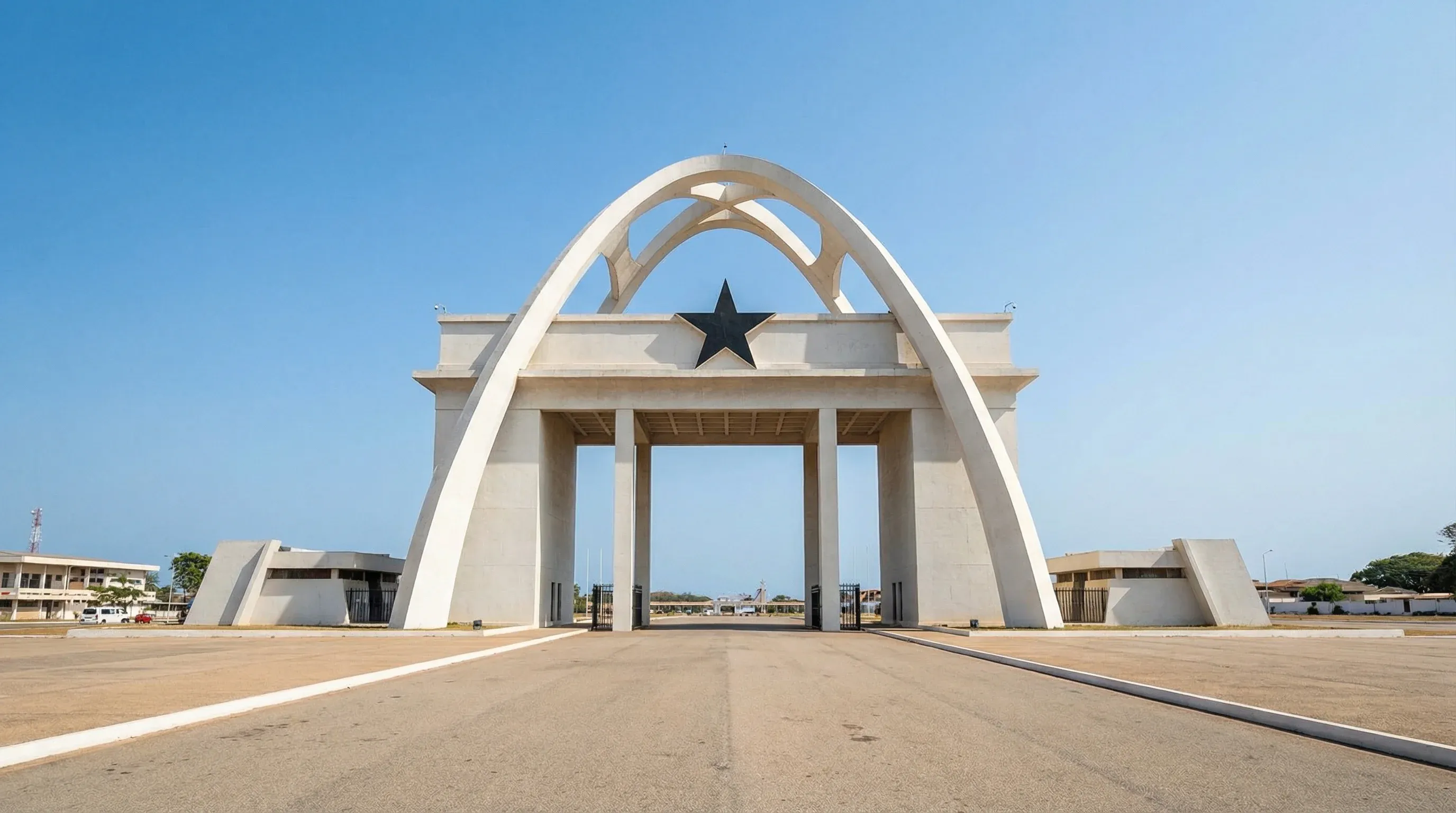

Accra & Greater Accra
The heartbeat of Ghana where culture meets the coast 🇬🇭🌊
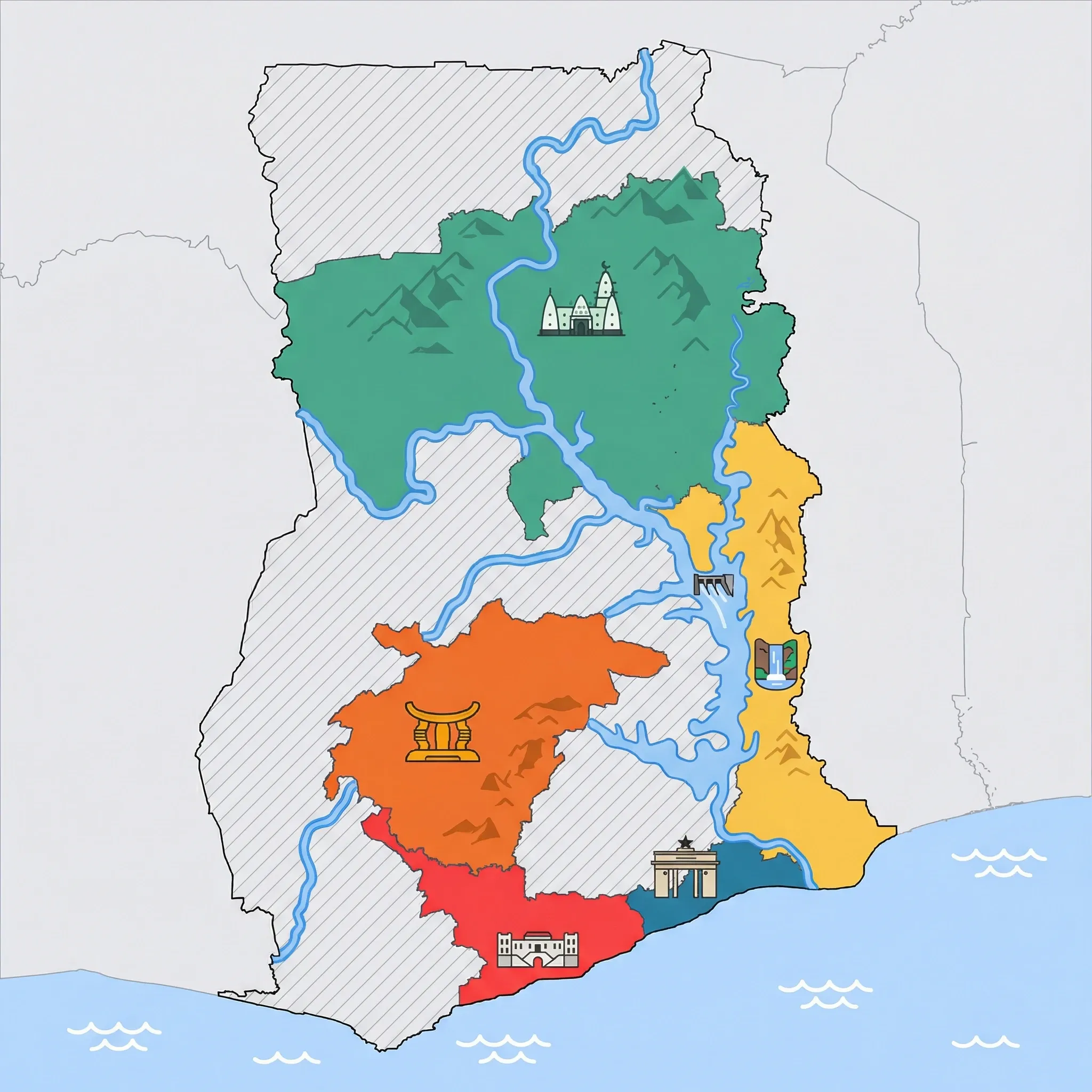
Click a region to explore
Accra is the pulsating heart of Ghana, a city that never truly sleeps and offers families a dynamic blend of heritage, modernity, and coastal life. For a family visiting West Africa for the first time, the Greater Accra region serves as the perfect landing pad. The atmosphere here is thick with humidity and hospitality; the streets are alive with the sounds of Azonto music, the honking of tro-tros, and the inviting aroma of grilling kebabs. While the traffic can be intense, the city's chaotic charm is balanced by pockets of serenity and world-class history. Geographically, the region hugs the Atlantic coastline, offering long stretches of sandy beaches that transform into lively social hubs on weekends, while the northern outskirts provide greener, hillier escapes.
Culturally, Accra is a melting pot. While it is traditionally the home of the Ga people—celebrated for their vibrant Homowo festival and distinct cuisine—you will find influences from every corner of Ghana here. For children, the city offers an unparalleled education in resilience, joy, and history. It is a place where you can watch fishermen hauling in heavy nets at dawn, visit ancient forts that tell the story of the trans-Atlantic trade, and then enjoy a burger in an air-conditioned mall in the afternoon. The heat can be oppressive, particularly for younger children, so planning activities around early mornings and late afternoons is essential. However, the warmth of the locals, who generally adore children and will go out of their way to make families feel welcome, makes the climate much easier to bear.
Key Attractions
For a dose of history that is accessible to children, the National Museum of Ghana is an essential stop. Recently renovated, it houses fascinating artifacts ranging from royal regalia to contemporary art, providing a colorful overview of the nation's past without being overwhelming. Just a short drive away, Kwame Nkrumah Memorial Park & Mausoleum offers a lesson in Pan-Africanism within a beautifully landscaped park that gives kids plenty of space to run around while parents soak in the history of Ghana's independence.
If your family needs a break from the urban sprawl, the Shai Hills Resource Reserve is a fantastic day trip located on the region's edge. It is the closest place to Accra where you can see wildlife; children are usually thrilled to spot baboons, antelopes, and ostriches against the backdrop of dramatic rocky hills. Closer to the city center, Legon Botanical Gardens provides a fantastic canopy walkway and high-ropes course that is perfect for burning off energy in a shaded, safe environment. Finally, no trip to Accra is complete without visiting Labadi Beach. While the currents can be strong for swimming, the cultural scene—with drumming, dancing, and horseback riding on the sand—is a quintessential Accra experience.
Practical Advice
The best time to visit is during the dry season from November to March, though December is particularly busy with the "Detty December" festivities. Traffic in Accra is notorious; a 10km journey can take an hour. Families should download ride-hailing apps (Uber, Bolt, Yango) rather than relying on standard taxis for better navigation and fixed pricing. Carry plenty of water and sunscreen, as the equatorial sun is strong.
Food & Drink
Typical meal times: Breakfast is early, often around 6:30 am to 8:30 am. Lunch is the main meal, taken between 12:00 pm and 2:00 pm. Dinner is usually eaten between 6:00 pm and 8:30 pm.
Typical meal costs: A mid-range meal for a family of four will cost between GH₵ 400–700 (approx. $25–45 USD / €23–42 EUR). Street food is significantly cheaper, costing around GH₵ 30–50 (approx. $2–3.50 USD / €1.80–3 EUR) per person.
Dietary requirements: Vegetarian options are increasingly common, though you must ask specifically about shrimp powder (shito), which is used as a base in many "vegetable" stews. Gluten-free travelers can rely on yam, cassava, and plantain dishes, but cross-contamination in kitchens is a risk.
Signature dishes:
- Kenkey with fried fish – Fermented corn dough balls served with spicy pepper sauce (shito) and fried tilapia or red snapper; a staple of the Ga people.
- Kelewele – Spiced, deep-fried plantain cubes seasoned with ginger, cloves, and chili; a sweet and spicy street food snack kids often love.
- Waakye – A hearty dish of rice and beans cooked with millet leaves (giving it a reddish color), served with spaghetti, cassava flour (gari), and stew.
Why this score?
The region is predominantly urbanized and serves as the country's administrative and commercial center. Adventure is limited to small-scale managed activities like the Legon Botanical Gardens rope courses or day trips to the fenced Shai Hills Resource Reserve.
Why this score?
This region offers Ghana's highest standard of care, featuring the Korle-Bu Teaching Hospital and several private clinics that cater to expats and diplomats. However, it still lacks the specialized equipment and consistency of international hubs, and medical evacuation is often recommended for serious conditions.
Why this score?
As the primary gateway for nearly one million annual arrivals, Accra is the hub for business, diaspora 'Year of Return' tourism, and cultural events. While it features international hotel brands and modern shopping malls, it remains a moderate destination on a global scale compared to major world capitals.

Accra is the most expensive region in Ghana. While street food remains cheap, accommodation and Western-style amenities command premium prices. A decent family hotel room costs GH₵ 1,600–2,800 (approx. $100–175 USD / €95–165 EUR) per night. Supermarket imports are pricey, but local markets offer excellent value for fruit and fabric.

Getting Here & Around
Getting Here
- Airports – Kotoka International Airport (ACC) is the primary international gateway to Ghana, located right within the city. It receives direct flights from major hubs in Europe (London, Amsterdam, Brussels) and North America (New York, Washington D.C.).
- Bus – Long-distance luxury buses (such as VIP or STC) connect Accra to all other major regional capitals, arriving at circle or various private terminals.
- Driving – Accra is the hub of the national road network. The N1 highway runs through the city, connecting it west to Cape Coast and east to the Volta Region.
Getting Around
- Ride-Hailing Apps – Uber, Bolt, and Yango are the most family-friendly options. They provide air-conditioned cars, tracked journeys, and fixed prices, avoiding the need to haggle.
- Tro-tros – These ubiquitous minibuses are the heartbeat of local transport. While incredibly cheap, they are often crowded, hot, and drive aggressively. They are an adventure for older teens but generally not recommended for families with small children or luggage.
- Private Driver – For a stress-free experience, hiring a car with a driver for the day is a common and affordable luxury, allowing you to explore the Shai Hills Resource Reserve or city sites at your own pace.
Nearby Airports (1 airport)
Kotoka International
ACCAccra
View full flight map for Ghana →
Official Links

Packing List
Hotel outlets are often scarce and power fluctuations can occur.
The humidity in Accra is intense; these help children regulate temperature.
Useful for beach days and sudden tropical downpours during the rainy season.
Essential for eating street food or snacks on the go.
Mandatory physical document checked before you even leave the plane.
Frequent power cuts ("Dumsor") mean you need backup for phones/fans.
Street lighting is inconsistent and power outages can happen at night.
Essential during Harmattan season (Dec-Mar) when air is thick with dust.
Exchange bureaus often reject notes that are old, torn, or marked.

Activities & Best Times

Urban tourism, museums, historical sites, architecture
As a hub of Pan-African history and the 'Year of Return' movement, Accra offers authentic experiences at the Kwame Nkrumah Memorial and Osu Castle. Peak travel occurs during the 'Detty December' period and August's vibrant street art scene, while heavy May-June rains can disrupt urban exploration.

Hiking, wildlife, outdoor exploration, ecotourism
Shai Hills Resource Reserve provides unique wildlife viewing and ancient cave exploration accessible from the capital. The dry season offers the best visibility and trail conditions, whereas the peak monsoon in June makes outdoor excursions difficult.

Beach resorts, marine activities: diving, snorkelling, kite surfing, wind surfing, sailing
Ada Foah and Bojo Beach offer distinct coastal experiences ranging from estuary lagoons to Atlantic surf. The sea is calmest and air most pleasant from November to March, while May and June see rougher conditions and significant precipitation.

Scenic drives, countryside tours, route-based travel
The scenic drive to the Aburi Mountains and the coastal route to Ada provide varied landscapes and cool highland escapes. Dry months ensure safe driving conditions and clear views of the Accra plains and coastline.

Sport tourism, fitness activities, active recreation
Facilities like Lakeside Marina Park and the Shai Hills mountain bike loops offer structured active recreation for families. These outdoor activities are best enjoyed during the drier months to avoid mud and high humidity on the trails.

Events, celebrations, seasonal attractions
Accra hosts internationally recognized events like AfroFuture in December and the Chale Wote Street Art Festival in August. These specific windows represent the only times the region becomes a global festival destination.

Attractions (13 total)



Public Holidays & Calendar Next 12 months
Public holidays, festivals, cultural celebrations, and seasonal natural phenomena coming up in Accra & Greater Accra over the next 12 months.
Loading holidays and events...

Travel Advisory
All major agencies maintain a baseline advisory for travellers to exercise increased vigilance across Ghana, primarily due to crime and regional security threats. While the country is generally stable, specific regional warnings and demographic-based risks necessitate higher awareness than standard travel.
Safety Topics
Traveller Advice (3 groups)

There are reports of sexual assault and harassment targeting women. Crimes often occur at night or in secluded spots; travellers should avoid walking alone after dark.

Visitors should avoid travel between cities after dark due to highway robberies. Be extremely cautious at beaches as coastal currents are powerful and often lack lifeguards.

Same-sex intimacy is criminalized and can lead to imprisonment. Recent legislative efforts have increased hostile rhetoric, discrimination, and the risk of targeted violence or extortion.
Agency Summaries
Safety concerns are higher than in New Zealand, driven by rising crime rates including armed robbery and kidnapping. Terrorism risks are elevated near the northern borders.
While general travel is permitted, the UK advises against all but essential travel to the Bawku Municipal area. There is a notable threat of terrorism in northern border areas and frequent demonstrations in cities.
Irish citizens are urged to be cautious, particularly regarding political gatherings and civil unrest. Comprehensive travel insurance and early visa application are strongly recommended.
Increased caution is advised nationwide due to crime and specific threats against women and LGBTQ+ travellers. There is a higher risk of civil unrest and crime in the northern border regions near Burkina Faso and Côte d'Ivoire.
Travellers should remain highly vigilant due to safety and security concerns, including petty and violent crime. There is a specific warning regarding increased risks for the 2SLGBTQI+ community due to legislative developments.
Heightened vigilance is required because of the risk of violent crime. Terrorism is a significant concern in the north, and local curfews are active in several regions due to security incidents.
Information is provided for general guidance only and does not constitute travel, safety, medical, or legal advice. Conditions may change. Users are responsible for independently verifying information before travel.