
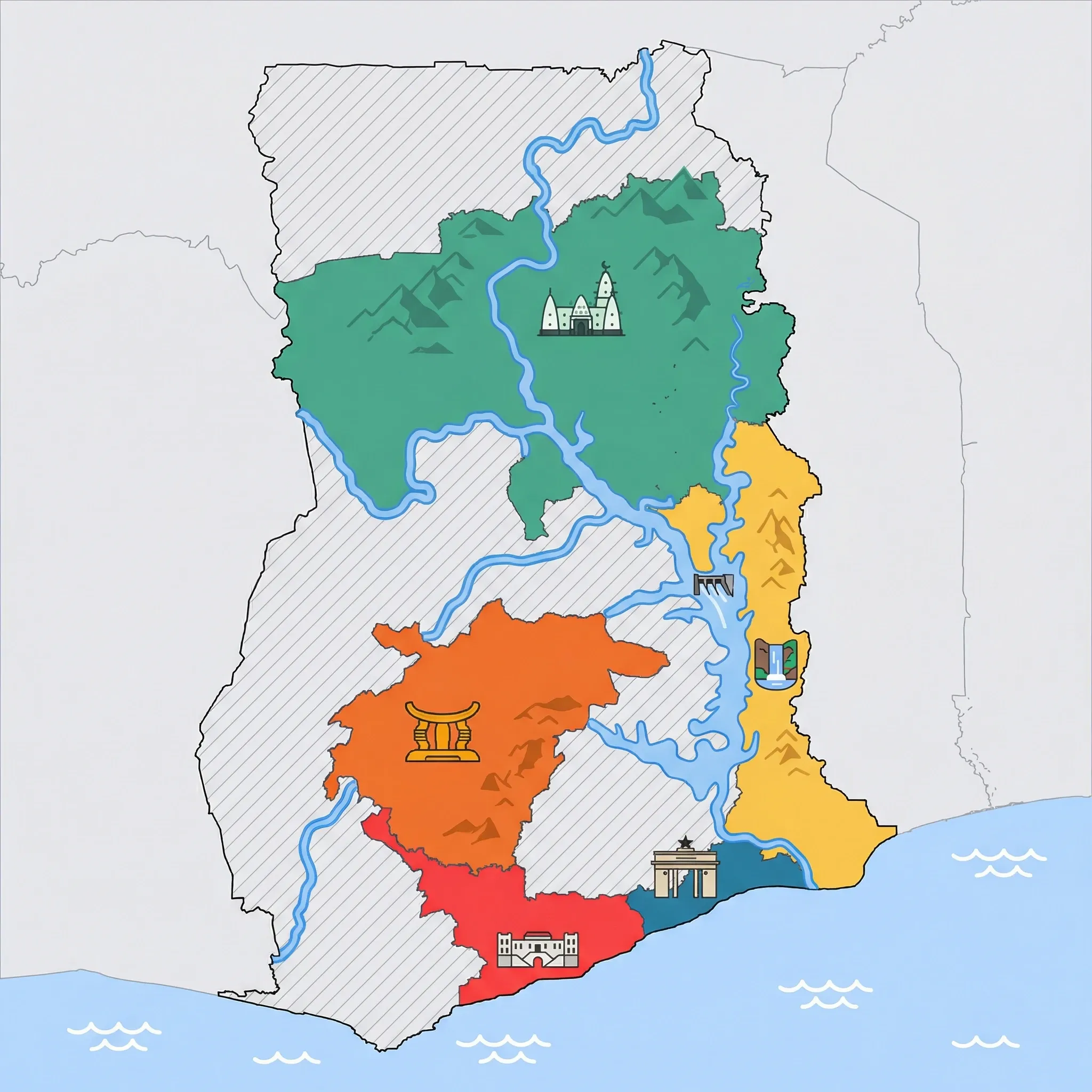
Click a region to explore
The Ashanti Region is the cultural soul of Ghana. Dominated by the city of Kumasi, this region is the seat of the Asantehene (the Ashanti King) and the home of the Golden Stool, a sacred symbol of unity. For families, visiting Kumasi is like stepping into a living history book where tradition is not just preserved in museums but practiced daily in the streets. Geographically, this is a greener, hillier region than the coast, located in the tropical rainforest belt. The air is slightly cooler and fresher than in Accra, especially in the evenings. The city of Kumasi itself is a frenetic, sprawling metropolis, centered around the colossal Kejetia Market—one of the largest open-air markets in West Africa.
Culturally, this is the best place to introduce children to West African arts and crafts. The region is dotted with specialized craft villages, each dedicated to a specific skill like weaving, stamping, or carving. The Ashanti people are known for their pride, eloquence, and hospitality. While the city traffic can be as gridlocked as the capital, the pace of life feels different here—more rooted in tradition. Funerals are major social events here, often filling the streets with mourners in red and black seeking to celebrate life, which can be a fascinating (if loud) cultural observation for older children. Beyond the city, the landscape opens up into cocoa farms and forest reserves, offering a glimpse into the agricultural backbone of the country.
Key Attractions
The absolute highlight for families is the Bonwire Kente Weaving Village. Here, children can watch the master weavers operate traditional looms with lightning speed, creating the vibrant Kente cloth that is famous worldwide. It is an interactive experience; many weavers will let children sit at the loom and try their hand at passing the shuttle. It is a fantastic opportunity to buy a genuine souvenir directly from the artisan.
While in the region, you can also explore the craft circuit to see Adinkra cloth stamping at Ntonso. Although not all craft villages have individual attraction links here, Bonwire acts as the central hub for this experience. Within Kumasi, the Manhyia Palace (the seat of the King) is a must-visit for its peacock-filled grounds and museum, though the primary listed attraction to focus your itinerary around is undoubtedly the weaving village of Bonwire.
Practical Advice
Kumasi is best visited during the Akwasidae festival (occurring every 42 days), where the King holds court—a colorful spectacle of drums, gold, and umbrellas. However, hotels book up fast during these times. The drive from Accra is long (4-5 hours), so consider flying or taking a VIP bus to make the journey easier for kids.
Food & Drink
Typical meal times: Lunch is typically 12:00 pm to 2:00 pm. Dinner is often eaten later here than in rural areas, around 7:00 pm to 9:00 pm.
Typical meal costs: Kumasi is generally cheaper than Accra. A hearty family meal in a nice restaurant will cost GH₵ 250–450 (approx. $15–28 USD / €14–26 EUR).
Dietary requirements: This is the heartland of fufu. Gluten is not an issue with fufu itself (cassava and plantain), but the soup bases are complex. Nut allergies (groundnut soup) are a major consideration here.
Signature dishes:
- Fufu and Light Soup – The defining dish of the region. Pounded cassava and plantain swallowed (not chewed) with a spicy tomato-based soup, often with goat meat.
- Ampesi – Boiled yam, plantain, or cocoyam served with a thick kontomire (cocoyam leaf) stew.
- Akple – Though originally from the Volta region, it is widely available here, served with okra soup.
Why this score?
The region is characterized by lush forests and traditional villages, offering gentle activities like visiting Lake Bosomtwe or artisan craft markets. The infrastructure is fairly developed around Kumasi, making it a cultural immersion rather than a rugged expedition.
Why this score?
The presence of Komfo Anokye Teaching Hospital makes this the second-best location for medical services in Ghana. While it is a significant regional center, the quality of private care for international tourists remains below the standards found in Accra's best clinics or international capitals and global hubs.
Why this score?
Kumasi is the cultural heart of the country and home to the Ashanti Kingdom, attracting niche travelers interested in West African royalty and traditional crafts. Despite its cultural depth, it receives fewer international leisure tourists than the coastal regions.

Kumasi offers excellent value for money. Accommodation is significantly cheaper than the capital; a high-end hotel room might cost GH₵ 1,000–1,600 (approx. $60–100 USD / €58–95 EUR). Craft items like Kente are cheaper here at the source (<a data-attraction-id="58104">Bonwire</a>) than in Accra, but bargaining is expected and necessary.

Getting Here & Around
Getting Here
- Airports – Kumasi International Airport (KMS) has frequent daily flights from Accra (30-45 minutes). This is by far the easiest way for families to travel.
- Bus – VIP and STC buses run hourly from Accra. The journey takes 4–5 hours depending on traffic at the outskirts of both cities.
- Driving – The Accra-Kumasi highway is the busiest road in Ghana. While scenic in parts, it requires cautious driving due to heavy truck traffic.
Getting Around
- Ride-Hailing – Uber and Bolt operate in Kumasi and are the safest and most convenient way to reach places like Bonwire Kente Weaving Village which is on the outskirts.
- Taxis – Local taxis are everywhere. Unlike Accra, they are often shared, so you must specify if you want a "drop" (private charter).
Nearby Airports (1 airport)
Kumasi Airport
KMSKumasi
View full flight map for Ghana →
Official Links

Packing List
Often used when dancing or attending traditional durbar festivals as a sign of joy.
Essential if visiting the Palace or traditional shrines; shorts are often frowned upon for adults.
You will likely buy bulky fabric (Kente) or wood carvings that won't fit in your standard day pack.
Kumasi is loud; funeral celebrations with heavy drumming can go late into the night.
Mandatory physical document checked before you even leave the plane.
Frequent power cuts ("Dumsor") mean you need backup for phones/fans.
Street lighting is inconsistent and power outages can happen at night.
Essential during Harmattan season (Dec-Mar) when air is thick with dust.
Exchange bureaus often reject notes that are old, torn, or marked.

Activities & Best Times

Hiking, wildlife, outdoor exploration, ecotourism
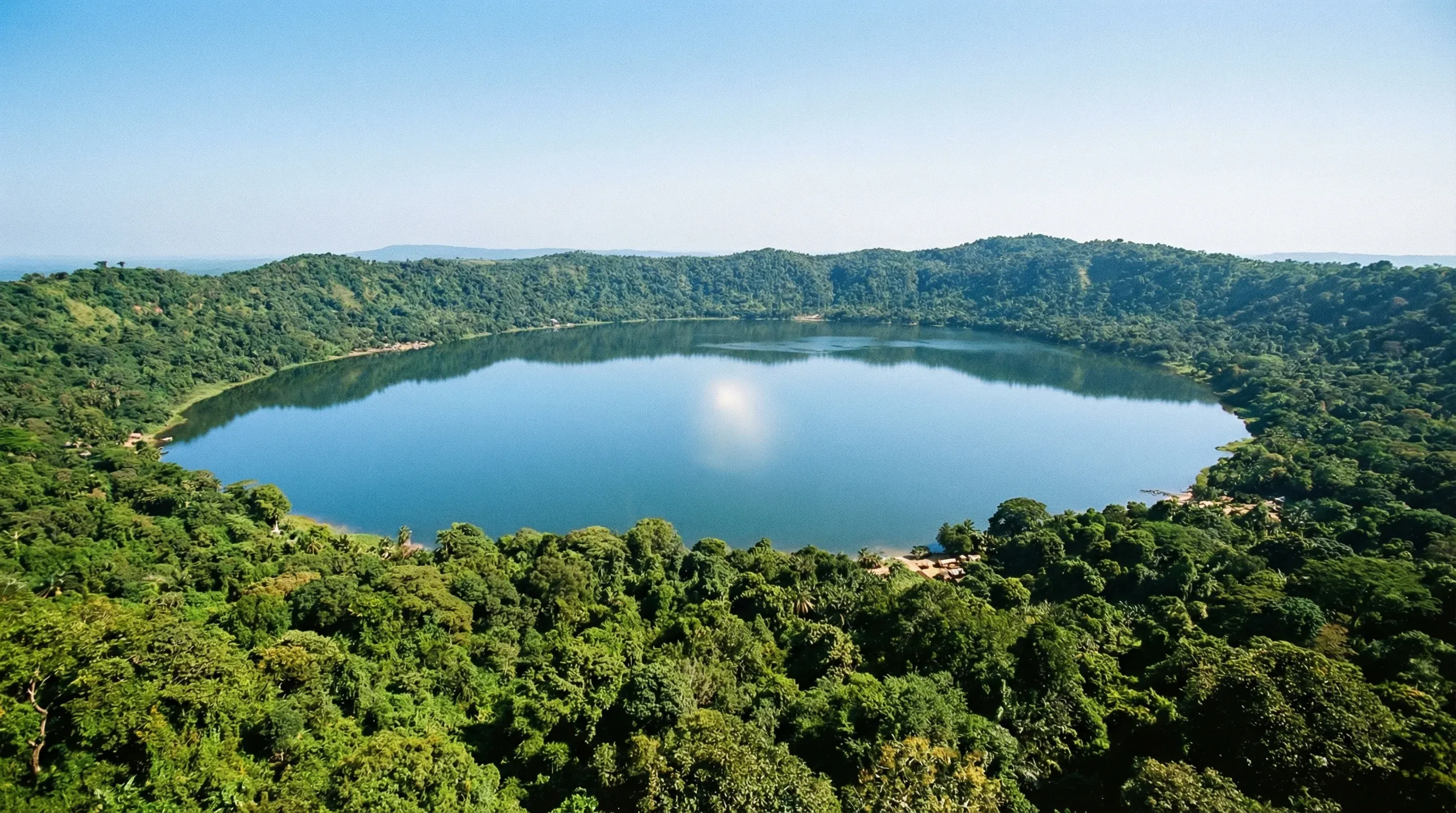
Home to the ancient meteorite impact crater of Lake Bosomtwe and the Bobiri Butterfly Sanctuary, the region provides unique biodiversity and rainforest immersion for nature-loving families. Outdoor exploration is best during the dry season (December to February) when forest trails are accessible and butterfly activity is at its peak.

Urban tourism, museums, historical sites, architecture
As the heart of the Ashanti Empire, Kumasi offers an authentic immersion into West African history and living craft traditions at Manhyia Palace and specialized weaving villages. The peak months align with major festivals and the drier harmattan period, providing the best conditions for exploring vibrant markets and heritage sites.

Scenic drives, countryside tours, route-based travel
The Ashanti Craft Villages Circuit and Lake Bosomtwe scenic routes offer well-defined itineraries for exploring rural heritage and panoramic landscapes. These drives are most enjoyable in the dry months to avoid road deterioration during heavy rains and to ensure clear views of the Mampong Escarpment.

Sport tourism, fitness activities, active recreation
The established circular route around Lake Bosomtwe provides a significant infrastructure for hiking and cycling in a unique natural setting. Optimal conditions occur during the dry season when humidity is slightly lower and trail surfaces remain stable for active sports.

Learning experiences, scientific sites, historical education
The Lake Bosomtwe Visitor Centre offers destination-level scientific insights into the geology and biology of West Africa's only natural lake. It is a valuable educational stop during the high tourism season when facility engagement and guided tours are most available.

Events, celebrations, seasonal attractions
The Akwasidae Festival is a premier cultural event occurring every 42 days, showcasing the splendor of the Ashanti monarchy. While it happens year-round, the year-end and New Year periods offer the most festive atmosphere for international travelers.




Public Holidays & Calendar Next 12 months
Public holidays, festivals, cultural celebrations, and seasonal natural phenomena coming up in Kumasi & Ashanti Region over the next 12 months.
Loading holidays and events...

Travel Advisory
All major agencies maintain a baseline advisory for travellers to exercise increased vigilance across Ghana, primarily due to crime and regional security threats. While the country is generally stable, specific regional warnings and demographic-based risks necessitate higher awareness than standard travel.
Safety Topics
Traveller Advice (3 groups)

There are reports of sexual assault and harassment targeting women. Crimes often occur at night or in secluded spots; travellers should avoid walking alone after dark.

Visitors should avoid travel between cities after dark due to highway robberies. Be extremely cautious at beaches as coastal currents are powerful and often lack lifeguards.

Same-sex intimacy is criminalized and can lead to imprisonment. Recent legislative efforts have increased hostile rhetoric, discrimination, and the risk of targeted violence or extortion.
Agency Summaries
Safety concerns are higher than in New Zealand, driven by rising crime rates including armed robbery and kidnapping. Terrorism risks are elevated near the northern borders.
While general travel is permitted, the UK advises against all but essential travel to the Bawku Municipal area. There is a notable threat of terrorism in northern border areas and frequent demonstrations in cities.
Irish citizens are urged to be cautious, particularly regarding political gatherings and civil unrest. Comprehensive travel insurance and early visa application are strongly recommended.
Increased caution is advised nationwide due to crime and specific threats against women and LGBTQ+ travellers. There is a higher risk of civil unrest and crime in the northern border regions near Burkina Faso and Côte d'Ivoire.
Travellers should remain highly vigilant due to safety and security concerns, including petty and violent crime. There is a specific warning regarding increased risks for the 2SLGBTQI+ community due to legislative developments.
Heightened vigilance is required because of the risk of violent crime. Terrorism is a significant concern in the north, and local curfews are active in several regions due to security incidents.
Information is provided for general guidance only and does not constitute travel, safety, medical, or legal advice. Conditions may change. Users are responsible for independently verifying information before travel.